On a narrow Left Bank street in the 5th arrondissement, YA BAYTÉ by Hébé brings a cross-cultural culinary approach to one of Paris's most historically layered neighbourhoods. The address at 1 Rue des Grands Degrés places it steps from Notre-Dame, situating it within a pocket of Paris where tradition and contemporary dining ideas have long coexisted. Expect a kitchen that draws on imported technique alongside local French produce.
Pearl is the En Primeur Club membership app — saves, bookings, and concierge access live there. Same editors, same standards.
- Address
- 1 Rue des Grands Degrés, 75005 Paris, France
- Phone
- +33975925520
- Website
- yabayte.com
- Directions
- Get directions
 Saves & bookings on Pearl
Where the Left Bank's Long Memory Meets a Kitchen Thinking Globally
The 5th arrondissement has been feeding students, scholars, and travellers since the medieval university quarter took root on this side of the Seine. Rue des Grands Degrés, a narrow street that drops toward the river, sits in the heart of that history, and it is here, at number 1, that YA BAYTÉ by Hébé has established its address. The name itself carries significance: ya bayté is an Arabic expression of belonging, roughly translating to "my home" or "my people," and it signals from the outset that this kitchen is operating from a different set of references than the classic French brigade down the road.
The restaurant is in Paris's 5th arrondissement at 1 Rue des Grands Degrés, and it serves Lebanese street food at a mid-tier price point. The 5th has always attracted restaurants that occupy a productive tension between the ancient and the experimental. It is not the arrondissement of grand palace dining, for that, you look to the 8th, where Alléno Paris au Pavillon Ledoyen or Le Cinq at the Four Seasons George V command four-figure tasting menus in gilded rooms. Nor is it the 7th, where Arpège has spent decades making the case for produce-led haute cuisine. The 5th operates on a different register: more intimate, more willing to absorb outside influence, historically a place where ideas from across the Mediterranean and beyond have found space on Parisian tables.
The Intersection of Imported Method and Local Produce
The editorial angle at YA BAYTÉ by Hébé, the thing that separates it from both its Left Bank neighbours and from the broader Parisian dining conversation, is the meeting of global culinary logic with French raw materials. This is a pattern that has become increasingly visible across French fine dining in the past decade. At Kei in the 1st, Japanese precision is applied to French seasonal produce, producing a style that would be difficult to place if you tasted it blind. At AM par Alexandre Mazzia in Marseille, a chef shaped by Congo and the French Riviera compresses spice and smoke into dishes that reference multiple continents simultaneously.
YA BAYTÉ by Hébé positions itself within that same broad current. The name and sensibility suggest a kitchen fluent in the flavour languages of the Levant and North Africa, yet operating in Paris, where the supply chain runs through French markets, French seasons, and French producers. When that combination works, the result is not fusion in the blunt 1990s sense but something more specific: a kitchen that knows precisely what it wants to say and uses the leading available materials to say it. Preserved lemon and ras el hanout find their logic inside French technique; a slow braise or a precisely mounted sauce belongs to one tradition while the aromatic scaffolding belongs to another.
This is the broader French dining story that venues like Mirazur in Menton (with its Mediterranean-Argentine axis) and Bras in Laguiole (with its hyper-local terroir obsession) have each told in their own way. The difference is that restaurant is doing it within the city itself, on a street where the Seine is close enough to shape the light, and where the tourist-heavy surroundings make the cooking's seriousness of purpose more, not less, meaningful.
How This Kitchen Fits Into Paris's Broader Restaurant Map
Paris in the 2020s has a more complicated dining map than the Michelin-or-bust binary of earlier decades suggested. At one end, you have the cathedral addresses: L'Ambroisie on Place des Vosges, where classic haute cuisine moves at a pace set entirely by the kitchen's own internal clock. At the other, a generation of smaller, format-driven restaurants has pushed the city's reputation in directions that no longer require the classical French framework as a reference point at all. Atomix in New York shows how a kitchen rooted in Korean tradition can achieve elite critical recognition without deferring to European convention, a lesson that Paris's more adventurous restaurants have absorbed.
The restaurant sits somewhere in the productive middle of that spectrum. The 5th arrondissement's relatively contained restaurant scene, compared to the density of Saint-Germain or the Marais, means a serious kitchen here draws from a neighbourhood clientele as much as from the destination-dining circuit. That local gravity often produces more consistent cooking than the purely trophy-meal model, because the kitchen has to perform for regulars who can compare Tuesday to Saturday and hold the team accountable across time.
For context on what French regional kitchens have achieved by committing to a specific place and point of view, look at Auberge du Vieux Puits in Fontjoncouse, Assiette Champenoise in Reims, or Au Crocodile in Strasbourg, each a study in what happens when a kitchen doubles down on its own logic rather than chasing a generalised definition of excellence. Flocons de Sel in Megève makes a similar argument from the Alps. The restaurant, in its own urban way, is part of the same conversation.
The French kitchen's long relationship with North African and Levantine flavour is not new, it is baked into the country's postcolonial history and its everyday bistro vocabulary. What is newer is the willingness to treat that influence as a primary language rather than a garnish. Restaurants like Paul Bocuse's Auberge du Pont de Collonges and Auberge de l'Ill in Illhaeusern represent one pole of French culinary identity, deeply rooted, provincial, shaped by generations. The restaurant represents a different and equally valid pole: urban, cross-referential, shaped by migration and movement. And Le Bernardin in New York demonstrates how thoroughly a French-rooted kitchen can redefine itself on foreign soil, the reverse dynamic of what is happening here. And the broader French high-end table, from Troisgros in Ouches to the innovation at Alléno Paris, provides the benchmark against which any ambitious Paris kitchen is ultimately read.
Standing Among Peers
Comparable venues nearby, for context on price, style, and recognition.
| Venue | Cuisine | Price | Notes |
|---|---|---|---|
| YA BAYTÉ by HébéThis venue — the venue you are viewing | Lebanese Street Food | $$ | Not listed |
| Janna | Authentic Lebanese Cuisine | $$ | 17th arrondissement (Ternes) |
| Assanabel | Authentic Lebanese | $$ | 14th Arr. - Observatoire |
| La Pause Libanaise | Authentic Lebanese | $$ | Madeleine |
| Mezzencore | Lebanese Street Food | $ | Plaine de Monceaux / Grands Boulevards |
| Afendi | Authentic Lebanese | $$ | 10th Arr. |
Continue exploring
More in Paris
Restaurants in Paris
Browse all →
Bars in Paris
Browse all →
Hotels in Paris
Browse all →

At a Glance
- Cozy
- Trendy
- Lively
- Casual Hangout
- Group Dining
- Open Kitchen
- Local Sourcing
Current opening hours
- Monday
- 6–10:30 PM
- Tuesday
- 12–10:30 PM
- Wednesday
- 12–10:30 PM
- Thursday
- 12–10:30 PM
- Friday
- 12–11 PM
- Saturday
- 12–11 PM
- Sunday
- 12–10:30 PM
Hours can change for holidays and private events. Last verified .
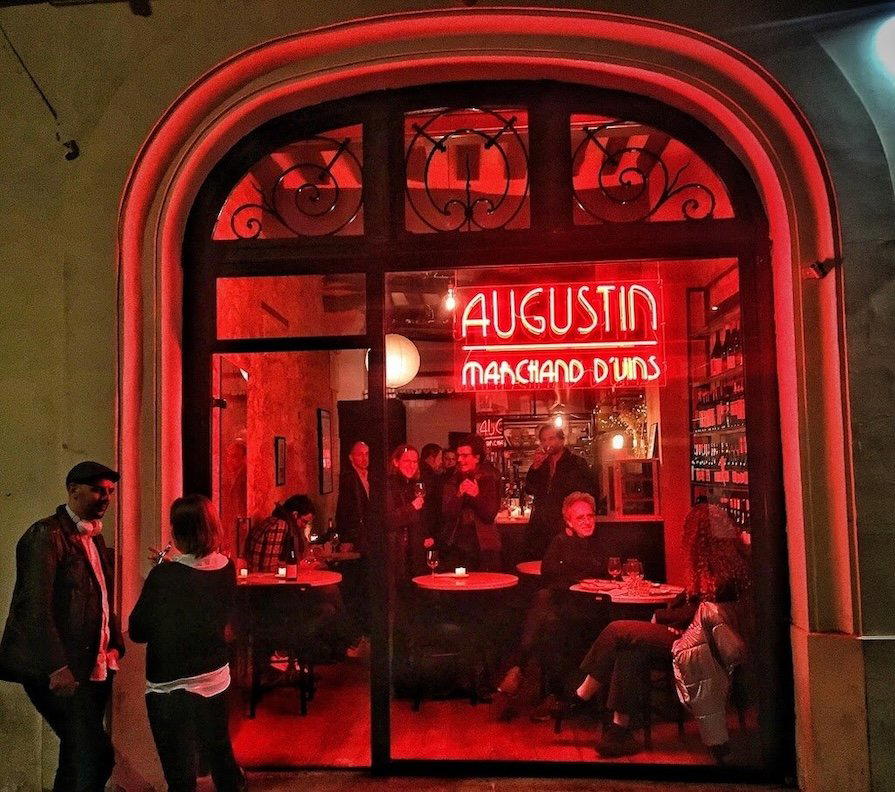
Casual and convivial atmosphere evoking a little air of Beyrouth, with fresh street food prepared on the spot.