Saperavi at 4 Rue du Fer à Moulin sits in Paris's 5th arrondissement, a neighbourhood where Georgian wine culture has quietly taken hold alongside the city's broader natural-wine shift. The address places it a short walk from the Jardin des Plantes, in a district more accustomed to student bistros than specialist wine lists. Saperavi takes its name from Georgia's flagship red grape, signalling a clear editorial position before you've crossed the threshold.
Pearl is the En Primeur Club membership app — saves, bookings, and concierge access live there. Same editors, same standards.
- Address
- 4 Rue du Fer à Moulin, 75005 Paris, France
- Phone
- +33186046094
- Website
- saperaviparis.fr
- Directions
- Get directions
 Saves & bookings on Pearl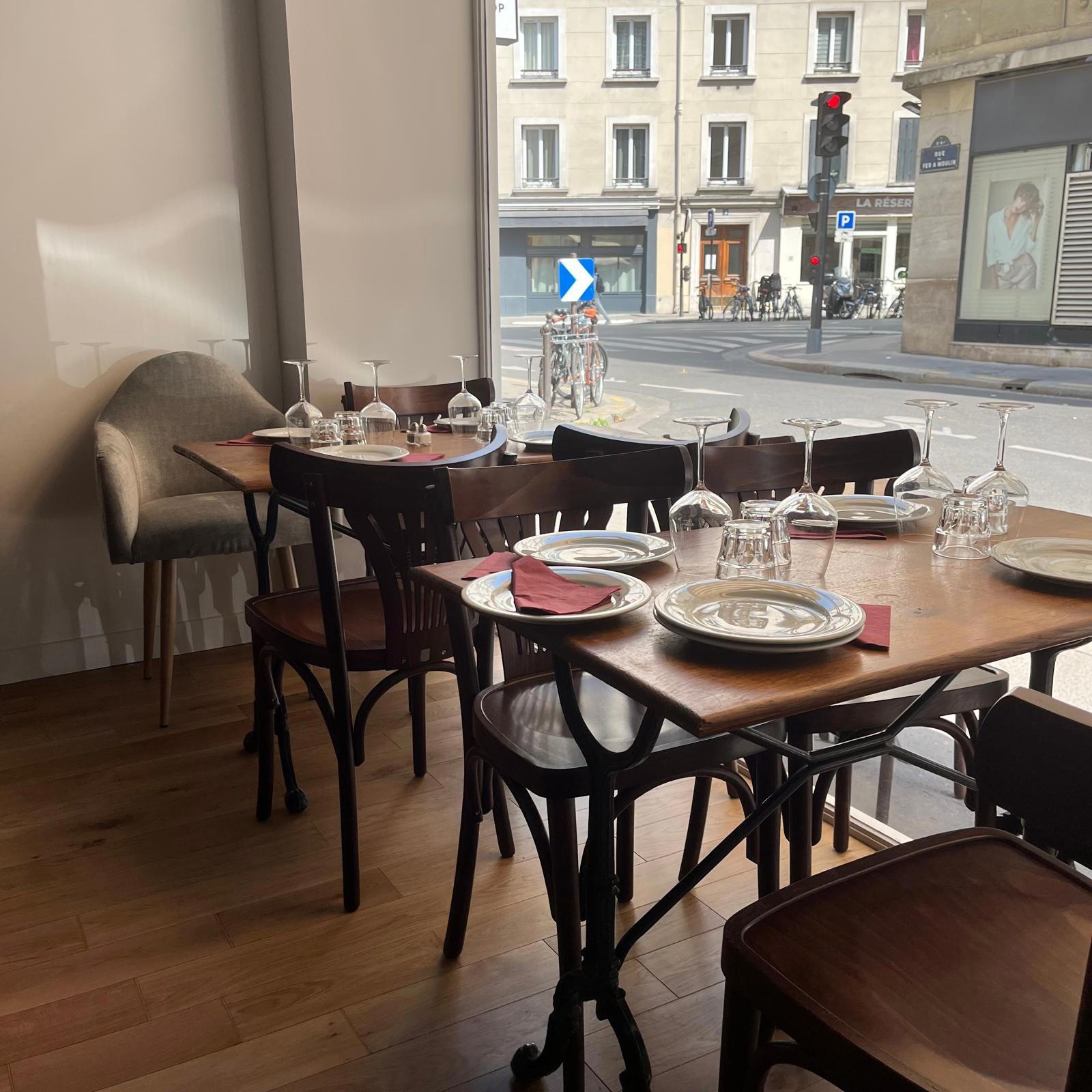
Where the 5th Arrondissement Meets the Caucasus
Paris has absorbed waves of specialist wine culture over the past two decades: biodynamic Loire producers, skin-contact Slovenians, low-intervention Beaujolais. Georgian wine arrived in that same current, but it has taken longer to find dedicated addresses willing to build an identity around it rather than slot a few qvevri bottles onto an otherwise conventional list. The 5th arrondissement, traditionally a neighbourhood of student brasseries and academic canteens clustered around the Sorbonne and the Jardin des Plantes, has proved a receptive host for this kind of specialist positioning. Rents are lower than in the Marais or Saint-Germain, and the clientele is more likely to ask what saperavi actually is than to reach for the Burgundy page by default.
Saperavi, at 4 Rue du Fer à Moulin, takes its name directly from Georgia's most planted red variety: a thick-skinned, deeply pigmented grape that produces wines with a particular tannic grip and dark fruit profile unlike anything from the Western European canon. The decision to name a Parisian address after that grape is not incidental. It announces a specific orientation toward Caucasian wine culture, amber wines made in clay qvevri, and a culinary register that most Paris dining rooms have historically ignored. In a city where the dining conversation is still largely structured around the axis running from classic French technique through to its contemporary derivatives, this represents a deliberate sidestep.
The Booking Logic for a Niche Address
The key question for a prospective visitor is how to plan a visit. Paris operates a tiered booking market. At the leading end, three-star addresses like L'Ambroisie on the Place des Vosges or Alléno Paris au Pavillon Ledoyen require forward planning measured in weeks if not months, with dedicated reservation systems and strict cancellation policies. The mid-tier of Michelin-recognised contemporary rooms, addresses like Kei or Le Cinq at the Four Seasons George V, operates with similar lead times during peak season. Specialist neighbourhood restaurants with a cult following but no star recognition occupy a different logic entirely: demand is real but inconsistent, walk-in availability fluctuates, and the leading strategy depends on when you arrive and how flexible you are.
The address, 4 Rue du Fer à Moulin, 75005, is confirmed. Beyond that, the practical details below are drawn from category-level knowledge of comparable specialist wine-bar-restaurant formats in Paris, not from venue-specific confirmation.
Planning Framework: Saperavi vs. the comparable set
| Venue | Category | Price Tier | Booking Lead Time | Walk-in Viability |
|---|---|---|---|---|
| Saperavi | Georgian wine specialist | Not confirmed | Not confirmed | Verify directly |
| Kei | Contemporary French | €€€€ | 2-4 weeks peak | Low |
| L'Ambroisie | Classic French | €€€€ | 4-8 weeks | low |
| Le Cinq | Modern French | €€€€ | 3-6 weeks peak | low |
The comparison underlines the structural point: Saperavi is part of a different tier of the Paris dining ecosystem, one where specialist knowledge and neighbourhood positioning matter more than institutional prestige. For visitors building a broader France itinerary that includes high-commitment bookings at addresses like Mirazur in Menton, Flocons de Sel in Megève, or Bras in Laguiole, Saperavi represents the kind of unscheduled discovery that rewards a more spontaneous approach.
Georgian Wine in a French Context
To understand what Saperavi is doing in the 5th, it helps to understand where Georgian wine sits in the French critical conversation. France imports Georgian wine in relatively modest volumes compared to Germany or the Nordic countries, where qvevri-fermented amber wines found an audience earlier through the natural wine circuit. Paris's interest has been growing, driven partly by sommeliers at French fine-dining institutions who have started placing Georgian bottles on lists dominated by domestic producers. The grape varieties involved, saperavi for reds and rkatsiteli or mtsvane for whites, are largely unknown to French consumers, which creates both a marketing problem and an opportunity for a specialist address willing to do the educational work.
The name-as-education approach is not new to Paris. Wine bars built around a single region or grape family, Jura, Corsica, natural Rhône, have used the same mechanism. What distinguishes the Georgian case is the degree of unfamiliarity: a visitor who knows the difference between a Côte de Nuits and a Côte de Beaune will not arrive at a Georgian wine list with transferable reference points.
For context on how the broader French fine-dining infrastructure handles regional specificity and specialist identity, the country's established three-star addresses are instructive: Troisgros in Ouches, Auberge de l'Ill in Illhaeusern, Paul Bocuse in Collonges-au-Mont-d'Or, and Auberge du Vieux Puits in Fontjoncouse each built institutional identity around a specific regional and cultural register. Saperavi is working in the same tradition, at a smaller scale and with a less domestically familiar source culture.
The 5th Arrondissement as Context
Arriving at Rue du Fer à Moulin, visitors are in a part of the 5th that sits between the Mosquée de Paris and the Jardin des Plantes, a zone with more foot traffic from museum visitors and students than from the traditional fine-dining circuit. This is not the 1st or 8th, where grand-room French cuisine concentrates. The neighbourhood supports a different kind of restaurant: lower-key, more idiosyncratic, more likely to survive on repeat local custom than on expense-account tourism. For Georgian wine to find a permanent address in Paris, this kind of neighbourhood makes more structural sense than a prestige postcode. Specialist formats that depend on a loyal, curious clientele tend to root themselves where that clientele already lives, and the 5th has been generating that kind of diner for decades.
Visitors building a Paris itinerary around the established fine-dining tier, whether that includes Arpège or Alléno au Pavillon Ledoyen, should treat Saperavi as a complement rather than an alternative: a different register, a different price assumption, and a different kind of knowledge on offer. For those whose France trip extends to international comparisons, specialist-format wine restaurants with a strong point-of-view identity have also taken hold in New York at addresses like Atomix and the precision-driven format of Le Bernardin. The French equivalent operates with less institutional scaffolding but often more room for genuine eccentricity.
Cost Snapshot
Comparable venues nearby, for context on price, style, and recognition.
| Venue | Cuisine | Price | Notes |
|---|---|---|---|
| SaperaviThis venue — the venue you are viewing | Not listed | $$ | Not listed |
| Cocoön | Not listed | $$ | Folie-Méricourt, Cocktail Bar with Complementary Small Plates |
| Sylon de Montmartre | Montmartre, Brunch Coffee Shop | $$ | Not listed |
| Goumanyat | Marais, Gourmet Spice Shop | $$ | Not listed |
| Balls | Not listed | $$ | 11th Arrondissement (Popincourt), Gourmet Meatballs |
| Poppy'z | Oberkampf, Cocktail Bar | $$ | Not listed |
Continue exploring
More in Paris
Restaurants in Paris
Browse all →
Bars in Paris
Browse all →
Hotels in Paris
Browse all →
At a Glance
- Cozy
- Intimate
- Casual Hangout
- Group Dining
- Standalone
- Natural Wine
Current opening hours
- Monday
- 11:30 AM–3 PM, 6:30–11:30 PM
- Tuesday
- 11:30 AM–3 PM, 6:30–11:30 PM
- Wednesday
- 11 AM–3 PM, 6:30–11:30 PM
- Thursday
- 11:30 AM–3 PM, 6:30–11:30 PM
- Friday
- 11:30 AM–3 PM, 6:30–11:30 PM
- Saturday
- 11:30 AM–3 PM, 6:30–11:30 PM
- Sunday
- 11:30 AM–3 PM, 6:30–11:30 PM
Hours can change for holidays and private events. Last verified .
Convivial and warm atmosphere ideal for sharing meals with friends or family.