Leonards Malasadas
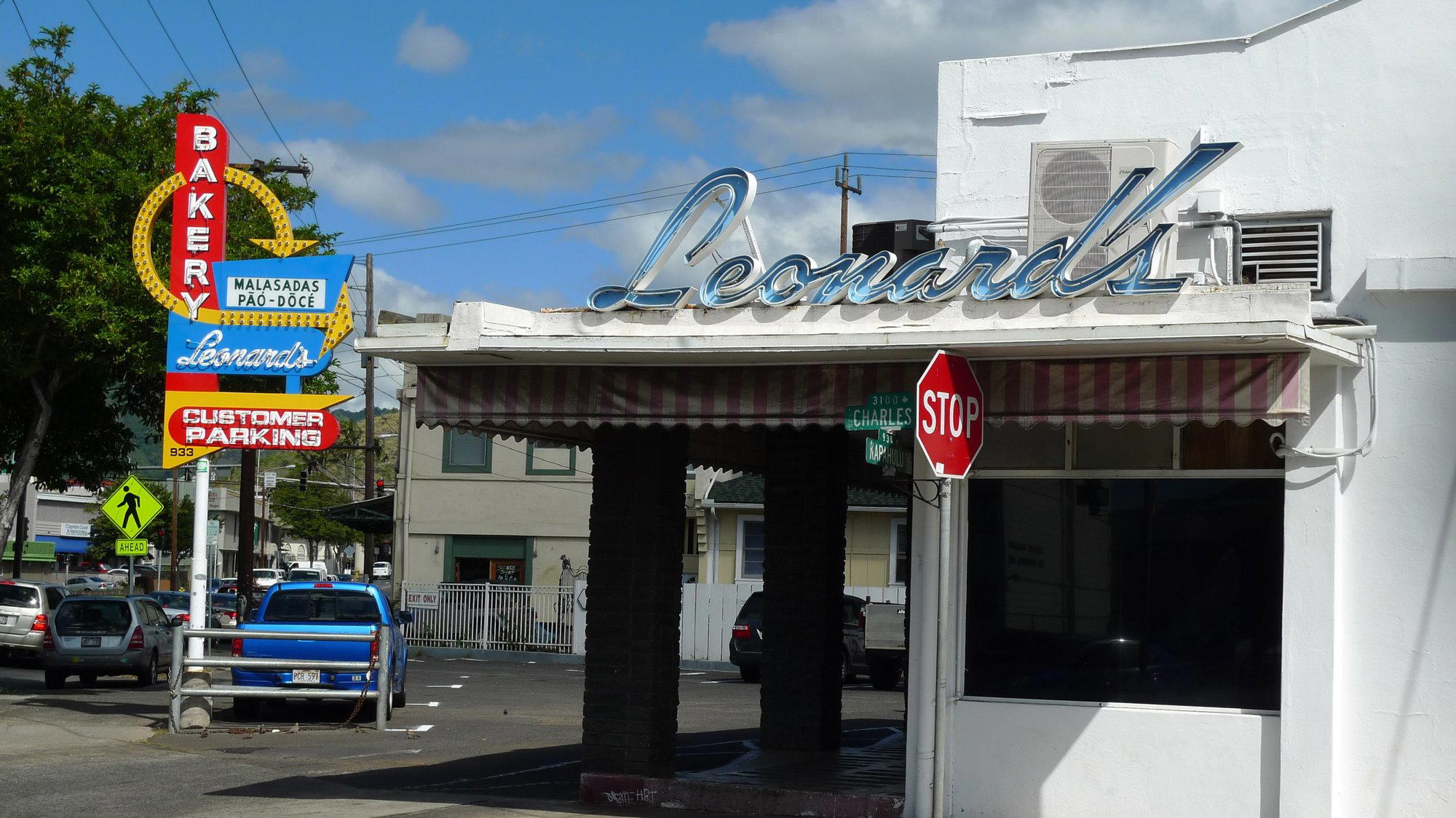
Leonard's Bakery has anchored Honolulu's Kapahulu Avenue since 1952, selling Portuguese malasadas that arrived in Hawaii with 19th-century plantation workers from the Azores and Madeira. The hot, sugar-dusted doughnuts without holes are ordered plain or filled, and the queue outside moves steadily through most of the day. It is one of the clearest living connections to Hawaii's multi-ethnic immigrant food history.
 Discover on Pearl
Pearl is the En Primeur Club membership app — saves, bookings, and concierge access live there. Same editors, same standards.
A Portuguese Tradition Rooted in Hawaii's Plantation Past
The malasada is not a Hawaiian invention, but it has become a Hawaiian institution. Portuguese workers who arrived in Hawaii from the Azores and Madeira during the 1870s and 1880s brought the fried dough tradition with them, and over the following century it wove itself so thoroughly into local food culture that it now appears at school fundraisers, family gatherings, and roadside bakeries across the islands. What distinguishes the malasada from other fried dough formats is its density and the absence of a hole: a full round of yeasted dough, fried until the outside sets to a thin shell and the interior stays soft, then rolled immediately in granulated sugar. The heat of the dough makes the sugar adhere rather than sift away, and the result is a balance of crunch, chew, and warmth that degrades quickly once cooled. This is why malasadas are sold to order, moved fast, and rarely survive a long drive home intact.
Leonard's Bakery on Kapahulu Avenue in Honolulu has been operating since 1952, making it one of the longest-running bakeries in Hawaii and the venue most closely associated with popularising the malasada for a broad local audience. It did not invent the form, which predates it by generations, but it became the address where the wider Honolulu public encountered the tradition in a consistent, accessible format. That longevity has given it a generational quality: visitors describe being brought here by grandparents who were themselves brought by parents. For a food that depends on immediacy, that kind of accumulated habit is a meaningful credential.
The Malasada in Context: Hawaii's Immigrant Food Lineage
Hawaii's food culture is inseparable from its plantation history. Workers recruited from Portugal, Japan, China, Korea, Puerto Rico, and the Philippines each introduced ingredients and techniques that cross-pollinated over decades into a local cuisine that belongs fully to none of those origins and entirely to Hawaii. The plate lunch, saimin, spam musubi, shave ice, and the malasada all carry traces of that process. What makes the malasada particularly interesting is that it has remained close to its source form while still adapting: the plain sugar-rolled version is faithful to Azorean tradition, while filled variants using local flavours reflect the same improvisational layering that defines the broader island food character.
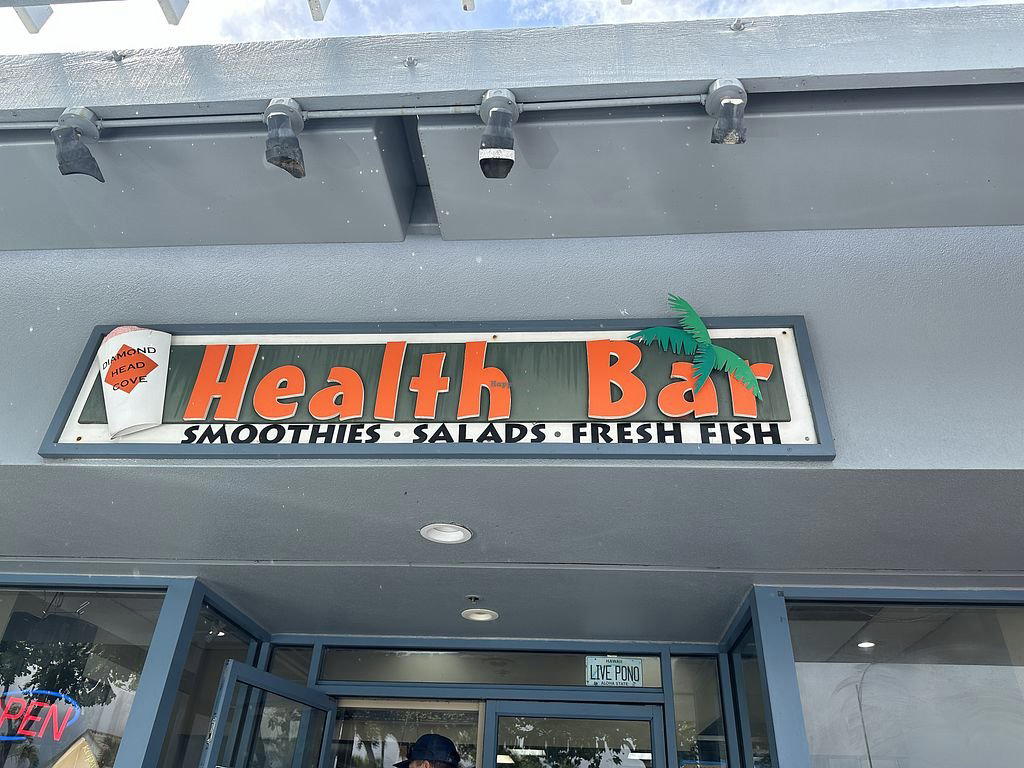
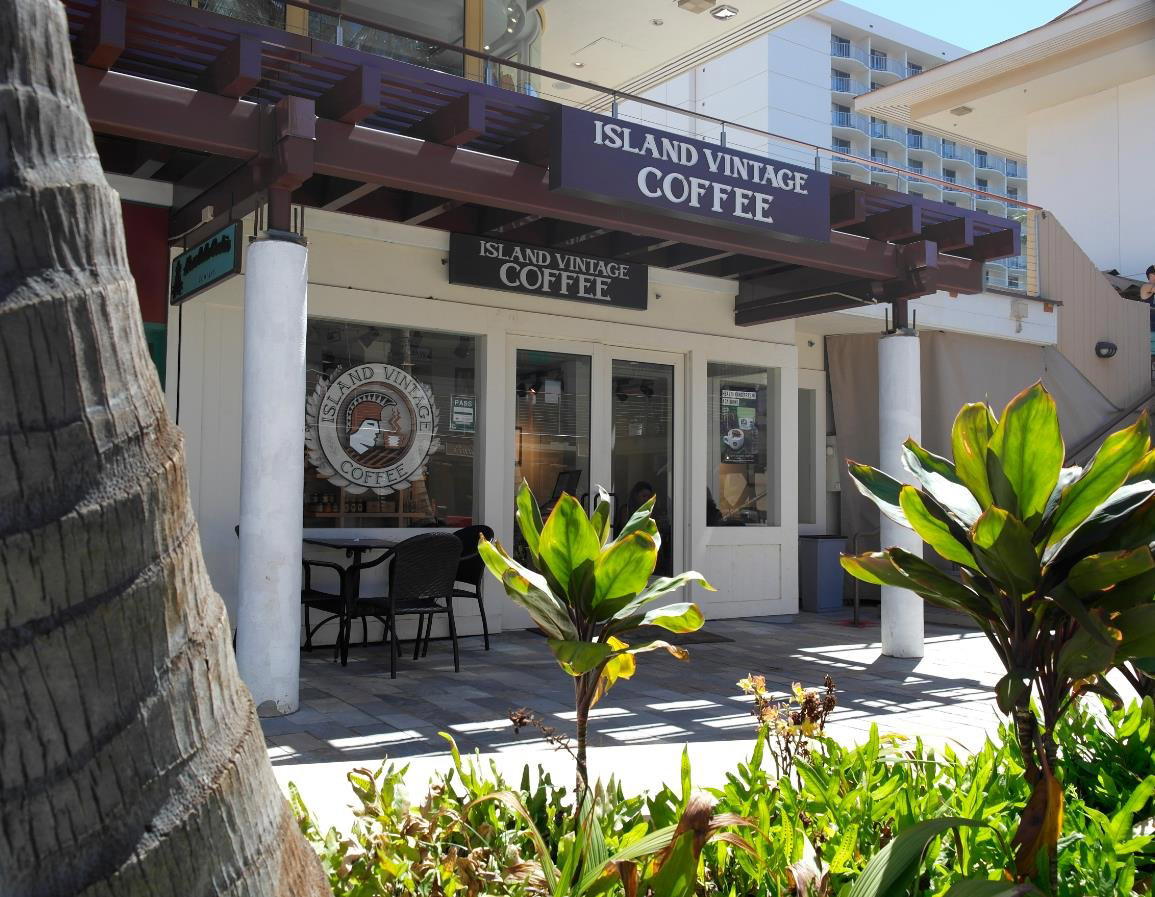
This cultural food layering is visible across Honolulu's eating scene. Island Vintage Coffee works with local agricultural producers to frame its menu in terms of Hawaiian provenance. Diamond Head Cove Health Bar draws on the islands' tropical fruit abundance in a different register entirely. The malasada at Leonard's sits at a different point on that spectrum: it is not farm-to-table or health-conscious, but it is deeply place-specific, carrying the memory of a migration that shaped the islands over a century and a half.
What the Queue Tells You
The line outside Leonard's on Kapahulu Avenue is a reliable constant, particularly on weekends and during the weeks surrounding Shrove Tuesday, when malasada consumption across Hawaii intensifies. The Portuguese tradition of eating malasadas on Fat Tuesday, the day before Lent begins, as a way of using up lard and sugar before the fasting period, transferred to Hawaii and became Malasada Day, a statewide observance that drives some of the highest single-day volumes any Hawaiian bakery sees in the year. On that day, queues at Leonard's extend significantly along the pavement and wait times stretch accordingly.
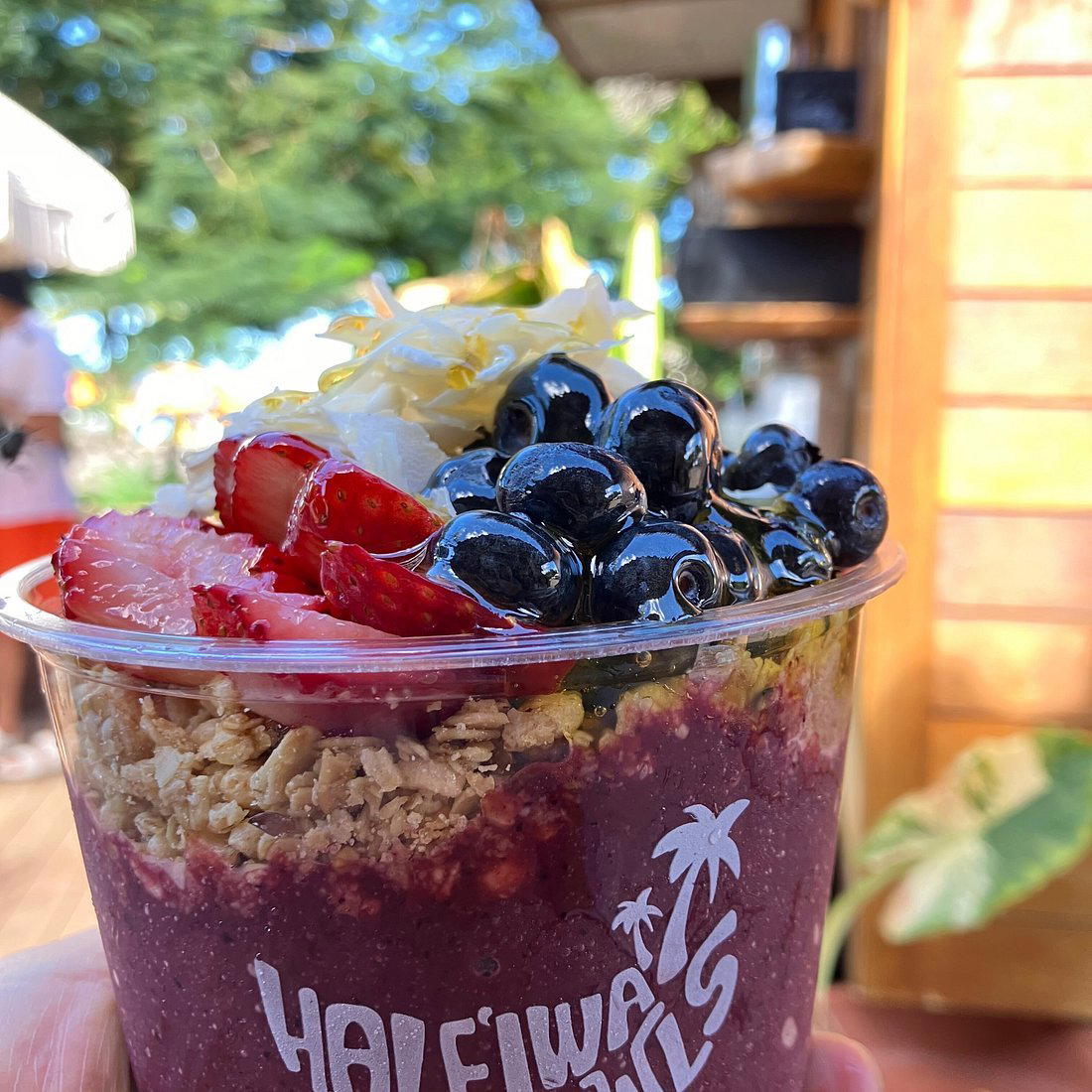
Outside of that seasonal peak, the operation runs steadily. The bakery is walk-in friendly and the product turns over quickly, which is precisely what a temperature-sensitive fried dough requires. The practical advice from repeat visitors is consistent: come earlier rather than later, and eat on site or very nearby. Haleiwa Bowls operates in a similarly immediate-consumption format on the North Shore, where the acai bowl degrades in texture as quickly as a malasada cools, and the same logic applies: the product is designed for the moment of purchase, not transport.
Placing Leonard's in the Oahu Food Conversation
Honolulu now supports a range of serious dining formats. Asuka Japanese Nabe + Shabu Shabu and 22 Kailua represent more structured, sit-down dining within the island's food scene. At the other end of the format spectrum, Leonard's operates as a bakery counter rather than a restaurant: no reservation, no table, no menu of courses. It occupies a category that fine-dining destinations on the mainland rarely intersect with, and that is precisely why it remains relevant when writers covering Hawaii's food culture reach for cultural anchors.
Nationally, the venues that draw the most critical attention, among them Le Bernardin in New York City, The French Laundry in Napa, Alinea in Chicago, and Blue Hill at Stone Barns in Tarrytown, compete in tasting-menu and technique-driven formats. Lazy Bear in San Francisco, Providence in Los Angeles, Single Thread Farm in Healdsburg, Addison in San Diego, The Inn at Little Washington, Atomix in New York City, Emeril's in New Orleans, and 8 1/2 Otto e Mezzo Bombana in Hong Kong each represent the formal end of restaurant ambition. Leonard's competes in none of those categories and does not need to. Its authority comes from a different axis entirely: duration, cultural rootedness, and a product that has no meaningful substitute in the islands.
Planning Your Visit
Leonard's Bakery is located on Kapahulu Avenue in Honolulu, accessible from Waikiki by a short drive or a longer walk. No reservation is required or possible; the format is walk-up counter service. The bakery operates most days from morning through early evening, though hours can shift around holidays and Malasada Day in February or March. The standard advice from locals is to arrive before midday on weekends, when the queue is most manageable without being absent. Eat immediately: a malasada that has sat for twenty minutes is a noticeably different product from one that has sat for two.
Budget Reality Check
Comparable venues nearby, for context on price, style, and recognition.
| Venue | Cuisine | Price | Awards | Notes |
|---|---|---|---|---|
| Leonards MalasadasThis venue — the venue you are viewing | Kapahulu, Portuguese Malasadas | $ | , | |
| Nalu Health Bar & Cafe | Kakaako, Healthy Hawaiian Fusion Cafe | $$ | , | |
| Diamond Head Cove Health Bar | $$ | , | Diamond Head - Kapahulu, Hawaiian Acai Bowls & Cafe | |
| Island Vintage Coffee | Waikiki, Hawaiian Cafe with Acai Bowls | $$ | , | |
| Tropical Tribe | Waikiki, Authentic Brazilian Açaí Bowls | $ | , | |
| Ramen Bario | Ala Moana, Tokyo Tonkotsu Ramen | $ | , |
At a Glance
- Iconic
- Cozy
- Casual Hangout
- Family
- Brunch
- Standalone
Casual bakery atmosphere with the inviting aroma of freshly fried malasadas.