Diamond Head Cove Health Bar
Diamond Head Cove Health Bar sits at the intersection of Hawaii's açaí bowl culture and the kind of casual, return-visit rhythm that defines eating well near Honolulu's most recognizable landmark. Regulars treat it less as a destination and more as a fixture, the sort of place that earns loyalty through consistency rather than spectacle. For visitors, it offers a grounded introduction to the health-forward, produce-driven eating that has become a hallmark of Oahu's daytime food scene.
Pearl is the En Primeur Club membership app — saves, bookings, and concierge access live there. Same editors, same standards.
- Address
- Oahu, United States
- Directions
- Get directions
 Saves & bookings on Pearl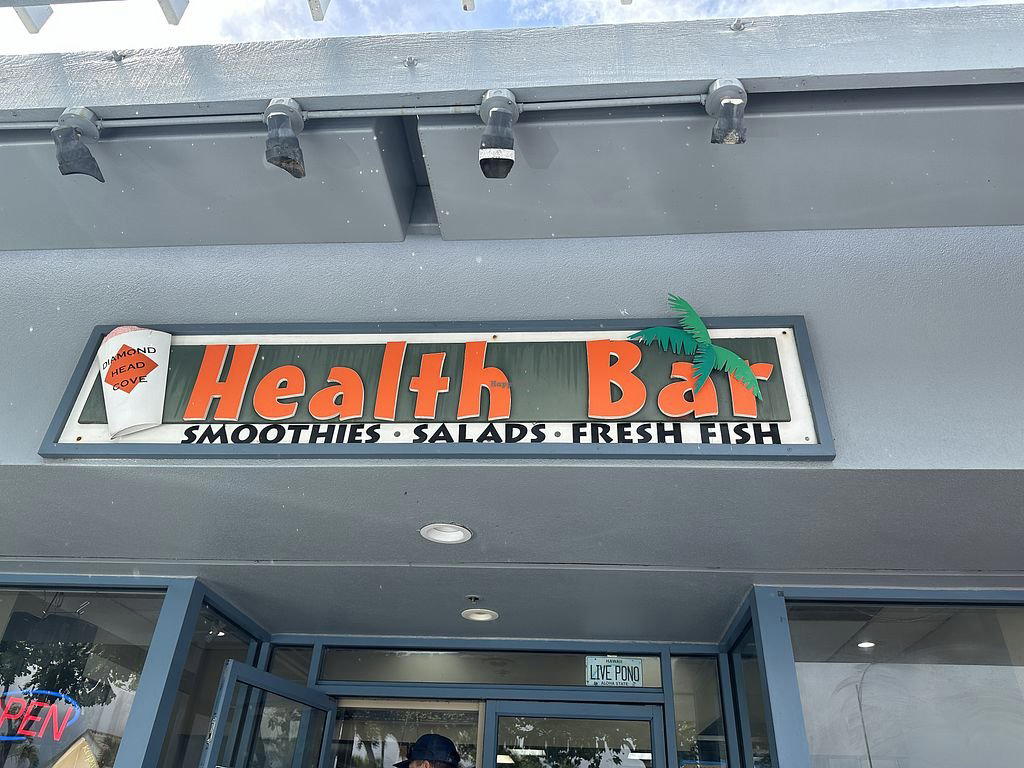
The Culture of the Morning Stop
Along the southeastern edge of Oahu, where Diamond Head's crater rim frames the horizon and the foot traffic shifts between surfers, hikers, and early-morning walkers, a particular category of eating place has taken hold. These are not restaurants in the formal sense. They operate closer to a daily ritual for the people who live nearby: a stop before the trail, after the paddle, or between errands. Diamond Head Cove Health Bar belongs squarely to this tradition, and its position near one of Honolulu's most-visited natural landmarks has made it a fixture in that rhythm for both locals and returning visitors who know to seek it out.
Hawaii's health-bar and bowl culture has developed its own internal logic over the past two decades. What began as a transplant of Brazilian açaí bowl formats onto Hawaiian shores has been absorbed and reshaped by local ingredient availability, the preferences of a population that eats outdoors year-round, and the competitive pressure of a food scene that rewards consistency. The venues that endure in this format are not the ones with the loudest marketing, but the ones that a neighborhood absorbs into its weekly pattern. That absorption is the clearest signal of a place working correctly.
What Keeps Regulars Returning
In the health-bar category on Oahu, repeat business is the most reliable editorial metric. A visitor-dependent model can sustain a venue for a season; a local-dependent model is the harder thing to build. The clientele that returns to a place like Diamond Head Cove Health Bar on a weekly or near-daily basis is operating on different criteria than a first-time visitor: they have already resolved the question of whether it is worth trying. What they are deciding, each time, is whether it remains consistent.
Consistency in this food category means portion integrity, ingredient freshness, and the kind of small operational fluency that makes a transaction feel effortless even during peak morning hours. The Diamond Head corridor draws a concentrated crowd between roughly 7am and mid-morning, a window shaped by the trail opening times and the surf schedule at nearby beaches. Venues that handle that window well earn a loyalty that is difficult to dislodge. Those that falter on execution during high-traffic moments tend to lose their local base to alternatives further along the coast or inland toward Kaimuki.
The unwritten menu at places like this is the ordering shorthand regulars develop over time: a base preference, a topping adjustment, a timing habit. That level of personalization does not appear on any printed menu, but it is the clearest sign that a venue has moved from option to institution in a neighborhood's food culture. Comparable dynamics play out at Haleiwa Bowls on the North Shore and at Island Vintage Coffee in Waikiki, where returning customers account for a disproportionate share of daily volume.
The Diamond Head Context
Location shapes a venue's character in ways that go beyond foot traffic. Diamond Head Cove sits in a zone where Oahu's visitor economy and its residential food culture overlap more than they diverge. The hikers coming down from the crater are not, as a category, looking for a formal sit-down experience. The surfers finishing a session at nearby breaks want something fast, cold, and nutrient-dense. The residents of the surrounding neighborhoods are calibrating against a longer relationship with the place.
This overlap produces a particular operating environment that differs from the more purely tourist-facing venues of central Waikiki and from the more purely local operations further inland. It also differs from the mid-range casual dining that characterizes spots like 22 Kailua on the windward side, or the sit-down format of Asuka Japanese Nabe + Shabu Shabu. Health bars in this location must perform for multiple audiences simultaneously without collapsing into a lowest-common-denominator offering.
That is a harder brief than it sounds. Venues that get it right earn a presence in Oahu's food culture that is disproportionate to their square footage. For broader context on how this fits into the island's eating patterns, see our full Oahu restaurants guide.
Health-Forward Eating as a Regional Category
The bowl format that Diamond Head Cove Health Bar operates within is worth placing in a wider context. Oahu has become one of the more developed markets in the United States for this category, partly because of climate, partly because of the local surfing culture's longstanding relationship with functional eating, and partly because of the island's access to tropical fruits that give açaí bowls their regional character. Dragonfruit, papaya, locally grown bananas, and seasonal mango appear across the category in ways that distinguish the Oahu version from mainland interpretations.
That differentiation matters to regulars and to informed visitors alike. The gap between a well-sourced bowl built around local fruit and a generic açaí product is significant and immediately legible to anyone who has eaten both. It is a different category of food experience from the tasting-menu format you find at Le Bernardin in New York City or the farm-driven precision of Blue Hill at Stone Barns in Tarrytown, but the underlying principle, that sourcing quality is immediately detectable in the final product, applies across price points and formats. Closer to home on the US West Coast, that same sourcing rigor drives the reputations of Single Thread Farm in Healdsburg and Lazy Bear in San Francisco.
Within the Oahu health-bar category, the venues that lean hardest into local sourcing tend to hold their customer base most durably. Jewel or Juice operates on a similar logic in a different part of the island, building its offer around cold-press and produce-forward formats that appeal to a comparable customer profile.
Planning Your Visit
The Diamond Head area rewards early arrival. Peak foot traffic along the corridor concentrates in the mid-morning, and the practical case for arriving closer to opening time is strong regardless of the venue. For visitors staying in Waikiki, the drive or ride to Diamond Head adds minimal time and places you in a residential neighborhood with a noticeably different tempo from the hotel strip. Specific hours, booking requirements, and current menu details are best confirmed directly with the venue before visiting, as operational specifics in this category can shift seasonally. No reservation format applies to counter-service health bars of this type; the question is queue management during peak windows rather than advance planning.
At a Glance
- Cozy
- Casual
- Casual Hangout
- Solo
- Family
- Brunch
- Standalone
- Zero Proof
- Local Sourcing
- Mountain
A casual, health-focused cafe with a laid-back island feel; reviews describe it as a hidden treasure near Diamond Head with an upbeat daytime smoothie-bar atmosphere and a more local, homey evening vibe.