
Lemongrass House brings Thai cooking into a compact Ibaraki setting, with a 10-seat room that makes scale part of the appeal rather than an afterthought. Its selection for Tabelog 100 Asian cuisine / Ethnic cuisine WEST in 2023 and 2024 places it within Kansai’s serious small-format ethnic dining conversation.
Pearl is the En Primeur Club membership app — saves, bookings, and concierge access live there. Same editors, same standards.
- Address
- Japan, 〒567-0032 Osaka, Ibaraki, Nishiekimaecho, 3−21 岸本ビルステーションプラザ
- Phone
- +81 72-604-1241
- Website
- tabelog.com
 Saves & bookings on Pearl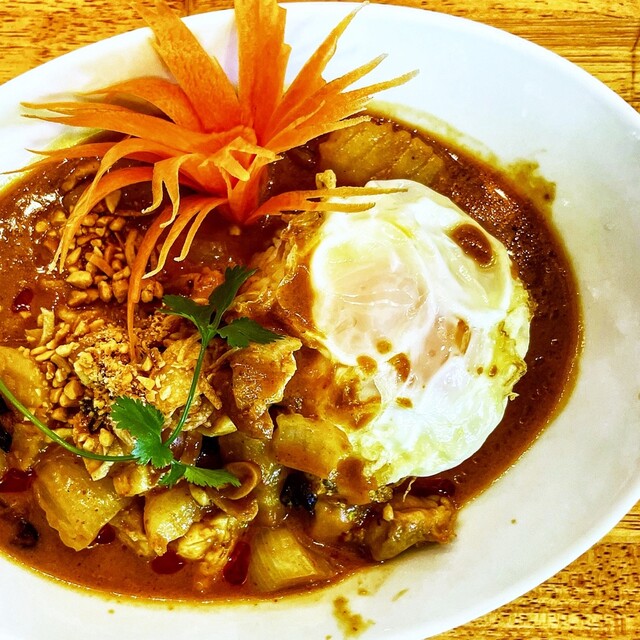
Approaching Thai food in Osaka through Ibaraki changes the frame. The city’s central dining corridors tend to reward spectacle, late-night density, and fast turnover; a 10-seat room outside the usual tourist orbit asks for a slower reading. Lemongrass House belongs to that smaller Kansai category where the physical container matters: close tables, limited capacity, and a room built for concentration rather than theatre.
That scale is not incidental. Thai restaurants in Japan often split between casual curry-and-noodle shops, student-friendly lunch counters, and more ambitious kitchens that treat regional seasoning, herbs, and heat as cuisine rather than decoration. The 2023 and 2024 Tabelog 100 Asian cuisine / Ethnic cuisine WEST selections put Lemongrass House in the latter conversation, not because awards define taste, but because this category is competitive across western Japan and tends to reward consistency over volume.
A 10-seat Thai room in Ibaraki, judged on precision rather than spectacle
Small dining rooms expose choices. There is less space for a concept to hide behind lighting, branding, or a sprawling menu. In a 10-seat Thai restaurant, the room itself becomes an editorial filter: service has to stay close, pacing has to be controlled, and the cooking has to carry the evening without the camouflage of scale. That is why Lemongrass House reads differently from the larger Thai venues clustered around busier Osaka districts.
Ibaraki also matters. North Osaka is not a single dining mood; it moves between commuter practicality, university-adjacent informality, and destination restaurants that draw diners beyond the central wards. A small Thai counter-room near Ibaraki Station fits that mix. It is neither a hotel-district export version of Thai food nor a backstreet drinking den built around snacks. Its competitive set is closer to Kansai’s specialist ethnic restaurants, the places diners seek out because the category has outgrown the idea that non-Japanese Asian cooking is merely casual.
The design story here is therefore one of compression. A 10-seat room narrows the margin for error and turns the meal into a compact social arrangement. In Osaka, where standing bars, ramen counters, kappo rooms, and tiny izakaya have long made intimacy feel normal rather than precious, that format gives Thai cooking a familiar Japanese dining grammar. The restaurant uses the small-room logic Osaka already understands, then applies it to a cuisine built on balance, acidity, aromatics, and heat.
Why the award signal matters for Osaka's ethnic dining tier
Tabelog’s Asian cuisine / Ethnic cuisine WEST list is a useful lens because it gathers restaurants that rarely sit inside the same Michelin-style prestige conversation as sushi, kaiseki, or French tasting menus. Selection in both 2023 and 2024 suggests repeat recognition in a field where price, informality, and neighbourhood location can make serious restaurants easy to underestimate. The point is not that a badge settles the question. The point is that it identifies a restaurant operating above the level of generic category dining.
Compared with Osaka specialists such as Ramen Shin, Menya Ikkei, and Menya Tsumugu, the appeal is not noodle-counter speed. Compared with Suigyoza no Mise Harbin, the reference point is not dumpling-house focus. Compared with Shouchiku Dou Suita yamada honten, the experience is not built around wagashi-style gifting or confectionery tradition. The restaurant sits in a narrower lane: Thai cooking, limited seating, and enough recognition to justify leaving the central Osaka circuit.
That distinction matters for visitors who already know the obvious Osaka script. The city is too often reduced to takoyaki, okonomiyaki, kushikatsu, and Dotonbori noise. Those foods matter, but the better reading of Osaka in 2026 includes how confidently the city absorbs outside cuisines into its own compact formats. Thai food here does not need to imitate Bangkok street chaos or hotel-lounge polish. It can exist in a small Kansai room, judged by regulars, platform scores, and repeat selection rather than imported theatrics.
How to place it within an Osaka eating itinerary
The restaurant makes sense as a corrective to central-ward dining fatigue. It is a restaurant for diners who value small rooms and category specificity, not a catch-all address for large groups or ceremony. The absence of private rooms and private-use format reinforces that point: this is a compact public dining room, not a flexible event space. Non-smoking status also changes the room’s rhythm, especially in a city where older small restaurants can still carry the memory of cigarette-era dining.
For a broader Osaka plan, use it as one specialist stop rather than a replacement for the city’s local staples. EP Club’s wider Osaka coverage gives the necessary range: start with Our full Osaka restaurants guide, then branch into hotel strategy through Our full Osaka hotels guide, drinking routes via Our full Osaka bars guide, regional cellar context in Our full Osaka wineries guide, and cultural planning through Our full Osaka experiences guide.
The surrounding restaurant map also shows how varied the city’s casual and specialist registers have become. A day might move from coffee at.cafe to bread at 52CHO-ME BAKERY, pork buns at 551 Horai (551蓬莱), pizza at 99 Pizza Napoletana Gourmet, or Italian cooking at a canto (Italian). Beyond Osaka, the same Japanese dining spread runs from -Grilled beef Sukiyaki- KAMAKURA TANUKIAN 鎌倉 たぬき庵 in Kamakura and. 鮪と炭火焼き うお炭 秋葉原店 in Tokyo to.know in Kumamoto, (Shoku) Vietnam in Kawasaki, [Curry Senmon Ten] Maruyama Kyoju. in Sapporo, and [ki:] in Kyoto. For Japanese food culture abroad, compare the restraint of Jōdo Saké Bar in Los Angeles with the focused simplicity of Onigiri Time in Pasadena.
The editorial case is clear: the restaurant is not valuable because it makes Thai food rare in Osaka. It is valuable because it places Thai cooking inside a disciplined, small-format Kansai dining room and has earned repeat recognition in a category that rewards exactness without requiring luxury signals. For travelers who want Osaka beyond the obvious food crawl, that is the more interesting argument.
Side-by-Side Snapshot
Comparable venues at the same tier for side-by-side context.
| Venue | Cuisine | Price | Notes |
|---|---|---|---|
| Lemongrass HouseThis venue — the venue you are viewing | Authentic Thai restaurant by Ibaraki Station | $$ | Not listed |
| Tabibito Chef no Thai Shokudo KHAO | Casual Thai Curry & Asian Ethnic Kitchen | $$ | Kita |
| CHEDI LUANG Yodoyabashi | Authentic Isaan Thai with buffet lunch | $$ | Chūō |
| Lime Light | Modern Chinese and wine bar | $$ | Osaka |
| Anello Stand | Casual Standing Bar with Western-Inspired Small Plates | $$ | Kita |
| Menroku menroku | Duck Ramen | $$ | Omine Motomachi |
Recognition history
Dated appearances from independent guides and award organizations, with the underlying list record or original source where available.
Tabelog 100 #83 · No. 83
Tabelog · Tabelog 100 - Asian cuisine / Ethnic cuisine - WEST - 2024
Continue exploring
More in Osaka
Restaurants in Osaka
Browse all →




Bars in Osaka
Browse all →

Hotels in Osaka
Browse all →


Wineries in Osaka
Browse all →
At a Glance
- Cozy
- Intimate
- Solo
- Casual Hangout
- After Work
- Date Night
- Standalone
- Street Scene
Current opening hours
- Monday
- Closed
- Tuesday
- 11:30 AM–2:30 PM, 5–11 PM
- Wednesday
- 11:30 AM–2:30 PM, 5–11 PM
- Thursday
- 11:30 AM–2:30 PM, 5–11 PM
- Friday
- 11:30 AM–2:30 PM, 5–11 PM
- Saturday
- 11:30 AM–2:30 PM, 5–11 PM
- Sunday
- 11:30 AM–2:30 PM, 5–11 PM
Hours can change for holidays and private events. Last verified .
A small, non‑smoking Thai restaurant with only ten seats, creating a cozy, intimate feel; photos and reviews suggest a casual, unpretentious space where the focus is on authentic Thai flavors rather than elaborate decor.