Lemon Tree

Michelin Plate
Our verdict
Holding a Michelin Plate for two consecutive years, Lemon Tree is a family-run restaurant in Letterkenny that puts County Donegal produce at the centre of its cooking. The menu draws on local farms, coastal suppliers, and regional seasonality, delivered in a clean, modern style with warmth that reads as genuine rather than rehearsed. At a single euro-sign price point, it represents the more accessible end of Ireland's recognised regional dining circuit.

Pearl is the En Primeur Club membership app — saves, bookings, and concierge access live there. Same editors, same standards.
- Address
- 32-34, Courtyard Shopping Centre, Lower main Street, Letterkenny, Co. Donegal, Ireland
- Phone
- +353 74 912 5788
- Hours
- Mon–Tue ClosedWed–Thu 5–9 PMFri–Sat 12:30–2:30 PM, 5–9 PMSun 5–9 PM
- Website
- thelemontreerestaurant.com
- Directions
- Get directions
- Booking
- Book on ResDiary
The menu
What to order
- Organic Mulroy Bay Mussels
- Salted Caramel Tart
- Ballyholey Farm Beetroot
- Noone Farm Chicken
Where Donegal Ends Up on the Plate
Letterkenny is not a city that figures prominently on Ireland's restaurant-tourism circuit. Positioned at the head of Lough Swilly in County Donegal, it functions primarily as a commercial hub for the northwest, with a main street built for practicality rather than atmosphere. That context matters, because it shapes what a restaurant here has to do: the room at Lemon Tree, set within the Courtyard Shopping Centre on Lower Main Street, asks no favours from its surroundings. The dining experience has to carry itself entirely on cooking and hospitality, without the tailwind of a scenic harbour view or a heritage building doing half the work. The fact that Michelin has awarded it a Plate in both 2024 and 2025 suggests it manages this without difficulty.
Ireland's regional dining scene has developed a recognisable pattern over the past decade: small, often family-operated restaurants, working with hyper-local supply chains, producing food that is more technically assured than their modest price points would suggest. You see this in places like Homestead Cottage in Doolin, Chestnut in Ballydehob, and House in Ardmore. Lemon Tree belongs to the same category. The cooking here is framed around what County Donegal actually produces, rather than what a certain type of restaurant is supposed to serve.
The Donegal Supply Chain
The sourcing philosophy at Lemon Tree is not an abstract commitment to provenance — it has a specific address. Ballyholey Farm, a short distance up the road from the restaurant, supplies vegetables that appear across the menu. This kind of named, proximate sourcing is what separates a restaurant genuinely embedded in its food region from one that deploys the language of locality without the supply chain to back it up. Donegal as a county offers a distinctive larder: Atlantic-caught fish from a coastline that runs from Malin Head to Donegal Bay, beef and lamb raised on terrain that imparts its own character, and vegetables grown in a cooler, wetter climate that produces particular sweetness in root crops and brassicas.
Across Ireland, the restaurants receiving sustained Michelin recognition outside Dublin tend to share this structural commitment to regional supply. Aniar in Galway has built its entire identity around terroir-driven Irish cooking, holding a Michelin star while operating on a similar philosophical axis. dede in Baltimore works the West Cork coastline with the same specificity. Lemon Tree operates at a more accessible price point than either of those, but the sourcing logic is comparable. The menu reflects the county it is in, which is a meaningful claim when the county in question is as geographically and agriculturally distinct as Donegal.
Family Operation, Modern Cooking
The service model at Lemon Tree is family-run in the most direct sense: siblings and cousins working the floor together. In an industry where hospitality can feel transactional, particularly in restaurants operating under any degree of critical recognition, this model produces a different quality of welcome.
The cooking itself is described as clean and modern, which in practice means classical technique applied to regional ingredients without the baroque elaboration that sometimes accompanies fine-dining ambition. This positions Lemon Tree differently from, say, Liath in Blackrock or Terre in Castlemartyr, where the cooking is more overtly ambitious in its technical register. Lemon Tree's equivalent at the other end of the Irish spectrum, in terms of price and ambition level, would be somewhere like Chapter One by Mickael Viljanen in Dublin, which operates in a completely different tier but shares the underlying conviction that Irish produce is worth taking seriously. The Letterkenny restaurant makes that same argument at a single euro-sign price point, which is its own kind of editorial statement.
Among the details that have emerged from diners and from Michelin's own notes on the restaurant, the salted caramel tart stands out as a consistent finish. Pastry is often where the discipline of a kitchen declares itself most clearly: a well-executed tart requires precision in pastry work, balance in filling, and restraint in sweetness calibration. The fact that this dish appears repeatedly in assessments of the restaurant suggests it is not an accident of a good night.
Letterkenny in Context
For a town of Letterkenny's scale, the presence of a twice-recognised Michelin Plate restaurant changes the calculus for a visit. Donegal is one of Ireland's most scenically compelling counties, with the Wild Atlantic Way passing through it, but dining infrastructure in the northwest has historically lagged behind the west and south coasts. A reliable, family-run room with Michelin acknowledgment and demonstrably high guest satisfaction gives visitors a reason to plan an evening around dinner rather than treating it as an afterthought. If you are already in Donegal for the landscape, the coast, or the Gaeltacht, Lemon Tree makes the argument that Letterkenny is worth a stop rather than a bypass.
The restaurant sits at 32-34 Courtyard Shopping Centre on Lower Main Street, a location that rewards prior knowledge over casual discovery. Knowing it is there is most of the work. For a broader picture of what Letterkenny offers visitors, see our full Letterkenny restaurants guide, as well as our guides to hotels, bars, experiences, and wineries in the area.
For comparison points in Ireland's broader regional dining circuit, the restaurants that occupy a similar position in their respective towns include Campagne in Kilkenny, Bastion in Kinsale, and Lady Helen in Thomastown. Each of these has built recognition by treating its immediate geography as a source rather than a backdrop. The pattern holds in other contexts too: Fahr in Künten-Sulz and Gannerhof in Innervillgraten demonstrate how the same model plays out in rural European settings where the local supply chain shapes the entire menu logic.
Planning Your Visit
Lemon Tree prices at the lower end of the Irish restaurant market, making it one of the more accessible entry points into Michelin-acknowledged cooking in the country. Phone and website details are not publicly listed in the standard databases, so booking directly through the restaurant's local channels or visiting in person to confirm availability is the practical approach. Arriving with a reservation rather than on spec is the sensible approach for anyone making a specific trip to Letterkenny for dinner.
Frequently asked questions
Does Lemon Tree work for a family meal?
How would you describe the vibe at Lemon Tree?
What should I eat at Lemon Tree?
At-a-Glance Comparison
| Venue | Cuisine | Price | Awards |
|---|---|---|---|
| Lemon TreeThis venue — the venue you are viewing | Modern Irish Seasonal | $30–50 | Michelin Plate |
| Patrick Guilbaud | Irish - French, Modern French | Not listed | Michelin 2 Star |
| Aniar | Modern Irish, Modern Cuisine | Not listed | Michelin 1 Star |
| Bastion | Progressive American, Modern Cuisine | Not listed | Michelin 1 Star |
| LIGИUM | Creative | Not listed | Michelin 1 Star |
| Host | Nordic, Modern Cuisine | Not listed | Not listed |
Recognition history
Dated appearances from independent guides and award organizations, with the underlying list record or original source where available.
Michelin Plate
Michelin
Full recognition history (3 entries)
Michelin Plate
Michelin
Michelin Plate
Michelin
Continue exploring
More in Letterkenny
Restaurants in Letterkenny
Browse all →
Bars in Letterkenny
Browse all →
Hotels in Letterkenny
Browse all →
Details
- Cozy
- Elegant
- Modern
- Intimate
- Date Night
- Family
- Group Dining
- Special Occasion
- Open Kitchen
- Standalone
- Beer Program
- Farm To Table
- Local Sourcing
- Organic
- A La Carte
- Wine
- Craft Beer
- Vegetarian Friendly
- Pescatarian Friendly
- Allergy Accommodating
Current opening hours
- Monday
- Closed
- Tuesday
- Closed
- Wednesday
- 5–9 PM
- Thursday
- 5–9 PM
- Friday
- 12:30–2:30 PM, 5–9 PM
- Saturday
- 12:30–2:30 PM, 5–9 PM
- Sunday
- 5–9 PM
Hours can change for holidays and private events. Last verified .
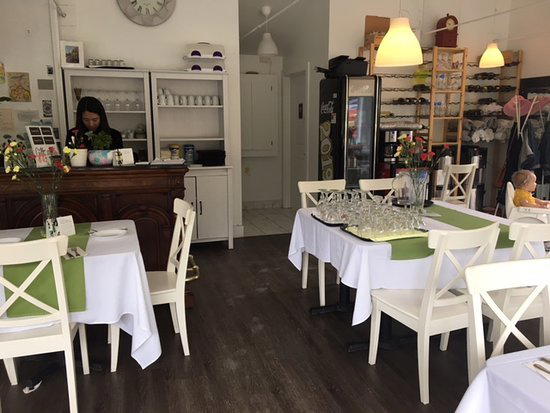
Clean, modern dining room with linen-clad tables and neutral color scheme; cozy and intimate in the evenings with an open kitchen as a focal point where diners can watch chefs work.