

Michelin Selected · World Travel Awards
Castle Leslie Estate in Glaslough, County Monaghan, holds the 2025 World Travel Awards title for Ireland's Leading Boutique Hotel. Set within a Victorian demesne on the Irish border, the estate occupies a tier of country house hospitality defined by scale, historical fabric, and deliberate remoteness. It sits in the same peer conversation as Ashford Castle and Ballyfin, but on notably quieter, less-trafficked ground.

Pearl is the En Primeur Club membership app, where members save venues, book tables and use the concierge.
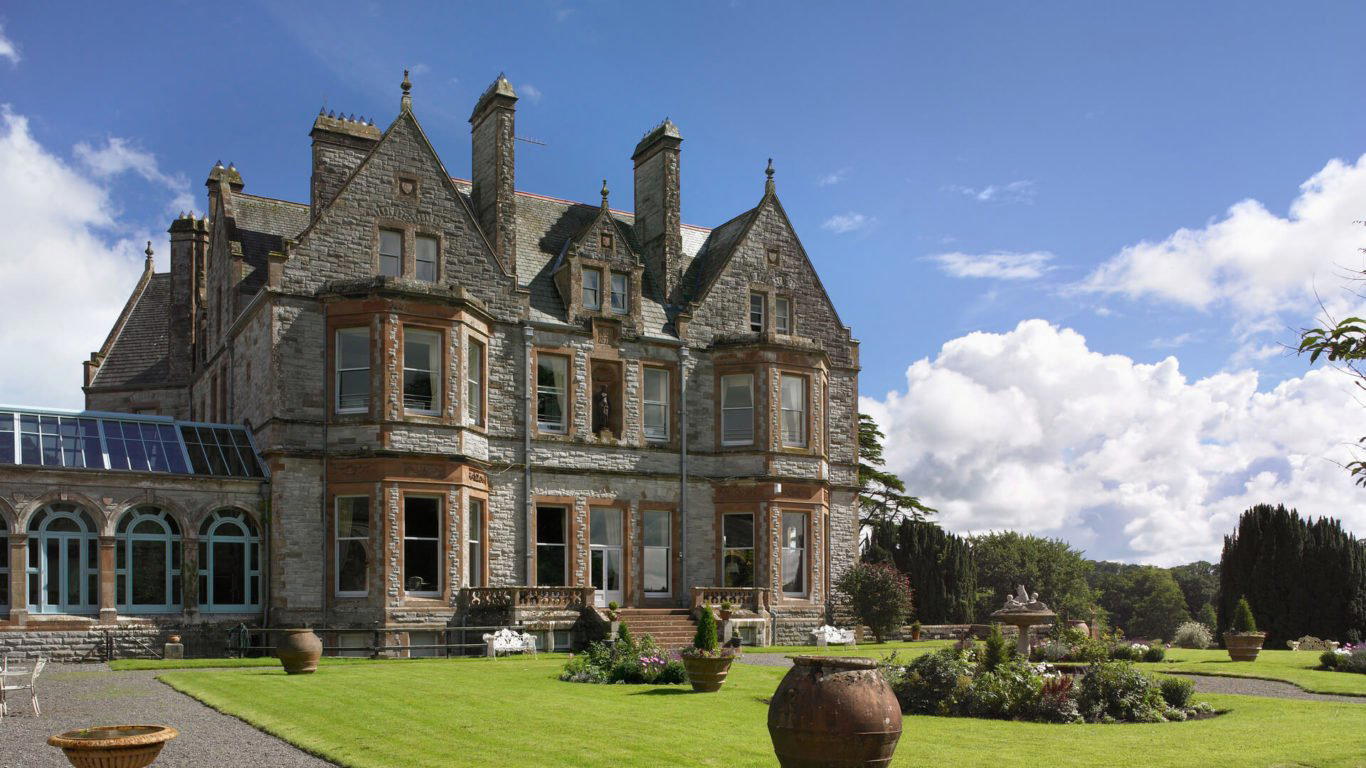
Where the Architecture Does the Talking
The road into Glaslough, a village so small it barely registers on most maps of County Monaghan, prepares you for almost nothing of what follows. Ireland's country house hotel tradition is well documented, from the grand castellated piles of Connacht to the Palladian estates of Leinster, but the northeast of the island operates at a quieter register. Castle Leslie Estate arrives without fanfare: a Victorian demesne of around 1,000 acres, a walled village, woodland walks, and a main house whose architectural bones predate the hotel category entirely. This is not a purpose-built resort dressed in heritage. It is heritage that learned, over time, to accommodate guests.
The estate sits within a broader Irish country house tier that includes properties such as Ashford Castle in Cong, Ballyfin Demesne in Ballyfin, and Adare Manor in Adare, all operating within the same premium country house conversation but with distinct physical identities. Ashford is lake-and-demesne spectacle. Ballyfin is Regency interiors taken to near-museum pitch. Castle Leslie occupies a different register: family-owned, deliberately low-profile in its marketing, and architecturally more layered than its competitors tend to be. The main house has Victorian Gothic additions grafted onto older foundations, and the estate's various accommodation buildings reflect different periods of the family's architectural decisions rather than a single coherent design moment.
The Physical Estate as Argument
Country house hotels in Ireland broadly divide between those that have been substantially refurbished toward a polished, international standard and those that have retained the textural irregularity of genuine long occupation. Castle Leslie sits firmly in the latter category. The collections inside the house, art, books, objects, are generational accumulations, not curated installations. Corridors do not match. Rooms are not standardised. This is the condition of a building that has been lived in, not one that has been art-directed into a simulacrum of living. For a cohort of travellers, this is precisely the point. For others accustomed to the seamlessness of, say, Aman New York or The Fifth Avenue Hotel, the unevenness requires an adjustment of expectations.
The accommodation across the estate spans the castle itself and a range of lodge and courtyard options that carry a different architectural character from the main house. This gives the property a flexibility that single-building estates lack: guests choosing the castle rooms are signing up for a particular kind of Victorian interior experience, while lodge accommodation operates closer to the comfortable country retreat end of the spectrum. The distinction matters when booking, and it accounts for much of the variance in how different guests experience the estate.
The equestrian facilities at Castle Leslie are among the most substantive attached to any Irish hotel, with a reputation that extends across the country house hospitality circuit as a genuine operational programme rather than a decorative amenity.
Awards Position and Competitive Placement
2025 World Travel Awards recognition as Ireland's Leading Boutique Hotel places Castle Leslie in a category defined by scale and ownership character rather than star rating or chain affiliation. The boutique designation is meaningful here: it signals a property that competes on distinctiveness of experience rather than breadth of facilities. That positions it differently from the larger-footprint castle hotels, and more closely alongside properties like Gregans Castle Hotel in Ballyvaughan, Liss Ard Estate in Skibbereen, and Ballyvolane House in Castlelyons, each of which operates within a family-owned, character-led framework.
Among the broader set of Irish castle and estate hotels, the geography works in Castle Leslie's favour for a specific traveller profile. County Monaghan sits close to the Northern Ireland border, making the estate accessible from Belfast in under two hours and from Dublin in approximately ninety minutes. This positions it as a credible weekend destination for either city without the longer drive required to reach the more celebrated western properties. Properties like Dromoland Castle in Newmarket on Fergus or Kilronan Castle Estate and Spa in Ballyfarnon draw from different catchment patterns and rarely compete directly for the same weekend market.
What to Know Before Booking
Planning a stay at Castle Leslie requires a decision at the accommodation level before arrival: the castle rooms and the lodge or courtyard options are sufficiently different in character that they effectively deliver two distinct experiences under the same estate umbrella. Travellers drawn specifically to the Victorian architectural fabric of the main house should confirm their reservation within the castle itself rather than assuming all accommodation shares the same aesthetic. This is a common point of confusion at multi-building estate properties and worth clarifying at the booking stage.
The estate's remoteness is a feature, not a logistical inconvenience, but it does mean that dining within the property becomes the default for most evenings. Glaslough village offers very limited independent options beyond the estate. This is worth factoring into expectations, particularly for longer stays. Guests who have stayed at comparably remote properties, such as Ballyfin in Laois or Lough Eske Castle in Donegal, will recognise the pattern: the estate functions as a self-contained environment, and the dining and activity programme within it carries more weight than it would at an urban property. For further context on the Glaslough area and what surrounds the estate, see our full Glaslough restaurants guide.
Advance booking is the standard operating assumption for castle room categories, particularly across the spring and summer calendar when the estate draws wedding and event traffic alongside leisure guests. The boutique scale of the property means availability at peak periods is genuinely constrained, and the award recognition tends to drive enquiry volume further in the months following announcement cycles.
The Broader Irish Estate Conversation
Ireland's estate hotel tier has deepened considerably over the past decade, with investment reaching properties that were previously operating well below their architectural potential. Newer entrants like Cashel Palace in Cashel and the repositioning of Kilkea Castle in Castledermot have raised the baseline, while long-established properties have had to clarify their positioning within an increasingly competitive field. The mid-range urban alternatives, including Number 31 in Dublin and Hotel Isaacs Cork in Cork, compete in a different tier entirely, but they illustrate the range of boutique hospitality now available across the island.
Within that context, Castle Leslie's position is clearest when framed by what it is not: it is not a resort hotel with a spa as its primary draw; it is not a Michelin-destination dining property; it is not a chain-managed property with standardised service protocols. The 2025 World Travel Award reflects a category where the accumulated character of the physical estate and the continuity of independent ownership carry more weight than the polish of a recent refurbishment cycle. Among Irish properties in that specific bracket, few carry a longer or more legible history.
Fast Comparison
Comparable venues nearby, for context on price, style, and recognition.
| Venue | Cuisine | Price | Awards | Notes |
|---|---|---|---|---|
| Castle Leslie EstateThis venue (the venue you are viewing) | Historic estate with castle, lodge, and mews accommodations | Not listed | Michelin Selected · World Travel Awards | Not listed |
| Stilt House | Contemporary minimalist treehouse retreat with Scandinavian design influences and sustainable eco-lodge principles. | Not listed | Not listed | Connemara |
| Kilkea Castle | Historic castle estate reimagined as a luxury resort, blending medieval architecture with contemporary amenities across 180 acres of manicured gardens and woodland. | $100–200 | Not listed | Castledermot |
| The College Green Hotel, Autograph Collection | Historic luxury in Georgian-style building with modern Irish design | $300–500 | Michelin Selected · Virtuoso Luxury Hotel Partner | Mansion House A |
| Powerscourt Hotel, Autograph Collection | Palladian-style architecture luxury resort | Not listed | Michelin Guide New Hotels New Hotel · Michelin Selected | Enniskerry |
| The Fitzwilliam Hotel Dublin | 5-star boutique luxury hotel | $300–500 | 1 Michelin Key · Virtuoso Luxury Hotel Partner | Royal Exchange B |
Recognition history
Dated appearances from independent guides and award organizations, with the underlying list record or original source where available.
Michelin Selected
Michelin
World Travel Awards
World Travel Awards
Continue exploring
More in Glaslough
Hotels in Glaslough
All hotels in Glaslough →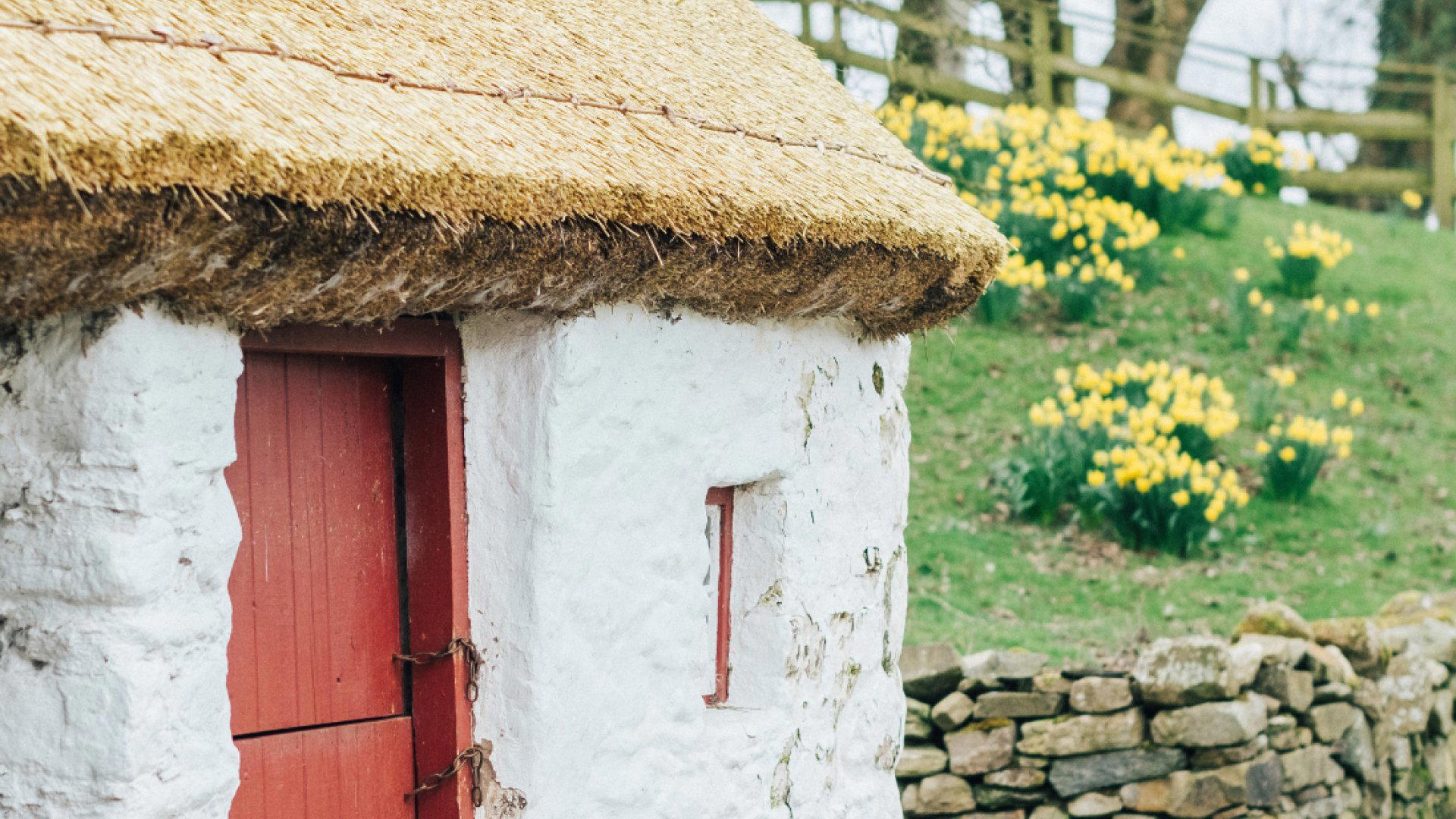
Restaurants in Glaslough
Browse all →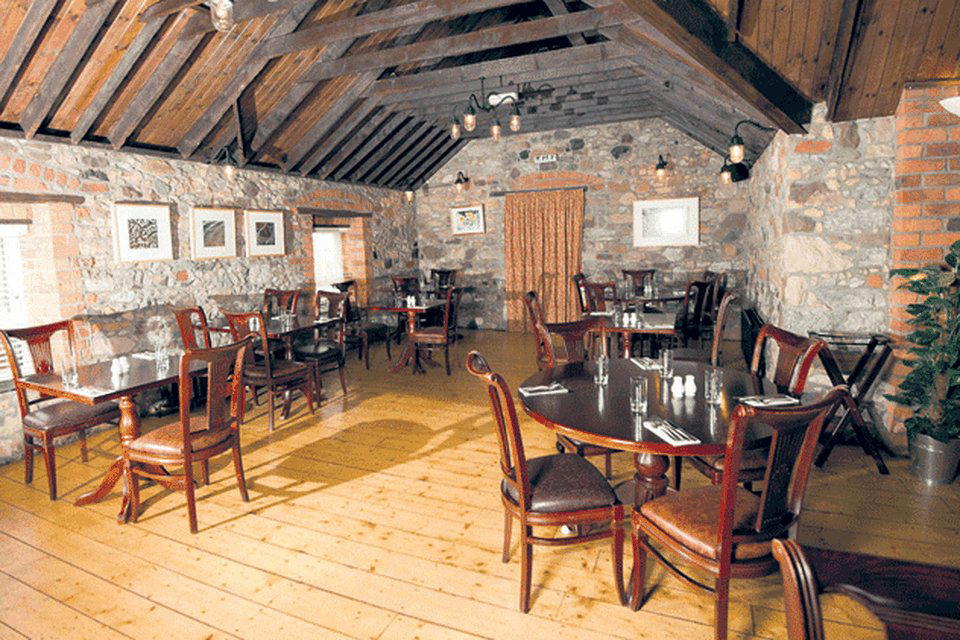
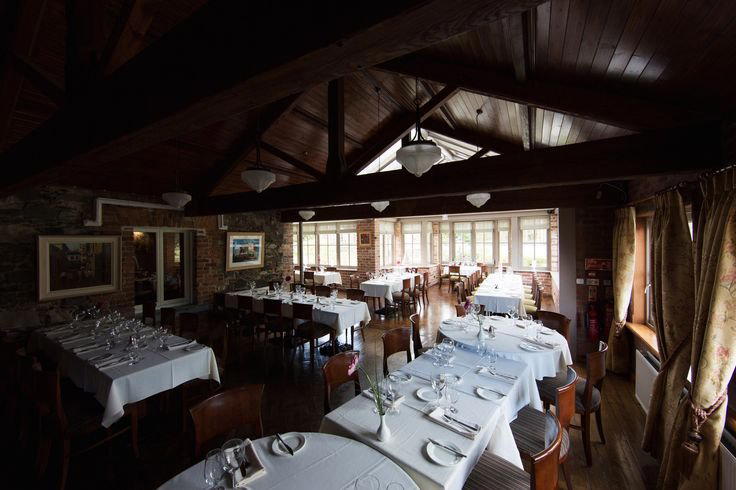
Details
- Romantic
- Elegant
- Classic
- Scenic
- Ornate
- Romantic Getaway
- Honeymoon
- Wedding
- Wellness Retreat
- Weekend Escape
- Historic Building
- Garden
- Wi Fi
- Pool
- Spa
- Room Service
- Concierge
- Restaurant
- Fitness Center
- Sauna
- Garden
- Wheelchair Accessible
- Elevator
Tranquil old-world grandeur with crackling log fires, elegant drawing rooms, and panoramic garden and lake views.