Artis by Phelim O'Hagan


Michelin Plate · The Sunday Times Ireland’s 100 Best Restaurants
Our verdict
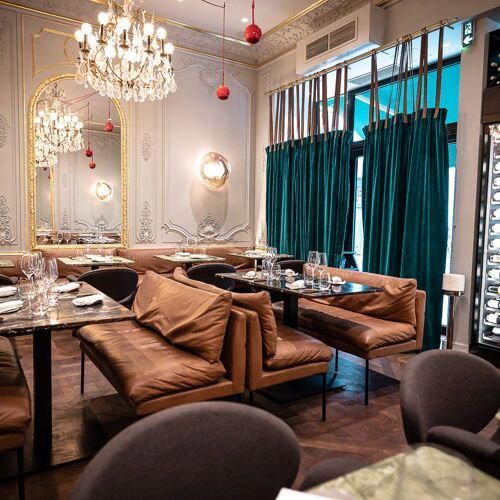
Holding two consecutive Michelin Plates (2024 and 2025), Artis by Phelim O'Hagan occupies a quiet corner of the Craft Village in Londonderry, its name drawn from the Latin for 'craft'. The two-roomed restaurant trades in clean, technically accomplished Modern British cooking built on local produce and trusted regional suppliers, with desserts that consistently draw attention. Neutral tones and warm service keep the atmosphere composed throughout.

Pearl is the En Primeur Club membership app — saves, bookings, and concierge access live there. Same editors, same standards.
- Address
- 29-31, Craft Village, Londonderry BT48 6AR, United Kingdom
- Phone
- +44 28 7126 1212
- Hours
- Mon–Tue ClosedWed–Thu 5–9 PMFri–Sat 12–2 PM, 5–9 PMSun Closed
- Website
- artisatcraftvillagederry.com
- Directions
- Get directions
The menu
What to order
- Wild Turbot with Scallop Roe Mousse
- Donegal Dexter Stuffed Beef Striploin
- North Atlantic Cod
- Sticky Toffee Pudding Soufflé
Where the Craft Village Sets the Scene
The Craft Village in Londonderry is a deliberate anachronism: a cobbled enclave of artisan traders and small independents tucked inside the old city walls, built to preserve a kind of commercial intimacy that larger streets in the city centre have long since lost. It is the kind of address that signals intent before you reach the door. Restaurants that choose it tend to mean something by the choice. Artis by Phelim O'Hagan, at 29-31 Craft Village, sits within that context and takes its name directly from the Latin for 'craft', a statement of position as much as anything else.
The physical approach matters here. The Craft Village has none of the ambient noise of a high street, which means that arriving at Artis carries a specific quality of quiet that many dining rooms spend considerable effort trying to manufacture. The two-roomed interior extends that atmosphere inward: neutral hues, an absence of decorative clutter, and service that the Michelin inspectors who awarded consecutive Plates in 2024 and 2025 noted as warm. This is a room designed to stay out of its own way and let the cooking speak.
Modern British Cooking in a Northern Irish Context
Broader Modern British category now spans a considerable range, from the three-Michelin-starred technical ambition of CORE by Clare Smyth in London to neighbourhood restaurants operating at a fraction of that scale and price. At the £££ price point, Artis occupies a tier where kitchens are expected to demonstrate real technique without the insulation of a metropolitan dining budget or a destination reputation that self-selects for high-tolerance diners. That is a harder position to hold than it looks.
Northern Ireland's food identity has shifted considerably over the past decade. The region's producers, particularly in dairy, meat, and coastal seafood, have developed a credibility that places them comfortably alongside suppliers feeding kitchens in London, Edinburgh, and Dublin. Artis is structured around that production base, working with local suppliers whose output is specific enough to shape what appears on the plate. The dishes that result are described as clean and contemporary, technically accomplished without the kind of baroque elaboration that can flatten ingredient quality under technique.
For comparison within the broader Modern British conversation, venues like Hand and Flowers in Marlow and hide and fox in Saltwood have demonstrated what regionally grounded, technically serious cooking can achieve outside London's gravitational pull. Artis operates within the same logic, applied to Londonderry's specific larder and geography. The Michelin Plate recognition, awarded in both 2024 and 2025, places it alongside venues the guide considers worth knowing about: not yet starred, but already past the point where the food is merely competent.
The Reinvention of Local Dining
The trajectory of serious cooking in smaller British and Irish cities follows a recognisable pattern. A decade ago, the assumed route for ambitious chefs trained in high-end kitchens was to move toward London, Edinburgh, or Dublin. The restaurants that stayed regional tended to anchor themselves to a gastropub format or lean heavily on tourist trade. That model has been disrupted, not by any single event but by a generational shift in how chefs think about place. Londonderry is part of that story. Browns Bonds Hill is among the better-known names in the city's restaurant set, but Artis represents something specific: a small, composed, technically serious operation that has accumulated Michelin recognition without the volume or profile of a destination venue.
The dessert course at Artis has drawn particular comment, consistently noted as a high point. In the grammar of a Modern British tasting menu, desserts are often where the kitchen's character is most clearly expressed, partly because savoury courses carry more structural obligation. A kitchen that makes its desserts a reliable highlight across multiple services is making a considered choice about where to invest precision.
This pattern of regional seriousness is visible across the UK: L'Enclume in Cartmel, Moor Hall in Aughton, and Midsummer House in Cambridge have each built their reputations from outside major metropolitan centres. What they share with Artis is a commitment to place as a structural ingredient rather than a marketing frame. Gidleigh Park in Chagford, Le Manoir aux Quat' Saisons in Great Milton, and Opheem in Birmingham each illustrate a different version of this, as do The Fat Duck in Bray and 33 The Homend in Ledbury. The common thread is that regional positioning, handled with discipline, becomes a competitive advantage rather than a limitation.
Planning a Visit
Artis is priced at £££, which places it above casual dining but well below the £££££ tier occupied by London's starred flagships. The Craft Village address, BT48 6AR, is within the city walls and accessible from the centre on foot. For visitors building a wider itinerary, our full Londonderry restaurants guide maps the broader dining picture, while our Londonderry hotels guide, bars guide, wineries guide, and experiences guide cover the full range. The Ritz Restaurant in London represents one end of the Modern British spectrum; Artis occupies a different and more intimate point on the same line.
What the Michelin Plate Tells You
Two consecutive Michelin Plates, in 2024 and 2025, carry a specific meaning within the guide's current framework. The Plate designation identifies restaurants where the food quality is considered good enough to merit attention, distinct from Bib Gourmand recipients (which signal value) and from starred venues (which signal exceptional cooking). It is, in effect, the guide's way of marking a kitchen worth tracking. For a two-roomed restaurant in Londonderry's Craft Village, consecutive recognition in both years suggests a kitchen operating with consistency rather than occasional brilliance, which is the harder quality to maintain.
Frequently asked questions
What's the must-try dish at Artis by Phelim O'Hagan?
The dessert course is the detail that recurs most consistently in accounts of eating at Artis. Within a menu built around clean, contemporary Modern British cooking sourced from trusted local suppliers, the desserts are singled out as a highlight in Michelin's own notes on the restaurant, which has held the Plate designation in both 2024 and 2025.
How much does it cost to eat at Artis by Phelim O'Hagan?
Pricing at Artis by Phelim O'Hagan is listed as £££.
Comparison Snapshot
| Venue | Cuisine | Price | Awards |
|---|---|---|---|
| Artis by Phelim O'HaganThis venue — the venue you are viewing | Modern British Fine Dining | $50–100 | Michelin Plate · The Sunday Times Ireland’s 100 Best Restaurants |
| The Ledbury | Modern European, Modern Cuisine | Not listed | Michelin 3 Star |
| Sketch, The Lecture Room and Library | Modern French | Not listed | Michelin 3 Star |
| CORE by Clare Smyth | Modern British | Not listed | Michelin 3 Star |
| Restaurant Gordon Ramsay | Contemporary European, French | Not listed | Michelin 3 Star |
| Dinner by Heston Blumenthal | Modern British, Traditional British | Not listed | Michelin 2 Star |
Recognition history
Dated appearances from independent guides and award organizations, with the underlying list record or original source where available.
Michelin Plate
Michelin
The Sunday Times Ireland’s 100 Best Restaurants
The Sunday Times
Full recognition history (4 entries)
Michelin Plate
Michelin
Michelin Plate
Michelin
Continue exploring
More in Londonderry
Restaurants in Londonderry
Browse all →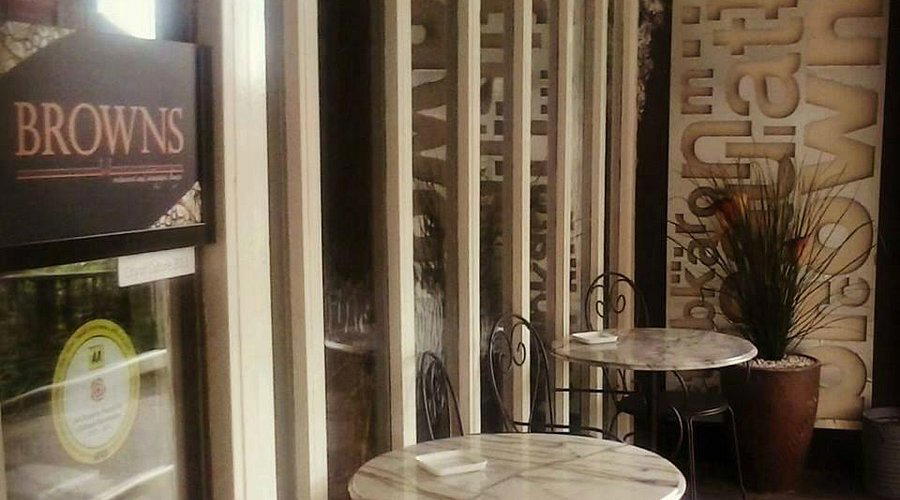
Bars in Londonderry
Browse all →
Hotels in Londonderry
Browse all →
Details
- Elegant
- Sophisticated
- Modern
- Intimate
- Date Night
- Special Occasion
- Celebration
- Open Kitchen
- Private Dining
- Standalone
- Beer Program
- Farm To Table
- Local Sourcing
- Tasting Menu
- A La Carte
- Set Menu
- Wine
- Craft Cocktails
- Beer
- Vegetarian Friendly
- Vegan Options
- Gluten Free Options
- Allergy Accommodating
Current opening hours
- Monday
- Closed
- Tuesday
- Closed
- Wednesday
- 5–9 PM
- Thursday
- 5–9 PM
- Friday
- 12–2 PM, 5–9 PM
- Saturday
- 12–2 PM, 5–9 PM
- Sunday
- Closed
Hours can change for holidays and private events. Last verified .
Serene and refined with neutral hues, warm service, and modern décor creating an upscale yet welcoming atmosphere.