Le Vieux Crapaud occupies a quietly significant address on Rue Lauriston in the 16th arrondissement, a neighbourhood where serious cellars and classical French technique have coexisted for decades. The wine list positions the house inside a specific tier of Parisian dining where curation depth matters as much as what arrives on the plate. For readers cross-referencing the 16th's established dining circuit, this address warrants attention.
Pearl is the En Primeur Club membership app — saves, bookings, and concierge access live there. Same editors, same standards.
- Address
- 16 Rue Lauriston, 75116 Paris, France
- Phone
- +33173757010
- Website
- levieuxcrapaud.fr
- Directions
- Get directions
 Saves & bookings on Pearl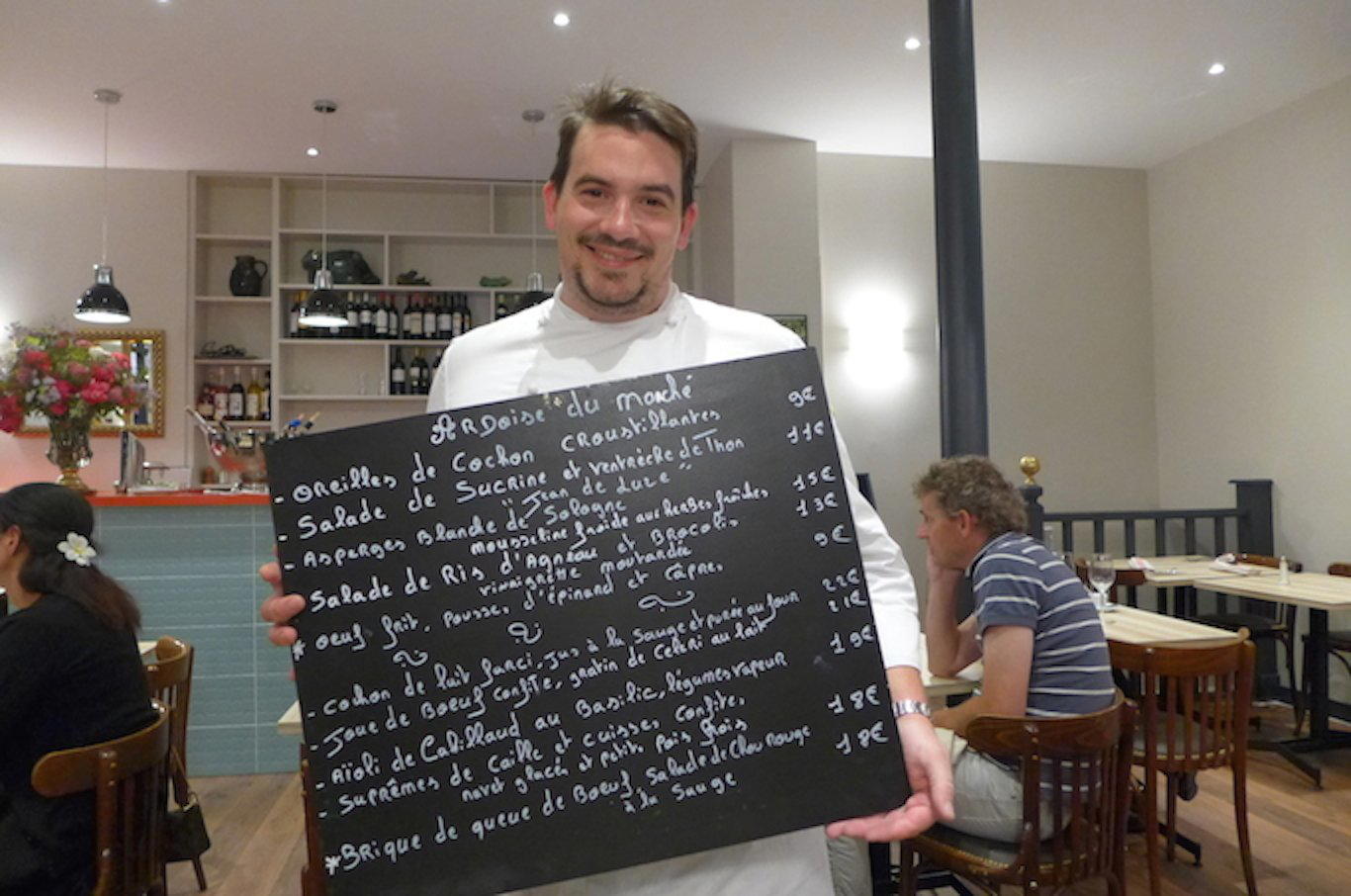
The 16th Arrondissement and the Art of the Serious Cellar
Paris's 16th arrondissement has never chased trends. While the 11th and the Marais absorbed the city's natural-wine bars and bistronomie wave, the 16th held its position: long-standing addresses, formal service registers, and cellars assembled over years rather than seasons. Rue Lauriston sits inside that tradition. The street has housed serious French cooking since at least the mid-twentieth century, and the dining rooms along it reflect a city that still believes a wine list is a document of intent, not a beverage afterthought. Le Vieux Crapaud occupies number 16 within that context.
That broader pattern, across the arrondissement and across comparable addresses in the 8th and 17th, is one of cellar depth as a primary signal of positioning. Where a restaurant in the 10th might stake its reputation on a curated list of thirty producers, the upper tier of the 16th has historically organised itself around scale and age: Burgundy going back fifteen or twenty vintages, Bordeaux with vertical depth on the classified growths, Loire rarely seen outside specialist merchants. It is a different grammar entirely, and Le Vieux Crapaud sits inside it.
Wine as the Organizing Principle
French fine dining has spent the last decade reassessing what a sommelier programme actually signals about a house. In the years when Alléno Paris au Pavillon Ledoyen was building its reputation for technical ambition and Le Cinq at the Four Seasons George V was assembling among the more discussed cellars in the city, the conversation in serious dining rooms shifted. Wine stopped being a revenue line and became an editorial statement. Addresses that held depth in older Burgundy and Rhône, that could offer a grower Champagne alongside a negotiant, that kept half-bottles of serious Alsace for solo diners, moved into a different conversation from those that did not.
The 16th's most studied wine rooms have typically followed a French-first logic: Burgundy as the spine, Bordeaux as the reference point, with regional France filling the gaps rather than international labels providing the talking points. That philosophy mirrors what you find at L'Ambroisie on the Place des Vosges, where the list operates as a direct expression of classical priorities. It also connects to what the leading provincial houses have demonstrated over time: Auberge de l'Ill in Illhaeusern and Auberge du Vieux Puits in Fontjoncouse have each built generational cellars that treat wine as inheritance rather than inventory. Le Vieux Crapaud's address and register place it in that lineage rather than in the contemporary natural-list scene.
Classical French Cooking in Its Competitive Tier
The cooking tradition at this kind of Parisian address runs through the great codified preparations of the French repertoire: stocks built over hours, sauces finished with precision, protein treated as the centrepiece around which technique demonstrates itself. That is a distinct proposition from what Kei offers on Rue Coq Héron, where Japanese rigour is applied to French product, or from the creative register at Arpège, where vegetable sourcing has reshaped the entire grammar of the menu. Classical French, at its better addresses, is not a conservative default. It is a technical commitment that requires the kitchen to have nowhere to hide.
Provincial France has produced particularly durable examples of this mode. Paul Bocuse's Auberge du Pont de Collonges in Collonges-au-Mont-d'Or is frequently cited reference point; Troisgros in Ouches, and Bras in Laguiole, extended the tradition in different directions. In Paris itself, the classical houses of the 16th and 8th have operated as urban nodes of the same sensibility. The competition for that dining slot is real: Assiette Champenoise in Reims and Au Crocodile in Strasbourg draw the same audience from outside Paris when they travel regionally. Within the city, the 16th's classical addresses compete most directly with each other and with the palace hotel dining rooms.
The contrast with what French chefs are doing elsewhere is instructive. AM par Alexandre Mazzia in Marseille and Mirazur in Menton represent the Mediterranean-inflected, produce-driven end of French three-star cooking. Flocons de Sel in Megève situates itself within Alpine tradition. The restaurant's Parisian address puts it in none of those regional conversations: it operates within the capital's own hierarchy, where neighbourhood, formality register, and cellar depth do most of the positioning work.
How This Address Sits in a Broader Dining Circuit
Readers building a Paris itinerary around serious French cooking typically anchor on the obvious starred addresses, then look for what fills the adjacent tier. The 16th's classical houses occupy a specific slot in that planning exercise: more formal than a bistronomie table, less engineered for spectacle than a palace hotel dining room, oriented toward the kind of extended lunch that remains a Parisian institution even as it has largely disappeared from other major cities. The broader circuit runs from the 8th's grand addresses to the Left Bank's tighter, producer-focused rooms.
For international context, the Paris classical tier competes for the same audience that flies to New York for Le Bernardin or Atomix. The proposition is different: those New York addresses work from tighter, more precisely engineered formats, whereas the Paris classical room still offers a more expansive, multi-hour experience built around service theatre and cellar access.
- Crispy pig's ear with mustard
- Frogs with persillade
- Grilled snails from Hungary
- Calf sweetbread with lemon
- Foie gras
- Duck confit
A Tight Comparison
Comparable venues nearby, for context on price, style, and recognition.
| Venue | Cuisine | Price | Notes |
|---|---|---|---|
| Le Vieux CrapaudThis venue — the venue you are viewing | Passy, Classic French Bistro | $$$ | Not listed |
| Bistrot Belhara | Not listed | $$$ | 7th Arrondissement, Modern French Bistro with Basque Influences |
| La Véraison | Not listed | $$$ | 15th arrondissement (Necker), Modern French Bistronomic |
| Le Récamier | Not listed | $$$ | 7th Arr., Classic French Soufflé Specialist |
| Club Cochon | Not listed | $$$ | 9th arrondissement, Traditional French Bistro with Charcuterie |
| Au petit Panisse | Not listed | $$$ | 11th Arrondissement, Modern French Bistro |
Continue exploring
More in Paris
Restaurants in Paris
Browse all →

Bars in Paris
Browse all →
Hotels in Paris
Browse all →



At a Glance
- Classic
- Rustic
- Cozy
- Intimate
- Group Dining
- Casual Hangout
- Standalone
- Extensive Wine List
- Local Sourcing
Current opening hours
- Monday
- 12–2 PM, 7–10 PM
- Tuesday
- 12–2 PM, 7–10 PM
- Wednesday
- 12–2 PM, 7–10 PM
- Thursday
- 12–2 PM, 7–10 PM
- Friday
- 12–2 PM, 7–10 PM
- Saturday
- Closed
- Sunday
- Closed
Hours can change for holidays and private events. Last verified .
Airy dining room with well-spaced seating for 42, decorated with hunting trophies (pheasant, boar, goose, antlers) that evoke rural roots; relaxing and earnest atmosphere with minimal traditional bistro decoration.