Michelin Plate
Our verdict
A Michelin Plate-recognised French restaurant in central Nara, LE UN delivers considered European cooking at the ¥¥¥ price point in a city better known for temples and deer than fine dining. Consecutive Michelin Plate recognition in 2024 and 2025 signals sustained kitchen consistency. For visitors pairing Nara's cultural itinerary with serious food, it represents one of the more focused French options in the prefecture.

Pearl is the En Primeur Club membership app, where members save venues, book tables and use the concierge.

The menu
What to order
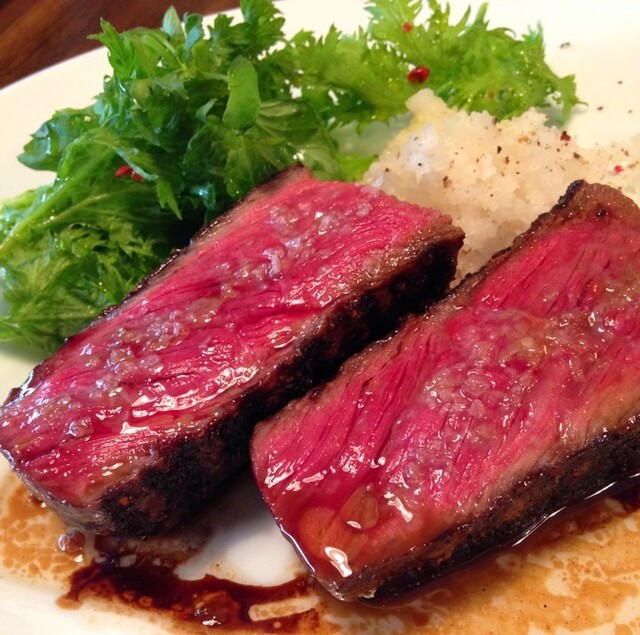
- Cedar-broiled Wagyu Beef
- Nara Farm Garden Salad with Poultry Jus
- White Asparagus Velouté with Saké Lees Crème
- Charcoal-Roasted Japanese Sea Bream
- Sake Lees Panna Cotta
- Broccoli Soup
French Cooking in a City That Rarely Gets Credit for It
Nara's reputation rests on antiquity: the Tōdai-ji lanterns, the roaming deer of Nara Park, the compressed walking distances between UNESCO-listed sites. What the city does not carry, in most visitors' mental maps, is a French dining scene worth detour. That assumption is increasingly worth revising. A small cluster of European-inflected restaurants has taken hold here, sitting at the same ¥¥¥ price tier as comparable rooms in Kyoto and Osaka but operating with less competition for the same calibre of diner. LE UN, at 4 Nishijodocho, holds Michelin Plate recognition for both 2024 and 2025, consecutive years of acknowledgement from a guide that is disciplined about consistency before it rewards ambition.
The Michelin Plate designation is sometimes misread as a consolation category, but in practice it functions as a quality floor. It signals that the guide's inspectors found the cooking competent and purposeful enough to single out without yet awarding a star. In Nara's context, where the competition for French dining recognition is narrower than in Osaka or Kyoto, consecutive Plate recognition carries proportionally more weight.
What the ¥¥¥ Tier Buys You Here
Across Japan's recognised French dining scene, the ¥¥¥ bracket covers a wide range of ambition. At one end sit tight, technically fluent rooms where the cooking is serious and the room is modest. At the other sit elaborately staged tasting formats where the price climbs toward ¥¥¥¥ territory in all but categorisation. LE UN sits in the former register. The Nara address means that its pricing operates against a local cost base rather than the premium land values of Ginza or Minami. For a visitor already spending on accommodation and transport to reach Nara, the value arithmetic shifts favourably: Michelin-acknowledged French cooking, without the metropolitan markup that the same recognition would command in Tokyo or at Sézanne in Tokyo.
That score, held across a meaningful sample size, suggests the kitchen delivers reliably rather than performing for occasional high-profile visits. In a city with modest tourist-dining infrastructure relative to its cultural draw, reliability is not a small thing.
Nara's Broader Dining Map
The French presence in Nara is more concentrated than it might initially appear. Within the same ¥¥¥ tier, La Terrasse irisée and LA TRACE both operate European-inflected programs, while à plus and A VOTRE SANTE round out the French-adjacent options in the city. Bon appétit Meshiagare covers a more casual register within the same broad French tradition. This clustering is characteristic of smaller Japanese cities that attract culturally motivated visitors: a few kitchens with European training have established themselves in the gaps between the city's dominant kaiseki and traditional Japanese formats, finding an audience among both domestic visitors from Osaka and Kyoto and international travellers who arrive wanting something other than another elaborate multi-course Japanese meal.
Nara's French cluster does not operate in direct competition with the kaiseki tradition. Rooms like Wa Yamamura address a different appetite entirely, and the city's sushi format, represented by venues like Araki, pulls from a separate diner pool. LE UN and its French-aligned peers occupy their own niche: European technique, Japanese ingredient access, mid-range pricing, and Michelin oversight as the credentialing framework.
The regional comparison sharpens the value case. HAJIME in Osaka and Gion Sasaki in Kyoto represent the upper tier of Kansai's recognised dining, operating at price points and reservation pressures that put them in a different planning category. Harutaka in Tokyo, Goh in Fukuoka, 1000 in Yokohama, and 6 in Okinawa each sit within their own city's competitive structures. LE UN's position in Nara means it operates in a less saturated context, which shapes both its pricing logic and its accessibility to the visitor who plans a Nara day trip from Osaka or Kyoto and wants a meal that anchors the cultural itinerary with something deliberate.
Planning a Visit
LE UN is located at 4 Nishijodocho in central Nara, within reach of the city's main historic sites. The ¥¥¥ price range places it at a level appropriate for a considered dinner or lunch rather than a casual stop between temples. Given the modest scale typical of Nara's recognised French rooms, advance reservation is sensible, particularly on weekends and during autumn leaf and spring blossom periods when visitor numbers in the city increase substantially. For further context on the city's food and hospitality options, see our full Nara restaurants guide, our full Nara hotels guide, our full Nara bars guide, our full Nara wineries guide, and our full Nara experiences guide.
Frequently asked questions
Is LE UN suitable for children?
LE UN operates in the ¥¥¥ price tier with two consecutive Michelin Plate recognitions, positioning it as a formal sit-down French restaurant rather than a casual family venue. Children comfortable with a structured, multi-course dining format would be a reasonable fit; younger or restless diners would likely find the setting mismatched. Confirming suitability directly with the restaurant before booking is advisable.
Is LE UN formal or casual?
The ¥¥¥ price range and back-to-back Michelin Plate awards (2024 and 2025) point to a setting that leans formal rather than relaxed. French cuisine at this price tier in Japan typically carries structured service and a composed dining room. The venue's address in central Nara, away from the city's tourist-facing food stalls, reinforces that positioning.
Is LE UN award-winning?
LE UN has received recognition including: Michelin Plate (2025); Michelin Plate (2024).
What's the signature dish at LE UN?
Given the French cuisine classification and Michelin Plate standing, the kitchen is likely organised around classical technique and seasonal produce, as is standard across comparable ¥¥¥ French rooms in Japan. Checking the restaurant directly will give the most accurate picture of current menu focus.
What should I expect cuisine-wise at LE UN?
Budget Reality Check
| Venue | Cuisine | Price | Awards | Notes |
|---|---|---|---|---|
| LE UNThis venue (the venue you are viewing) | French-Japanese Fusion Fine Dining | $100–150 | Michelin Plate | Not listed |
| akordu | Modern Spanish with Nara Influences | $150–200 | 2 Michelin Stars · La Liste Top Restaurants | Spanish, Innovative |
| Wa Yamamura | Traditional Kaiseki | $100–150 | 1 Michelin Star | Kaiseki, Japanese |
| Araki | Seasonal Japanese Tempura and Kaiseki | $100–150 | Michelin Plate · Tabelog Bronze #23 | Sushi, Japanese |
| Tama | French with Local Nara Ingredients | $50–100 | Michelin Plate | Okinawan, French |
| NARA NIKON | Kaiseki | $150–200 | 2 Michelin Stars · La Liste Top Restaurants | Japanese |
Recognition history
Dated appearances from independent guides and award organizations, with the underlying list record or original source where available.
Michelin Plate
Michelin
Full recognition history (3 entries)
Michelin Plate
Michelin
Michelin Plate
Michelin