On a quiet residential street in the 14th arrondissement, Le Saut du Crapaud occupies a corner of Paris that most visitors never reach. The address at 16 Rue des Plantes puts it squarely in a neighbourhood where locals eat rather than tourists graze, and the kitchen operates at the intersection where French classical discipline meets ingredients sourced well outside Île-de-France tradition.
Pearl is the En Primeur Club membership app — saves, bookings, and concierge access live there. Same editors, same standards.
- Address
- 16 Rue des Plantes, 75014 Paris, France
- Phone
- +33140447309
- Website
- lesautducrapaud.fr
- Directions
- Get directions
 Saves & bookings on Pearl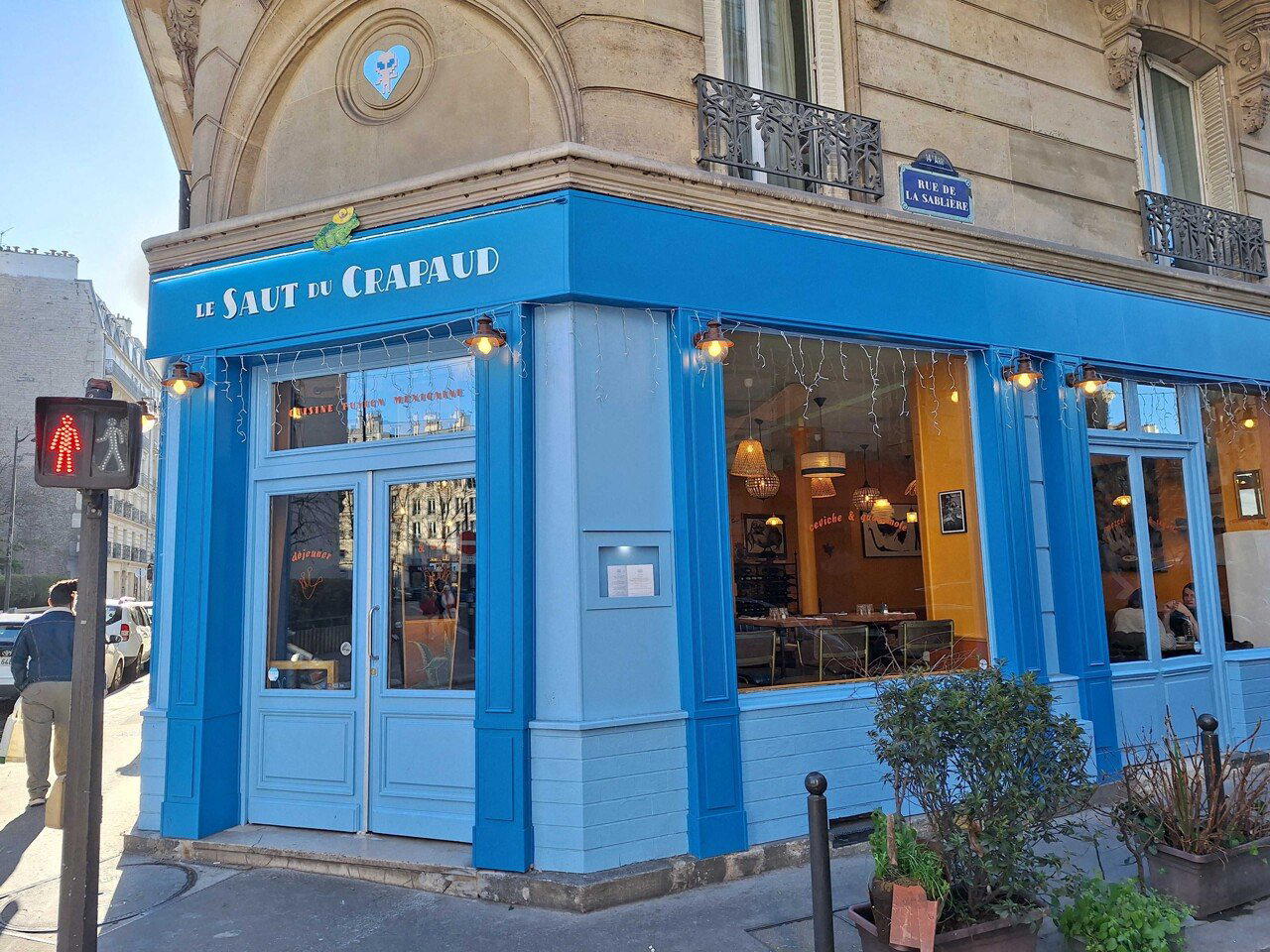
The 14th's Quiet Argument for Serious Eating
Paris's dining reputation concentrates heavily in the 6th, 8th, and 1st arrondissements, where addresses like Alléno Paris au Pavillon Ledoyen and L'Ambroisie define the city's upper register. The 14th operates differently. It is a residential arrondissement, bounded by Montparnasse to the north and the périphérique to the south, and its restaurants tend to serve the neighbourhood rather than perform for it. Le Saut du Crapaud, at 16 Rue des Plantes, sits inside that quieter geography, a deliberate counterpoint to the theatre of the grands boulevards.
This matters for how you should read the room. The 14th has historically been a working and middle-class district with a streak of artistic residency, Montparnasse's legacy bleeds southward, and the restaurants that do well here earn regulars rather than one-time visitors. That dining culture rewards consistency and honest pricing over spectacle, which shapes what serious kitchens in this part of the city tend to do.
Technique Import, Ingredient Honesty
The broader conversation in French cooking over the past two decades has centred on a specific tension: France's culinary infrastructure, its classical saucing tradition, its brigade discipline, its obsession with technique, applied to ingredients that don't come from the canonical French larder. You see this pattern across the country at different price tiers. Kei in the 1st arrondissement demonstrates it at the €€€€ level, where Japanese precision rewires a French tasting format. AM par Alexandre Mazzia in Marseille represents a southern variant, where Congolese and Indian references arrive through a formally French technical lens. The pattern recurs because France's technique vocabulary is genuinely portable, and ingredients from outside the traditional French canon can carry more vibrancy when treated with classical rigour rather than casual fusion looseness.
At the neighbourhood scale where Le Saut du Crapaud operates, that intersection tends to be less grand-gesture and more quotidian, the kind of cooking where the influence shows in seasoning logic, in sauce construction, in how acidity is managed rather than in a dramatic concept stated upfront. This is, where the technique-meets-local-ingredient thesis does its most honest work: not in a tasting menu manifesto, but in a carte that rotates with what's available and responds to season without announcement.
The 14th in Context: Where This Address Sits
Compared to the Michelin-dense corridors of the right bank, the 14th offers a different proposition to the serious eater. The comparison set here isn't Le Cinq at the Four Seasons George V or Arpège. It's the tier of Paris restaurants that operates without the institutional weight of multi-starred rooms but brings enough kitchen seriousness to reward a deliberate detour. France has a long tradition of these addresses, the regional equivalents include places like Auberge du Vieux Puits in Fontjoncouse or Auberge de l'Ill in Illhaeusern, where location outside the capital doesn't diminish seriousness.
In Paris itself, the 14th shares its dining character with parts of the 11th, 12th, and 20th: arrondissements where you eat well precisely because the clientele is local and the kitchen has no tourist margin to fall back on. Rue des Plantes is a narrow residential street; the address doesn't market itself to the passing trade on Boulevard du Montparnasse. That self-selection produces a particular kind of restaurant.
Seasonality as Operating Logic
In the broader French tradition, the shift from a fixed grande cuisine model to a market-driven, seasonal one has been underway since the nouvelle cuisine movement of the 1970s, accelerated by the influence of vegetable-led kitchens at places like Bras in Laguiole and the hyper-regional sourcing logic of Flocons de Sel in Megève. At the neighbourhood restaurant level, this translates into menus that shift meaningfully between autumn and spring, that treat the fishmonger's arrival on a Tuesday as more determinant than a printed menu card.
Visiting Le Saut du Crapaud in late autumn or early winter, when root vegetables and game define the French larder, produces a different meal than arriving in May when asparagus and early alliums dominate. This isn't a seasonal gimmick, it's the baseline operating logic of a kitchen that sources to cook rather than cooking to a fixed template.
For comparison, the technique-through-local-ingredient approach has international parallels worth noting: Mirazur in Menton has built an entire identity around the garden-to-plate seasonality thesis at the summit of the market, while Troisgros in Ouches demonstrates how classical French lineage can remain dynamic across generations through radical sourcing evolution. Neither comparison is direct, the price tier and scale are different, but the underlying question they pose is the same one that neighbourhood kitchens answer in their own register.
Internationally, the conversation about French technique applied to non-French ingredients runs in both directions. Le Bernardin in New York City exports French classical discipline to American seafood; Atomix in New York City demonstrates what Korean precision looks like when it operates at fine-dining formality. The traffic of technique across ingredient traditions has become the defining feature of serious cooking globally, and it shows up in Paris neighbourhood restaurants as much as in marquee addresses.
Know Before You Go
- Address: 16 Rue des Plantes, 75014 Paris, France
- Arrondissement: 14th (Montparnasse/Plaisance quarter)
- Getting there: Mouton-Duvernet (line 4) is the closest Métro station; Alésia (line 4) also walkable
- Ideal time to visit: Autumn and winter for the fullest seasonal menu range; spring for early-season vegetables
- Booking: Reservation is recommended
- Price: About $39 per person
Peers Worth Knowing
Comparable venues nearby, for context on price, style, and recognition.
| Venue | Cuisine | Price | Notes |
|---|---|---|---|
| Le Saut du CrapaudThis venue — the venue you are viewing | Franco-Mexican Fusion Bistro | $$$ | Not listed |
| Maison Blanche | Modern French Fine Dining | $$$ | 8th arrondissement |
| Place de l'Odéon | Traditional French Bistro | $$$ | Odéon |
| La Bonne Excuse | Seasonal French Bistro | $$$ | 7th Arrondissement |
| Brasserie l'Émil | French Brasserie with Mediterranean Accents | $$$ | 1er arrondissement |
| Un jour à Peyrassol | Provençal Truffle Bistro | $$$ | Vivienne |
Continue exploring
More in Paris
Restaurants in Paris
Browse all →
Bars in Paris
Browse all →
Hotels in Paris
Browse all →
At a Glance
- Cozy
- Intimate
- Date Night
- Family
- Business Dinner
- Open Kitchen
- Craft Cocktails
Current opening hours
- Monday
- 10 AM–11:30 PM
- Tuesday
- 10 AM–11:30 PM
- Wednesday
- 10 AM–11:30 PM
- Thursday
- 10 AM–11:30 PM
- Friday
- 10 AM–11:30 PM
- Saturday
- 10 AM–11:30 PM
- Sunday
- 10 AM–11:30 PM
Hours can change for holidays and private events. Last verified .
Warm, familial atmosphere with a joyful and welcoming vibe in a small, cozy neighborhood bistro.