Our verdict
On Rue Saint-Roch in the 1st arrondissement, Brasserie l'Émil occupies a corner of Paris where classic brasserie culture and contemporary appetite intersect. The address places it steps from the Palais Royal and deep within a neighbourhood that rewards those who look beyond the obvious tourist circuit. For visitors calibrating between the 1st's grand dining rooms and its quieter, more local registers, l'Émil warrants attention.

Pearl is the En Primeur Club membership app, where members save venues, book tables and use the concierge.

The menu
What to order
- Château filet
- Ratatouille
- Beef Tartare
- Grilled Fish
The Corner of Rue Saint-Roch
Paris has always maintained two parallel brasserie traditions: the monument and the local. The monument is a set piece, high ceilings, mirrored walls, waiters in long aprons moving between zinc counters and white-clothed tables, the whole theatrical apparatus of French café culture preserved under heritage listing. The local is something quieter, rooted in neighbourhood rhythm rather than tourist itinerary. Brasserie l'Émil, at 55 Rue Saint-Roch in the 1st arrondissement, positions itself in the second category, on a street that angles between the busier arteries of the Opéra district and the calmer residential edge of the Palais Royal quarter.
Rue Saint-Roch itself carries a particular texture. The 1st arrondissement is among the most visited districts in the world by raw footfall, yet it fractures into micro-zones where the tourist density drops sharply within fifty metres of a main axis. The street runs past the Church of Saint-Roch, one of the largest in Paris, largely overlooked by visitors who stay on the Rue de Rivoli, and into a quieter residential and commercial pocket that gives addresses here a more grounded character than the nearby luxury corridors might suggest.
What the Brasserie Format Means in 2024
The brasserie as a category has been under pressure for at least two decades. At one end, the grand historic rooms, Bofinger, La Coupole, Lipp, trade on heritage and atmosphere as much as cooking, drawing both tourists and Parisians who understand the bargain they are making. At the other end, a younger generation of Paris bistros and natural-wine-oriented zinc counters has claimed the informal, convivial end of the market, sometimes at the expense of the classical repertoire. What survives comfortably in between is a format that holds classical French brasserie cooking, terrines, bavette, sole meunière, tarte tatin, against a backdrop that reads as genuinely Parisian without being a museum piece.
That positioning matters in the 1st arrondissement specifically. The neighbourhood's dining options split sharply: at the leading, multi-Michelin rooms like L'Ambroisie on the Place des Vosges (technically the 4th, but part of the same high-end orbit), Kei on the Rue Coq-Héron, and further out in the 8th, Le Cinq and Alléno Paris. At the bottom, tourist-facing formula restaurants along the Rue de Rivoli. The middle register, where a neighbourhood brasserie with genuine cooking and reasonable ambition operates, is genuinely underserved in this arrondissement.
Atmosphere and Approach
The sensory register of a well-run Paris brasserie is one of the most specific in European dining. It is not the hushed concentration of a gastronomic room, where silence signals the food's importance. Nor is it the deliberate noise engineering of a contemporary bistro designed to feel like a party. The classic brasserie operates at a particular frequency: ceramic and glass, the sound of a kitchen working at pace behind swing doors, conversation at a volume that permits it without overwhelming, and a quality of light, often warm, slightly golden, arriving from wall sconces or pendant fixtures, that flatters the room and its occupants equally.
On Rue Saint-Roch, the approach to this question matters. The street's low-key character means the room is not competing with a monumental address or a famous terrace. What it offers instead is the grounded, unhurried quality of a local that knows its neighbourhood, with an interior that reads as considered without being designed to impress. This is the register that Paris does better than almost any other city: the room that feels entirely natural and entirely composed at the same time.
The 1st Arrondissement in Broader Context
To understand where Brasserie l'Émil sits in the wider Paris dining picture, it helps to map the 1st against the trajectories that define French restaurant culture at large. France's most celebrated addresses, Mirazur in Menton, Troisgros in Ouches, Bras in Laguiole, operate at a remove from urban centres, embedded in landscape and local produce in ways that urban restaurants cannot replicate. The city's own gastronomic rooms, from Arpège to the long-standing institution of Paul Bocuse in Collonges-au-Mont-d'Or, represent a different register entirely: the formal French table, with its codes, its ceremony, and its price architecture.
Elsewhere in France, regional institutions like Auberge de l'Ill in Illhaeusern, Georges Blanc in Vonnas, Auberge du Vieux Puits in Fontjoncouse, Les Prés d'Eugénie in Eugénie-les-Bains, La Table du Castellet, and Flocons de Sel in Megève carry the weight of a specific terroir and a multi-generation reputation. In Paris, that kind of rootedness is harder to achieve, the city moves faster, rents are punishing, and the competition for attention is relentless. A neighbourhood brasserie that carves out a consistent local following in the 1st arrondissement is doing something that deserves credit on its own terms, distinct from the credential arms race of the gastronomic tier.
For international points of comparison, the equivalent in the French-influenced dining world might be something like the neighbourhood anchor model: Le Bernardin in New York operates at a different altitude entirely, but the principle of a French-rooted room holding its own in a demanding urban market is shared. Closer to the informal end, Lazy Bear in San Francisco represents the American evolution of the communal table format, a different lineage, but the same underlying logic of a room built around a clear idea of hospitality rather than spectacle.
Planning Your Visit
Brasserie l'Émil is at 55 Rue Saint-Roch, 75001 Paris, in the 1st arrondissement. The nearest metro stations are Pyramides (lines 7 and 14) and Tuileries (line 1), both within a five-minute walk. The address is directly accessible from the Rue de Rivoli axis and a short walk from the Palais Royal gardens. For a broader orientation to dining in the city, see our full Paris restaurants guide.
Reservations: Booking ahead is advisable for dinner and weekend lunch in the 1st arrondissement, where demand from both local and visiting diners is consistent. Dress: Smart casual is the standard across Parisian brasseries of this type; the neighbourhood leans presented rather than formal. Budget:
Frequently asked questions
What should I eat at Brasserie l'Émil?
The brasserie format in Paris has a dependable classical core: steak frites, sole meunière, duck confit, and seasonal market dishes that reflect what French kitchens do at this register. In brasseries of this type, the chalkboard specials often represent the kitchen's sharpest work.
Do I need a reservation for Brasserie l'Émil?
In the 1st arrondissement, walk-in availability at dinner varies significantly by day of the week and season. Paris dining in general operates with greater spontaneity at lunch than dinner, but a street-level brasserie with a local following will fill on weekday evenings without much notice. Booking in advance is the lower-risk approach, particularly on Thursday through Saturday.
What makes Brasserie l'Émil worth seeking out?
Its address on Rue Saint-Roch places it in one of the 1st arrondissement's quieter residential pockets, away from the formula-restaurant density of the main tourist corridors. In a district where the dining options tend toward either the very expensive or the very convenient, a neighbourhood brasserie operating at a considered middle register fills a gap that visitors and locals alike navigate carefully. The cooking tradition it draws on, classical French brasserie, is one of the most historically grounded in European dining.
Is Brasserie l'Émil a good option for a solo dinner in central Paris?
The brasserie format has historically been one of the most accommodating in French dining for solo visitors: counter seats, bar dining, and the general culture of the single diner eating without ceremony are all embedded in the tradition. In a city where the gastronomic rooms can feel oriented toward couples and groups, a neighbourhood brasserie in the 1st offers a more relaxed framework. The Rue Saint-Roch address, in a lower-traffic pocket of a busy arrondissement, adds to that sense of ease.
Quick Comparison
A quick peer list to put this venue’s basics in context.
| Venue | Cuisine | Price | Awards | Notes |
|---|---|---|---|---|
| Brasserie l'ÉmilThis venue (the venue you are viewing) | French Brasserie with Mediterranean Accents | $50–100 | Not listed | Not listed |
| Alléno Paris au Pavillon Ledoyen | Modern French Fine Dining | $150–200 | 3 Michelin Stars · World's 50 Best #79 | Creative |
| Kei | Modern French with Japanese Influences | $300–500 | 3 Michelin Stars · World's 50 Best #93 | Contemporary French, Modern Cuisine |
| L'Ambroisie | Classic French Haute Cuisine | $300–500 | 2 Michelin Stars · World's 50 Best #23 | French, Classic Cuisine |
| Le Cinq - Four Seasons Hôtel George V | Modern French Fine Dining | $300–500 | 3 Michelin Stars · World's 50 Best #24 | French, Modern Cuisine |
| Pierre Gagnaire | Avant-Garde French Fine Dining | $200–300 | 3 Michelin Stars · World's 50 Best #17 | French, Creative |
Continue exploring
More in Paris
Restaurants in Paris
All restaurants in Paris →
Bars in Paris
All bars in Paris →
Hotels in Paris
All hotels in Paris →
Details
- Elegant
- Cozy
- Sophisticated
- Classic
- Date Night
- Special Occasion
- Hotel Restaurant
- A La Carte
Current opening hours
- Monday
- 7 AM–10:30 PM
- Tuesday
- 7 AM–10:30 PM
- Wednesday
- 7 AM–10:30 PM
- Thursday
- 7 AM–10:30 PM
- Friday
- 7 AM–10:30 PM
- Saturday
- 7 AM–10:30 PM
- Sunday
- 7 AM–10:30 PM
Hours can change for holidays and private events. Hours as of .
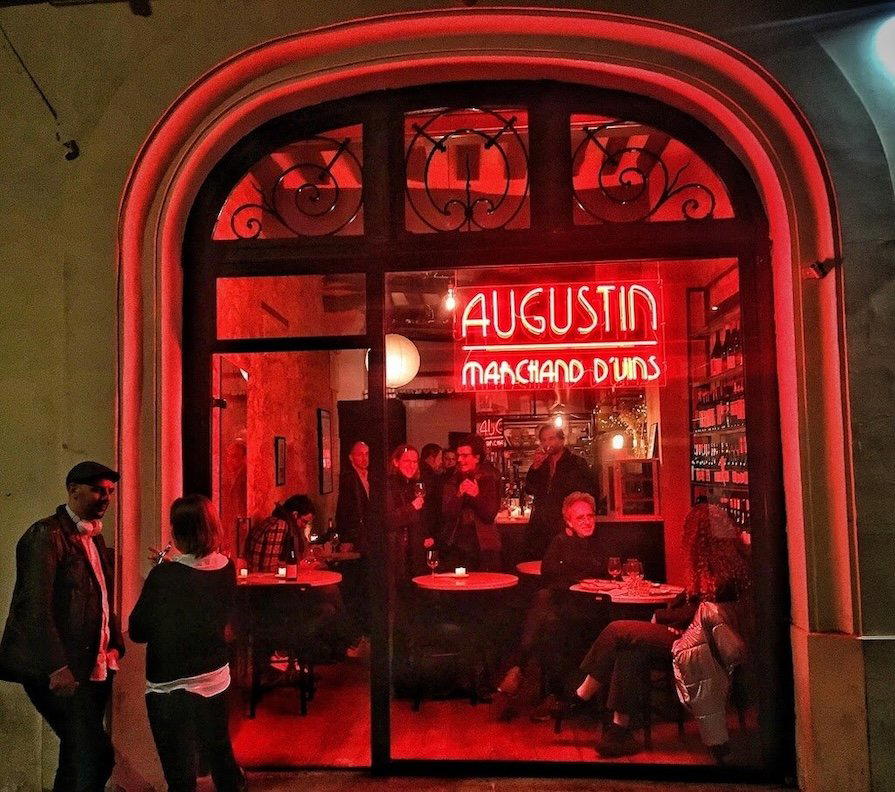
Subdued lighting, low ceilings, close tables creating a cosy lounge atmosphere with soft jazzy music and multilingual conversations.