






2 Michelin Stars · La Liste Top Restaurants · Relais Chateaux Award
Our verdict
Perched on the second floor of the Eiffel Tower, Le Jules Verne holds two Michelin stars under chef Frédéric Anton and sits within the Les Grandes Tables du Monde network. The cooking is French haute cuisine with the precision you'd expect from Anton's Meilleur Ouvrier de France credentials, set against one of the most architecturally charged dining rooms in Europe. Bookings at this altitude require planning well in advance.

Pearl is the En Primeur Club membership app — saves, bookings, and concierge access live there. Same editors, same standards.
- Address
- Avenue Gustave Eiffel 2ème, Eiffel Tower, Av. Anatole France, 75007 Paris, France
- Phone
- +33 1 83 77 34 34
- Hours
- Daily 12–1:30 PM, 7–9 PM
- Website
- restaurants-toureiffel.com
- Directions
- Get directions
- Booking
- Book on the venue's website
The menu
What to order
- Tarragon-Tinged Crab
- Scallop with Puffed Buckwheat Galette and Oscietra Caviar
- Langoustine Raviolo with Parmesan Cream
- Caramelized Veal Sweetbread with Grenobloise Sauce
- Pear Poached with Honey
Dining at Altitude: The Eiffel Tower's Second Floor
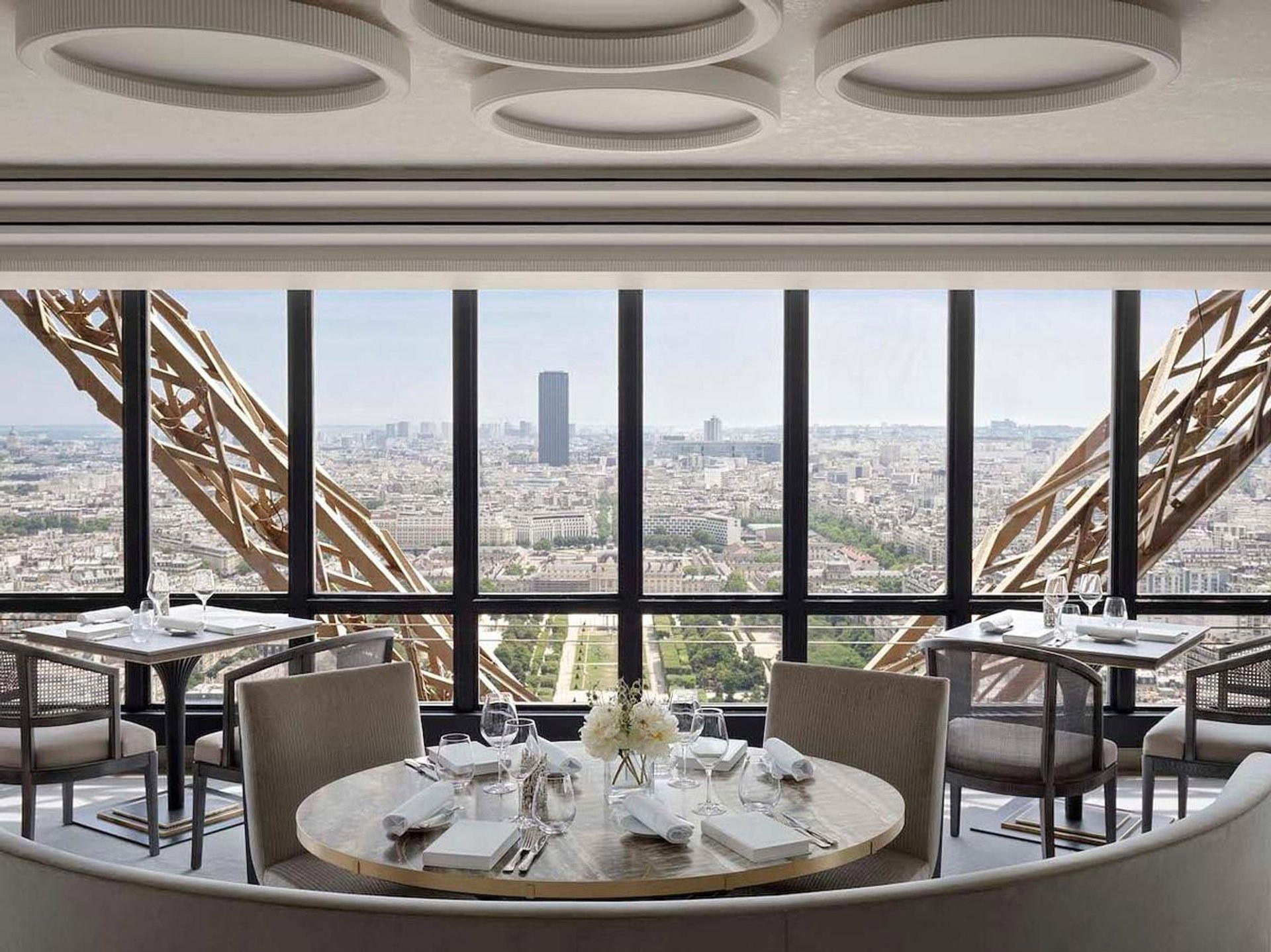
Paris has a category of restaurant that no other city can replicate: the monument dining room. The Louvre has its brasserie, the Musée d'Orsay its gilded belle époque hall, but the Eiffel Tower's second floor operates on a different register altogether. At roughly 125 metres above the Seine, the view from Le Jules Verne's windows frames the 7th arrondissement's stone rooflines, the Seine's grey-green curve, and the Trocadéro's symmetrical gardens in a single unbroken panorama. The structural ironwork of the tower itself becomes part of the interior geometry, visible through the glass as both architecture and atmosphere. This is not incidental scenery. The room is shaped around the view in ways that most urban dining rooms are not required to consider.
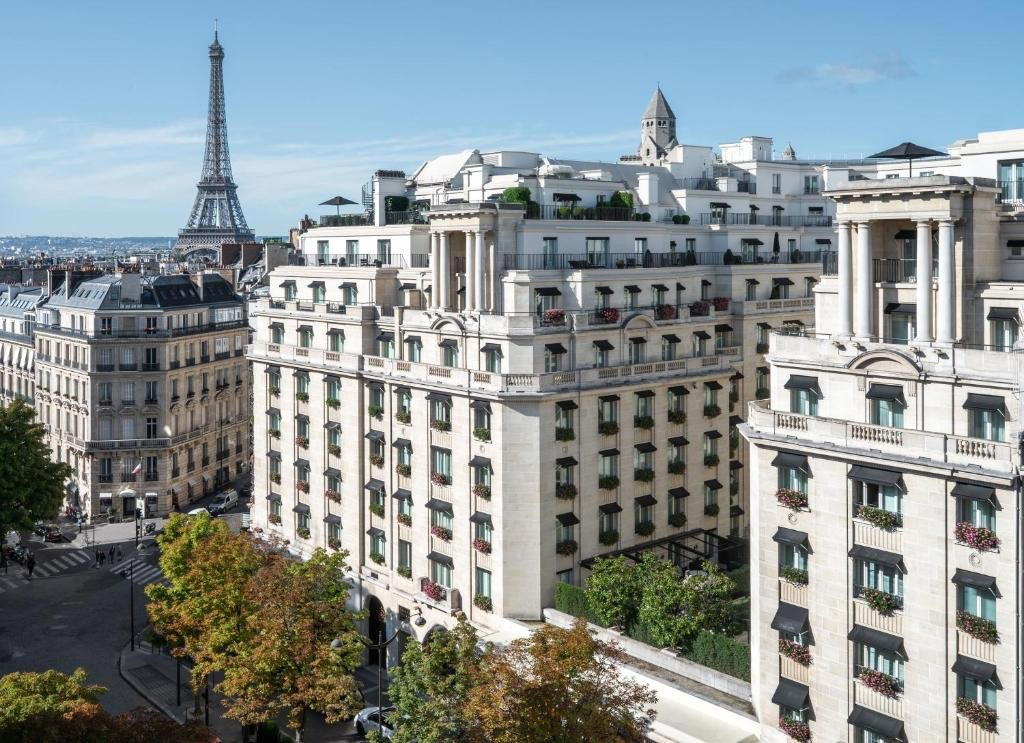
The broader question for any monument restaurant is whether the kitchen can hold its own once the novelty of the location settles. Le Jules Verne has answered that question with sustained Michelin recognition: two stars in both 2024 and 2025, placing it in a tier occupied by perhaps a dozen Paris addresses. Le Cinq at the Four Seasons George V and L'Ambroisie on the Place des Vosges sit in the same two-star bracket within the French classical tradition, though without the vertical address.
Frédéric Anton and the French Classical Tradition
French haute cuisine at this level is inseparable from the transmission of technique across generations, and chef Frédéric Anton carries credentials that place him squarely inside that lineage. Anton trained under Joël Robuchon and holds the title of Meilleur Ouvrier de France, the French state's highest craft designation for culinary professionals. That training places Le Jules Verne within a specific branch of the French classical tradition: precise, product-driven, technically exacting, built on the logic that the chef's primary obligation is to the ingredient rather than to novelty for its own sake.
This matters for the editorial angle on the food. The French haute cuisine tradition at this standard is not primarily a story of creative reinvention; it is a story of sourcing discipline and execution rigour. Anton's kitchen operates within a framework where the selection of producers, the handling of seasonal supply, and the control of classical technique are the differentiators. Comparable rigor applies at Flocons de Sel in Megève and at Bras in Laguiole, where the dialogue between kitchen and terroir defines the cooking more than any single signature dish. Le Jules Verne operates from a Paris base but with a comparable sourcing seriousness.
What the Ingredient Sourcing Tells You About the Menu
In the French haute cuisine category at two Michelin stars, the supply chain is as much a trust signal as the awards themselves. Kitchens at this standard operate with long-standing producer relationships: specific farms for game, specific coastal suppliers for fish and shellfish, named dairies for butter and cheese. These relationships are not marketing copy; they are the structural reason why the plate arrives the way it does. Seasonal transitions in the French culinary calendar are particularly significant at this level. The arrival of Périgord truffles in January, morel mushrooms in spring, and the game season in autumn each mark a material shift in what the kitchen can honestly offer.
The implication for timing a visit is direct. A table booked during the white truffle window or at the start of the asparagus season in the Loire and Landes regions will encounter the kitchen at a different moment than a mid-summer booking, when the emphasis shifts to fine vegetables, cold-water fish, and the produce of the Atlantic coast. This seasonal rhythm is not unique to Le Jules Verne; it runs through the full tradition from Arpège to Troisgros. What distinguishes the top tier of this category is the discipline with which the kitchen resists offering ingredients before they are genuinely ready.
The Opinionated About Dining 2025 Classical Europe ranking places Le Jules Verne at position 217 in the classical European category, a useful data point for calibrating expectations. This is not a restaurant in the conversation for the highest creative positions (occupied in Paris by addresses like Alléno Paris au Pavillon Ledoyen), nor does it position itself there. The two-star classical designation signals sustained technical excellence within a defined idiom rather than boundary-pushing invention. That clarity is itself a form of editorial honesty.
Understanding where Le Jules Verne sits among Paris's two-star addresses requires mapping the full category. Paris currently supports more Michelin-starred restaurants per square kilometre than any other city in Europe, and the two-star tier is genuinely competitive. Kei on the Rue Coq Héron brings Japanese technique to French classical ingredients from the same price bracket. Le Cinq operates within a grand hotel format that shares some of Le Jules Verne's sense of occasion. The difference is what you're paying for in addition to the food. At Le Jules Verne, the room itself, the tower's structural ironwork framing every table, the specific quality of the light above Paris at dusk, is part of the value calculation in a way it isn't at a street-level address.
Among French fine dining houses beyond Paris, the tradition of technically rigorous classical cooking appears at Auberge de l'Ill in Illhaeusern and in the continuing legacy institutions like Paul Bocuse's Auberge du Pont de Collonges. Le Jules Verne belongs to the Parisian strand of that same tradition, updated by Anton's Robuchon training rather than rooted in regional terroir. The international comparison point extends to restaurants like Le Bernardin in New York, where classical French rigour applied to a specific product category (seafood) produces a similar profile of sustained recognition without the pursuit of trendiness. Atomix in New York represents the opposite pole: a kitchen where concept and creativity lead.
The View as Argument
The Eiffel Tower receives roughly seven million visitors per year, making it one of the most visited paid monuments in the world. The vast majority experience it from the ground, from the first-floor glass floor walkway, or from the summit observation deck. The second-floor dining room is access of a categorically different kind: a private angle on a public monument, available only to a small number of covers per service. The room does not need to perform; the tower's geometry does that. What the kitchen is asked to do is match that structural authority with food of equal seriousness, which is precisely the argument for two Michelin stars as the appropriate benchmark.
Mirazur in Menton operates on a comparable principle, where the Mediterranean view from the hillside terrace is inseparable from the experience of the food. The difference is that Mirazur's three stars place the kitchen as the primary draw; at Le Jules Verne, the tower and the kitchen make a joint case.
Planning Your Visit
Le Jules Verne sits at a €€€€ price point consistent with the two-star haute cuisine tier in Paris. Access is via a private lift on the south pillar of the Eiffel Tower, separate from the general public entrances, which means arrival is considerably more controlled than the tower's usual visitor flow. Advance reservations are strongly advisable; tables at peak seasonal moments (the truffle season in January, spring asparagus weeks, and Paris's high summer) move quickly against a limited cover count.
For the broader Paris dining picture, see our full Paris restaurants guide. Additional planning resources: Paris hotels guide, Paris bars guide, Paris wineries guide, and Paris experiences guide.
Quick reference: Le Jules Verne, second floor Eiffel Tower, 7th arrondissement, Paris. Two Michelin stars (2024, 2025). Chef Frédéric Anton. Price range €€€€. Les Grandes Tables du Monde (2025). La Liste 83pts (2026).
Frequently asked questions
What should I eat at Le Jules Verne?
Le Jules Verne operates a French haute cuisine menu shaped by Frédéric Anton's Robuchon-lineage training and a sourcing approach consistent with the two-star tier. Anton's Meilleur Ouvrier de France credentials and the restaurant's two consecutive Michelin stars through 2025 signal a kitchen where classical technique applied to high-quality French product is the consistent throughline. Visiting during the truffle season (roughly January through March) or during the spring asparagus window will align the table with the moments the French haute cuisine calendar considers most significant. The wine programme at a Les Grandes Tables du Monde member address should be treated as seriously as the food: this is a category where the sommelier's guidance is part of the value delivered.
Comparable Options
Comparable options at a glance, pulled from our tracked venues.
| Venue | Cuisine | Price | Awards | Notes |
|---|---|---|---|---|
| Le Jules VerneThis venue — the venue you are viewing | Modern French Fine Dining | $300–500 | 2 Michelin Stars · La Liste Top Restaurants | Not listed |
| Alléno Paris au Pavillon Ledoyen | Modern French Fine Dining | $150–200 | 3 Michelin Stars · World's 50 Best #79 | Creative |
| Kei | Modern French with Japanese Influences | $300–500 | 3 Michelin Stars · World's 50 Best #93 | Contemporary French, Modern Cuisine |
| L'Ambroisie | Classic French Haute Cuisine | $300–500 | 2 Michelin Stars · World's 50 Best #23 | French, Classic Cuisine |
| Le Cinq - Four Seasons Hôtel George V | French, Modern Cuisine | Not listed | Not listed | Not listed |
| Plénitude | Modern French Sauce-Led Fine Dining | $300–500 | 3 Michelin Stars · World's 50 Best #14 | Contemporary French |
Recognition history
Dated appearances from independent guides and award organizations, with the underlying list record or original source where available.
Michelin 2 Stars
Michelin
La Liste Top Restaurants
La Liste
Falstaff Restaurant - 95 Falstaff Points
Falstaff
Les Grandes Tables du Monde Member
Les Grandes Tables du Monde
Opinionated About Dining Classical in Europe Ranked #133
Opinionated About Dining
Full recognition history (11 entries)
Relais Chateaux Award
Relais Chateaux
Gault & Millau Remarkable Restaurant
Gault & Millau
La Liste Top Restaurants
La Liste
Opinionated About Dining Classical in Europe Ranked #217
Opinionated About Dining
Relais Chateaux Award
Relais Chateaux
Michelin 2 Stars
Michelin
Continue exploring
More in Paris
More from Chef Frédéric Anton
Browse all →
Restaurants in Paris
Browse all →
Bars in Paris
Browse all →
Hotels in Paris
Browse all →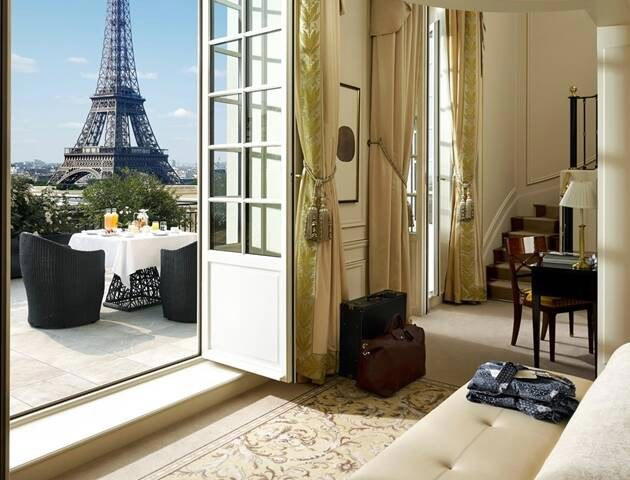

Le Jules Verne
The wine
- Wine program
- Exceptional wine program
- Extensive wine list
- Sommelier-led
Details
- Elegant
- Well Known
- Romantic
- Sophisticated
- Scenic
- Special Occasion
- Date Night
- Celebration
- Panoramic View
- Historic Building
- Design Destination
- Private Dining
- Extensive Wine List
- Sommelier Led
- Local Sourcing
- Farm To Table
- Skyline
- Street Scene
- Prix Fixe
- Tasting Menu
- Wine Pairing
- French Wine
- Vegetarian Friendly
- Allergy Accommodating
Current opening hours
- Monday
- 12–1:30 PM, 7–9 PM
- Tuesday
- 12–1:30 PM, 7–9 PM
- Wednesday
- 12–1:30 PM, 7–9 PM
- Thursday
- 12–1:30 PM, 7–9 PM
- Friday
- 12–1:30 PM, 7–9 PM
- Saturday
- 12–1:30 PM, 7–9 PM
- Sunday
- 12–1:30 PM, 7–9 PM
Hours can change for holidays and private events. Last verified .
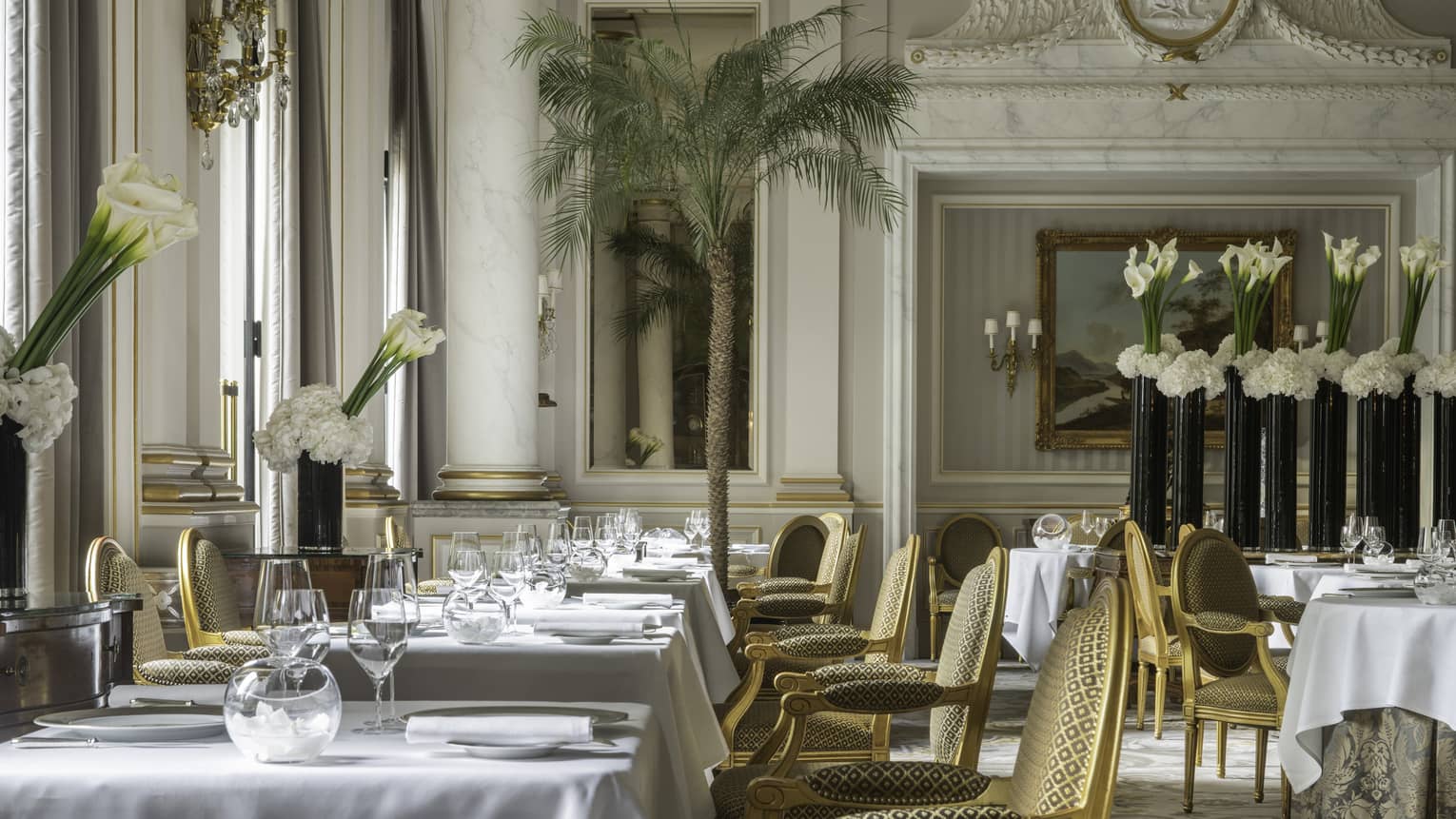
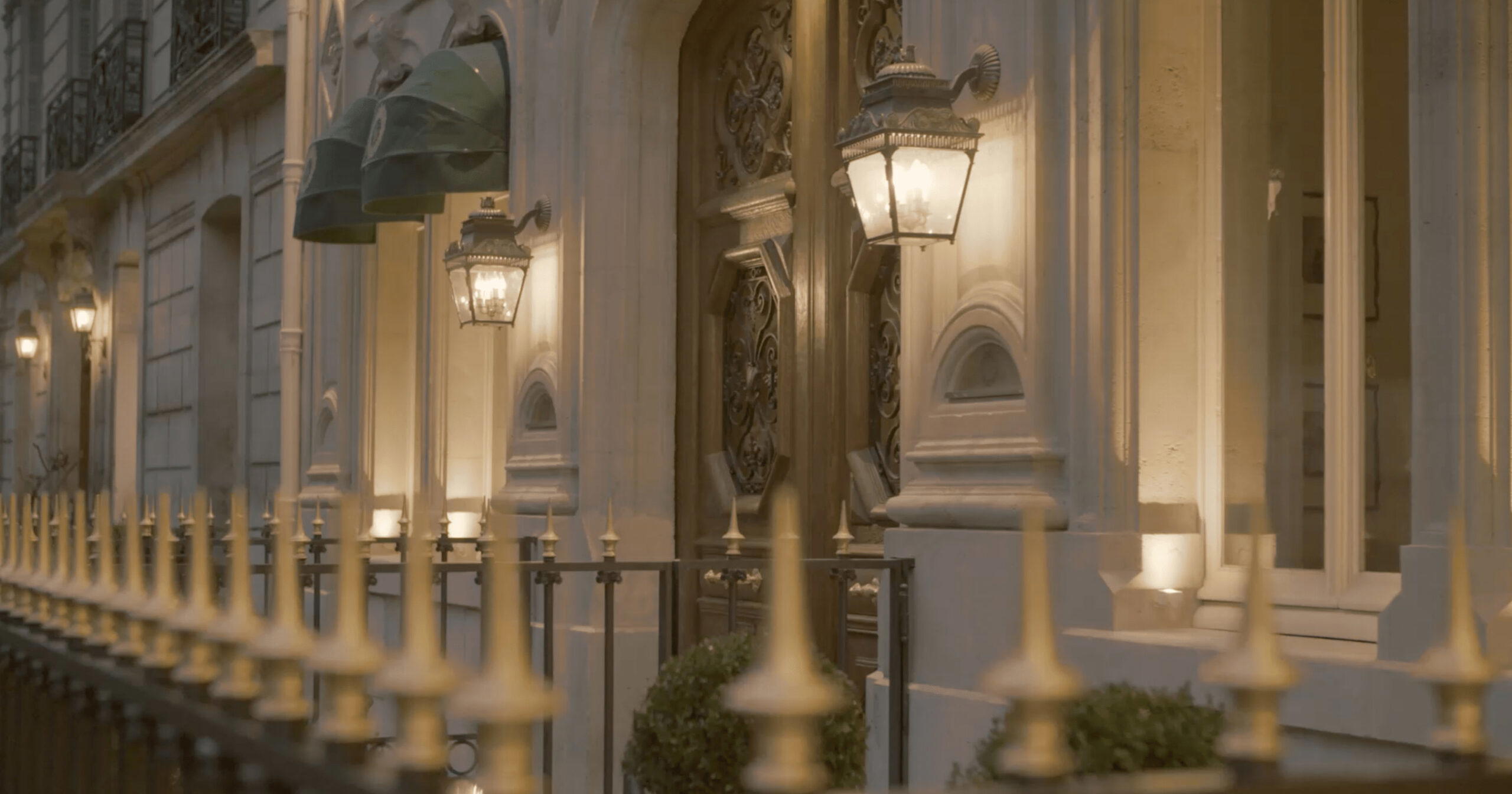
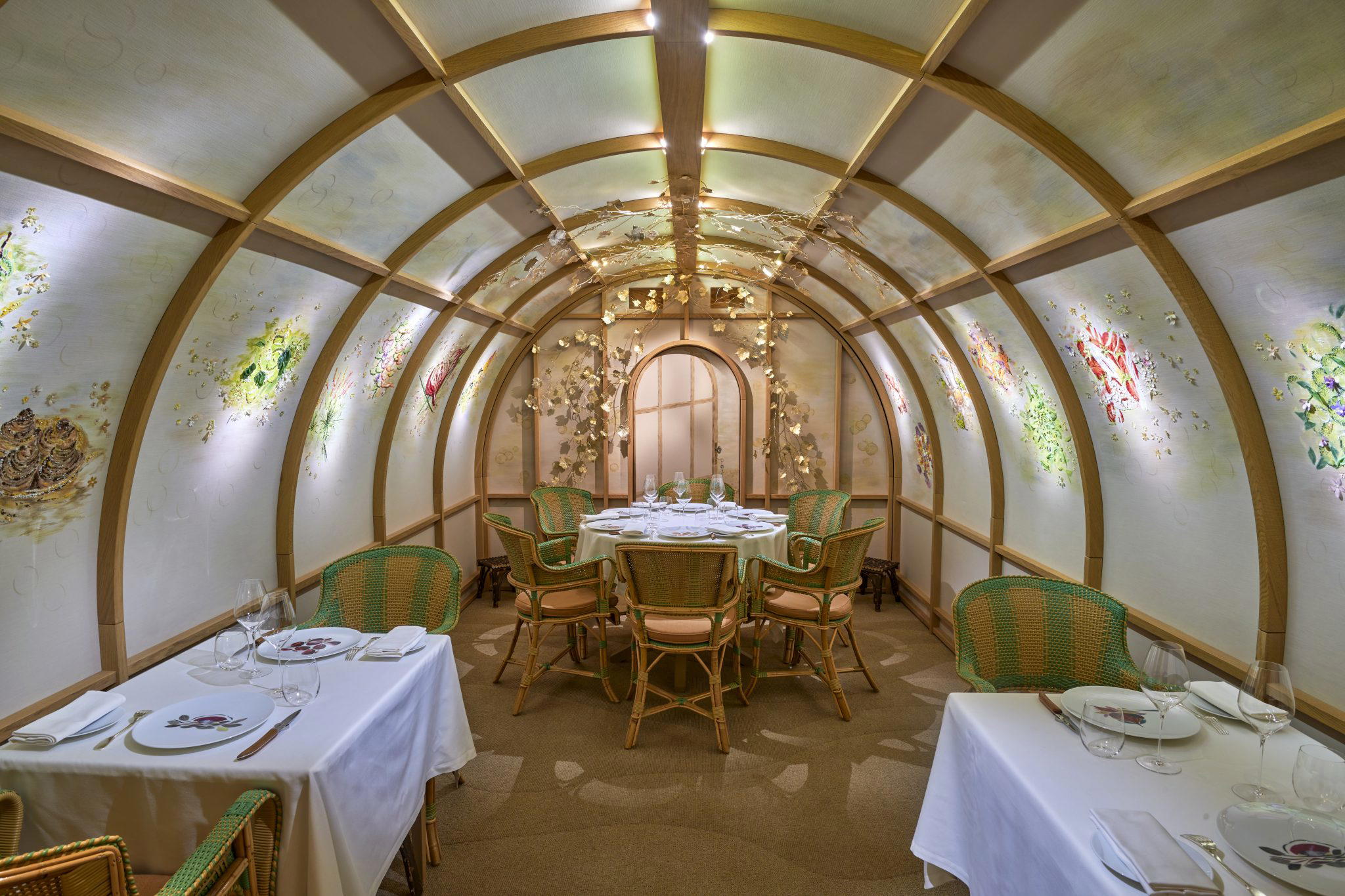
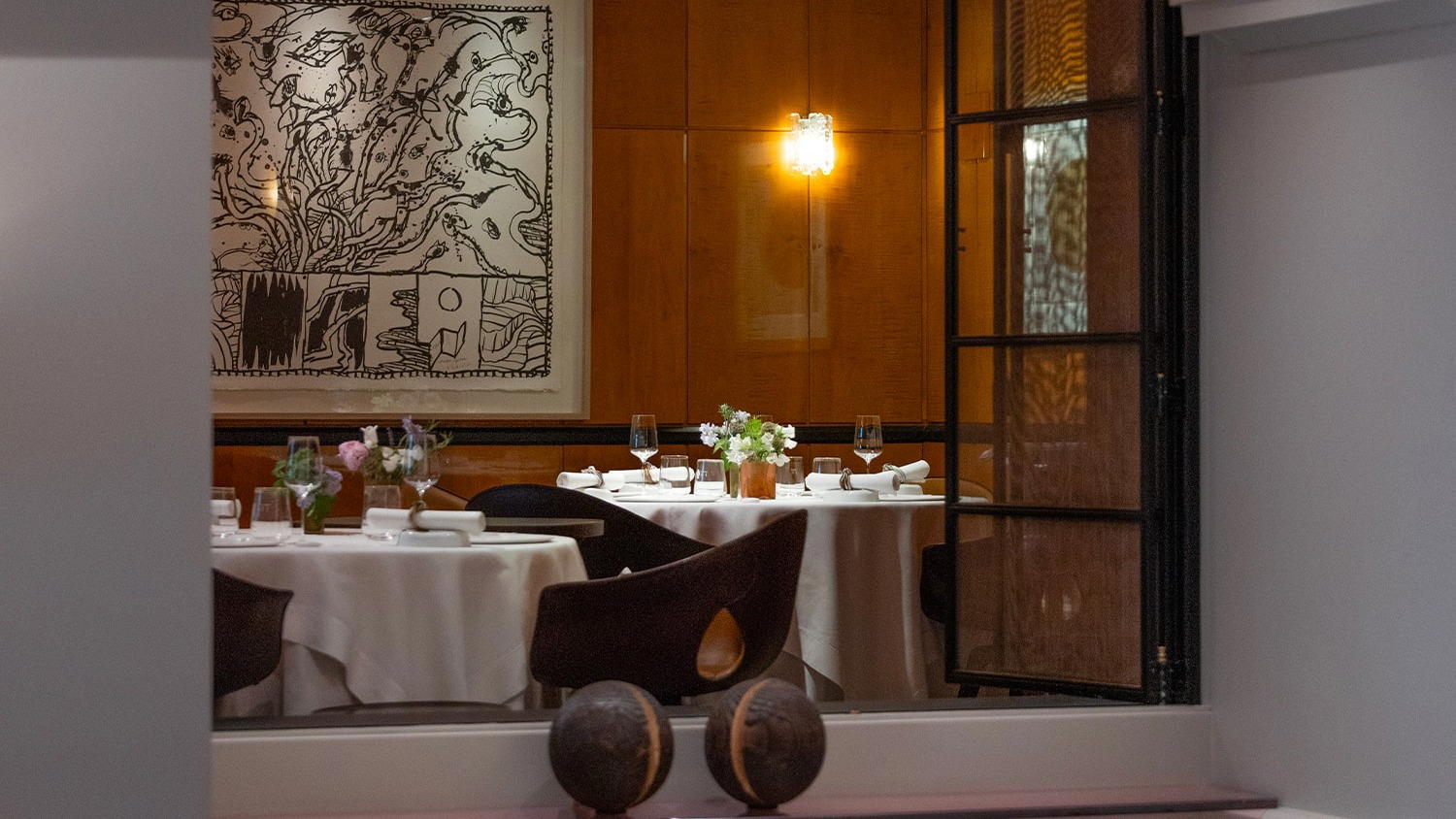
Understated grey interiors with steel accents and white dinnerware designed to highlight the food and sweeping views; moody and sleek entry with airy, light-filled dining rooms featuring gold accents and mirrors that enlarge the space.