Our verdict
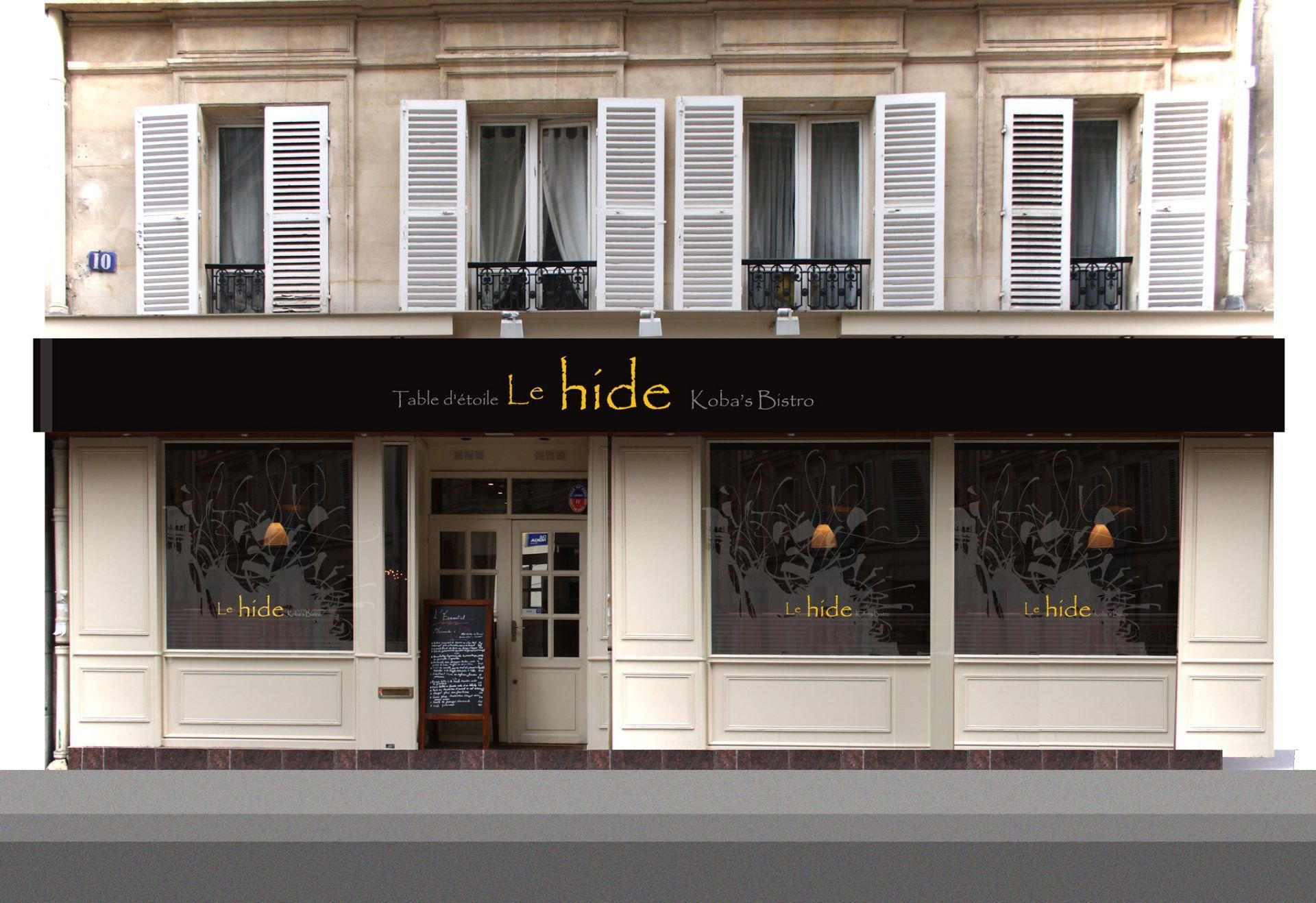
Le Hide occupies a quiet address on Rue du Général Lanrezac in Paris's 17th arrondissement, where the neighbourhood's unhurried pace suits a restaurant that has built its reputation on precise French bistro cooking rather than spectacle. The room is small, the booking window fills quickly, and the cooking draws regulars who return for the progression of the meal rather than a single headline dish.

Pearl is the En Primeur Club membership app — saves, bookings, and concierge access live there. Same editors, same standards.
- Address
- 10 Rue du Général Lanrezac, 75017 Paris, France
- Phone
- +33145741581
- Hours
- Mon–Sat 6:30–11 PMSun Closed
- Website
- lehide.fr
- Directions
- Get directions
- Booking
- Book on the venue's website
The menu
What to order
- Pan-fried foie gras
- Crayfish ravioli
- Escargots
A Bistro in the 17th That Earns Its Reservations
Paris's 17th arrondissement sits at an interesting remove from the city's most photographed dining corridors. The Champs-Élysées pull, the Left Bank institution cluster around Saint-Germain, the grand-palace dining of properties like Le Cinq at the Four Seasons Hôtel George V — none of that geography applies here. What the 17th offers instead is a quieter kind of Parisian dining credibility, the sort that accrues through consistent neighbourhood presence rather than awards-season visibility. Le Hide, at 10 Rue du Général Lanrezac, operates in precisely that register.
The French bistro format has split in recent decades into two broad trajectories. One moves upward toward multi-course architectural menus, the territory occupied by addresses like Alléno Paris au Pavillon Ledoyen or Arpège, where the cooking becomes a statement about what French cuisine can reach. The other holds its ground: careful, ingredient-led, structured around a familiar arc of courses that rewards diners who read the menu as a sequence rather than a list of options. Le Hide belongs to the second tradition, and that positioning is a deliberate one.
How the Meal Moves
The editorial angle that makes a place like Le Hide legible is not any single dish but the architecture of the meal itself. French bistro cooking at its most considered operates through accumulation: a first course that opens appetite rather than sating it, a fish or vegetable course that introduces precision, a main that carries weight without heaviness, a dessert that closes the sequence with enough sweetness to feel complete but not overworked. This is an old grammar, and Le Hide works within it.
That structure distinguishes the address from its peers across France who have pushed the tasting-menu format into more experimental territory. Mirazur in Menton organises its menus around garden calendars and biodynamic rhythms. Bras in Laguiole works the gargouillou tradition into something close to philosophy. Flocons de Sel in Megève draws on mountain-specific ingredients to build menus that are geographically rooted. Le Hide does not operate at that level of conceptual ambition, and that is not a criticism. Its contribution is to hold the classical progression intact in a neighbourhood context, which is itself a form of discipline.
What that means in practice is a menu that reads as a genuine progression rather than a collection of individually spectacular moments. The kitchen earns attention not through spectacle but through the logic of the sequence — the sense that each course prepares the palate for what follows. This is the bistro tradition at its most functional and, when executed with care, its most satisfying.
Where It Sits in the Paris Dining Map
Paris's top-tier French cooking tends to concentrate around a handful of arrondissements and is anchored by addresses with significant institutional weight. L'Ambroisie on the Place des Vosges operates as a benchmark for classical French haute cuisine with three Michelin stars. Kei in the 1st brings a French-Japanese synthesis that earned its own Michelin recognition. These addresses define one end of the spectrum.
Le Hide occupies a different tier, one that is arguably more useful to the traveller who is not building an entire trip around a single prestige reservation. The 17th arrondissement bistro format, at its most reliable, offers the kind of French cooking that does not require months of advance planning but still rewards the diner who arrives with attention. The address on Rue du Général Lanrezac is compact enough that tables fill consistently, and the repeat-visitor dynamic that characterises the room suggests a local credibility that no marketing effort alone produces.
For comparison within France's broader fine-dining geography, the classical sequencing at Le Hide connects to a tradition that runs through addresses like Auberge de l'Ill in Illhaeusern, Troisgros in Ouches, and Paul Bocuse in Collonges-au-Mont-d'Or, all of which have maintained classical French sequencing as a core discipline even as the wider industry moved toward more fragmented tasting formats. Le Hide is not at the scale or historical weight of those addresses, but the structural commitment to the progressive meal as the unit of experience places it in the same lineage.
Further afield, the progression-led format appears in different guises at addresses like Au Crocodile in Strasbourg, Assiette Champenoise in Reims, and Auberge du Vieux Puits in Fontjoncouse. Each interprets the multi-course format through its own regional lens. Le Hide does so through the specific lens of the Paris neighbourhood bistro, which means tighter rooms, shorter menus, and an expectation that the diner brings their own patience to the table.
Internationally, the closest structural analogues would be addresses like Le Bernardin in New York, which also builds meals around progression and restraint rather than single-dish drama, or Atomix, which uses a more conceptually layered format but shares the commitment to the meal as a designed arc. AM par Alexandre Mazzia in Marseille pushes the progression idea further, into something almost cinematic. Le Hide is quieter than all of these, but the underlying logic is the same: the sequence is the point.
For the reader planning a Paris trip with an eye toward the full French dining spectrum, our full Paris restaurants guide maps the city's dining addresses across price tiers and styles.
Know Before You Go
Address: 10 Rue du Général Lanrezac, 75017 Paris, France
Arrondissement: 17th, quieter residential quarter northwest of the Arc de Triomphe
Format: Neighbourhood bistro with classical French multi-course sequencing
Booking: Tables fill consistently; advance reservation is advisable, particularly for dinner service
Price tier:, contact the restaurant directly for current menu pricing
Getting there: Argentine and Charles de Gaulle–Étoile on the Paris Métro provide the closest access points
Frequently asked questions
Where do I go for LE HIDE?
LE HIDE is located at 10 Rue du Général Lanrezac, 75017 Paris, France, Paris.
Is Le Hide a good option for a solo dinner in Paris?
Solo dining at a neighbourhood bistro in the 17th arrondissement is generally more comfortable than at destination restaurants, where the pacing is calibrated to tables of two or more. Le Hide's address on Rue du Général Lanrezac places it in a residential quarter of Paris where solo covers are a practical reality for the local clientele. Sitting at the counter or a small table and ordering the full progression is the appropriate way to experience the kitchen's intent.
What should I order at LE HIDE?
Le Hide operates within the classical French bistro tradition, which means the menu is best read as a sequence: entrée, plat, dessert. Rather than isolating a single dish, follow the set progression the kitchen has structured for the day. In a neighbourhood bistro at this address in the 17th, the plat principal is generally where the kitchen commits its most deliberate effort.
How hard is it to get a table at LE HIDE?
Le Hide draws a consistent local following at 10 Rue du Général Lanrezac, and walk-in availability at peak service times is limited. Booking ahead by several days is advisable, particularly for dinner midweek and across the weekend. Its location in the residential 17th means it attracts a neighbourhood-loyal crowd rather than transient tourist traffic, which keeps demand steady rather than seasonal.
What makes LE HIDE worth seeking out?
The case for Le Hide is structural: it holds to the classical French multi-course format in a part of Paris — the 17th arrondissement — where that tradition is practised for locals rather than performed for visitors. Addresses like this sit outside the institutional weight of the Left Bank or the 8th, which means the cooking is less pressured by reputation and more anchored in routine quality. For a reader who wants French bistro cooking without the self-consciousness of a destination address, the 17th is the correct arrondissement.
Is LE HIDE allergy-friendly?
Classical French bistro kitchens at Le Hide's scale are typically built around set-menu architecture with limited scope for mid-service substitutions. Stocks, sauces, and preparations in this tradition often contain dairy, gluten, and shellfish as structural components rather than optional additions. Anyone with a severe allergy should check the venue's official channels before booking to confirm what the kitchen can accommodate on a given service.
Reputation First
Comparable venues nearby, for context on price, style, and recognition.
| Venue | Cuisine | Price | Notes |
|---|---|---|---|
| LE HIDEThis venue — the venue you are viewing | Traditional French Bistro | $30–50 | Not listed |
| L'Entredgeu | Traditional French Bistro | $30–50 | Ternes |
| L'Alsace | Alsatian Brasserie | $30–50 | 8th Arr. |
| Biche | Classic French Bistro | $30–50 | 8th arrondissement |
| Mon Loup | Cozy French Bistro | $20–30 | Batignolles |
| Le Garde-Manger des Dames | Bio French Locavore Cafe | Not listed | Batignolles |
Continue exploring
More in Paris
Restaurants in Paris
Browse all →

Bars in Paris
Browse all →
Hotels in Paris
Browse all →



Details
- Cozy
- Intimate
- Date Night
- Casual Hangout
- Standalone
- A La Carte
- Vegetarian Friendly
- Gluten Free Options
Current opening hours
- Monday
- 6:30–11 PM
- Tuesday
- 6:30–11 PM
- Wednesday
- 6:30–11 PM
- Thursday
- 6:30–11 PM
- Friday
- 6:30–11 PM
- Saturday
- 6:30–11 PM
- Sunday
- Closed
Hours can change for holidays and private events. Last verified .
Convivial and cozy atmosphere in a tiny, anonymous bistro setting near Champs-Élysées.