Le Grigoli's
Le Grigoli's occupies a quiet address on the Place de l'Hôtel de Ville in Trans-en-Provence, a small Var hill town where the Provençal kitchen remains grounded in what grows nearby. The surrounding countryside — olive groves, market gardens, and limestone scrubland — defines what ends up on the plate. For visitors exploring the Var interior, it represents the kind of address the region does quietly and well.
- Address
- 1 Pl. de l'Hôtel de ville, 83720 Trans-en-Provence, France
- Phone
- +33622595613
- Website
- facebook.com
- Directions
- Get directions
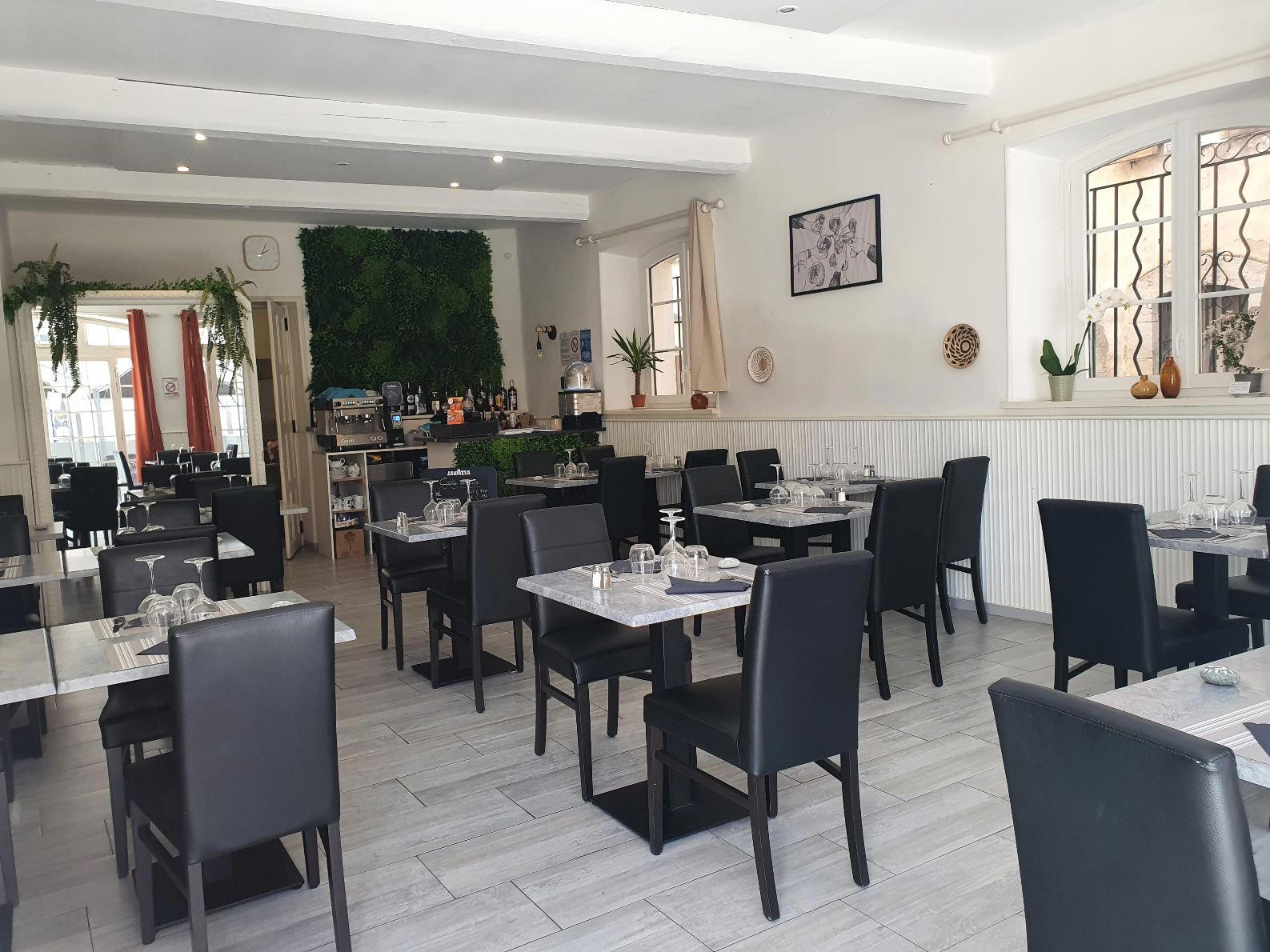
A Village Square, a Provençal Pantry
Trans-en-Provence sits in the Var département, roughly equidistant between the coastal sprawl of the Côte d'Azur and the wilder Gorges du Verdon. It is a village that appears on fewer itineraries than the coast, which says less about its quality than about how the French interior is often bypassed by visitors moving between Nice and Aix. The village square here — the Place de l'Hôtel de Ville — has the unhurried geometry of a hundred similar squares across southern France: a mairie, a fountain, plane trees casting shade in the afternoon. Le Grigoli's occupies a position directly on that square at number one, and the physical setting does most of the atmospheric work before a dish arrives.
Provence's food culture is among the more ingredient-legible in France. Unlike kitchens where technique is the primary story, the Provençal tradition asks the cook to answer for what is in season and where it was sourced. That accountability is built into the local market structure: the Var produces olives, courgettes, tomatoes, aubergines, figs, almonds, and a range of herbs that function less as garnish and more as architectural elements in the cooking. For a restaurant sited in a village like Trans-en-Provence, proximity to those sources is not a marketing proposition, it is simply the operational reality. The distance between a Var market garden and a kitchen counter here is measured in minutes, not supply chains.
The Provençal Sourcing Tradition and What It Means at the Table
To understand why ingredient sourcing matters so specifically in this part of France, it helps to look at the broader southern culinary context. At Mirazur in Menton, Mauro Colagreco built a three-Michelin-star program substantially around a kitchen garden model, the coastal Alpes-Maritimes landscape feeding the menu in real time. Further west, Auberge du Vieux Puits in Fontjoncouse in the Corbières applies a similar logic in a remote village setting: the address is inconvenient, the sourcing is unimpeachable, the reputation follows. These are the reference points for what sourcing-led cooking in rural southern France can achieve at its most ambitious.
Le Grigoli's operates at a different register, a village bistro in a small Var commune. But the principle is the same. The Var's agricultural calendar is specific: early spring brings asparagus and artichokes from the Plaine des Maures; summer produces a corridor of stone fruit, tomatoes, and courgette flowers that defines the region's cuisine at its most photogenic; autumn turns to mushrooms, game, and the olive harvest. A kitchen here that pays attention to that calendar will eat and cook differently in June than it does in November, and that responsiveness is the baseline expectation of Provençal village cooking at its most honest.
For the broader French culinary conversation, it is worth noting how differently the southern village restaurant tradition sits from the grand institutional houses. Operations like Paul Bocuse - L'Auberge du Pont de Collonges or Georges Blanc in Vonnas function as anchors of regional identity but with the full apparatus of multi-generational reputation and destination dining infrastructure. The village square bistro operates without that scaffolding: its authority comes from continuity with a place and its produce, not from awards architecture. Both models are legitimate expressions of French regional cooking; they are simply answering different questions.
The Square as Context
Eating on or adjacent to a French village square carries its own set of codes. The pace is slower, the room usually smaller, the menu shorter. Lunch tends to be the more considered meal in towns of this scale, with the square coming to life between noon and two before the afternoon quiet reasserts itself. The Var heat in summer means shade becomes a primary amenity, and the plane trees on a square like the Place de l'Hôtel de Ville provide it reliably. Evening service in a village of Trans-en-Provence's size draws a more local crowd, which is generally the better signal of a kitchen's actual standing in its community.
For visitors arriving from the coast, Trans-en-Provence is accessible by road from Draguignan, which itself connects to the A8 autoroute. The village does not have a train station; a car is the practical requirement for this part of the Var interior. Those combining a visit with the wider region might cross-reference L'Oustau de Baumanière in Les Baux to the west or AM par Alexandre Mazzia in Marseille for a sense of what the broader southern French kitchen is doing at different ambition levels. Our full Trans-en-Provence restaurants guide covers additional options across the town and surrounding Var communes.
Further afield in France, the reference kitchen for ingredient-led cooking in a remote setting is Bras in Laguiole, where the Aubrac plateau's flora has shaped a three-star menu for decades. The ambition at Le Grigoli's is not in that category, but the underlying logic, that a kitchen's identity should be answerable to its specific geography, runs through both ends of the spectrum. It also runs through the Atlantic coast work at La Marine in Noirmoutier-en-l'île and the Alsatian tradition at Auberge de l'Ill in Illhaeusern, each of which grounds itself in a specific terroir rather than a portable technique.
Planning a Visit
Trans-en-Provence is a working Var village rather than a tourist centre, and Le Grigoli's reflects that: the address is on the main square, making it direct to locate on foot from any part of the town centre. Specific hours, pricing, and booking procedures are best confirmed before arrival. Walk-in availability may be easier than in larger towns, though market days and summer weekends can fill local dining rooms quickly.
At-a-Glance Comparison
Comparable venues nearby, for context on price, style, and recognition.
| Venue | Cuisine | Price | Notes |
|---|---|---|---|
| Le Grigoli'sThis venue — the venue you are viewing | Authentic French Bistro | $$ | Not listed |
| La Farigoulette | Traditional Provençal French Bistro | $$ | Fayence village center |
| L'Emblème | Mediterranean Bistro | $$ | Sophia Antipolis |
| Le Provençal | Traditional Provençal Truffle Bistro | $$ | centre-ville |
| Les Cinq Sens | French Mediterranean Bistro | $$ | Port Cros |
| Elsa | French Fine Dining by Marcel Ravin | Not listed | Roquebrune-Cap-Martin |
Continue exploring
More in Trans En Provence
Restaurants in Trans En Provence
Browse all →
Bars in Trans En Provence
Browse all →
Hotels in Trans En Provence
Browse all →


At a Glance
- Cozy
- Romantic
- Family
- Date Night
- Terrace
- Street Scene
Chaleureux et accueillant with friendly service.