

A Michelin Plate-recognised address on Avenue de la Motte-Picquet, Le Florimond sits in the 7th arrondissement's quieter register of traditional French cooking, mid-priced, grounded in Limousin terroir, and shaped by a kitchen that moves between grandmother's recipes and seasonal vegetable-forward plates. It holds, which places it well above the neighbourhood average for comparable bistros.
Pearl is the En Primeur Club membership app — saves, bookings, and concierge access live there. Same editors, same standards.
- Address
- 19 Av. de la Motte-Picquet, 75007 Paris, France
- Phone
- +33 1 45 55 40 38
- Website
- leflorimond.com
- Directions
- Get directions
 Saves & bookings on Pearl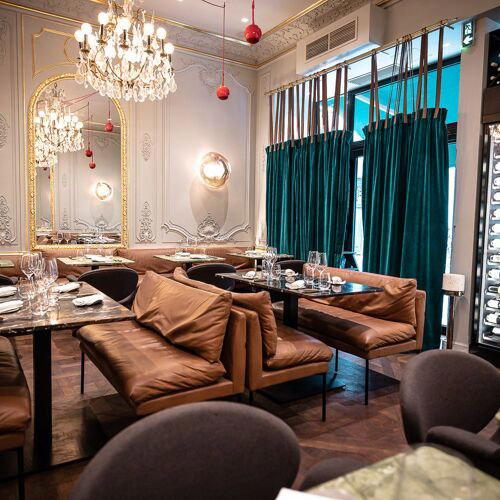
The 7th Arrondissement's Approach to the Ritual Meal
Paris's 7th arrondissement has never been a district that chases trends. The streets around the École Militaire and the Champ-de-Mars have long sustained a particular style of restaurant, mid-priced, classically framed, and anchored to the kind of cooking that treats the meal as a structured event rather than a sequence of Instagram moments. The ritual of the French lunch or dinner, with its arc from amuse to digestif, its pace set by the table rather than the kitchen, finds some of its most reliable expression in this neighbourhood. Le Violon d'Ingres works the same arrondissement at a higher price tier, while 20 Eiffel represents the contemporary-facing edge of local dining. Le Florimond, at 19 Avenue de la Motte-Picquet, occupies a different register: unhurried, traditional, and rooted in the kind of regional French cooking that made the €€ bistro format a cultural institution rather than just a price bracket.
Terroir as the Organising Principle
French traditional cuisine, when it operates at its most coherent, is a form of culinary regionalism. The leading practitioners in this category do not assemble a menu from wherever the season points; they begin with a specific geographical sensibility and allow the season to work within it. Le Florimond's kitchen has its roots in the Limousin, a region in south-central France known for its cattle, its chestnuts, and its unshowy approach to ingredients, a tradition that prizes honesty of flavour over technique for its own sake. This places it in a comparable set that runs from the deeply regional houses of provincial France, such as Auberge Grand'Maison in Mûr-de-Bretagne and Auga in Gijón, to the Parisian bistros that have transplanted a regional identity into the capital without diluting it.
That regional grounding coexists with a gradual shift toward produce-led cooking. In response to customer interest in health and sustainability, the kitchen has moved part of its creative energy toward seasonal fruit and vegetables, not as a philosophical pivot, but as a practical evolution that keeps the menu responsive without abandoning its foundations. The stuffed cabbage, made to a grandmother's recipe, represents the anchoring point: a dish that is legible, technically modest by haute cuisine standards, and almost impossible to improve through intervention. Its continued presence on the menu signals something about what kind of meal Le Florimond considers worth serving.
Pacing, Ceremony, and What the Dining Ritual Asks of You
The French dining ritual carries expectations that the tourist circuit has largely erased from Paris's more visible addresses. At a restaurant like Le Florimond, the meal is not a transaction with a start time and an exit window; it is a sequence with internal logic, where each course arrives when the kitchen and the room decide it should, not when a cover-turn calculation demands it. This is, by the standards of much contemporary hospitality, an act of mild resistance. It also tends to produce a better meal.
Compare that against the upper tier of Parisian creative fine dining: Mirazur in Menton and the formally starred houses like Flocons de Sel in Megève operate in an entirely different register of ceremony. At the other end of the French tradition, the institutional gravity of Paul Bocuse's Auberge du Pont de Collonges or Auberge de l'Ill in Illhaeusern reminds you how deep the liturgical strand of French dining runs. The restaurant is not in that company by scale or prestige, but it shares the underlying conviction that a meal should have duration and that duration is part of the pleasure.
For context within the Paris dining spectrum, places like Allard and Anecdote represent adjacent positions in the traditional-bistro tier, each with its own way of calibrating formality against warmth. The €€€€ tier, Alléno at Ledoyen, L'Ambroisie, Le Cinq, Plénitude, operates the same city's fine-dining ritual, but at a remove from the everyday that changes its social function entirely. The restaurant occupies the middle distance: approachable enough to sustain regular patronage, serious enough that the meal has shape and intention. 19.20 by Norbert Tarayre represents a more contemporary-inflected address in the same city tier.
Michelin Recognition and What It Means at This Level
The Michelin Plate, awarded in both 2024 and 2025, is the guide's baseline signal: the inspectors ate here and considered the food worth noting. It is not a star, and it does not carry the competitive weight of the upper tiers occupied by houses such as Troisgros in Ouches or Bras in Laguiole. What consecutive Plate recognition does confirm is consistency, the kitchen is not occasionally good. For a traditional-format restaurant at the €€ price point, consistency is the relevant metric, because the meal depends less on a single theatrical dish than on a sequence of preparations that all meet the same standard. That standard has been met across two consecutive guide editions.
The cuisine type is listed as Traditional, which within the Michelin taxonomy places it alongside the classical bistro tradition rather than the creative-contemporary line. That distinction matters when you are planning a meal in Paris and trying to understand what a restaurant is actually offering. Traditional here means technique in service of flavour, not technique as spectacle, and that aligns directly with the regional Limousin foundation the kitchen works from.
Know Before You Go
| Address | 19 Av. de la Motte-Picquet, 75007 Paris, France |
|---|---|
| Cuisine | Traditional French, Limousin-rooted |
| Price range | €€ |
| Recognition | Michelin Plate 2024 and 2025; Google 4.7 / 607 reviews |
| Booking | Reservation recommended; contact details available via Google Maps listing |
| Area context | 7th arrondissement, close to École Militaire and the Champ-de-Mars |
Compact Comparison
Comparable venues nearby, for context on price, style, and recognition.
| Venue | Cuisine | Price | Notes |
|---|---|---|---|
| Le FlorimondThis venue — the venue you are viewing | Gros-Caillou, Traditional French Bistro | $$ | Not listed |
| À La Biche au Bois | Not listed | $$ | Bercy/Nation (12th arrondissement), Traditional French Bistro with Game Specialties |
| Le Mermoz | Not listed | $$ | 8th arrondissement (Champs-Élysées area), Modern French Neo-Bistro |
| Beurre Noisette | Not listed | $$ | 15th arrondissement, Market-Inspired French Bistro |
| Le Mazenay | Not listed | $$ | Marais, French Bistro with Vietnamese Accents |
| Jouvence | Not listed | $$ | 12th Arrondissement, Modern French Bistro |
Recognition history
Dated appearances from independent guides and award organizations, with the underlying list record or original source where available.
Michelin Plate
Michelin
Michelin Plate
Michelin
We're Smart World 2 Radishes
We're Smart World
Michelin Plate
Michelin
Continue exploring
More in Paris
Restaurants in Paris
Browse all →
Bars in Paris
Browse all →
Hotels in Paris
Browse all →



At a Glance
- Cozy
- Intimate
- Classic
- Well Known
- Date Night
- Celebration
- Special Occasion
- Family
- Group Dining
- Standalone
- Local Sourcing
- Farm To Table
Current opening hours
- Monday
- 12–2:15 PM, 7–10:15 PM
- Tuesday
- 12–2:15 PM, 7–10:15 PM
- Wednesday
- 12–2:15 PM, 7–10:15 PM
- Thursday
- 12–2:15 PM, 7–10:15 PM
- Friday
- 12–2:15 PM, 7–10:15 PM
- Saturday
- Closed
- Sunday
- Closed
Hours can change for holidays and private events. Last verified .
Warm, intimate, and homey with a welcoming atmosphere that makes guests feel like they're dining at a French grandmother's house; soft lighting and traditional bistro décor create a cozy, unpretentious setting.