Our verdict
Le Copenhague occupies a commanding address on the Avenue des Champs-Élysées, placing it within one of Paris's most scrutinised dining corridors. For travellers planning a serious meal on the eighth arrondissement's grand axis, understanding how this address fits the broader landscape of Parisian fine dining, and how to approach it, matters as much as the menu itself.

Pearl is the En Primeur Club membership app, where members save venues, book tables and use the concierge.

The menu
What to order
- Raw Mackerel and Pickles
Dining on the Axis: The Champs-Élysées Fine Dining Context
The Avenue des Champs-Élysées is not where most serious Paris diners instinctively look. The avenue's commercial density and tourist volume have, for decades, pushed the city's more celebrated kitchens toward quieter addresses: the 7th arrondissement's hushed streets, the 8th's side avenues, or the Left Bank's institutional rooms. Yet Le Copenhague at number 142 occupies a position that resists that conventional wisdom. Sitting on the Champs-Élysées itself, it operates in a category of Parisian dining that must work harder to signal seriousness, which is precisely why understanding its place in this corridor matters before you plan a visit.
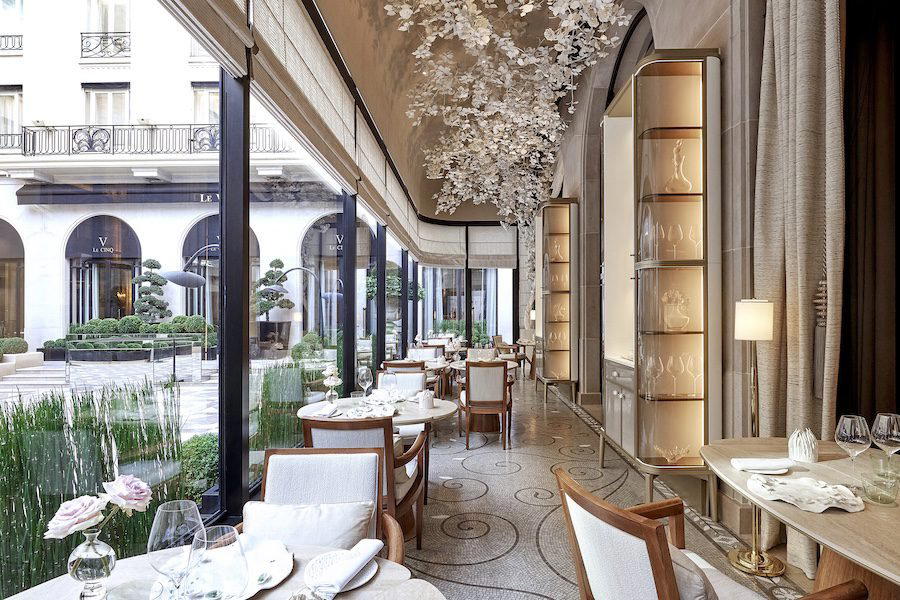
The 8th arrondissement alone contains some of France's most decorated tables. Le Cinq at the Four Seasons Hôtel George V anchors the George V side streets with three Michelin stars and a formal grandeur that references classical French service at its most theatrical. Alléno Paris au Pavillon Ledoyen, also three-starred, pushes the creative edge of French technique from its pavilion in the gardens of the Champs-Élysées. Le Copenhague's address on the avenue itself places it adjacent to these references, geographically close, contextually distinct.
A Scandinavian Signal on a French Address
Name carries weight that the address alone does not. Copenhagen's dining influence on European fine dining over the past fifteen years has been structural: the Nordic approach to seasonality, fermentation, and ingredient-forward cooking reshaped how serious kitchens across the continent thought about restraint and sourcing. A Parisian restaurant carrying that association in its name positions itself within that broader tradition, one that now sits in productive tension with classical French technique rather than opposition to it.
This Scandinavian-French dialogue is not unique to this address. Across Paris, a generation of kitchens has absorbed Nordic thinking without abandoning French rigour. Kei in the 1st arrondissement offers a parallel case: a Japanese sensibility applied to French foundations, earning three Michelin stars by making that cross-cultural tension productive rather than decorative. Le Copenhague operates within a similar logic, where the geographical reference in its name functions as a culinary positioning statement.
Planning a Visit: What the Address Demands
The editorial angle here is practical and direct: the Champs-Élysées as a dining destination requires more planning than most Paris addresses, and less of it has to do with the restaurant's booking calendar than with the surrounding logistics. The avenue's pedestrian density, particularly between April and October, means arrival timing matters. Coming by metro (Franklin D. Roosevelt or George V stations place you within comfortable walking distance of number 142) avoids the taxi delays that peak tourist season reliably produces on the avenue itself.
For Paris fine dining at this tier, advance reservation is the baseline assumption. The city's most recognised rooms, from L'Ambroisie in the Place des Vosges to Arpège in the 7th, typically require bookings of four to eight weeks, with three-star tables extending to three months or beyond during high season. Any serious address on or near the Champs-Élysées operates within those same parameters during spring and autumn, Paris's two most demand-compressed dining seasons.
For broader context on how Le Copenhague fits within the city's wider restaurant map, the EP Club Paris restaurants guide covers the full range of arrondissement-by-arrondissement options at this price tier.
Situating Le Copenhague within French fine dining more broadly means acknowledging that Paris no longer monopolises the country's most ambitious kitchens. Regional France has produced a constellation of tables that rival or surpass the capital in ambition. Mirazur in Menton earned the number one position on the World's 50 Best list in 2019, operating from the Mediterranean coast. Troisgros in Ouches and Bras in Laguiole have sustained multi-decade relevance from provincial bases. Flocons de Sel in Megève and Auberge de l'Ill in Illhaeusern demonstrate that Alsatian and Alpine terroirs support cooking of serious depth.
Within Paris, the competitive set for an address at this level on the Champs-Élysées includes rooms with documented Michelin recognition and strong international name recognition. Paul Bocuse's Auberge du Pont de Collonges near Lyon remains the reference point for what French institutional dining means at its most codified. Against that tradition, a Scandinavian-inflected address in Paris reads as a deliberate counter-positioning.
The international frame extends further. For travellers who move between Paris and New York's fine dining circuits, the comparison with Le Bernardin, which translates French technique into a New York context with consistent four-star recognition, or the cross-cultural ambition of Atomix, which applies Korean precision to a Western fine dining format, illustrates how this kind of cultural hybridity now operates across the tier. France's own regional examples, from AM par Alexandre Mazzia in Marseille to Assiette Champenoise in Reims and Auberge du Vieux Puits in Fontjoncouse, confirm that the country's serious cooking is distributed widely, making a Parisian address only one node in a larger map.
Planning Details
| Detail | Le Copenhague | Le Cinq (peer reference) | Alléno Ledoyen (peer reference) |
|---|---|---|---|
| Address | 142 Av. des Champs-Élysées, 75008 | 31 Av. George V, 75008 | 8 Av. Dutuit, 75008 |
| Arrondissement | 8th | 8th | 8th |
| Nearest Metro | Franklin D. Roosevelt / George V | George V | Champs-Élysées–Clemenceau |
| Price Tier (peer context) | Not confirmed | €€€€ | €€€€ |
| Michelin Stars | Not confirmed | 3 | 3 |
| Advance Booking Recommended | Yes (assume 4+ weeks minimum) | 8–12 weeks | 8–12 weeks |
Frequently asked questions
What's the overall feel of Le Copenhague?
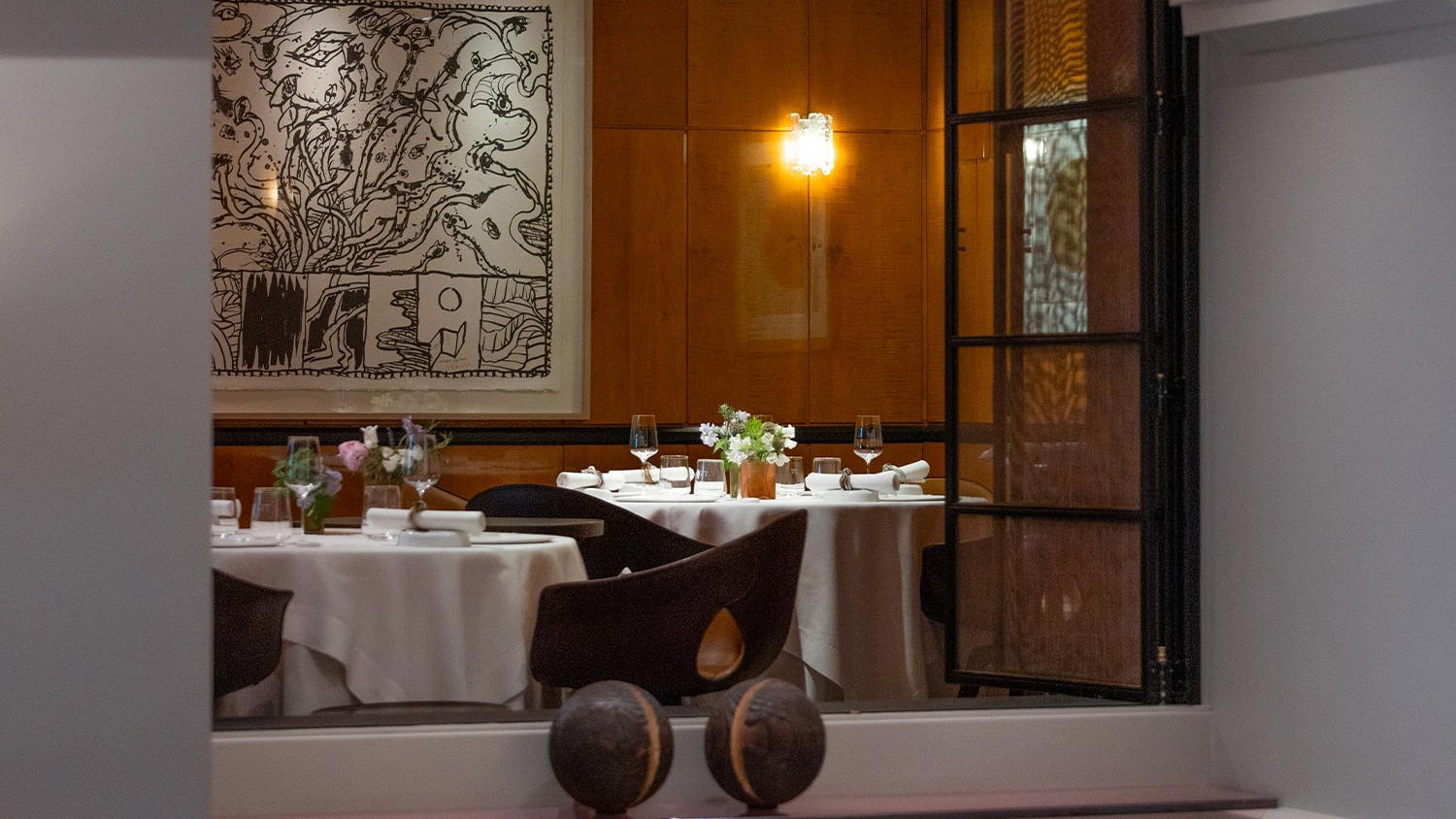
Le Copenhague occupies a notable position on the Avenue des Champs-Élysées at number 142, which immediately sets a formal, considered tone, this is not a casual street-level drop-in. The Scandinavian signal in the name points toward restraint and precision rather than the opulence associated with classic French grande cuisine. Expect a composed, structured dining environment shaped by the tension between its French address and its Nordic conceptual framing.
What's Le Copenhague's location?
Le Copenhague is located at 142 Av. des Champs-Élysées, 75008 Paris, France, Paris.
Is Le Copenhague a good option for fine dining on the Champs-Élysées compared to other Paris 8th arrondissement restaurants?
The 8th arrondissement concentrates some of Paris's most formally recognised tables, including multi-Michelin-starred addresses, which makes Le Copenhague's Scandinavian positioning at 142 Avenue des Champs-Élysées a deliberate counter-point to classic French haute cuisine in the same postcode. Copenhagen's influence on European fine dining since the early 2010s has been structurally significant, the city shifted the conversation on technique and produce sourcing continent-wide, and a Paris restaurant drawing on that lineage sits in a well-defined peer group.
What dish is Le Copenhague famous for?
The Scandinavian orientation of the name suggests an approach grounded in Nordic technique and seasonal produce, but confirming signature dishes requires checking directly with the restaurant before your visit.
Do they take walk-ins at Le Copenhague?
Given the restaurant's address on the Champs-Élysées at 142 and its positioning within Paris fine dining, advance reservation is the prudent approach, the avenue draws significant foot traffic, and restaurants at this level rarely rely on walk-in covers to fill the room.
What is Le Copenhague known for?
Le Copenhague is identified by its Scandinavian framing within a Paris fine dining context, an unusual combination on an avenue more associated with large-scale brasseries and luxury retail than Nordic-influenced cuisine. Copenhagen's outsized role in reshaping European fine dining over the past fifteen years lends the name a specific set of associations: fermentation, seasonal restraint, produce-led menus, and precise technique. That editorial positioning on the Champs-Élysées at 75008 makes it a distinct reference point in the Paris dining conversation.
Can Le Copenhague accommodate dietary restrictions?
Restaurants operating at the fine dining level in Paris generally handle dietary requirements with advance notice, but the specifics, particularly around tasting menu substitutions, should be confirmed directly when making a reservation at the Champs-Élysées address.
Comparable Spots
| Venue | Cuisine | Price | Awards | Notes |
|---|---|---|---|---|
| Le CopenhagueThis venue (the venue you are viewing) | New Nordic Danish | $50–100 | Not listed | Not listed |
| Alléno Paris au Pavillon Ledoyen | Modern French Fine Dining | $150–200 | 3 Michelin Stars · World's 50 Best #79 | Creative |
| Kei | Modern French with Japanese Influences | $300–500 | 3 Michelin Stars · World's 50 Best #93 | Contemporary French, Modern Cuisine |
| L'Ambroisie | Classic French Haute Cuisine | $300–500 | 2 Michelin Stars · World's 50 Best #23 | French, Classic Cuisine |
| Le Cinq - Four Seasons Hôtel George V | Modern French Fine Dining | $300–500 | 3 Michelin Stars · World's 50 Best #24 | French, Modern Cuisine |
| Pierre Gagnaire | Avant-Garde French Fine Dining | $200–300 | 3 Michelin Stars · World's 50 Best #17 | French, Creative |