Wild & The Moon on Rue Charlot sits at the intersection of the Marais's design-conscious street culture and a broader Parisian shift toward plant-forward eating. The café operates as a reference point for the city's organic, whole-food movement, drawing a neighbourhood crowd that spans locals, creatives, and visitors seeking something outside the bistro tradition. It belongs to a category the city has taken seriously only in the last decade.
Pearl is the En Primeur Club membership app — saves, bookings, and concierge access live there. Same editors, same standards.
- Address
- 55 Rue Charlot, 75003 Paris, France
- Phone
- +33 1 86 95 40 44
- Website
- wildandthemoon.fr
- Directions
- Get directions
 Saves & bookings on Pearl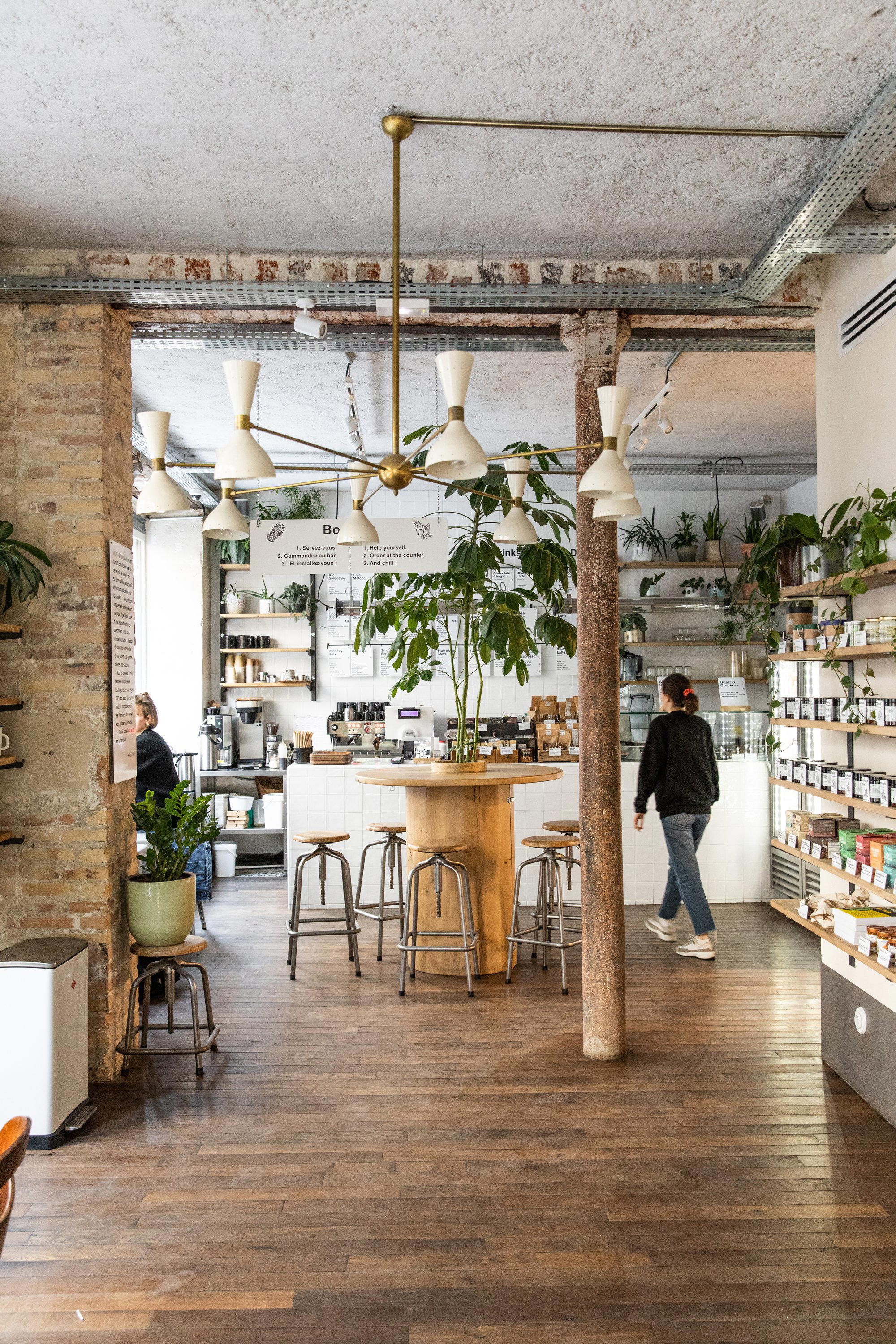
Plant-Forward Paris and the Marais Moment
The rue Charlot stretch of the upper Marais has spent the last decade evolving from a gallery corridor into one of the city's most food-conscious streets. The neighbourhood sits between the design ateliers of the 3rd arrondissement and the busier café circuits near Place de la République, and that positioning has shaped the kind of food businesses that open here: smaller, slower, more deliberate about sourcing. Wild & The Moon, at number 55, arrived as that shift was consolidating, and it functions now as one of the clearer examples of what Parisian plant-based eating looks like.
For most of the twentieth century, Paris was not a city that took vegetable-centred cooking seriously at the level of cafés and casual counters. The prestige sat firmly with classical technique and animal protein. The three-star world, from L'Ambroisie in the Marais to Le Cinq at the Four Seasons George V, remained structured around French classical tradition. Even creative departures, such as the work at Alléno Paris au Pavillon Ledoyen or Kei, approached vegetables as one component of a larger composition, not as the organisational principle. The café tier followed the same logic, defaulting to croque-monsieurs and jambon-beurre as baseline offerings.
That began shifting in the 2010s, partly through international influence and partly through a younger Parisian consumer who had lived or studied abroad and returned with different expectations. Wild & The Moon entered that opening and has since expanded to multiple locations across the city, which, in Paris's cautious café market, is a meaningful signal of traction.
What the Rue Charlot Address Tells You
Location in Paris is never incidental. The 3rd arrondissement carries specific associations: independent retail, a design-literate public, a food culture that values provenance without performative austerity. The street-level format at Wild & The Moon fits that register. It reads as a place you go on a Tuesday morning as readily as a Saturday brunch, which in Paris is a particular kind of social permission that not every café manages to establish.
The organic and raw-food café category it occupies is, by French standards, still relatively young. France's food culture prizes technique and tradition above almost everything, so a café built around cold-pressed juices, plant milks, and whole-ingredient bowls operates somewhat against the grain of the broader scene. That tension is part of what makes places like this worth attention: they are not simply transplanting a Los Angeles or London format onto a Paris street but negotiating between international wellness-food habits and French expectations around quality of ingredient and preparation care.
The Marais has been a natural home for this negotiation. Its population skews younger and more internationally connected than the traditional 6th or 7th arrondissement café circuits. It also has the foot traffic density to sustain a counter that does not rely on a long, sit-down lunch as its primary revenue format.
Organic Sourcing as a Cultural Stance
Across the category, the credibility of a plant-forward café rests almost entirely on ingredient sourcing. A cold-pressed juice made from supermarket fruit is a different product than one built from certified organic, seasonally correct produce, and a Paris consumer who has been to markets at Bastille or Raspail knows the difference. Wild & The Moon's positioning within the organic-first tier places it in a comparable set that competes on sourcing transparency rather than price or spectacle.
This is a distinct operating logic from the fine-dining world represented by houses such as Arpège, where Alain Passard's vegetable focus is expressed through multi-course haute cuisine with the kind of technical rigour that earned and has sustained three Michelin stars for decades. The café format that Wild & The Moon occupies operates at a different register entirely: accessible price points, counter service or light table service, a menu designed for daily return visits rather than occasion dining.
Internationally, the plant-forward fine-dining conversation extends beyond France. Mirazur in Menton, which held the number one position on the World's 50 Best list in 2019, built its identity partly around garden-to-table sourcing along the French Riviera. Further afield, venues like Lazy Bear in San Francisco show how plant-forward thinking integrates into tasting-menu formats that owe as much to technique as to ideology. The café tier where Wild & The Moon operates is quieter about credentials but no less deliberate about its position.
The Broader French Restaurant Context
Understanding Wild & The Moon requires some sense of what it is not competing with. The major French houses, from Paul Bocuse's Auberge du Pont de Collonges to Troisgros in Ouches, Bras in Laguiole, or Auberge de l'Ill in Illhaeusern, represent a tradition of hospitality and technique that has defined French gastronomy internationally for generations. Destination properties like Les Prés d'Eugénie in Eugénie-les-Bains, Flocons de Sel in Megève, La Table du Castellet, Georges Blanc in Vonnas, and Auberge du Vieux Puits in Fontjoncouse all anchor a conception of French dining that is place-specific and technique-heavy.
Wild & The Moon operates in the interstitial space that those institutions leave open: the everyday, the accessible, the counter that serves someone who cares about what they eat but is not booking three months ahead. That space is increasingly competitive in Paris, and the organic café category has attracted enough serious operators that the baseline standard has risen. Credibility now requires demonstrable sourcing, consistent preparation, and a menu that does not feel imported wholesale from another city's wellness-food circuit. The fact that Wild & The Moon has maintained a presence across multiple Paris locations suggests it has met enough of those criteria to retain a loyal return customer base.
Wild & The Moon's negotiation is different in scale but not unrelated in principle.
Where It Fits
Comparable venues nearby, for context on price, style, and recognition.
| Venue | Cuisine | Price | Notes |
|---|---|---|---|
| Wild & The MoonThis venue — the venue you are viewing | Plant-Based Superfood Cafe | $$ | Not listed |
| Balls | Gourmet Meatballs | $$ | 11th Arrondissement (Popincourt) |
| Saperavi | Authentic Georgian | $$ | 5e arrondissement |
| Indonesia | Traditional Indonesian | $$ | Quartier Latin |
| Freddy’s | Modern Small Plates Tapas | $$ | 6th Arr. |
| Telescope | Specialty Coffee Shop | $$ | 1er arrondissement |
Continue exploring
More in Paris
Restaurants in Paris
Browse all →
Bars in Paris
Browse all →
Hotels in Paris
Browse all →
At a Glance
- Trendy
- Modern
- Minimalist
- Brunch
- Casual Hangout
- Open Kitchen
- Organic
- Local Sourcing
Current opening hours
- Monday
- 8 AM–7 PM
- Tuesday
- 8 AM–7 PM
- Wednesday
- 8 AM–7 PM
- Thursday
- 8 AM–7 PM
- Friday
- 8 AM–7 PM
- Saturday
- 9 AM–7 PM
- Sunday
- 9 AM–7 PM
Hours can change for holidays and private events. Last verified .
Light, airy atmosphere with raw, minimalist decor blending high-tech Parisian oasis and wild vegetal touches.