Our verdict
On Rue Port Neuf, Bayonne's most characterful street for food and drink, Le Chistera occupies a spot shaped by the Basque Country's deep culture of sourced, local produce. The address sits in a city where pintxos bars and market stalls set a high baseline for ingredient quality, and Le Chistera reads as part of that tradition rather than apart from it.

Pearl is the En Primeur Club membership app — saves, bookings, and concierge access live there. Same editors, same standards.
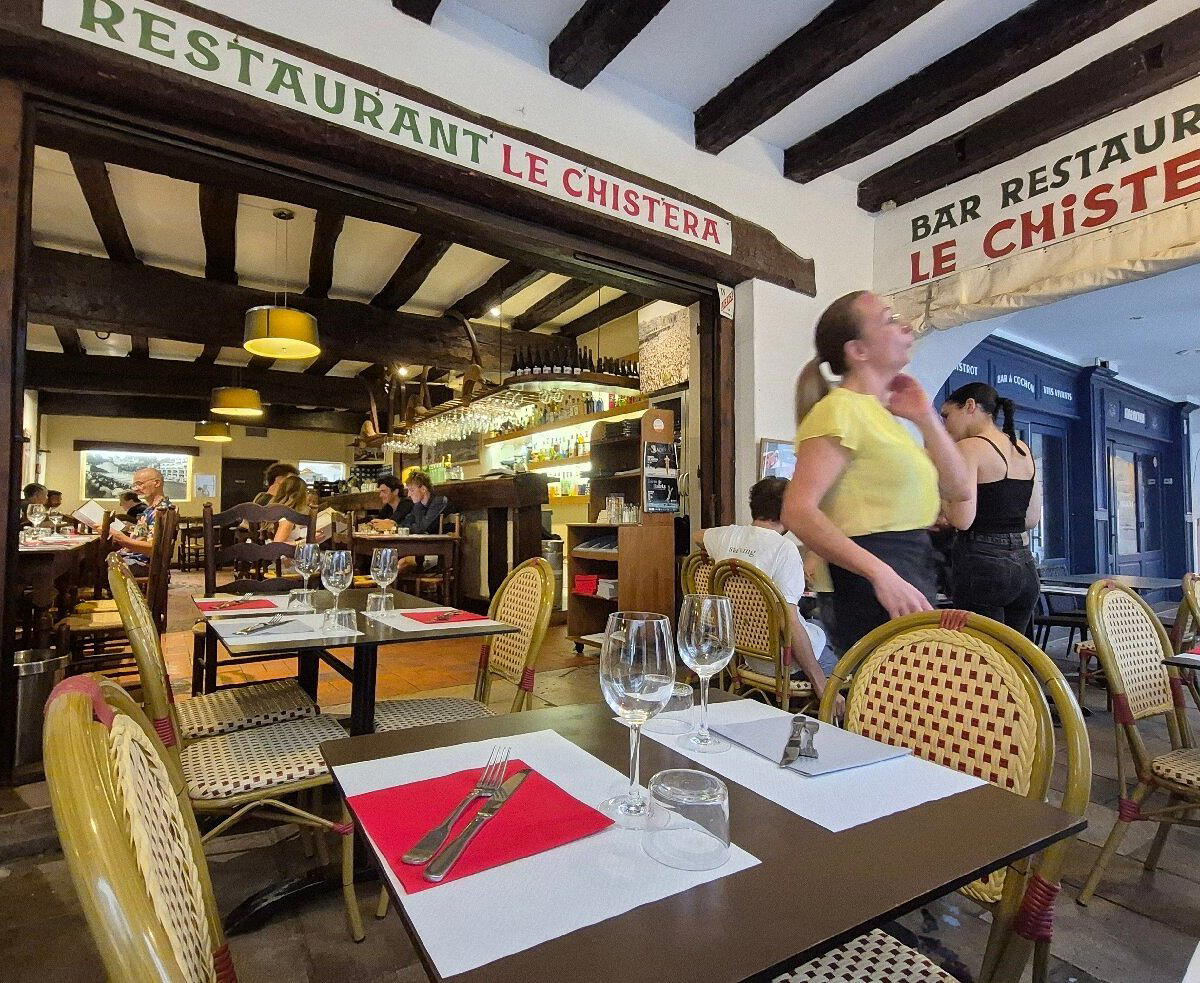
Rue Port Neuf and the Ingredient Logic of Bayonne Eating
Rue Port Neuf is the axis around which Bayonne's food culture rotates. The street runs through the heart of the old city, past charcutiers curing Bayonne ham in the centuries-old style, chocolate makers operating under the methods introduced by the Sephardic community in the seventeenth century, and market traders whose suppliers are, in many cases, farms within an hour's drive. When a restaurant sits on this street, it inherits both the context and the standard. Le Chistera, at number 42, is part of that fabric.
The name itself is worth noting before anything else arrives on the table. A chistera is the curved wicker basket used in jai alai, the fast and physically demanding Basque sport that has been played across the region for centuries. It is a local reference without being a decorative one — it signals a point of view about where this restaurant belongs, geographically and culturally, before the kitchen makes its case.
What the Basque Country Brings to the Plate
The Basque Country, straddling the French and Spanish sides of the Pyrenees, operates one of Europe's most coherent regional food systems. On the French side, the Adour Valley produces duck and foie gras of a quality that drives significant wholesale trade toward Paris. The Atlantic coast, roughly thirty kilometres west of Bayonne, delivers anchovy, hake, and sea bass through Saint-Jean-de-Luz and Hendaye. Inland, Espelette pepper — the only French chilli pepper to hold an Appellation d'Origine Protégée, grows in a single, defined zone and arrives dried or fresh into Basque kitchens as a seasoning rather than a heat source.
This density of designated, traceable ingredients gives Basque cuisine a geographic backbone that very few French regional traditions can match. Compare it to, say, the Alsatian kitchen at a place like Au Crocodile in Strasbourg, where German influence runs parallel to French technique, or the high-altitude sourcing discipline at Flocons de Sel in Megève, and you see how location-specific ingredient logic shapes what ends up on the plate. In Bayonne, the sourcing case is almost made before the kitchen begins.
Le Chistera operates within that system. Bayonne's Tuesday and Saturday markets at the covered Halles de Bayonne supply a consistent rotation of seasonal produce, white asparagus in spring, cèpes and walnuts through autumn, and winter preparations built around preserved duck and dried peppers. A restaurant on Rue Port Neuf has direct access to that supply chain, and the proximity is an operational advantage as much as a philosophical one.
Where Le Chistera Sits in Bayonne's Dining Picture
Bayonne's restaurant scene has a split identity. There is the pintxos-and-cider register, which runs fast, informal, and cheap, and there is a more considered mid-market tier where ingredient sourcing and kitchen ambition move closer together. Le Chistera occupies territory in that second bracket, alongside addresses like Goxoki, which holds to traditional Basque cuisine in the same price range, and La Grange, another address working within the city's classic culinary register.
The more creative end of the Bayonne spectrum is represented by places like Basa, where the kitchen takes a less traditional approach, and Germaine, which has built a following for a different kind of neighbourhood dining proposition. The farm-to-table tier has its own anchor in La Table - Sébastien Gravé, which makes ingredient provenance an explicit part of its identity. Le Chistera does not require that level of programmatic declaration; the address and the tradition do the framing work.
For a fuller reading of the city's dining options across categories and price points, the EP Club Bayonne restaurants guide maps the scene in more detail.
The Broader French Context
Bayonne is not a city that generates the kind of institutional recognition that places like Mirazur in Menton or Alléno Paris au Pavillon Ledoyen attract. That is partly because its culinary identity is resolutely regional rather than internationally ambitious, the same quality of localism that defines places like Bras in Laguiole or Auberge de l'Ill in Illhaeusern, both of which built their reputations on a deep relationship with a specific place and its produce. There is a strong argument that the Basque Country deserves more critical attention in that conversation.
For visitors coming from contexts like Le Bernardin in New York City or Atomix, restaurants where every sourcing decision is visible and documented, eating in Bayonne involves a different kind of trust: the supply chain here is embedded in the city's commercial infrastructure, not presented as a marketing differentiator. The ingredients arrive because this is where they are grown, caught, or cured. That is a harder thing to perform and a more honest version of farm-to-table than most cities can offer.
Addresses like Troisgros - Le Bois sans Feuilles in Ouches, Paul Bocuse in Collonges-au-Mont-d'Or, and Assiette Champenoise in Reims represent French regional cooking at its most decorated. Le Chistera does not compete in that tier. It operates in a more everyday register, which in Bayonne means a register still shaped by exceptional raw materials. And in a city where the chocolate shops and ham curers on the same street set a consistent quality benchmark, that is a meaningful position to hold. AM par Alexandre Mazzia in Marseille shows what happens when a regional city produces a kitchen that takes its local identity to an international level; Bayonne has not yet produced that translation, but the underlying ingredients are there.
Planning a Visit
Le Chistera is at 42 Rue Port Neuf in central Bayonne, within walking distance of the covered market and the cathedral. The street is compact and lively on market days, Tuesday and Saturday mornings draw the most concentrated activity in the surrounding neighbourhood, and arriving in that window gives a richer sense of what the kitchen is working with. Booking ahead is advisable for weekend lunch and dinner; Rue Port Neuf restaurants at this level of local following do not carry much walk-in capacity. Contact details and current hours should be confirmed directly, as the venue's operational information is not centrally listed.
Frequently asked questions
How do I find Le Chistera?
Le Chistera is located at 42 Rue Port Neuf, 64100 Bayonne, France, Bayonne.
How does Le Chistera differ from the pintxos bars also found on Rue Port Neuf in Bayonne?
Bayonne's dining scene divides broadly between the fast, informal pintxos-and-cider register and a more considered sit-down format where Basque ingredients are given longer treatment. Le Chistera at 42 Rue Port Neuf operates in the latter category, which means plated courses rather than bar snacks and a kitchen approach grounded in the French Basque tradition rather than the cross-border pintxos circuit. The distinction is one of pace and depth, not price or formality alone.
What should I order at Le Chistera?
The Basque Country's ingredient calendar is the most reliable guide. Spring brings white asparagus from the Landes and fresh anchovies from the Bay of Biscay; autumn shifts toward game and mushrooms from the Pyrenean foothills. Le Chistera sits on Rue Port Neuf, steps from Bayonne's covered market, which means the kitchen works within a short supply radius. Follow whatever reflects that week's local catch or harvest rather than anchoring to a fixed dish.
Is Le Chistera reservation-only?
Established addresses on Rue Port Neuf with a loyal local following tend to fill quickly at weekend lunch and Friday dinner — Bayonne's food culture is resident-first, not tourist-first. Booking ahead is the practical approach, particularly if you are visiting on a market day when foot traffic through the old city increases. Walk-ins may find space at the counter or early in the week, but the safer position is to reserve.
Comparison Snapshot
Comparable venues nearby, for context on price, style, and recognition.
| Venue | Cuisine | Price | Awards | Notes |
|---|---|---|---|---|
| Le ChisteraThis venue — the venue you are viewing | Traditional Basque | $20–30 | Not listed | Not listed |
| Le Bayonnais | Basque Bistro | $30–50 | Not listed | Petit Bayonne |
| Relief | Modern French Bistronomic | Not listed | Michelin Plate | Saint Esprit |
| Germaine | Modern French Creative | $50–100 | Michelin Plate | Quai Amiral Dubourdieu |
| Goxoki | French Gastronomic Brasserie | $50–100 | Michelin Plate | Petit Bayonne |
| Basa | Modern French Brasserie with Basque and Asian Influences | $30–50 | Michelin Plate | centre de Bayonne |
Continue exploring
More in Bayonne
Restaurants in Bayonne
All restaurants in Bayonne →
Bars in Bayonne
Browse all →
Details
- Classic
- Cozy
- Family
- Casual Hangout
- Historic Building
- Local Sourcing
- Street Scene
- A La Carte
- Vegetarian Friendly
Current opening hours
- Monday
- Closed
- Tuesday
- 12–2 PM
- Wednesday
- 12–2 PM
- Thursday
- 12–2 PM, 7–9 PM
- Friday
- 12–2 PM, 7–9 PM
- Saturday
- 12–2 PM, 7–9 PM
- Sunday
- 12–2 PM
Hours can change for holidays and private events. Last verified .
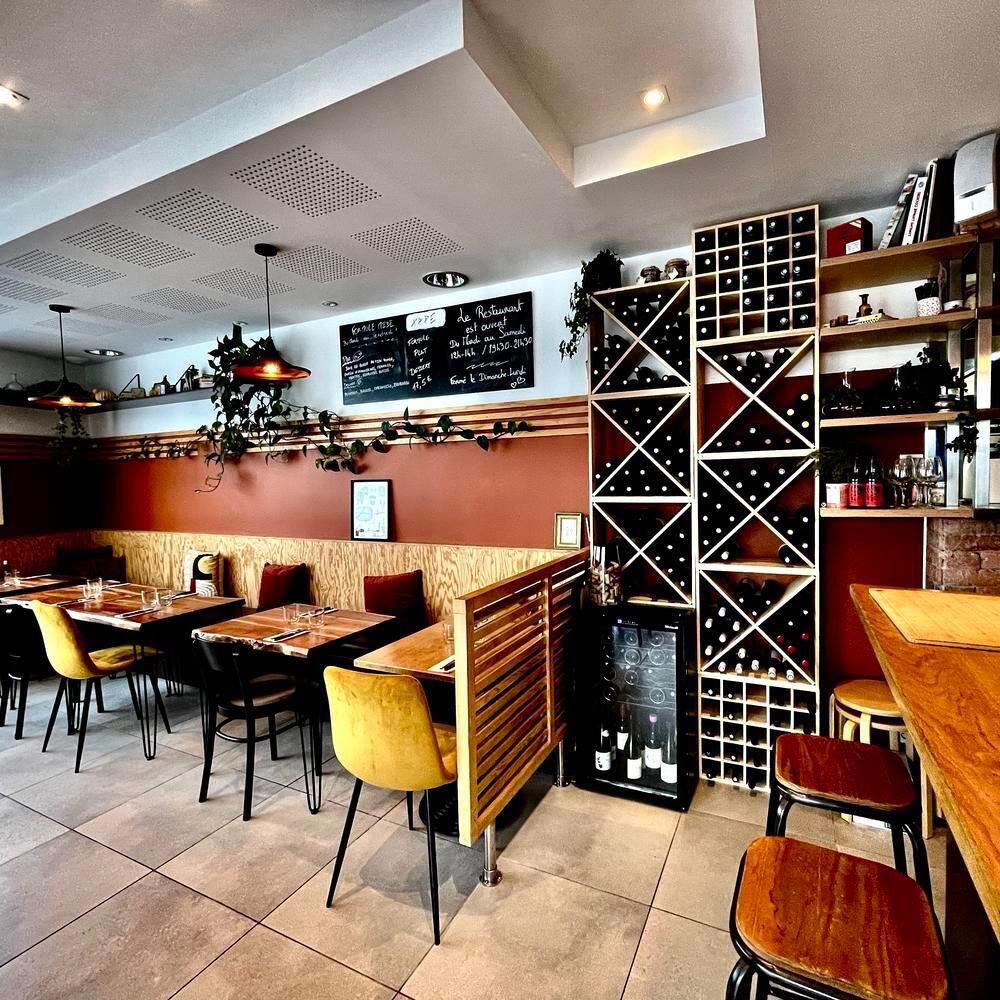
Cozy and welcoming with charming wood beams and a relaxed traditional atmosphere.