
At Germaine on Bayonne's Quai Amiral-Dubourdieu, Maxime Chentouf runs a counter of fifteen seats and a single set menu that draws on fermentation, robatayaki, citrus, and seaweed alongside the Basque Country's notable local produce. The format is disciplined, the cooking is technically precise, and the result is a small-room experience that places Bayonne firmly on the map for serious diners tracking France's most interesting solo-chef counters.
Pearl is the En Primeur Club membership app — saves, bookings, and concierge access live there. Same editors, same standards.
- Address
- 27 quai Amiral-Dubourdieu
- Phone
- +33 6 87 62 06 07
- Website
- germainerestaurant.fr
 Saves & bookings on Pearl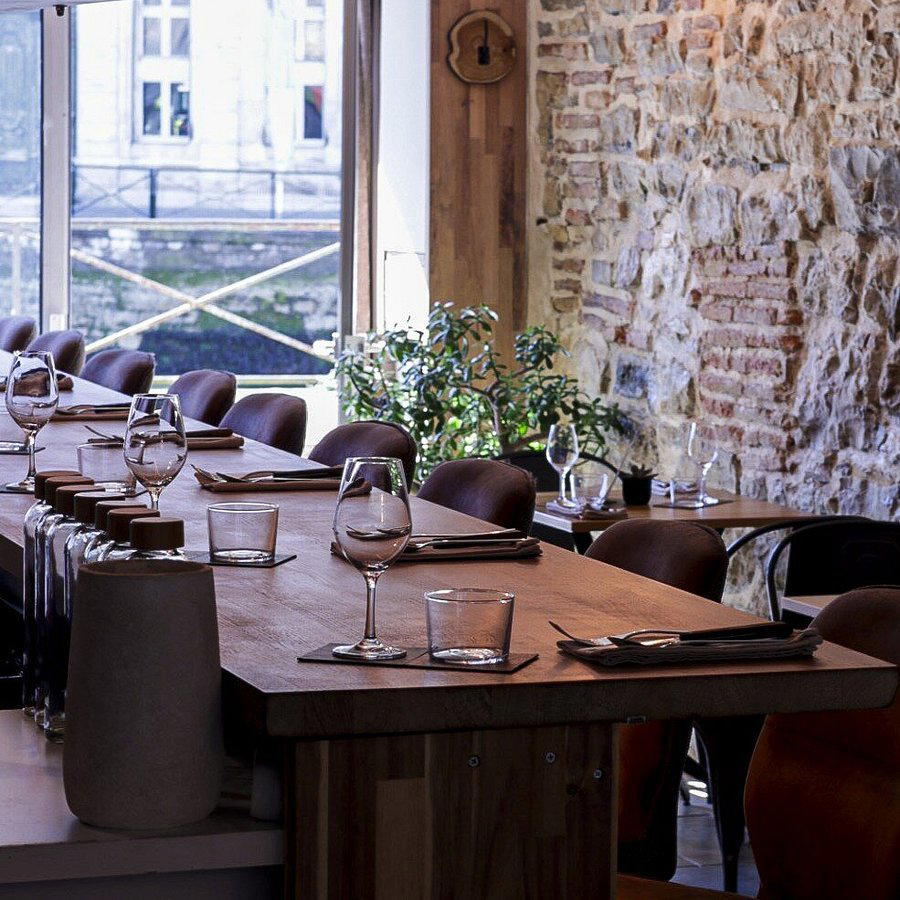
The Counter at Quai Amiral-Dubourdieu
Bayonne sits at the confluence of the Nive and Adour rivers, and its dining scene has long traded on the same raw materials that define the broader Basque Country: salt-cured ham from the Pyrenean foothills, cheeses from upland farms, fish from the Cantabrian Atlantic, and peppers whose dried powder turns everything terracotta-red. Most of the city's restaurant culture leans into that tradition directly, Goxoki (Traditional Cuisine) and La Grange (Traditional Cuisine) both work within that conservative, produce-forward register. Germaine, at 27 quai Amiral-Dubourdieu, starts from the same ingredient base but routes it through a different sensibility.
The room is small and intentional. Fifteen seats arranged around a counter, with one chef working behind it. In French fine dining, the solo-counter format has become a particular vehicle for precision and personal statement, closer in spirit to the Japanese omakase model than to the brigade-driven kitchens behind the country's grandes tables. At this scale, every decision about sourcing is visible. There is nowhere to hide mediocre produce, and no sous chef to absorb the rounding errors. What arrives in front of you reflects exactly what Maxime Chentouf decided to buy that week, and how he decided to treat it.
Where the Produce Comes From, and What It Does
The Basque Country is one of France's most tractable sourcing territories. The mountains, the coast, and the river systems within a short radius of Bayonne produce a range of ingredients that most chefs in larger cities have to source from multiple distant suppliers. The local produce referenced in Germaine's menu descriptions is not a marketing gesture, in a fifteen-cover room with a single set menu, it is a structural commitment. The menu changes around what is available and excellent, not around what is consistent and convenient.
What distinguishes Germaine's treatment of those ingredients is the technical framework applied to them. Fermentation extends and transforms flavours that might otherwise peak and fade. Citrus, a category the Basque coast handles with more nuance than its Mediterranean competitors, given the influence of the Atlantic climate on acidity levels, runs through the menu as a brightness agent rather than a dominant note. Seaweed, gathered from Atlantic waters that wash both the French and Spanish Basque coastlines, provides mineral depth that functions differently from the umami-forward seaweed preparations more common in Japanese-influenced cooking further north. The robatayaki technique, Japanese charcoal grilling, introduces a specific kind of heat and smoke that modifies texture at the surface without disturbing the ingredient's core character.
This is a culinary vocabulary assembled from several traditions, French, Japanese, and Basque, but it is not fusion in the diluted sense. Each technique has a specific job to do with a specific local ingredient. The sourcing and the method are in genuine conversation, which is what separates this kind of cooking from menus where global technique is applied decoratively to whatever produce happens to be available. For broader context on how French chefs are rethinking local sourcing, the approach at Bras in Laguiole and the farm-to-table discipline at Flocons de Sel in Megève offer instructive reference points, though the scale and setting at Germaine are different.
One Menu, Served All at Once
The format here is specific and worth understanding before you book. There is one set menu. All fifteen guests receive their courses simultaneously. This is a deliberate structural choice rather than a logistical constraint, and it shapes the atmosphere in ways that distinguish it from the sequential tasting-menu format common across French fine dining, from Alléno Paris au Pavillon Ledoyen in Paris down to mid-tier tables in regional cities.
The simultaneous service means the kitchen's timing is built around the room as a collective rather than around individual pacing. It creates a shared rhythm between guests that smaller, more fragmented services rarely achieve. It also means that the menu is not a surprise menu, guests know what they are eating, which allows the format to function as a choice rather than an act of faith. That distinction matters in a room this size, where the relationship between kitchen and guest is closer and more legible than in larger venues.
Bayonne's creative dining tier is growing but remains compact. Basa (Creative) and Nuance (Modern Cuisine) occupy adjacent territory in the city's more experimental register, while La Table - Sébastien Gravé (Farm to table) takes a more agrarian approach to similar sourcing territory. Germaine's counter format and the specific combination of techniques place it in a distinct position within that peer group, closer in format logic to Japanese-influenced European counters than to the region's broader bistro-to-gastronomic spectrum.
Planning Your Visit
The fifteen-seat capacity means demand consistently outpaces availability. Bookings at counters of this type in provincial French cities, particularly those with a single operator running a single daily service, tend to fill quickly once word circulates among the travelling dining public, and Germaine is no exception. Advance planning is not optional here; it is the functional requirement of a room this size. The address is 27 quai Amiral-Dubourdieu, on the riverside quayside that runs through the older part of Bayonne. The location places it within reach of the city's central accommodation options, which are covered in our full Bayonne hotels guide.
For those building a longer Bayonne itinerary, the city's bars, wineries, and broader restaurant scene are mapped in our full Bayonne bars guide, our full Bayonne wineries guide, and our full Bayonne experiences guide. For a full view of where Germaine sits within the city's dining options, our full Bayonne restaurants guide maps the scene across price tiers and cooking styles.
Internationally, the solo-counter format at this level of technical ambition has parallels across France and beyond, from the produce-obsessive sourcing discipline at Mirazur in Menton to the lineage-driven precision of Troisgros - Le Bois sans Feuilles in Ouches, and across the Atlantic to the product-first philosophy that defines Le Bernardin in New York City. Germaine operates at a different scale from any of those, but the commitment to sourcing intelligence and technical honesty places it in the same broad conversation about what serious cooking actually requires of its ingredients.
How It Stacks Up
Comparable venues nearby, for context on price, style, and recognition.
| Venue | Cuisine | Price | Awards | Notes |
|---|---|---|---|---|
| GermaineThis venue — the venue you are viewing | Modern French Creative | $$$ | Michelin Plate | Not listed |
| Nuance | Modern French Fine Dining | $$$$ | Michelin Plate | Petit Bayonne |
| La Table - Sébastien Gravé | Modern Basque Bistronomie | $$$ | Michelin Plate | Petit Bayonne |
| Relief | Modern French Bistronomic | $$ | Michelin Plate | Saint Esprit |
| Goxoki | French Gastronomic Brasserie | $$$ | Michelin Plate | Petit Bayonne |
| Le Chistera | Traditional Basque | $$ | Not listed | Downtown |
Recognition history
Dated appearances from independent guides and award organizations, with the underlying list record or original source where available.
Michelin Plate
Michelin
At a Glance
- Intimate
- Modern
- Elegant
- Date Night
- Special Occasion
- Chefs Counter
- Open Kitchen
- Extensive Wine List
- Local Sourcing
- Waterfront
Current opening hours
- Monday
- Closed
- Tuesday
- 8–10 PM
- Wednesday
- 8–10 PM
- Thursday
- 8–10 PM
- Friday
- 8–10 PM
- Saturday
- 8–10 PM
- Sunday
- 8–10 PM
Hours can change for holidays and private events. Last verified .
Elegant, accessible, and comfortable counter dining space focused on the immersive chef experience.