Le Cappeville sits on Rue Cappeville in Gisors, a Norman market town where the cooking tradition leans on the agricultural wealth of the Vexin plateau. Without the density of starred kitchens found in Normandy's larger cities, places like this carry the local dining scene on their own terms, drawing from the surrounding farmland in ways that larger, more celebrated French tables rarely need to.
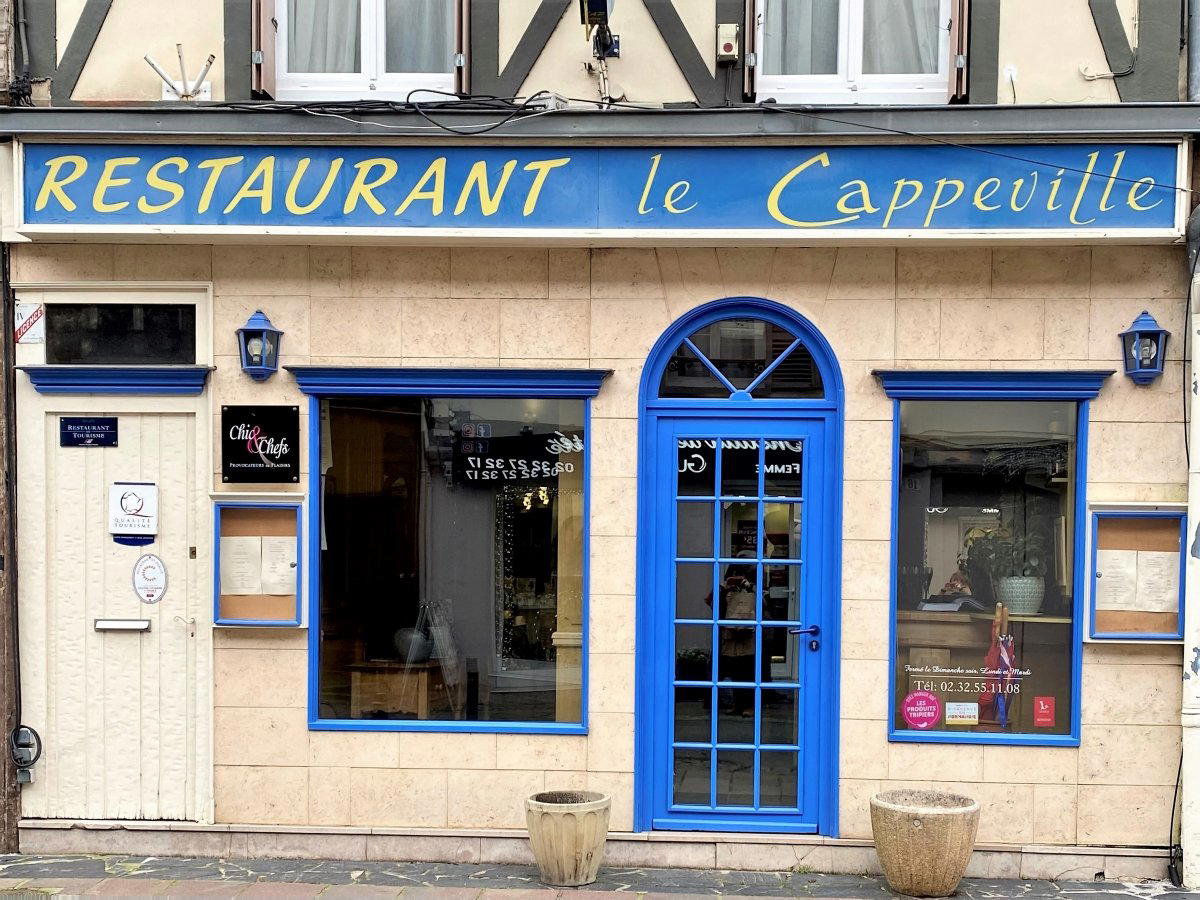
Gisors and the Vexin Table
The Norman Vexin is agricultural France at its least performative. The plateau that stretches between the Seine valley and the Oise produces wheat, dairy, and livestock at a scale that feeds Paris but rarely earns much attention from the dining press. Gisors, the market town at its centre, is the kind of place where supply chains are short not because a chef has engineered a sourcing philosophy, but because the farms are simply there, a few kilometres down a departmental road. Restaurants that operate in this context have access to ingredients that kitchens in larger cities spend considerable effort and money trying to replicate. Le Cappeville, a Traditional French Normandy Bistro at 17 Rue Cappeville, Gisors, sits inside that agricultural logic. For context on what else the local dining scene offers, see our full Gisors restaurants guide.
What the Land Brings to the Plate
Norman cooking has always been inseparable from its primary materials: butter, cream, apple, and the beef and dairy cattle that define the bocage and the plateau. The ingredient sourcing tradition in this part of France is not a recent trend toward localism but a structural feature of how kitchens here have always operated. The Vexin's proximity to Paris, roughly 75 kilometres by road, means its produce is prized by metropolitan buyers, which in turn means local restaurants are competing for the same supply as urban tables. A restaurant on Rue Cappeville in Gisors occupies an interesting position in that competition: geographically close to the source, without the price architecture of a Parisian dining room pushing the cost of those ingredients upward.
This matters because the ingredient quality available in small Norman towns is genuinely high. The cattle breeds raised on the Vexin plateau, the cheeses produced in neighbouring Seine-Maritime and Calvados, the apple orchards that supply both cider and calvados: these are not secondary products that filter down from elsewhere. They are the primary output of the region, and a kitchen that draws on them correctly does not need elaborate technique to produce something worth eating. The French regional table at its most coherent is exactly this: materials of high provenance, cooked with knowledge of local tradition rather than ambition to replicate a metropolitan register.
France's most celebrated restaurants, from Alléno Paris au Pavillon Ledoyen to Mirazur in Menton, tend to use sourcing as a narrative anchor, naming producers and building tasting menus around seasonal provenance as a deliberate signal of seriousness. At that level, ingredient sourcing is both a culinary and a marketing act. In a town like Gisors, the same sourcing logic applies without the apparatus of a starred room around it. The Vexin's produce does not need a three-Michelin-star context to be good; it needs a kitchen that knows what to do with it.
The Norman Dining Tradition in a Market Town
Market towns in northern France have historically supported a specific kind of restaurant: one that serves the commercial and agricultural community of the surrounding area, anchored to the weekly market rhythm, and oriented toward a midday meal that is substantial rather than theatrical. This is not the model of the destination restaurant, the kind of place that draws visitors from other regions or countries as a primary purpose. It is the model of the integrated local table, where the cooking is evaluated by regulars who know what the season should taste like because they live inside it.
Gisors fits that profile. Its Wednesday and Saturday markets supply the town with direct access to Vexin produce, and the restaurants that sit in its centre are positioned to benefit from that supply. The address on Rue Cappeville places Le Cappeville within walking distance of the market place and the medieval château that dominates the town's skyline, which means it sits at the practical heart of Gisors rather than on its periphery. This is the geography of a town-centre bistro or brasserie, the kind of room that serves lunch to the market-day crowd and dinner to locals on weekends.
That format sits at a considerable remove from the high-investment tasting-menu format that defines France's most documented restaurants. Tables like Bras in Laguiole, Auberge de l'Ill in Illhaeusern, or Paul Bocuse in Collonges-au-Mont-d'Or have spent decades building the infrastructure of destination dining: wine cellars, extended kitchen brigades, rooms designed to hold guests for three-hour meals. The regional market-town table operates on different economics and different expectations, and that is not a deficiency but a distinction. Some of France's most honest cooking happens precisely where the pressure to perform for a travelling audience is absent.
Placing Le Cappeville in Context
Without published awards, a documented chef, or a rated price tier, Le Cappeville cannot be evaluated against the criteria that apply to starred or widely reviewed rooms. What can be assessed is its position within Gisors's dining offer and within the Norman culinary tradition more broadly. Restaurants in this category, small-town French tables in agricultural regions, are increasingly rare in the sense that the economic pressures of hospitality have thinned their numbers. Those that persist tend to do so because they serve a genuine local need and draw on a supply chain that is both proximate and consistent.
The contrast with destination restaurants elsewhere in France is instructive rather than hierarchical. Assiette Champenoise in Reims and Au Crocodile in Strasbourg operate in regional cities with enough visitor traffic to sustain a different model. Auberge du Vieux Puits in Fontjoncouse has built a destination identity around a village address. The restaurant does not appear to be competing in that space. It addresses a different reader: someone already in Gisors, or passing through the Vexin on the way between Paris and the Norman coast, looking for a room that cooks from the region rather than despite it.
Planning a Visit
Gisors is accessible by car from Paris in around 90 minutes via the A15 and D14, or by regional train from Paris Saint-Lazare with a connection at Pontoise, a journey of roughly two hours. The town itself is compact enough to cover on foot. The restaurant's address on Rue Cappeville places it in the centre, close to the château and the market square. Arriving on a market day, Wednesday or Saturday morning, is the practical approach. Norman kitchens in this format typically serve lunch from noon and dinner from early evening, but confirmation at the address is advisable before planning a journey specifically around a meal here.
For those building a wider itinerary around serious French cooking, the region connects logically to Normandy's coast and to Paris, where restaurants like Flocons de Sel, Christopher Coutanceau in La Rochelle, La Marine in Noirmoutier, L'Oustau de Baumanière in Les Baux, AM par Alexandre Mazzia in Marseille, Georges Blanc in Vonnas, Troisgros in Ouches, Le Bernardin in New York, and Atomix in New York represent a different register of ambition entirely. The restaurant is not a stop on a fine-dining itinerary. It is a stop on a journey through the agricultural core of northern France, where the cooking, at its most grounded, reflects the land it sits on.
How It Stacks Up
Comparable venues nearby, for context on price, style, and recognition.
| Venue | Cuisine | Price | Notes |
|---|---|---|---|
| Le CappevilleThis venue — the venue you are viewing | Traditional French Normandy Bistro | $$$ | Not listed |
| Les Fables de La Fontaine | Modern French Seafood Fine Dining | $$$ | 7th Arrondissement |
| Abstinence | Modern French Bistro | $$$ | 15th Arrondissement |
| Mollard | Traditional French Brasserie with Seafood | $$$ | 8th arrondissement |
| La Belle Maison | Classic French Bistro | $$$ | Montmartre |
| Les Caudalies | Contemporary French Bistro | $$$ | Bois-Guillaume |
Continue exploring
More in Gisors
Restaurants in Gisors
Browse all →
Bars in Gisors
Browse all →
Hotels in Gisors
Browse all →
Wineries in Gisors
Browse all →
At a Glance
- Elegant
- Cozy
- Intimate
- Classic
- Date Night
- Special Occasion
- Family
- Historic Building
- Extensive Wine List
- Local Sourcing
Warm and welcoming dining room with fireplace, creating a cozy and elegant atmosphere praised for its romantic and pleasant setting.