On the quieter edge of the Marais, Le Café des Musées at 49 Rue de Turenne occupies the kind of address that Paris does better than anywhere else: a neighbourhood bistro that earns its place through consistency rather than spectacle. The room trades in worn zinc, close-set tables, and the particular hum of a place locals return to without announcement. It sits firmly in the tradition of the honest Parisian café-restaurant.
Pearl is the En Primeur Club membership app — saves, bookings, and concierge access live there. Same editors, same standards.
- Address
- 49 Rue de Turenne, 75003 Paris, France
- Phone
- +33142729617
- Website
- lecafedesmusees.fr
- Directions
- Get directions
 Saves & bookings on Pearl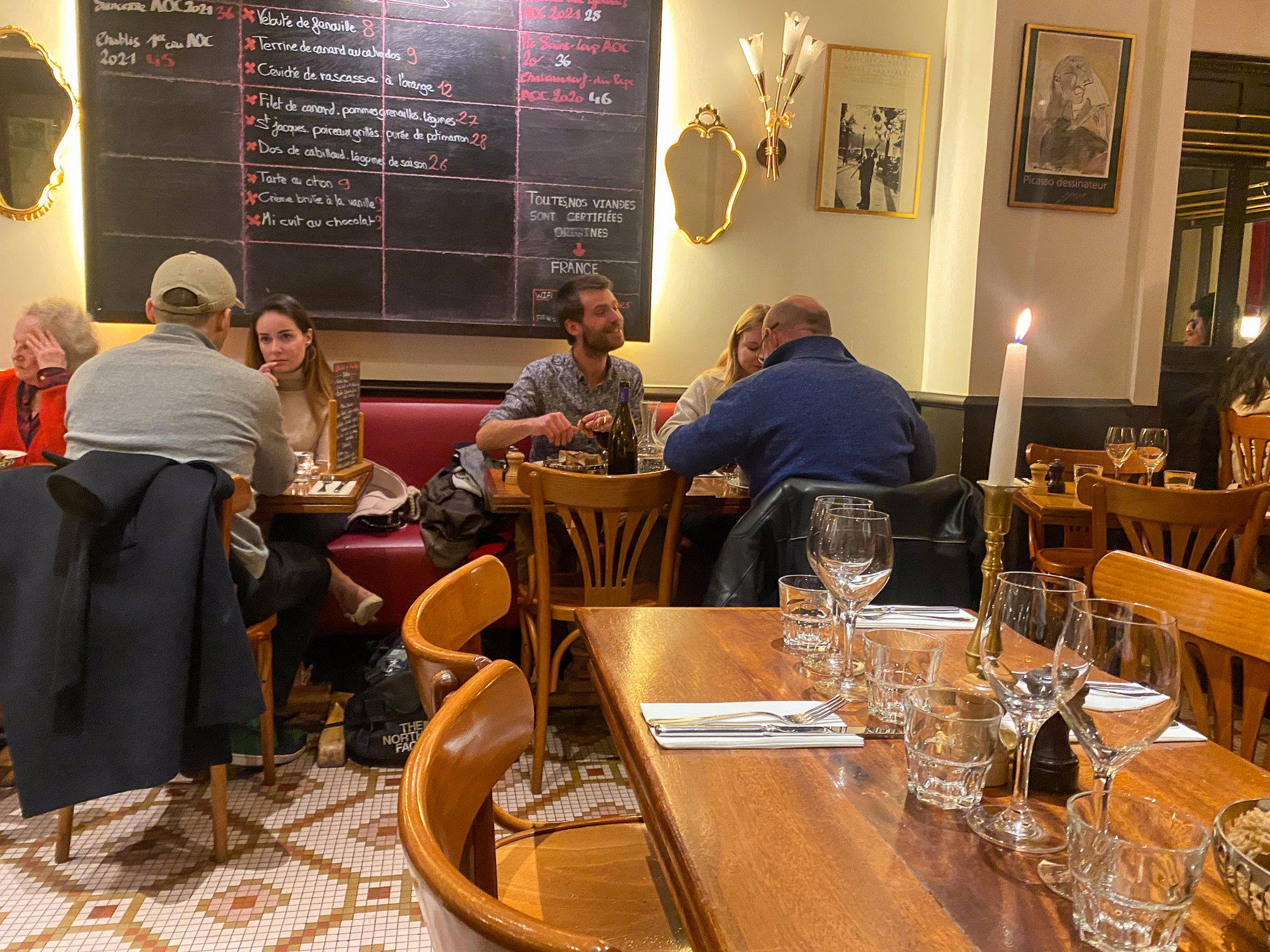
The Marais Bistro Tradition and Where Le Café des Musées Fits
Paris has many restaurants chasing the idea of the classic French bistro, but the Marais has fewer than you'd expect that actually live it. The 3rd arrondissement, specifically the stretch of Rue de Turenne running north from the Place des Vosges, has remained comparatively resistant to the gallery-café conversion that reshaped much of the surrounding neighbourhood over the past two decades. Le Café des Musées sits at number 49 on that street, and the address matters: it places the restaurant within easy reach of the Musée Picasso, the Musée Carnavalet, and the Musée Cognacq-Jay, which together give the immediate area a footfall of culturally engaged visitors who tend to eat lunch seriously rather than hurriedly.
The bistro format that Le Café des Musées represents is itself a distinct category in French dining, one that sits in Paris's accessible price range and remains distinct from restaurants like L'Ambroisie or Le Cinq at the Four Seasons George V, and equally distinct from the creative contemporary formats of Alléno Paris au Pavillon Ledoyen or Kei. The honest café-restaurant occupies its own register: steak tartare, braised meats, seasonal vegetables, a short wine list with something drinkable by the carafe. That register is increasingly difficult to sustain in Paris as rents rise and the tourist-to-local ratio in dining rooms shifts. A bistro that holds its position in a neighbourhood like the Marais is making a statement through its existence.
What the Room Actually Feels Like
The sensory character of a room like this is established before you sit down. Rue de Turenne at lunchtime has the particular quality of a Parisian side street that hasn't been fully pedestrianised or branded: delivery vans, zinc-topped bars glimpsed through open doors, and the smell of something braising that has been on the heat since early morning. Le Café des Musées continues that atmosphere internally. The décor belongs to the French tradition of not trying too hard: bentwood chairs, mirrors that have been on the walls long enough to stop being decorative, close-set tables that make solitary dining feel communal and communal dining feel slightly compressed. The acoustics are lively, which is to say loud enough to feel inhabited but not so loud as to require effort. This is the register that separates a working bistro from a restaurant performing the idea of one.
Parisians read these signals fluently. A room that has earned patina rather than installed it, a menu written on a board or a card that changes with market availability, a server who has been there long enough to have opinions about the wine list, these are not incidental details but the substance of the experience. The bistro tradition that venues like Troisgros and Auberge de l'Ill refined into haute cuisine in the provinces finds its urban, democratic counterpart in exactly this kind of address. The bistro is not a lesser form; it is a different discipline.
Placing the Menu in Tradition
French bistro cooking at its most considered works within a narrow vocabulary deliberately. The emphasis falls on technique applied to accessible ingredients: a properly made steak tartare requires good beef, correct seasoning, and confidence; a well-executed confit demands patience and fat management rather than exotic sourcing. These are not simple dishes but dishes where simplicity is the point. The tradition runs from the Lyonnais bouchon through the Parisian café-restaurant, and the markers of quality are consistently the same: ingredient sourcing, sauce depth, and the discipline not to overcomplicate.
In the broader French context, the range from a neighbourhood bistro to a destination like Mirazur in Menton or Bras in Laguiole is vast in ambition and price but connected by a shared commitment to French seasonal produce. The bistro's contribution is to make that produce legible without ceremony. A good crème brûlée at a zinc counter on Rue de Turenne and a tasting menu at a three-star address share the same underlying logic: respect for the material, precision in execution. The difference is scale and register, not the underlying argument about food.
For visitors moving between the starred addresses, Arpège, Assiette Champenoise in Reims, or Flocons de Sel in Megève, a meal at a well-positioned Marais bistro like Le Café des Musées offers a different kind of calibration: what French cooking looks like when the room costs nothing to look at and everything on the plate has to hold its own.
The Neighbourhood and When to Go
The 3rd arrondissement runs on a rhythm that differs from the tourist-heavy 4th. Mornings are quiet; the lunch service at neighbourhood restaurants draws a mix of office workers, museum visitors between venues, and locals who have a table they consider theirs. By mid-afternoon the street empties. Weekend lunch in the Marais has a different energy again, more leisurely, more families, longer occupancy at tables. The restaurant sits on Rue de Turenne, which gives it slightly more through-traffic than the narrower side streets behind the Carnavalet, making it easier to find but not obvious enough to attract queues of uncertain visitors.
Seasonally, the months when Paris bistros are at their most compelling tend to be autumn and early winter, when braised dishes and root vegetables come into their own and the evening light through a steamed-up window acquires a particular quality. Spring menus in these rooms shift toward asparagus, radishes, and the first green vegetables, which the French treat with more seriousness than most cuisines. If your Paris visit is timed around museum access, the Carnavalet alone warrants a half-day, this address works as an anchor for a longer afternoon in the 3rd.
For context on what else the Paris dining scene offers across price points and formats, the EP Club Paris restaurants guide covers the full range, from neighbourhood addresses to the level of Paul Bocuse's Auberge du Pont de Collonges and the contemporary ambition of AM par Alexandre Mazzia in Marseille. For those whose France visit takes in Alsace, Au Crocodile in Strasbourg and Auberge du Vieux Puits in Fontjoncouse represent regional French cooking at a different scale. And for those tracking French culinary influence across the Atlantic, Le Bernardin in New York and Atomix show what happens when that tradition is absorbed and redirected through other culinary frameworks.
Planning a Visit
The restaurant is located at 49 Rue de Turenne, 75003 Paris, in the northern Marais within a short walk of Saint-Sébastien-Froissart metro station on Line 8. Reservations are recommended. Arriving without a reservation at lunch on a weekday carries reasonable odds of finding a table, particularly if you arrive at or just after service begins rather than at the peak of the midday rush. Pricing sits at about $40 per person. The dress code is smart casual.
Peers Worth Knowing
Comparable venues nearby, for context on price, style, and recognition.
| Venue | Cuisine | Price | Notes |
|---|---|---|---|
| Le Café des MuséesThis venue — the venue you are viewing | Traditional French Bistro | $$ | Not listed |
| Guiren | Modern French Bistronomic with Ecuadorian Influences | $$ | 2nd arrondissement |
| Rocaille | Traditional French Bistro | $$ | Latin Quarter |
| Breizh Café Paul Bert | Authentic Breton Crêpes & Galettes | $$ | 11th arrondissement |
| La Rôtisserie | Classic French Rotisserie Bistro | $$ | Quartier Latin |
| La Table d'Eugène | Contemporary French Bistro | $$ | Montmartre (18th arrondissement) |
Continue exploring
More in Paris
Restaurants in Paris
Browse all →
Bars in Paris
Browse all →
Hotels in Paris
Browse all →
Wineries in Paris
Browse all →
At a Glance
- Classic
- Cozy
- Intimate
- Casual Hangout
- Date Night
- Open Kitchen
- Historic Building
- Extensive Wine List
- Local Sourcing
Current opening hours
- Monday
- 10 AM–10:30 PM
- Tuesday
- 10 AM–10:30 PM
- Wednesday
- 10 AM–10:30 PM
- Thursday
- 10 AM–10:30 PM
- Friday
- 10 AM–10:30 PM
- Saturday
- 10 AM–10:30 PM
- Sunday
- 10 AM–10:30 PM
Hours can change for holidays and private events. Last verified .
Warm and cozy atmosphere with 1930s Parisian heritage featuring mosaics, woodwork, and an open kitchen view.