Rocaille pairs a Traditional French Bistro menu with local sourcing, an extensive wine list, and terrace seating at 24 Rue de la Parcheminerie.
Pearl is the En Primeur Club membership app — saves, bookings, and concierge access live there. Same editors, same standards.
- Address
- 24 Rue de la Parcheminerie, 75005 Paris, France
- Phone
- +33171323011
- Website
- rocaillerestaurant.com
- Directions
- Get directions
 Saves & bookings on Pearl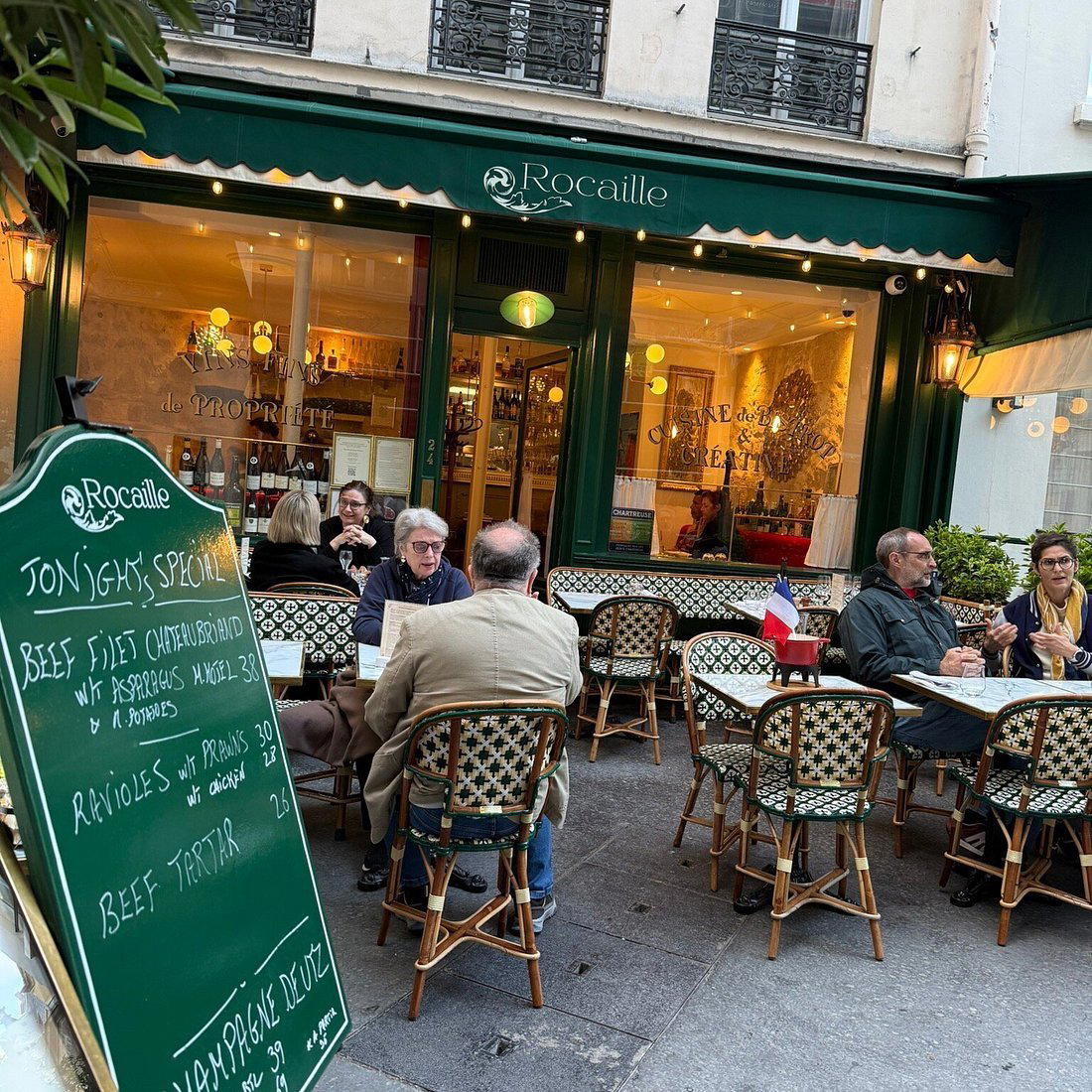
The Fifth Arrondissement and the Ethics of What Ends Up on the Plate
The Rue de la Parcheminerie has been a working street since the medieval period, when parchment-makers and scribes occupied its narrow frontages. The fifth arrondissement carries that same layered quality today: a neighbourhood where bookshops, university corridors, and small restaurants share the same block, and where the clientele tends to be less interested in spectacle than in substance. Rocaille, at number 24, belongs to this context. The address places it in a part of Paris that has always valued considered work over theatrical presentation, and that positioning matters when you try to understand what kind of restaurant it is and who it is for.
Sustainability as Operating Logic, Not Marketing Posture
Across France's serious dining tier, sustainability has become a dividing line. At one end are restaurants that deploy the language of ethical sourcing as a communications strategy while their kitchens continue to function conventionally. At the other are operations where waste reduction, supplier relationships, and seasonal discipline are the actual architecture of the menu. The distinction shows up in practical ways: how far in advance the menu is fixed, whether offcuts and secondary cuts appear alongside prime ones, how produce ordering responds to what arrives rather than what was planned. Rocaille sits in the fifth arrondissement's tradition of unpretentious rigour, a neighbourhood that produced and continues to support restaurants where the sourcing logic is legible on the plate rather than explained on a placard. For comparative reference in the French fine-dining tier, the approach has precedent at Bras in Laguiole, where the kitchen's relationship with the Aubrac plateau has defined a template for landscape-responsive cooking, and at Mirazur in Menton, where the garden rather than the market is the primary sourcing unit. Rocaille operates at a different scale and in an urban setting, but the underlying discipline of letting supply shape the menu rather than the reverse is the same structural commitment.
What the Neighbourhood Expects
The fifth arrondissement is not a neighbourhood that rewards ostentation. Unlike the eighth, where Alléno Paris au Pavillon Ledoyen and Le Cinq at the Four Seasons Hôtel George V occupy grand heritage buildings and price accordingly, or the third arrondissement's Place des Vosges, where L'Ambroisie commands its own category of formality and price, the Latin Quarter operates on different terms. Restaurants here tend to be smaller, more direct in presentation, and more dependent on local repeat custom than on destination traffic. That structure encourages a different kind of kitchen discipline: menus that change more frequently, portions that reflect what came in that morning, and a pricing logic that has to make sense to someone eating there on a Tuesday. This is the context Rocaille occupies, and it is a more demanding one in some respects than the institutional grandeur of the eighth.
French Regional Sustainability Benchmarks
France's most discussed examples of ethical sourcing operate largely outside Paris. Flocons de Sel in Megève has built its identity around Alpine producers and mountain-specific ingredients. Troisgros at Le Bois sans Feuilles in Ouches relocated partly to get closer to its sourcing network. Auberge du Vieux Puits in Fontjoncouse and Auberge de l'Ill in Illhaeusern both draw on immediate regional produce as a matter of identity rather than policy. In Paris, replicating that supplier proximity requires more deliberate effort: urban kitchens must build the supply relationships that rural restaurants inherit by geography. The restaurants in Paris that do this credibly, including Arpège, which maintains its own farm in the Loire, and Kei, which integrates Japanese sourcing rigour into a French kitchen context, tend to make the supply chain a visible part of how they communicate. Rocaille's position on the Rue de la Parcheminerie places it in a neighbourhood where that kind of transparency reads as normal rather than exceptional.
The Broader Conversation: Paris, Ethics, and the Independent Restaurant
Paris's independent restaurant sector has faced sustained pressure over the past decade, with rising costs, labour shortages, and post-pandemic shifts in dining patterns reshaping which formats survive. Sustainability-oriented kitchens have responded in different ways: some by shortening menus radically to reduce waste, some by adopting fixed-format meals that allow more precise ordering, some by shifting to lunch-only or limited-days-per-week models that give the kitchen more control over throughput. Each of these choices carries a trade-off between accessibility and discipline. Internationally, the conversation around ethical restaurant operation has reached restaurants as different as Le Bernardin in New York and Atomix, where sourcing transparency has become part of the premium offer rather than an afterthought. In France, AM par Alexandre Mazzia in Marseille and Assiette Champenoise in Reims have demonstrated that ethical sourcing commitments are compatible with three-star ambition. At the independent scale of a Latin Quarter address, the same principles apply with tighter margins and less institutional support. For a broader survey of where Rocaille sits within Paris's dining geography, the EP Club full Paris restaurants guide maps the city's current offer across price points and neighbourhoods.
Planning Your Visit
The Rue de la Parcheminerie is walkable from Saint-Michel Notre-Dame RER station and from the Cluny-La Sorbonne and Maubert-Mutualité Métro stops. The fifth arrondissement is one of the more navigable parts of central Paris on foot, and the street itself is compact. For context on the booking environment and format, contacting the restaurant directly is advisable; Parisian independents at this scale often operate without third-party reservation platforms and may offer more flexibility for walk-ins at lunch than at dinner. Below is a reference comparison against peer-set restaurants in the same city tier.
| Venue | Arrondissement | Price Tier | Format | Booking Lead Time |
|---|---|---|---|---|
| Rocaille | 5th | Contact venue | Contact venue | Contact venue |
| L'Ambroisie | 4th | €€€€ | À la carte / classic formal | Several weeks minimum |
| Kei | 1st | €€€€ | Tasting / à la carte | 2-4 weeks |
| Arpège | 7th | €€€€ | Tasting / à la carte | Several weeks |
| Au Crocodile (Strasbourg) | N/A | €€€€ | Classic formal | 1-2 weeks |
| Paul Bocuse - L'Auberge du Pont de Collonges | N/A | €€€€ | Classic / heritage | 1-3 weeks |
How Rocaille Paris compares with similar nearby venues.
| Venue | Cuisine | Price |
|---|---|---|
| Hestia | Modern Cuisine | €€€ |
Continue exploring
More in Paris
Restaurants in Paris
Browse all →
Bars in Paris
Browse all →
Hotels in Paris
Browse all →



At a Glance
- Cozy
- Classic
- Intimate
- Rustic
- Date Night
- Casual Hangout
- Terrace
- Extensive Wine List
- Local Sourcing
- Street Scene
Current opening hours
- Monday
- 12–2:30 PM, 6–11 PM
- Tuesday
- 12–2:30 PM, 6–11 PM
- Wednesday
- 12–2:30 PM, 6–11 PM
- Thursday
- 12–2:30 PM, 6–11 PM
- Friday
- 12–2:30 PM, 6–11 PM
- Saturday
- 12–11 PM
- Sunday
- 12–11 PM
Hours can change for holidays and private events. Last verified .
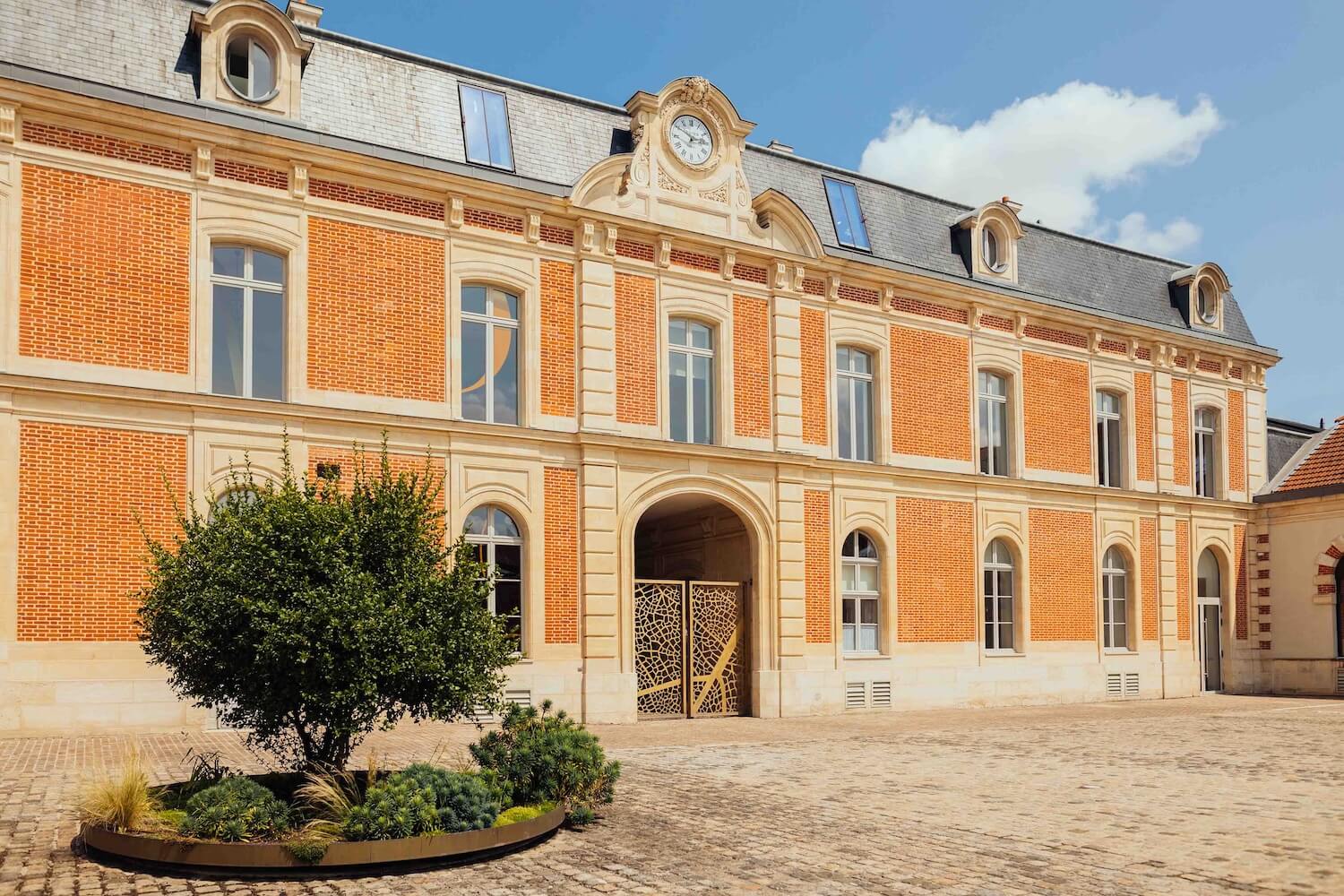
Warm, cozy room with rustic decor and inviting terrace, offering a relaxed, welcoming Parisian bistro atmosphere.
Know Before You Go
- Getting there
- 24 Rue de la Parcheminerie, 75005 Paris, France