Le Balaou
Our verdict
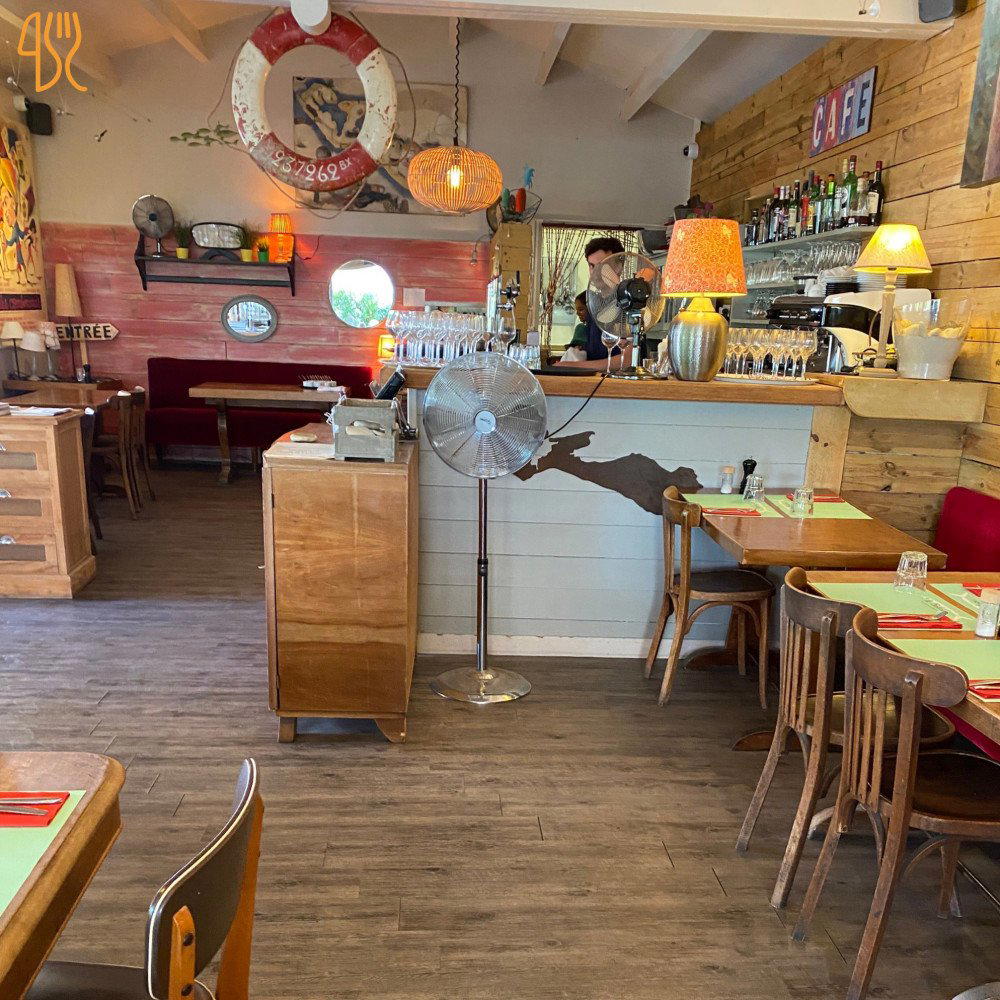
Le Balaou sits at the heart of La Couarde-sur-Mer on the Île de Ré, a village address that places it squarely inside the Atlantic seafood tradition that defines the island's restaurant culture. The surrounding waters and salt marshes shape what ends up on the plate, making provenance the organizing principle of any meal here. For visitors exploring the island's dining options, Le Balaou represents the kind of neighbourhood anchor that rewards those who look beyond the harbour-front obvious.

Pearl is the En Primeur Club membership app, where members save venues, book tables and use the concierge.
The menu
What to order
- Accras de morue sauce chien
- Couteaux en persillade
Île de Ré and the Logic of Eating Where the Food Comes From
There is a particular coherence to eating on an island, and the Île de Ré makes that coherence easier to feel than most. La Couarde-sur-Mer sits roughly at the island's midpoint, far enough from the ferry terminal at Saint-Martin-de-Ré to feel like a local address rather than a tourist staging post. The village is low-rise, cycle-path-threaded, and surrounded by salt marshes that have been worked for centuries. When a restaurant at this address draws from its immediate geography, it is drawing from one of France's most distinctive Atlantic larders: Marennes-Oléron oysters from the bays to the south, line-caught sea bass from the open Atlantic shelf, fleur de sel harvested a few kilometres away, and vegetables grown in the island's protected micro-climate. Le Balaou, at 2 bis Avenue de Nouralene, occupies that geography directly.
France's most decorated restaurants Mirazur in Menton, Alléno Paris au Pavillon Ledoyen, Bras in Laguiole, have long made ingredient provenance a formal argument, the kind that arrives on the table with printed sourcing notes and a sommelier's introduction. But the same logic operates at a quieter register along the Atlantic coast, where proximity to supply is simply a fact of restaurant life rather than a marketing position. The Île de Ré sits in that quieter tradition, and a village restaurant here competes on the quality of its sourcing relationships as much as on kitchen technique.
Atlantic Provenance: What the Waters and Marshes Actually Provide
The Charente-Maritime department, which includes the Île de Ré, is one of France's most productive coastal zones. Oyster production in the Marennes-Oléron basin, just across the Pertuis d'Antioche from the island's southern coast, is classified under a protected geographical indication, and the oysters grown there are among the most traded in French fine dining. The island's salt marshes, worked by paludiers using traditional hand-harvest methods, produce a fleur de sel that has consistent placement in professional kitchens across France. Seasonal fish from the Atlantic shelf, bar (sea bass), daurade (sea bream), sole, follow the rhythms of the season rather than the logistics of distant wholesale markets.
For context on what serious engagement with Atlantic seafood provenance looks like at the highest tier, Christopher Coutanceau in La Rochelle, a two-Michelin-star address less than an hour from the island, has made sustainable Atlantic sourcing an explicit programme, with direct relationships with local fishermen and a seasonal menu architecture built entirely around what the Pertuis Breton and Antioche straits produce week to week. Coutanceau's approach reflects a broader shift in serious French coastal cooking: the supply chain is now part of the editorial argument, not just a backstage detail. La Marine on Noirmoutier operates under a comparable philosophy further north along the Atlantic coast, where the island's geography similarly shapes a tight sourcing radius.
Le Balaou operates at a different scale from those destinations, but the geography it shares with them is the same. The Île de Ré's insularity, one bridge connecting it to the mainland at La Rochelle, keeps the supply chain short by default. Restaurants here do not need a philosophy of localism so much as a willingness to work with what the tides and the marshes actually provide each week.
The Village Setting and What to Expect Arriving
La Couarde-sur-Mer is not a showpiece destination in the way that Saint-Martin-de-Ré, with its citadel and portside restaurants, positions itself to visitors arriving by car or bicycle from the bridge. It is a working village with a market, a church square, and the kind of main-street address that relies on regulars as much as passing trade. Approaching Le Balaou at 2 bis Avenue de Nouralene, the surrounding residential scale sets the register: this is neighbourhood dining in a place where the neighbourhood is mostly people on holiday who have decided, at least temporarily, to behave like locals. For context on what French regional cooking at its most formal looks like, Auberge de l'Ill in Illhaeusern, Troisgros in Ouches, or Paul Bocuse in Collonges-au-Mont-d'Or occupy a completely different tier, destination addresses with international recognition and multi-decade reputations. Le Balaou is not in conversation with that tier, and that is precisely the point. The Île de Ré has its own internal logic, and a restaurant in La Couarde is measured by island standards: freshness, simplicity, honest pricing relative to the local market, and a sense that the kitchen is cooking with what is actually available rather than what a standardised menu demands year-round.
For those planning a broader sweep of French fine dining, Flocons de Sel in Megève, AM par Alexandre Mazzia in Marseille, Assiette Champenoise in Reims, or Auberge du Vieux Puits in Fontjoncouse, the Île de Ré represents a deliberate gear-change, a place to eat simply and well between more formal dining commitments. The island's restaurants cluster in the summer months when population triples with Parisian holiday-makers; visiting in late spring or early September gives more access to tables and a slightly less pressured atmosphere on the plate.
Planning Your Visit
Le Balaou is at 2 bis Avenue de Nouralene, La Couarde-sur-Mer, reached most practically by bicycle from anywhere on the island, the flat terrain and extensive cycle network make it the standard mode of transport. The Île de Ré is accessible from La Rochelle by the Viaduc de Ré bridge, roughly 20 minutes by car. Given the island's summer peak season (July and August), booking ahead is advisable for any La Couarde restaurant with a local following. Our full La Couarde-sur-Mer restaurants guide covers the broader dining picture across the island, including alternatives across different price points and styles. For international reference points at the French seafood end of the spectrum, Le Bernardin in New York City and Atomix represent what happens when serious technique meets a dedicated sourcing programme at full scale, a useful contrast to the scaled-down Atlantic directness of island cooking. Similarly, Georges Blanc in Vonnas, L'Oustau de Baumanière in Les Baux, and Au Crocodile in Strasbourg each illustrate how deeply French regional identity can be expressed through a kitchen's sourcing choices, a thread that runs, at a quieter pitch, through every serious restaurant on an island that has been feeding itself from its own waters for centuries.
Frequently asked questions
Is Le Balaou child-friendly?
La Couarde-sur-Mer is a family-oriented village, and the relaxed register of restaurants along Avenue de Nouralene reflects that. The flat, cycling-friendly terrain around Le Balaou's address means families typically arrive on bikes rather than by car, which sets a casual tone from the outset. Nothing in the venue's setting suggests a formal dining room that would be poorly suited to children.
What's the overall feel of Le Balaou?
La Couarde-sur-Mer operates at a slower pace than the more visited Saint-Martin-de-Ré, and Le Balaou at 2 bis Avenue de Nouralene sits squarely within that unhurried village rhythm. Without formal awards on record, the draw is situational: the island's proximity to Marennes-Oléron oyster beds and Atlantic fishing grounds gives local restaurants access to produce that larger tourist-facing destinations often charge a premium for.
Is Le Balaou a good option for a cycling lunch stop in the middle of an Île de Ré loop?
La Couarde-sur-Mer sits at roughly the geographic centre of the Île de Ré, placing Le Balaou at 2 bis Avenue de Nouralene on a logical midpoint for cyclists doing a full-island route. The village has none of the portside congestion of Saint-Martin-de-Ré, which makes it easier to find a table at a reasonable hour. The flat terrain means the ride out and back requires no particular planning around hills or recovery time.
What dish is Le Balaou famous for?
The Charente-Maritime coast, which frames the Île de Ré, is known for Marennes-Oléron oysters, Atlantic sole, and the region's fine de claire production, these are the reference points for any serious meal on the island, and village restaurants in La Couarde-sur-Mer generally reflect that provenance.
What's the address for Le Balaou?
Le Balaou is located at 2 bis Av. de Nouralene, 17670 La Couarde-sur-Mer, France, La Couarde Sur Mer.
Side-by-Side Snapshot
Comparable venues nearby, for context on price, style, and recognition.
| Venue | Cuisine | Price | Notes |
|---|---|---|---|
| Le BalaouThis venue (the venue you are viewing) | French Bistronomic Seafood | $50–100 | Not listed |
| La Chaloupe | French Seafood | $10–20 | Rivedoux-Plage |
| L’aventure | French Mountain Grill | $30–50 | Oz en Oisans |
| L'Endroit du Goinfre | Traditional French Bistro | $30–50 | La Flotte |
| Accalmie | Modern French Bistro | $30–50 | La Tranche sur Mer |
| Le Bistrot de la place | Traditional French Bistro | $30–50 | Nieul-sur-Mer |
Continue exploring
More in La Couarde Sur Mer
Restaurants in La Couarde Sur Mer
All restaurants in La Couarde Sur Mer →
Hotels in La Couarde Sur Mer
Browse all →
Wineries in La Couarde Sur Mer
Browse all →
Details
- Cozy
- Rustic
- Casual Hangout
- Family
- Terrace
- Extensive Wine List
- Local Sourcing
- A La Carte
- Vegetarian Friendly
Current opening hours
- Monday
- Closed
- Tuesday
- 7–9 PM
- Wednesday
- 12–1:30 PM, 7–9 PM
- Thursday
- 12–1:30 PM, 7–9 PM
- Friday
- 12–1:30 PM, 7–9 PM
- Saturday
- 12–1:30 PM, 7–9 PM
- Sunday
- 12–1:45 PM, 7–9 PM
Hours can change for holidays and private events. Hours as of .
Chaleureuse maison à taille humaine with cozy ambiance, terrace under bambous and pergola, relaxed vintage bistro atmosphere.