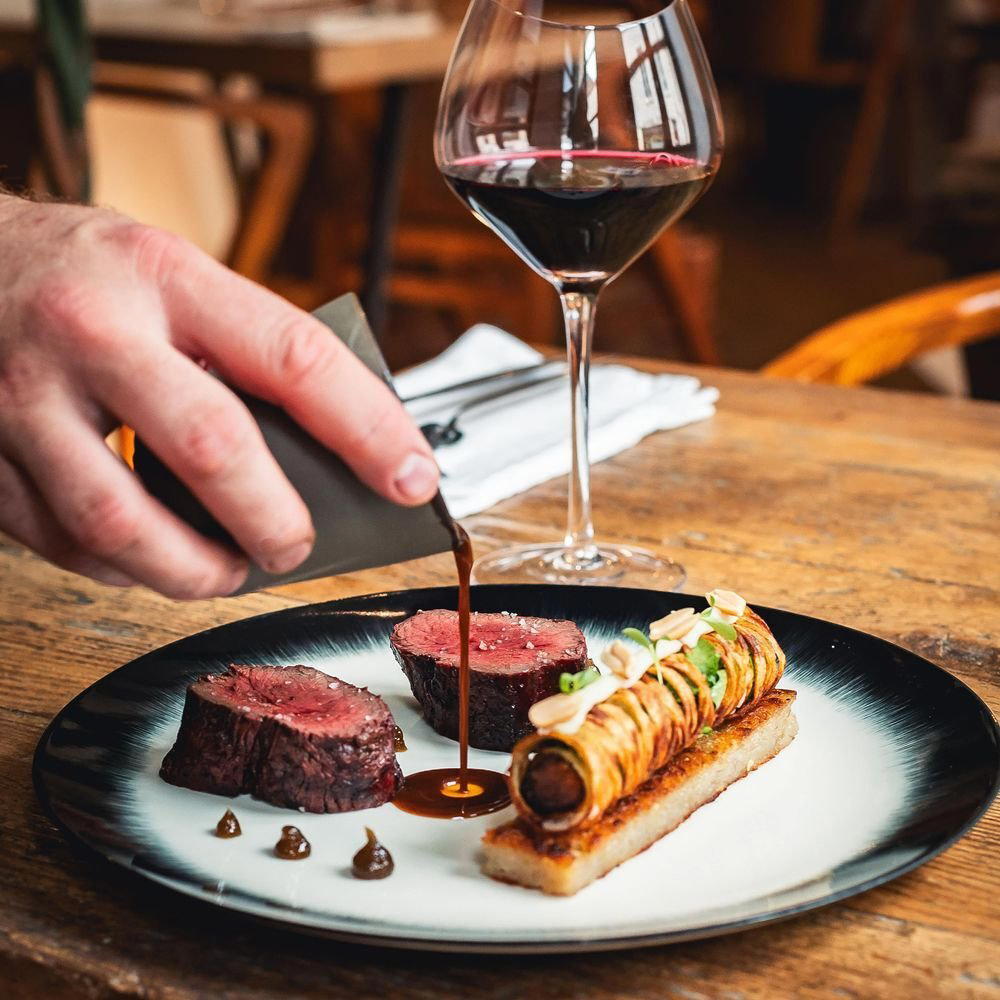
L'Endroit du Goinfre is a Traditional French Bistro in La Flotte, serving veal head with gribiche sauce, with terrace seating and a street-scene view.
Pearl is the En Primeur Club membership app — saves, bookings, and concierge access live there. Same editors, same standards.
- Address
- 1 Rue Jean Henry - Lainé, 17630 La Flotte, France
- Phone
- +33546095001
- Website
- lendroit-du-goinfre.com
- Directions
- Get directions
 Saves & bookings on Pearl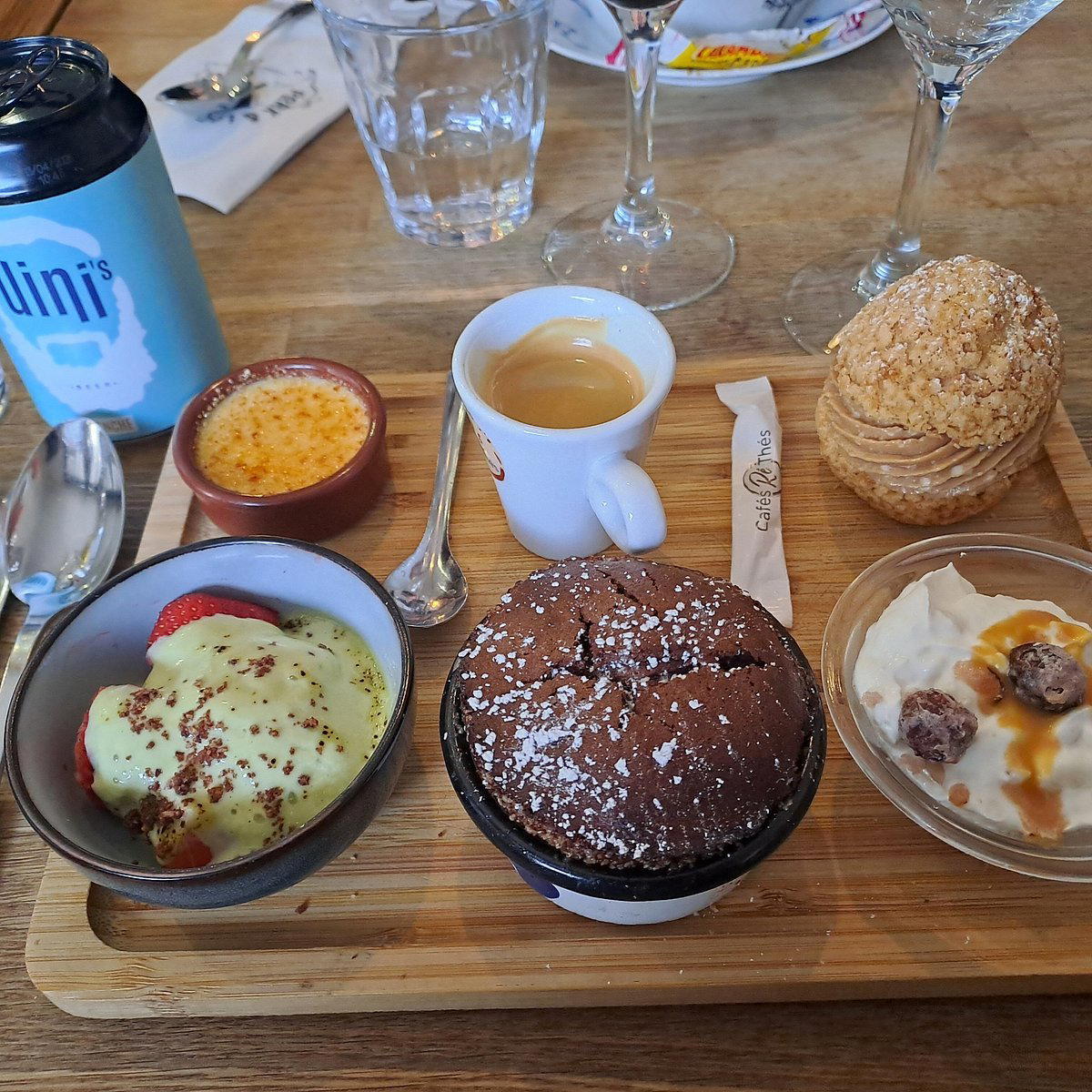
The Atlantic Table: Eating on Île de Ré
La Flotte sits on the eastern shore of Île de Ré, the slender barrier island connected to La Rochelle by a toll bridge that, in summer, becomes among the more congested entry points on the Atlantic coast. The village is a classified Plus Beau Village de France, its harbour rimmed with whitewashed houses and hollyhocks growing through pavement cracks. In this setting, the gap between tourist-trap brasserie and genuinely sourced coastal cooking is often wide. L'Endroit du Goinfre, at 1 Rue Jean Henry-Lainé, is a casual traditional French bistro in La Flotte that draws the attention of anyone who takes food seriously on the island.
The name itself sets a tone. Goinfre translates roughly as glutton or greedy eater, and the address, l'endroit, the place, suggests somewhere specific and deliberate rather than anywhere and accidental. On an island where many restaurants default to the same oyster-moules-frites circuit, a name that owns appetite unapologetically signals a different intent.
Where the Produce Comes From, and Why That Matters Here
Île de Ré has a legitimate claim to ingredient provenance that few French islands can match at this scale. The salt marshes at the island's western end produce fleur de sel and grey sea salt harvested by hand, used by kitchens across France. The oyster beds in the bays around La Flotte and Ars-en-Ré supply shellfish to markets in Paris and beyond. The shallow tidal waters produce clams, cockles, and sea bass that travel a short distance from water to plate. In season, the island's sandy soils grow pommes de terre nouvelles that have held an IGP designation since 1997, a formal recognition of terroir for a potato crop that the French take more seriously than the designation might suggest to outsiders.
This proximity of primary ingredients to the kitchen is not a talking point here, it is simply the operating reality of cooking on a tidal island. The question any serious restaurant on Île de Ré has to answer is whether it treats that proximity as a baseline or as the centre of gravity for the menu. Along the Atlantic coast, the comparison point is clear: Christopher Coutanceau in La Rochelle, fifteen minutes across the bridge, has built a three-Michelin-star reputation almost entirely around Atlantic seafood sourcing and minimal intervention. That benchmark shapes what experienced visitors expect when they cross to the island itself.
L'Endroit du Goinfre operates at a different register, neighbourhood rather than destination, approachable rather than ceremonial. But the sourcing logic of the region applies at every price point. The island's produce calendar runs from spring asparagus and new potatoes through summer shellfish abundance to autumn and the quieter, sharper flavours of grey weather and rough water. Visiting in July or August means peak shellfish and peak crowds; a September or October visit gives fewer tables fighting for the same raw material and a kitchen that often finds its footing more confidently in the shoulder season.
The Île de Ré Dining Pattern
The island has developed a two-speed dining economy. In high season, from mid-June through August, the harbour restaurants in La Flotte, Saint-Martin-de-Ré, and Ars-en-Ré run at full capacity with waiting lists. Many of these establishments serve a reliable but predictable menu built around local oysters, grilled fish, and moules marinières. The second tier, smaller, more idiosyncratic places that locals return to off-season, is harder to find and more worth the effort. L'Endroit du Goinfre falls into that second category, operating in a village where Chai nous comme Chai vous represents the more casual, convivial end of the local dining offer.
Across France, the Atlantic and Mediterranean coastlines have developed distinct approaches to seafood cooking. The Mediterranean tradition, represented by places like Mirazur in Menton, layers coastal produce into complex, herb-driven compositions informed by Italian proximity. The Atlantic tradition from the Vendée south through Charente-Maritime tends toward cleaner, brine-led flavours where butter, cream, and white wine from Île de Ré's own vineyards do most of the work. It is a more restrained register and one that rewards attention to the quality of the primary ingredient rather than complexity of technique.
That Atlantic tradition connects La Flotte to a wider circuit of serious French regional cooking. Auberge du Vieux Puits in Fontjoncouse and Bras in Laguiole demonstrate how regional specificity, sourcing from a defined territory with a clear ecological identity, can sustain cooking at the highest levels. On Île de Ré, the ecological identity is the tidal zone, the salt marsh, and the Atlantic shelf. Smaller restaurants that work from those ingredients honestly are participating in the same tradition at a different scale.
Planning a Visit to La Flotte
La Flotte is roughly 25 kilometres from La Rochelle-Île de Ré airport and accessible by car across the bridge (toll applies) or by seasonal ferry from La Rochelle harbour. The village itself is walkable; L'Endroit du Goinfre at 1 Rue Jean Henry-Lainé is a short walk from the harbour front. In peak summer months, reservations for any table in the village are advisable well in advance, the island's resident population is dwarfed by visitor numbers in July and August, and the better-known local spots fill weeks ahead. Shoulder season visits, particularly May, June, and September, offer shorter lead times and the same produce calendar without the compression. Reservations are recommended, and current hours should be checked before visiting.
Visitors exploring beyond the island who want to understand where Atlantic French cooking can reach should look at Christopher Coutanceau in La Rochelle for the benchmark end of the spectrum, or travel further afield to AM par Alexandre Mazzia in Marseille and Assiette Champenoise in Reims to see how regional French cooking with strong sourcing logic operates at the starred level. For those building a broader French itinerary, Flocons de Sel in Megève, Troisgros - Le Bois sans Feuilles in Ouches, Auberge de l'Ill in Illhaeusern, Au Crocodile in Strasbourg, Georges Blanc in Vonnas, Paul Bocuse - L'Auberge du Pont de Collonges, L'Oustau de Baumanière in Les Baux, and Alléno Paris au Pavillon Ledoyen map the range of French culinary ambition from regional to institutional. Beyond France, Le Bernardin in New York City and Atomix in New York City show how the discipline of sourcing-led cooking translates across different culinary traditions.
Comparable Spots, Quickly
Comparable venues nearby, for context on price, style, and recognition.
| Venue | Cuisine | Price | Awards | Notes |
|---|---|---|---|---|
| L'Endroit du GoinfreThis venue — the venue you are viewing | Traditional French Bistro | $$ | Not listed | Not listed |
| Chai nous comme Chai vous | French Seasonal Market Bistro | $$$$ | Michelin Plate | La Flotte |
| Boute en Train | Traditional French Bistro | $$ | Not listed | Centre Ville |
| Chez Gaspard | French Crêperie & Waffles | $$ | Not listed | Vieux Port |
| Le KréGrand Restaurant | French Bistrot with Local Products | $$ | Not listed | Chantenay |
| Saturne | Modern French with Nordic Influences | $$$ | Not listed | 2nd Arrondissement |
Continue exploring
More in La Flotte
Restaurants in La Flotte
Browse all →
At a Glance
- Cozy
- Rustic
- Classic
- Casual Hangout
- Group Dining
- Date Night
- Terrace
- Standalone
- Local Sourcing
- Street Scene
Current opening hours
- Monday
- Closed
- Tuesday
- 11 AM–2 PM, 6:30–9:30 PM
- Wednesday
- 11 AM–2 PM, 6:30–9:30 PM
- Thursday
- 11 AM–2 PM, 6:30–9:30 PM
- Friday
- 11 AM–2 PM, 6:30–9:30 PM
- Saturday
- 11 AM–2 PM, 6:30–9:30 PM
- Sunday
- 11 AM–2 PM
Hours can change for holidays and private events. Last verified .
Intimate, welcoming atmosphere with nice decor in a small room; terrace seating along a pedestrian street creates a relaxed, convivial dining experience.