LaRina Pastificio & Vino

On Myrtle Avenue in Fort Greene, Brooklyn, LaRina Pastificio & Vino occupies the neighbourhood-restaurant tier that New York's pasta-focused Italian houses have quietly made their own. Fresh pasta and a focused wine list anchor the format, drawing a local clientele that returns on rotation rather than occasion. It sits at a different price point and register from Manhattan's formal Italian rooms, and that contrast is part of the draw.
Pearl is the En Primeur Club membership app — saves, bookings, and concierge access live there. Same editors, same standards.
- Address
- 387 Myrtle Ave, Brooklyn, NY 11205
- Phone
- +17188520001
- Website
- larinabk.com
- Directions
- Get directions
 Saves & bookings on Pearl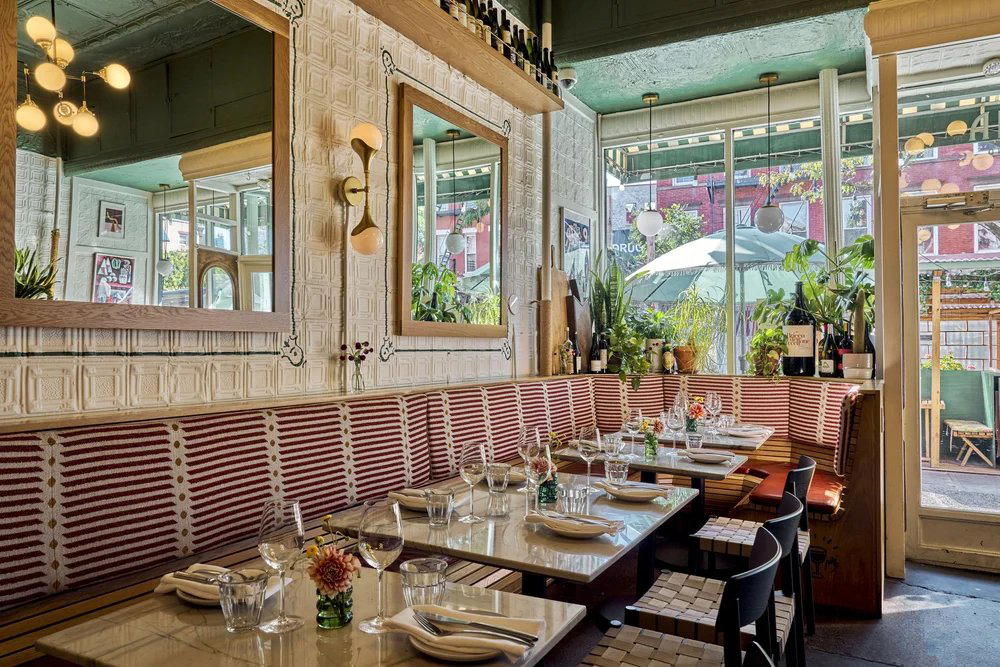
Myrtle Avenue and the Brooklyn Italian That Earns Its Regulars
Fort Greene's dining strip on Myrtle Avenue has assembled a collection of neighbourhood restaurants that function less like destination dining and more like extensions of the apartment. You go often, you know what you want before you sit down, and the room feels calibrated for that. LaRina Pastificio & Vino reads exactly that way: an Italian pasta house with a wine program, built for repeat visits rather than first impressions. The format is common enough in Rome or Bologna. In Brooklyn, it fits into a smaller cohort of places where the regulars set the tone.
The pastificio framing matters here. Across Italian-American dining in New York, the word signals a production commitment: pasta made on-site, likely daily, with format and texture taken seriously. That separates LaRina from the broader field of red-sauce neighbourhood spots and from the upmarket Italian rooms of Midtown. LaRina's register is deliberate: ingredient-driven, pasta-centred, and pitched at the kind of guest who wants a half-carafe and a bowl of something made that afternoon.
What Keeps the Regulars Coming Back
In pasta-focused Italian restaurants operating at the neighbourhood level, the repeat-visit logic follows a recognisable pattern. The menu rotates enough to reward return, but the anchors stay constant. Regulars orient around those anchors: the format they trust, the glass pour that works, the table they prefer. The room becomes a known quantity, which is exactly what makes it useful on a Tuesday.
LaRina's position on Myrtle Avenue gives it a catchment that includes Fort Greene, Clinton Hill, and the edges of Bed-Stuy, a cluster of neighbourhoods with a high density of exactly that kind of diner. These are not guests looking for occasion dining. They are guests who want a kitchen they can rely on, a wine list that does not require much deliberation, and the ease of a room that already knows them.
The Italian wine focus implied by the vino half of the name also feeds repeat behaviour. Short, well-chosen wine lists in neighbourhood pasta houses tend to generate loyalty because regulars learn them. A guest who discovers a producer they like on the first visit has a reason to return, and a reason to ask whether anything new has come in. That dynamic is what LaRina cultivates on its side of the East River.
Brooklyn's Neighbourhood Italian Tier, Placed in Context
New York's Italian dining splits across several registers. At the formal end, places like Atomix-adjacent serious rooms compete on tasting menus and wine depth. At the other end, the old-school red-sauce institutions carry weight through nostalgia and volume. LaRina occupies a middle tier that has expanded significantly in Brooklyn over the past fifteen years: the serious neighbourhood Italian, pasta-forward, with a wine list selected by someone who has opinions. This tier exists in other American cities too, but the instinct toward a defined, returnable format connects them. What distinguishes the Brooklyn version is density: the borough now has enough of these rooms that diners cross-compare them and develop preferences.
The pastificio model connects to a broader American interest in in-house pasta production. Restaurants from California to the Hudson Valley made in-house production central to their identity, though at a different price point. LaRina brings that production seriousness to a neighbourhood format, which is where the concept works well: when it's accessible enough that people can come back the following week.
The Pasta House as a Dining Format
It's worth understanding what the pasta house format demands of a kitchen. Fresh pasta requires daily production, portion control, and sauce balance calibrated to the specific dough. The margin for error is smaller than with dry pasta, and the upside, when it works, is textural and flavour depth that dry pasta can't replicate. Kitchens that get it right develop a regulars market almost automatically, because the product rewards return. You try the shape you know, then you try a new one, then you start having opinions about which sauce works with which format.
That incremental familiarity drives a pasta restaurant's regulars culture. It mirrors what drives loyalty at wine-focused venues like The French Laundry in Napa or Providence in Los Angeles, where the depth of the program rewards guests who invest time in understanding it. LaRina's version operates at a neighbourhood scale, which means the investment is lower and the return visits happen faster.
For visitors to Brooklyn from outside the borough, the Myrtle Avenue location places LaRina near Fort Greene Park and within reasonable distance of the Brooklyn Academy of Music, making it a plausible pre- or post-event dinner. For those coming from Manhattan and accustomed to the Italian rooms of the Upper East Side or the expense-account pace of Midtown, the format shift is significant. This is not a room that competes with Jungsik New York on ambition or with Alinea in Chicago on conceptual range. It competes on the kind of reliability that keeps a neighbourhood restaurant full on a Wednesday.
Those interested in how Italian cooking reads at the fine-dining end internationally might compare with 8 1/2 Otto e Mezzo Bombana in Hong Kong or Alain Ducasse at Louis XV in Monte Carlo, where the Italian and French classical traditions meet at the opposite end of the formality spectrum. The contrast sharpens what makes LaRina's format coherent on its own terms.
Know Before You Go
- Address: 387 Myrtle Ave, Brooklyn, NY 11205
- Neighbourhood: Fort Greene, Brooklyn
- Format: Neighbourhood pasta house with Italian wine focus
- Reservations: Recommended
- Nearby: Fort Greene Park, Brooklyn Academy of Music
- Getting there: Accessible from multiple G and C train stops in the Fort Greene and Clinton Hill corridor
Compact Comparison
Comparable venues nearby, for context on price, style, and recognition.
| Venue | Cuisine | Price | Notes |
|---|---|---|---|
| LaRina Pastificio & VinoThis venue — the venue you are viewing | Fort Greene, Modern Italian Pasta | $$$ | Not listed |
| Wayward Fare | Not listed | $$$ | Prospect Heights, Italian Trattoria with Mediterranean Influences |
| Vic's | Greenwich Village, Seasonal Italian | $$$ | Not listed |
| OLIO E PIÙ | Not listed | $$$ | West Village, Authentic Italian Trattoria |
| Osteria 57 | Not listed | $$$ | West Village, Italian Seafood & Vegetarian |
| Mercato | Not listed | $$$ | Hell's Kitchen, Authentic Apulian Trattoria |
Recognition history
Dated appearances from independent guides and award organizations, with the underlying list record or original source where available.
Wine Spectator Best of Award of Excellence
Wine Spectator
Continue exploring
More in New York City
Restaurants in New York City
Browse all →
Bars in New York City
Browse all →
Hotels in New York City
Browse all →





At a Glance
- Romantic
- Modern
- Elegant
- Intimate
- Date Night
- Group Dining
- Celebration
- Special Occasion
- Open Kitchen
- Standalone
- Terrace
- Natural Wine
- Farm To Table
- Local Sourcing
Current opening hours
- Monday
- 5–10 PM
- Tuesday
- 5–10 PM
- Wednesday
- 5–10 PM
- Thursday
- 5–10 PM
- Friday
- 5–11 PM
- Saturday
- 12–11 PM
- Sunday
- 12–10 PM
Hours can change for holidays and private events. Last verified .
Warm and inviting with romantically lit patio featuring string lights, gold sconces, red and white cushions, wooden and marble tables, and handpainted Italian touches throughout the airy interior.