Lanzhou Beef Noodles I-8 Markaz
In the basement of Crema Cafe in I-8 Markaz, Islamabad's Chinese noodle imports have found an unlikely foothold. Lanzhou Beef Noodles brings the hand-pulled wheat traditions of Gansu province to a Pakistani capital increasingly curious about regional Chinese cooking. It sits at an accessible price point, making it one of the more approachable entry points into this style of cookery in the city.
 Discover on Pearl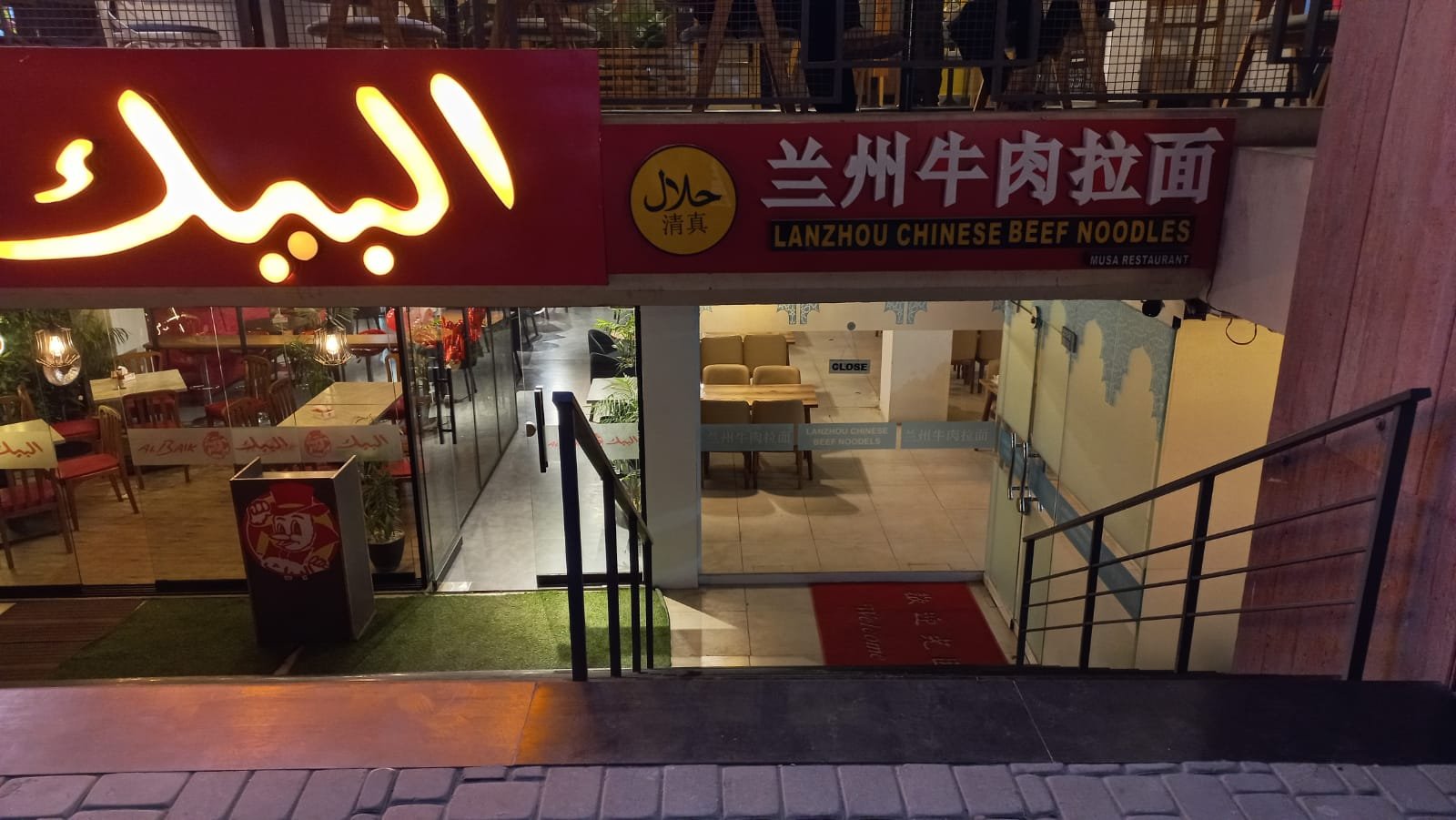
Islamabad's relationship with Chinese cuisine has always been shaped by geography and geopolitics as much as by appetite. The China-Pakistan Economic Corridor brought a fresh wave of Chinese nationals, contractors, and culinary habits into the capital, and with them came a more specific, regional appetite that moved well beyond the hybrid 'Chinese' dishes that Pakistani diners had long treated as their own. One of the more revealing expressions of that shift sits in the basement of Crema Cafe in I-8 Markaz, where Lanzhou Beef Noodles operates in a format that strips the experience back to its functional essentials: a bowl, a broth, and wheat pulled to order.
The Gansu Tradition in an Islamabad Basement
Lanzhou beef noodle soup, known in Mandarin as lanzhou la mian, is one of China's most documented street foods. It originates in Gansu province in northwestern China, where the Muslim Hui community developed a bowl built around a clear, deeply reduced beef-and-bone broth seasoned with a range of dried chillies and spices. The noodles themselves are made from a specific high-gluten wheat and pulled by hand into one of several thicknesses, from hair-thin to flat and wide, at the moment of service. The sourcing logic is tight: the wheat strain, the bone-to-water ratio, the specific chilli blend, and the hand technique all determine whether the result tastes of Gansu or of approximation.
The shortlist, unlocked.
Hard-to-book tables, cellar releases, and concierge-planned trips.
Get Exclusive Access →Bringing that tradition to Islamabad requires navigating ingredient sourcing in a city where supply chains for regional Chinese staples are still developing. The dried chilli varieties and the wheat flour specifications that define authentic la mian are not standard Pakistani pantry items, and how closely any local version tracks the original depends almost entirely on what the kitchen can source and at what consistency. That sourcing question is the central editorial one for any Chinese noodle outpost operating in South Asia, and it applies here as much as anywhere.
Setting and Format
The basement placement beneath Crema Cafe in I-8 Markaz places this operation in one of Islamabad's more commercially active neighbourhood nodes. I-8 Markaz draws a mix of residents, office workers, and students, and the lower-level location creates a separation from the cafe above that functions more as practical division than atmospheric design. The setting is functional rather than considered, which matches the format: Lanzhou beef noodle operations worldwide tend to run as counter-focused, fast-turnover spots where the bowl is the complete proposition and the room is secondary. Compared to the more produced environments at something like China Hot Pot or the ingredient-forward framing at Sesame And Soy, this venue operates in a different register entirely, prioritising throughput and price accessibility over atmosphere.
For diners accustomed to the more theatrical end of Islamabad's dining options, from the grill-driven productions at The Smokey Cauldron to the view-led rooms at Capital View Restaurant, the basement setting here is a deliberate shift in register. That is not a criticism. The la mian tradition was built in street-level stalls and market canteens; the informality is architectural honesty.
What the Bowl Tells You About the Kitchen
The signature format across all Lanzhou noodle houses is the same: clear broth, pulled noodles, thin-sliced beef, white radish, fresh coriander, and chilli oil on the side. The variables that separate one kitchen from another are the depth of the bone stock (which requires long reduction and quality marrow bones), the chilli seasoning blend, and the skill of the noodle puller. In the Pakistani context, the beef supply chain is strong, which works in the kitchen's favour. Local beef is a daily staple, and the bone stocks that define this style of cookery draw on cuts that are widely available here in a way they might not be in other South Asian capitals.
The noodle element is the more technically demanding proposition. Hand-pulling la mian to consistent thickness across multiple thicknesses requires trained hands, and that skill is either imported with the kitchen team or developed locally over time. The wheat flour specification is a separate question again. These sourcing and training details determine quality more than any design choice or pricing decision, which is why the ingredient-sourcing angle is the right frame for assessing any version of this dish operating outside its origin geography.
Where This Sits in Islamabad's Wider Food Pattern
Islamabad's restaurant scene has expanded rapidly in the last decade, but the development has been uneven across cuisines. Pakistani regional cooking remains the anchor, from the northern traditions documented at Hunza Food Pavilion in Karimabad to the karahi-focused operations like Butt Karahi in Lahore. Chinese food has long had a presence, but it has typically been adapted to local palates, heavier on spice and oil, lighter on the structural differences that define regional Chinese styles.
The Lanzhou noodle format represents a different category: an attempt to preserve a specific regional tradition rather than adapt it for local expectations. That places it closer in spirit to the sourcing discipline of, say, a technically rigorous kitchen like Le Bernardin in New York City (where ingredient provenance is non-negotiable) than to the broader category of Pakistani-Chinese fusion. The ambition is regional authenticity at an accessible price point, and within Islamabad's current dining map, that is a relatively specific position to occupy.
Visitors arriving in the capital from other parts of Pakistan, whether from Lahore's karahi belt as documented at Buqayvia Restaurant or from the mountain north as covered in guides to Rafsal in Skardu and Mountain Pizzeria in Bulchi Das, will find the bowl here an instructive contrast to the grill and slow-cook traditions that dominate those regions. The format is quick, the sourcing logic is specific, and the bowl carries a culinary lineage that connects back to Gansu province rather than to local adaptation. Our full Islamabad restaurants guide maps these contrasts across more of the city's neighbourhoods.
Planning Your Visit
The venue sits in the basement of Crema Cafe in I-8 Markaz, Islamabad, making it easy to locate within a well-trafficked commercial area. Given the format, walk-ins are the likely operating model, and the throughput-focused setup means waiting times should be short during off-peak hours. Phone and website details are not currently listed, so approaching in person is the practical option for confirming current hours and any menu updates. For those combining this stop with wider exploration of the capital's regional food options, Sapna Shinwari Restaurant in Abbottabad and Butt Karahi by Usman Tahir in Gujar Khan offer useful counterpoints in the region's grilled and slow-cooked traditions.
Frequently Asked Questions
- Is Lanzhou Beef Noodles I-8 Markaz okay with children?
- The format works well for families. Islamabad's basement casual dining spots at accessible price points are generally tolerant of children, and a noodle bowl is a practical, self-contained meal that does not require extended wait times or formal behaviour. The quick-turnover setup reduces the pressure on younger diners who may not be comfortable in longer-format restaurant settings.
- What kind of setting is Lanzhou Beef Noodles I-8 Markaz?
- This is a functional, casual operation in the basement of Crema Cafe in I-8 Markaz. There are no awards on record, no dress code implied by the format, and the price point positions it at the accessible end of Islamabad's dining spectrum. The experience is the bowl, not the room.
- What's the signature dish at Lanzhou Beef Noodles I-8 Markaz?
- The Lanzhou beef noodle soup is the defining format: clear bone broth, hand-pulled wheat noodles in the customer's chosen thickness, thin-sliced beef, and white radish. The dish originates with the Hui Muslim community of Gansu province in northwestern China, giving it a culinary lineage distinct from the Pakistani-Chinese hybrid cooking more common across Islamabad. No chef credentials or awards are currently listed, so the bowl itself is the credential.
- Why does Lanzhou-style noodle soup taste different from other Chinese noodle dishes available in Islamabad?
- The distinction is structural rather than just flavoural. Lanzhou la mian uses a clear, long-reduced beef-and-bone broth seasoned with a specific dried chilli and spice blend from northwestern China's Hui culinary tradition, which produces a cleaner, more mineral broth than the oil-heavier sauces common in Pakistani-adapted Chinese cooking. The noodles are hand-pulled to order from high-gluten wheat rather than machine-cut, which changes both the texture and how the broth adheres to each strand. The sourcing of the right chilli varieties and wheat flour specification is what determines how closely any Islamabad version tracks the Gansu original.
Peer Set Snapshot
A fast peer set for context, pulled from similar venues in our database.
| Venue | Cuisine | Price | Awards | Notes |
|---|---|---|---|---|
| Lanzhou Beef Noodles I-8 Markaz | This venue | |||
| China Hot Pot | ||||
| Sesame And Soy | ||||
| The Smokey Cauldron |
Need a table?
Our members enjoy priority alerts and concierge-led booking support for the world's most difficult tables.
Get Exclusive AccessThe shortlist, unlocked.
Hard-to-book tables, cellar releases, and concierge-planned trips.
Get Exclusive Access →