Our verdict
Where the Karakoram Sets the Table Arrive in Karimabad by mid-morning and the valley already feels like a separate country from the Pakistan you passed through on the Karakoram Highway. The air is thinner, cooler, carrying the smell of apricot...

Pearl is the En Primeur Club membership app — saves, bookings, and concierge access live there. Same editors, same standards.
- Address
- 8MF9+QHM, N-35, Hunza, Ali Abad
- Phone
- +92 310 9400259
- Hours
- Daily 8 AM–10 PM
- Directions
- Get directions
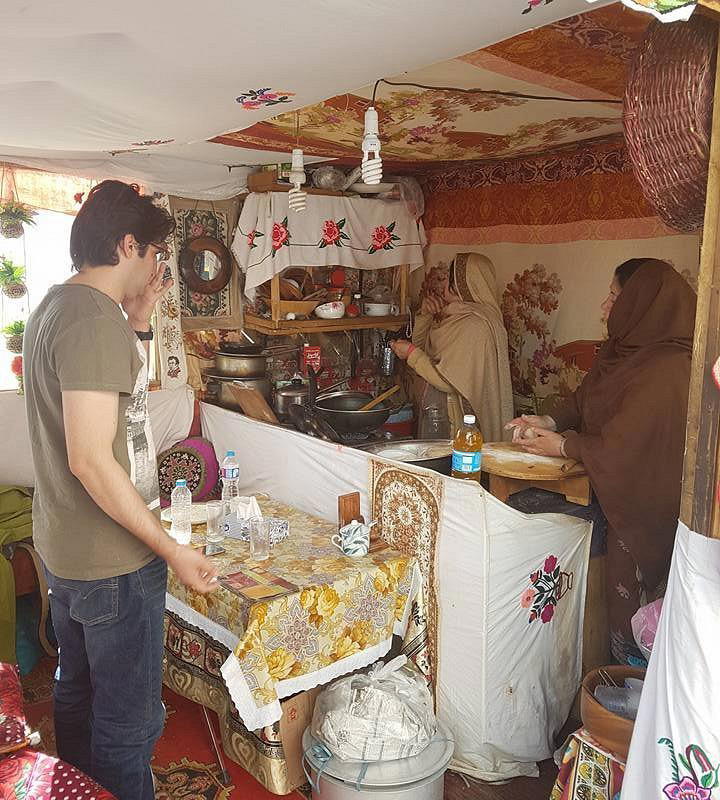
The menu
What to order
- Chapshoro
- Dao Dao
- Yak meat pizza
Where the Karakoram Sets the Table
Arrive in Karimabad by mid-morning and the valley already feels like a separate country from the Pakistan you passed through on the Karakoram Highway. The air is thinner, cooler, carrying the smell of apricot trees and glacier melt. Hunza Food Pavilion sits along the N-35 corridor that threads through Ali Abad, the commercial spine connecting Karimabad to the wider Hunza district. Travelers moving between Gilgit and the Chinese border have been stopping along this stretch for decades, and the pavilion format, open to the mountain air with views toward Rakaposhi or Ultar Sar depending on orientation, is the region's default architecture for communal eating. The building is not trying to frame the landscape so much as surrender to it.
Sourced from Ground That Barely Exists Elsewhere
Hunza's credibility as a food destination rests almost entirely on what the land produces, and what it produces is unusual by any measure. The valley sits at elevation, with short summers and dramatic diurnal temperature swings that concentrate sugars in fruit and slow the maturation of grains in ways that lowland agriculture cannot replicate. Apricots dried on rooftops under direct Karakoram sun are nothing like the Turkish or Iranian equivalents sold in European markets. Mulberries here ripen briefly and intensely. Buckwheat and millet, two of the valley's traditional staples, grow in terraced fields carved into slopes that receive snowmelt irrigation from above.
This sourcing context matters for any meal eaten in the region. A restaurant along the N-35 in Ali Abad draws from the same agricultural base that Hunza communities have maintained for centuries, which means the raw ingredients carry provenance that most urban Pakistani restaurants, however technically accomplished, cannot access. In cities like Lahore or Islamabad, where restaurants such as Buqayvia Restaurant in Lahore or Capital View Restaurant in Islamabad build menus around imported or lowland-grown produce, the altitude-specific character of Hunza ingredients simply cannot be reproduced. That gap between the valley's larder and everything south of it is the real story of eating in Karimabad.
The Regional Plate in Practice
Hunza cuisine sits in a different culinary register from the karahi-dominant cooking of the Punjab or the Shinwari tradition further south, which you can encounter at places like Sapna Shinwari Restaurant in Abbottabad. The northern mountain tradition favors dishes where preservation, fermentation, and slow cooking matter more than the high-heat flash of a karahi. Dirams, a type of steamed bread, and chapshuro, a stuffed flatbread filled with minced meat and herbs, are foundational formats. Harissa, a slow-cooked wheat and meat porridge with Central Asian relatives, appears in different forms across the valley. Dairy plays a central role: fresh butter, locally cultured yogurt, and cheese from animals grazing on high pasture are not luxury additions but structural ingredients.
For travelers arriving from the south who have been eating at Punjabi establishments along the highway, including the karahi shops clustered around Rawalpindi or the variations found at Butt Karahi in Lahore or Butt Karahi by Usman Tahir in Gujar Khan, Hunza food represents a genuine shift in logic. The spicing is lighter, the heat level lower, the emphasis on grain and dried fruit more pronounced. It is worth adjusting expectations accordingly rather than measuring northern cuisine against southern Pakistani benchmarks.
The Pavilion Dining Format Along the KKH
Roadside dining infrastructure along the Karakoram Highway has developed its own functional vernacular. Pavilions, canteens, and open-sided restaurants at key stopping points between Gilgit and Sost serve both through-traffic, including long-haul truckers and CPEC logistics convoys, and the growing flow of domestic and international tourists. Hunza Food Pavilion sits within this category, occupying the N-35 address that makes it accessible to travelers in transit as much as to Karimabad residents. This is not a destination requiring advance planning in the way that a tasting-menu counter in Karachi or a Michelin-circuit restaurant like Le Bernardin in New York City might demand. It functions as a quality regional food stop within a highway infrastructure that has historically offered limited options.
The comparison to mountain-adjacent casual dining elsewhere in Pakistan is instructive. In Skardu, Rafsal represents a parallel model serving travelers approaching the Karakoram from the Baltistan side. In the Naran or Besham corridors, roadside canteens rarely rise above basic fuel-stop level. The Hunza stretch, partly because tourism infrastructure here has developed faster and partly because the local agricultural base gives kitchens genuinely good raw material to work with, has produced a tier of eating that justifies stopping for its own sake rather than out of necessity. Even novelty formats, like the wood-fired approach at Mountain Pizzeria in Bulchi Das, have found a foothold in this stretch because traveler expectations have risen.
Planning the Stop
Karimabad sits roughly in the center of the Hunza valley, accessible from Gilgit in approximately two hours by road under normal conditions on the KKH. The N-35 address places Hunza Food Pavilion within the Ali Abad commercial corridor rather than inside the pedestrian old bazaar of Karimabad itself, which sits on higher ground. Visitors staying in Karimabad's upper hotels can reach Ali Abad by a short descent; those passing through on the highway can access it directly from the main road. Peak tourist season in Hunza runs from April through October, when the valley is accessible and fruit harvests are active; winter travel on the KKH is possible but weather-dependent. For a fuller picture of where this fits within the region's eating options, see our full Karimabad restaurants guide.
Frequently asked questions
Can I bring kids to Hunza Food Pavilion?
The pavilion format along the N-35 corridor in Karimabad is inherently informal, with open or semi-open seating typical of roadside dining infrastructure on the Karakoram Highway. That setting suits families travelling through the Hunza valley without any particular restrictions. Children who have made the KKH journey will be well at home here.
Is Hunza Food Pavilion formal or casual?
Casual by design. Pavilion-style restaurants along the KKH address the practical needs of travellers on a high-altitude highway route rather than a sit-down dining occasion. The address at 8MF9+QHM on the N-35 places it squarely within the roadside dining corridor, where function sets the tone over formality.
Is Hunza Food Pavilion a good dining stop when driving the Karakoram Highway between Gilgit and the Chinese border?
Karimabad sits roughly central in the Hunza valley, approximately two hours by road from Gilgit on the KKH under normal conditions, making it a natural break point on the N-35 route. Hunza Food Pavilion at address 8MF9+QHM fits the practical rhythm of that drive. For travellers covering the full KKH corridor, a midday stop in Karimabad allows time to eat regional Hunza food before continuing north or south.
What should I eat at Hunza Food Pavilion?
Hunza cuisine operates in a distinct register from the karahi-dominant cooking of the Punjab or the Shinwari tradition to the south. Regional staples across the valley include dishes built around local apricots, hand-milled grain, and high-altitude produce that has limited equivalents elsewhere in Pakistan. Order what is made locally rather than dishes you recognise from the lowland menu.
Where do I go for Hunza Food Pavilion?
Hunza Food Pavilion is located at 8MF9+QHM, N-35, Hunza, Ali Abad, Karimabad.
Can I walk in to Hunza Food Pavilion?
Pavilion dining along the Karakoram Highway operates on a walk-in basis as a matter of convention — pre-booking infrastructure does not apply to this category of roadside stop. No reservations contact is published, which is consistent with the format. Timing around midday tends to align with the flow of KKH traffic through Karimabad.
What's the defining dish or idea at Hunza Food Pavilion?
The defining idea is provenance under constraint. The Hunza valley produces ingredients at altitudes and in conditions that limit what grows, and that scarcity shapes the plate. The cuisine reflects a landlocked mountain tradition rather than the spice-forward cooking that dominates Pakistan's lower regions — the food is specific to the ground it comes from.
How It Stacks Up
Comparable venues nearby, for context on price, style, and recognition.
| Venue | Cuisine | Price | Notes |
|---|---|---|---|
| Hunza Food PavilionThis venue — the venue you are viewing | Authentic Hunza Cuisine | Not listed | Not listed |
| The Smokey Cauldron | Harry Potter Themed Cafe | Not listed | F-6 |
| Khalifa Naan Shop Since 1869 | Historic Pakistani Naan Shop | Not listed | Walled City of Lahore |
| Sapna Shinwari Restaurant | Traditional Pakistani Shinwari | Not listed | Mera Muzaffar |
| Rafsal | Pakistani Local Cuisine | $10–20 | Chogomatamsara Khor |
| Sesame And Soy | Pan-Asian Cuisine | Not listed | Islamabad |
Continue exploring
More in Karimabad
Restaurants in Karimabad
Browse all →
Hotels in Karimabad
Browse all →
Details
- Cozy
- Rustic
- Energetic
- Casual Hangout
- Family
- Historic Building
- Local Sourcing
- Organic
- Mountain
- Street Scene
- A La Carte
- Vegetarian Friendly
Current opening hours
- Monday
- 8 AM–10 PM
- Tuesday
- 8 AM–10 PM
- Wednesday
- 8 AM–10 PM
- Thursday
- 8 AM–10 PM
- Friday
- 8 AM–10 PM
- Saturday
- 8 AM–10 PM
- Sunday
- 8 AM–10 PM
Hours can change for holidays and private events. Last verified .
Warm, homely shack with handmade decor, energetic atmosphere, and valley views from windows.