Butt Karahi by Usman Tahir
On the GT Road corridor between Rawalpindi and Gujar Khan, Butt Karahi by Usman Tahir represents the kind of roadside karahi institution that Pakistan's highway dining culture has long depended on. The format is direct: meat cooked hard and fast in a wok over high heat, served to travellers and locals who know the difference between a karahi built on fresh ingredients and one that is not.
Pearl is the En Primeur Club membership app — saves, bookings, and concierge access live there. Same editors, same standards.
- Address
- GT Rd, Mandra, 47670, Pakistan
- Phone
- +923319441612
- Directions
- Get directions
 Saves & bookings on Pearl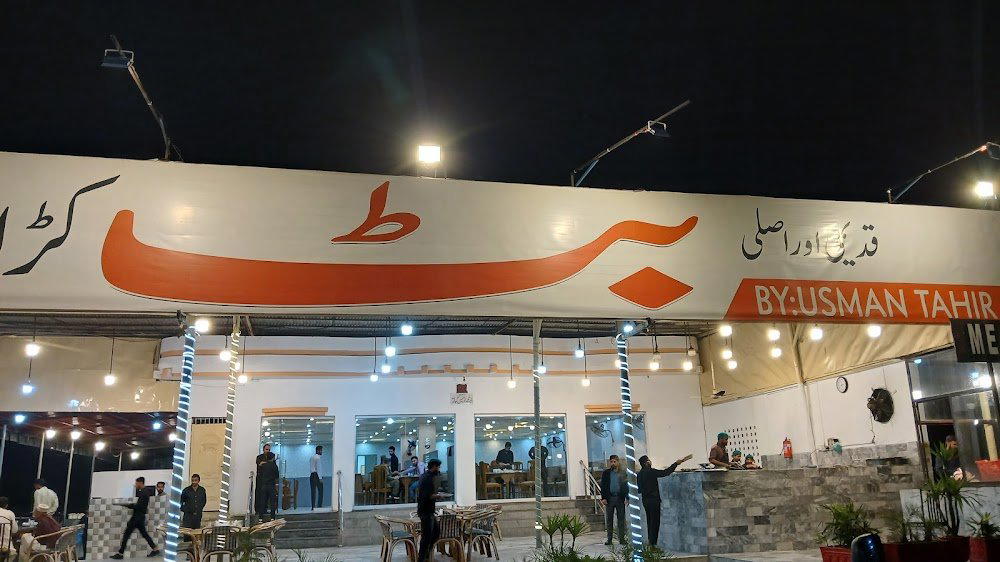
The GT Road Karahi Tradition
Pakistan's Grand Trunk Road is one of the oldest trade arteries in Asia, and its food culture has evolved alongside its traffic for centuries. The stretch running through Mandra, just outside Gujar Khan in Rawalpindi District, carries a particular character: roadside dhabas and karahi houses that serve travellers moving between Rawalpindi and points east, alongside a local clientele that treats these establishments as a weekly or even daily ritual. This is not the sanitised restaurant dining of Islamabad's F-7 or Lahore's Gulberg. The format here is stripped back, the cooking is high-heat and unapologetic, and the measure of quality is whether the karahi is built properly from the base up. Butt Karahi by Usman Tahir operates within that tradition. For a broader look at where this fits into the local dining picture, see our full Gujar Khan restaurants guide.
What Karahi Actually Requires
The karahi is a cooking vessel and a discipline simultaneously. Across Pakistan's northern corridor, from Peshawar's namkeen karahi to the tomato-forward versions common in Rawalpindi and the Potohar Plateau, the dish demands fresh meat, a hot iron wok, and a cook who understands the reduction of a tomato-based gravy under sustained direct heat. The difference between a karahi that works and one that does not comes down to ingredient quality and timing: fat content in the meat, ripeness of the tomatoes, the moment at which the ginger and green chilli are added. These are not variables that reward shortcuts.
On the GT Road corridor, the sourcing question matters because the supply chain is visible. Meat on this stretch comes primarily from local butchers servicing the towns of Mandra, Gujar Khan, and surrounding villages in Rawalpindi District. Proximity to the source is the structural advantage that roadside karahi houses hold over urban restaurants buying through longer distribution chains. A diner arriving at a venue like Butt Karahi by Usman Tahir is, in a practical sense, closer to where the ingredient began than they would be at a comparable restaurant twenty kilometres further into the city. This is the logic that sustains the GT Road dhaba tradition and the reason that regular travellers on this route develop strong preferences for specific stops.
Pakistan's karahi culture has regional variants that are worth mapping. Venues in Peshawar and KPK tend toward the salt-forward namkeen style, with minimal tomato and emphasis on the fat rendered from the meat itself. The Rawalpindi and Islamabad belt, where Butt Karahi by Usman Tahir sits geographically, tends toward a more tomato-intensive gravy with green chilli and ginger finishing. These are not rigid categories, but they reflect ingredient availability and local taste that has settled over generations. For comparison across the broader northern Pakistan dining tradition, the Hunza Food Pavilion in Karimabad and Rafsal in Skardu represent how northern Pakistani food traditions shift further up the Karakoram Highway, while Sapna Shinwari Restaurant in Abbottabad illustrates the KPK-inflected approach to highway dining on a different corridor.
The Physical Setting
Addresses on the GT Road at this stretch function more as kilometre markers than precise locations. The restaurant sits at GT Road, Mandra, postcode 47670. Like most establishments in this format, the experience of arrival involves pulling off the main carriageway into a forecourt area, often shared with other vehicles making the same stop. The cooking typically happens in a visible or semi-visible kitchen or open grill area, which is part of the format's appeal: the process is not hidden. Seating in GT Road karahi houses tends to be communal or semi-communal, built for throughput rather than extended stays. The atmosphere is functional and social in equal measure, the kind of place where the conversation at adjacent tables is not muffled by design.
Reading the Broader Category
The Butt name is common across Pakistan's karahi restaurant sector, most prominently associated with establishments in Lahore's Data Darbar area that built a reputation over decades. Butt Karahi in Lahore represents that older, more established tier of the category. The Mandra venue operates in the same naming tradition but in a roadside highway format, which is a distinct competitive context. The comparable set here is not urban Lahore karahi houses but other GT Road stops that compete on freshness, speed, and the consistency of their high-heat technique.
For readers accustomed to the editorial benchmarks of restaurants like Capital View Restaurant in Islamabad or the international reference points of venues such as Le Bernardin in New York City, Atomix in New York City, or HAJIME in Osaka, the GT Road karahi house occupies a different position entirely: it is valued not for tasting menu architecture or sourcing provenance narratives, but for the direct, unmediated relationship between heat, ingredient, and plate. The disciplinary standards are no less real, only differently expressed.
Planning a Stop
The restaurant is located on the GT Road at Mandra, accessible to anyone travelling the Rawalpindi-to-Gujar Khan corridor by car. Visiting during daylight or early evening hours is the standard approach for GT Road dining, as traffic patterns and kitchen activity both peak during those windows. Travellers moving between Islamabad or Rawalpindi and destinations east or north will pass through Mandra, making this a natural stop rather than a detour. Pricing is about USD 8 per person.
Comparable Venues
Comparable venues nearby, for context on price, style, and recognition.
| Venue | Cuisine | Price | Notes |
|---|---|---|---|
| Butt Karahi by Usman TahirThis venue — the venue you are viewing | Pakistani Karahi & Tikka | $$ | Not listed |
| The Smokey Cauldron | Harry Potter Themed Cafe | $$ | F-6 |
| Mountain Pizzeria | Pakistani Pizza | $$ | Bulchi Das |
| Khalifa Naan Shop Since 1869 | Historic Pakistani Naan Shop | $$ | Walled City of Lahore |
| Haveli | Authentic Pakistani | $$ | Walled City of Lahore |
| Capital View Restaurant | Traditional Pakistani | $ | Blue Area |
Continue exploring
More in Gujar Khan
Restaurants in Gujar Khan
Browse all →
Hotels in Gujar Khan
Browse all →
At a Glance
- Group Dining
- Family
- Casual Hangout
Current opening hours
- Monday
- 11 AM–2 AM
- Tuesday
- 11 AM–2 AM
- Wednesday
- 11 AM–2 AM
- Thursday
- 11 AM–2 AM
- Friday
- 11 AM–2 AM
- Saturday
- 11 AM–2 AM
- Sunday
- 11 AM–2 AM
Hours can change for holidays and private events. Last verified .
Casual barbecue atmosphere focused on flavorful grilled dishes.