


Michelin Plate · Gambero Rosso 2 Forchette
Our verdict
Langosteria brings its Milan-born seafood format to the Cheval Blanc Paris on the Quai du Louvre, where raw dishes, oysters, and freshly caught fish anchor a menu that reads as a deliberate counterpoint to the French capital's land-heavy fine dining tradition.

Pearl is the En Primeur Club membership app, where members save venues, book tables and use the concierge.
The menu
What to order
- Linguine with lobster
- Grilled langoustines
- Tiramisu
Seafood as Architecture: How Langosteria's Menu Makes Its Argument
The dominant grammar of Paris fine dining at the €€€€ tier is French, land-rooted, and classically structured. Addresses like Le George and the grandes tables that appear in our full Paris restaurants guide tend to orient themselves around terroir in the agricultural sense: butter, cream, duck, and the great French vegetable traditions. Into that environment, Langosteria arrives with a menu that makes its case entirely through the sea. That choice is not incidental. It is the restaurant's structural premise.
The Milan original positioned itself as a place where the Italian relationship with raw fish and shellfish could be expressed at a level of precision that matched the country's broader fine dining ambitions. The Paris iteration, installed inside the Cheval Blanc at 8 Quai du Louvre, carries the same logic. Raw preparations and cold shellfish occupy the front of the menu, establishing the tone before anything cooked appears. Oysters and crudo-style dishes arrive as the opening argument rather than as an amuse or afterthought. What follows, the freshly caught fish preparations, reads as a continuation of the same thesis rather than a pivot toward something warmer and more familiar.
This architecture separates Langosteria from most of its immediate Paris competitors. Italian restaurants at this price point in the city, including Armani Ristorante and Il Carpaccio, tend to balance land and sea across the menu without foregrounding either. Langosteria commits. The result is a menu that reads as curated rather than comprehensive, which is a structural decision with real consequences: guests who arrive expecting the breadth of a traditional Italian menu will be redirected toward something more focused.
The Setting at Cheval Blanc
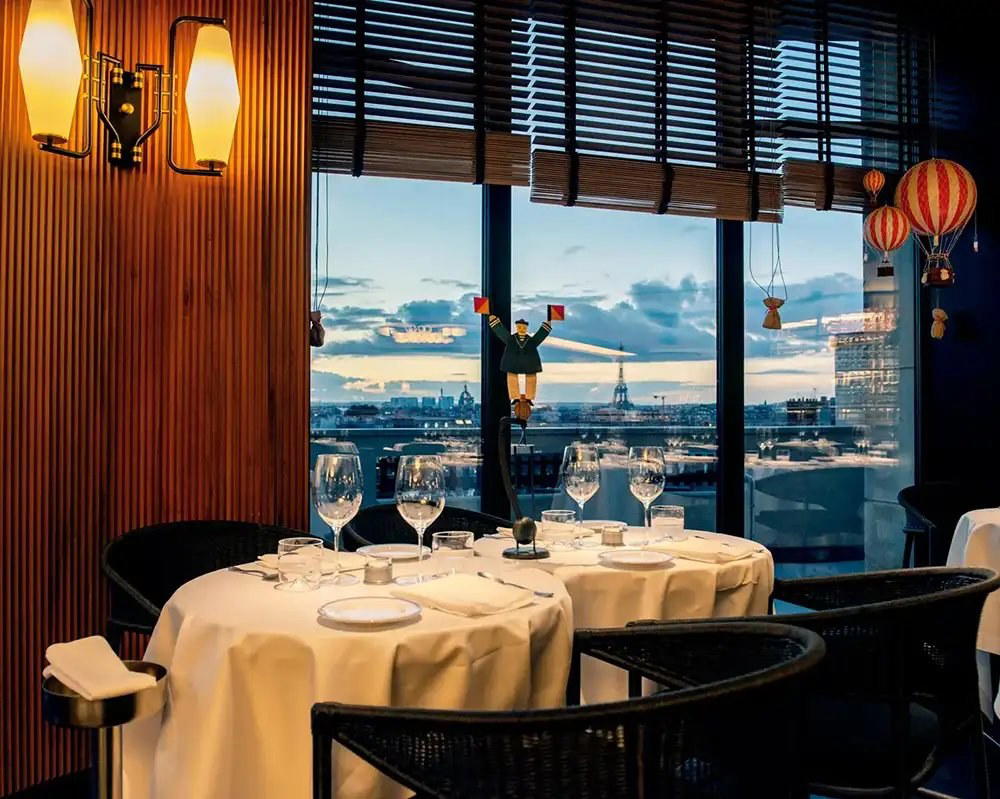
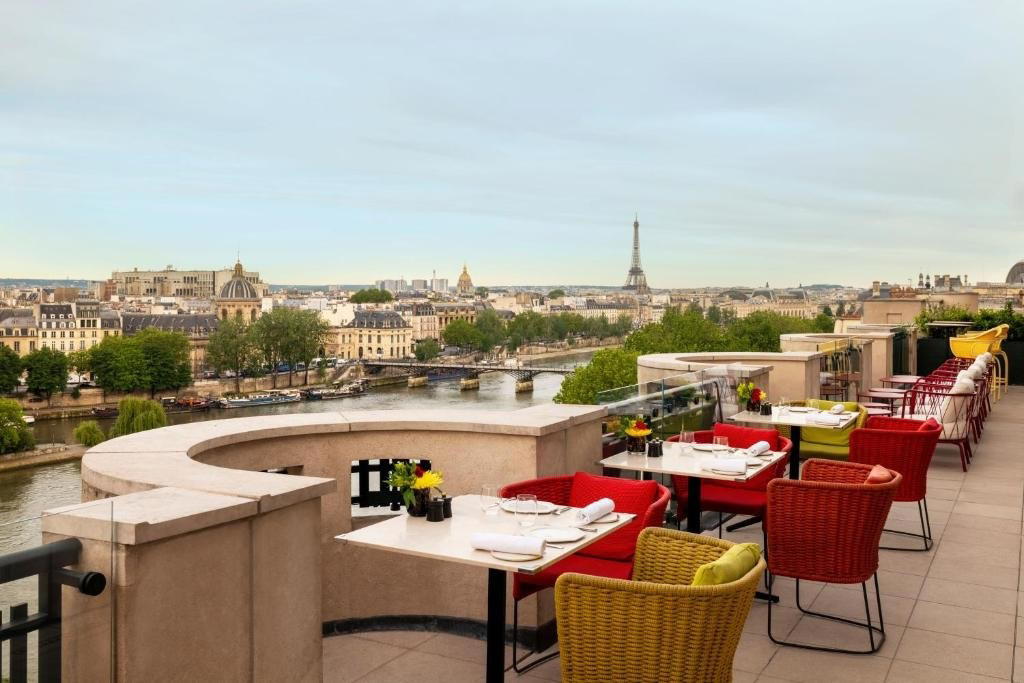
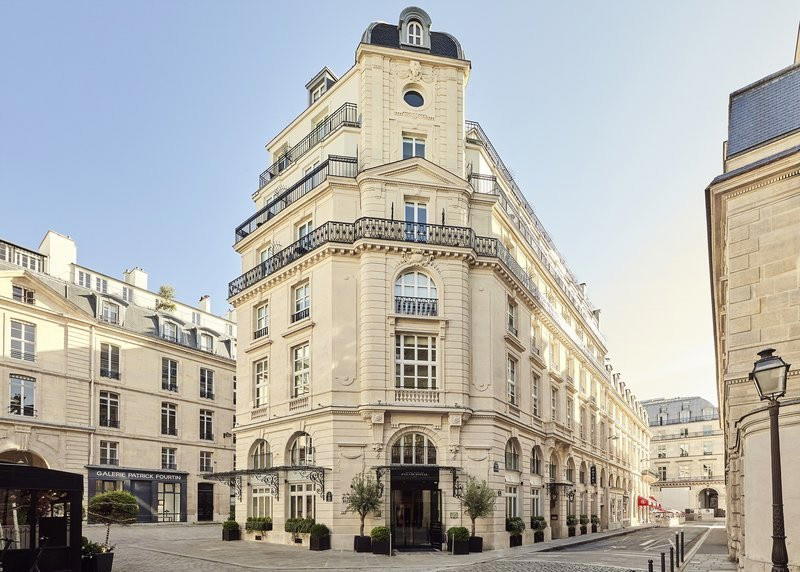
Hotel dining at this level in Paris operates within a specific set of expectations. The room should match the address. At Cheval Blanc, the Seine-front position on the Quai du Louvre means that the physical context arrives before any dish does. The building sits at the western end of the Île de la Cité view corridor, placing guests within sight of Notre-Dame's reconstructed spire and the Pont Neuf. Few dining rooms in the 1st arrondissement carry that kind of framing.
The glamour referenced in Langosteria's Opinionated About Dining recognition is not decorative description. At €€€€ pricing inside one of Paris's most architecturally considered hotels, the room functions as part of the value proposition. Guests are paying for a complete environment, not just for the food. That alignment between setting and menu register matters more at this tier than at mid-market price points, where the kitchen can carry the experience independently.
For hotel dining comparisons at a similar position, our full Paris hotels guide covers the Cheval Blanc's broader competitive set. Within that set, Langosteria's seafood specialisation gives it a more differentiated identity than most in-hotel restaurants, which tend to offer broader menus to serve a diverse guest base across multiple meal occasions.
Where Langosteria Sits in the Italian-in-Paris Field
Italian cuisine in Paris occupies a complicated position. The French capital has historically treated it as a secondary category relative to its own classical tradition, but that has shifted over the past decade as a generation of Italian-origin addresses have moved into the €€€€ tier with clear ambitions. Langosteria's Opinionated About Dining ranking at number 298 in Europe for 2025 places it inside a traceable competitive frame, though OAD's casual category covers a wide range of formats and price points, which makes direct peer comparisons from that ranking alone less precise.
More useful context comes from looking at where seafood-focused Italian restaurants have established credibility internationally. 8½ Otto e Mezzo Bombana in Hong Kong demonstrated that Italian fine dining transplanted into a non-Italian metropolitan environment can build its own identity without relying on proximity to source regions. cenci in Kyoto shows a different model, where Italian technique is filtered through local ingredient logic. Langosteria's Paris address takes neither of those approaches. It imports the Milan format relatively intact, betting that the product quality and menu architecture are sufficient to translate without significant local adaptation.
Other Italian addresses in Paris, including Adami and Baffo, operate at different price tiers and with different format assumptions. At the French fine dining ceiling, addresses like those covered in the broader regional guides to Mirazur in Menton, Flocons de Sel in Megève, or the classical institutions such as Paul Bocuse, Auberge de l'Ill, Bras, and Troisgros, the frame of reference is entirely different. Langosteria is not competing with those addresses. It is offering an alternative to them for guests who want precision and atmosphere without the weight of French classical ceremony.
The Wine List as a Secondary Signal
The Opinionated About Dining record flags an excellent wine selection alongside the seafood focus. At a seafood-led Italian address in this price range, that typically means a list oriented toward white wine depth: Campanian Falanghina and Fiano, Sicilian Etna Bianco, Friulian skin-contact wines, and the kind of Ligurian vermentino that bridges the gap between the Italian coastal tradition and the Provençal bottles that Paris's wine-literate guests already know. Wine pairing in a seafood-forward Italian menu at €€€€ is not optional infrastructure; it is part of how the menu makes its full argument.
For context on Paris's broader drinking culture and bar programming, our full Paris bars guide and our full Paris wineries guide cover adjacent territory. For experiences beyond the table, our full Paris experiences guide maps the city's wider premium programming.
Planning Your Visit
Location: Cheval Blanc Paris, 8 Quai du Louvre, 75001 Paris. The address sits on the Right Bank directly above the Seine, within walking distance of the Louvre and the Pont Neuf. Budget: €€€€, positioning it at the top tier of Paris restaurant pricing and in line with comparable hotel dining rooms in the 1st arrondissement. Reservations: Chef: Domenico Magistri leads the kitchen. Rating:
Frequently asked questions
What do regulars order at Langosteria?
The menu at Langosteria is structured around raw dishes, oysters, and seafood as the primary sequence, with freshly caught fish preparations following. That architecture suggests the cold and raw section is where the kitchen's identity is most concentrated, and the Opinionated About Dining recognition specifically calls out raw dishes and shellfish as the address's strengths. Guests familiar with the Milan original tend to orient toward whatever the kitchen is sourcing at peak freshness on a given day, which at a seafood-led address at this price point is typically communicated through daily specials or server recommendation rather than fixed menu items. The wine programme is recognised alongside the food, which points toward pairing as a meaningful part of the experience rather than an add-on.
Do they take walk-ins at Langosteria?
At a €€€€ address inside the Cheval Blanc, one of Paris's most in-demand hotel properties, walk-in availability is limited in practice regardless of formal policy. Contacting the Cheval Blanc Paris directly is the most direct path to current availability information.
Reputation First
A quick peer list to put this venue’s basics in context.
| Venue | Cuisine | Price | Awards | Notes |
|---|---|---|---|---|
| LangosteriaThis venue (the venue you are viewing) | Italian Seafood | $100–150 | Michelin Plate · Gambero Rosso 2 Forchette | Not listed |
| Alléno Paris au Pavillon Ledoyen | Modern French Fine Dining | $150–200 | 3 Michelin Stars · World's 50 Best #79 | Creative |
| Kei | Modern French with Japanese Influences | $300–500 | 3 Michelin Stars · World's 50 Best #93 | Contemporary French, Modern Cuisine |
| L'Ambroisie | Classic French Haute Cuisine | $300–500 | 2 Michelin Stars · World's 50 Best #23 | French, Classic Cuisine |
| Le Cinq - Four Seasons Hôtel George V | Modern French Fine Dining | $300–500 | 3 Michelin Stars · World's 50 Best #24 | French, Modern Cuisine |
| Plénitude | Modern French Sauce-Led Fine Dining | $300–500 | 3 Michelin Stars · World's 50 Best #14 | Contemporary French |
Recognition history
Dated appearances from independent guides and award organizations, with the underlying list record or original source where available.
Michelin Plate
Michelin
Gambero Rosso 2 Forchette
Gambero Rosso
Opinionated About Dining Casual in Europe Recommended
Opinionated About Dining
Full recognition history (4 entries)
Opinionated About Dining Casual in Europe Ranked #298
Opinionated About Dining
Langosteria
Featured Guides
Continue exploring
More in Paris
Restaurants in Paris
All restaurants in Paris →
Bars in Paris
All bars in Paris →

Langosteria
The wine
- Wine program
- Deep wine list
- Extensive wine list
- Sommelier-led
Details
- Elegant
- Sophisticated
- Date Night
- Special Occasion
- Panoramic View
- Hotel Restaurant
- Extensive Wine List
- Sommelier Led
- Skyline
- Street Scene
- A La Carte
- Tasting Menu
- Gluten Free Options
Current opening hours
- Monday
- 6–11 PM
- Tuesday
- 6–11 PM
- Wednesday
- 12–3 PM, 6–11 PM
- Thursday
- 12–3 PM, 6–11 PM
- Friday
- 12–3 PM, 6–11 PM
- Saturday
- 12–3 PM, 6–11 PM
- Sunday
- 12–3 PM, 6–11 PM
Hours can change for holidays and private events. Hours as of .
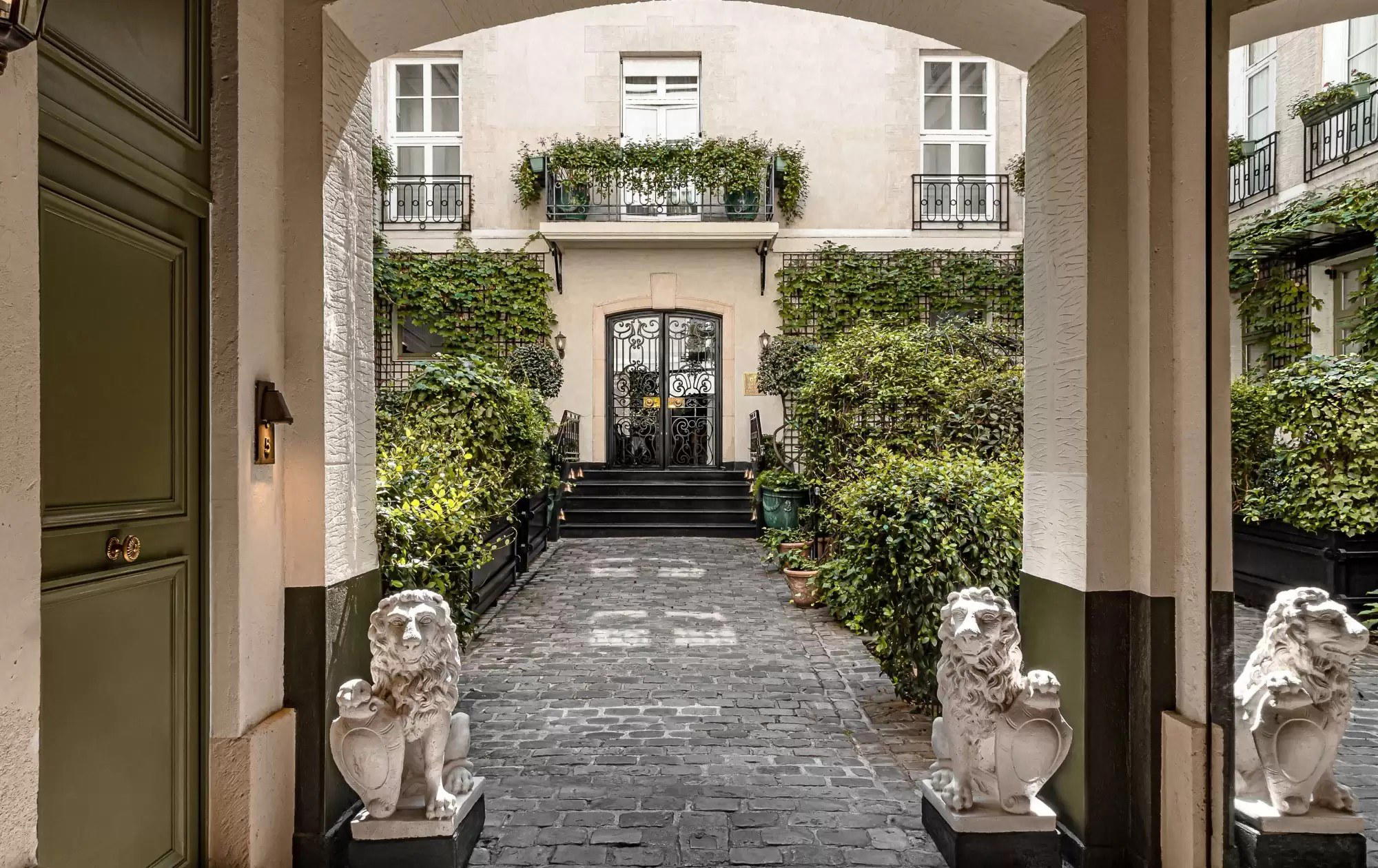
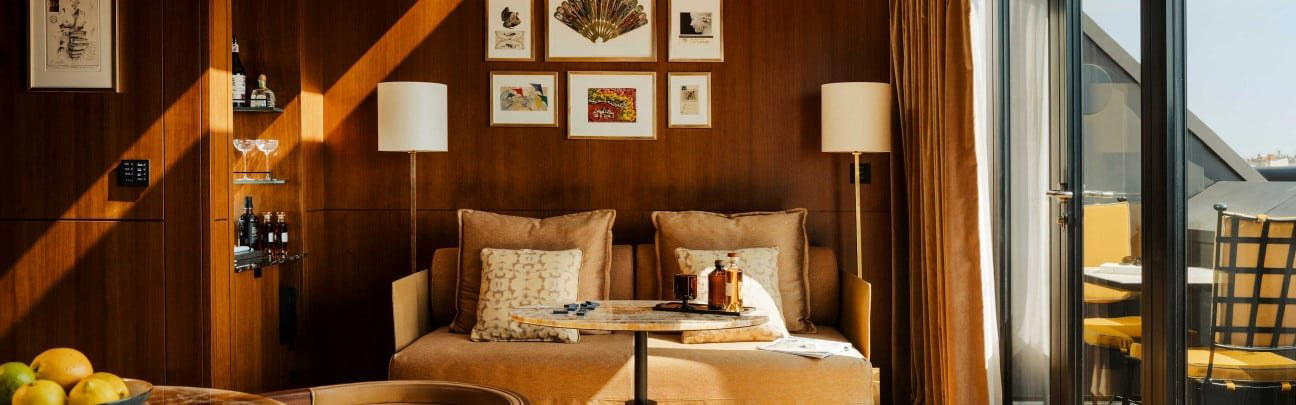
Refined alliance of warm woods and elegant tables with discreet luxury, dramatic city views, and a chic urbane vibe.