L'angolo
L'angolo occupies a corner address on St John Street in Clerkenwell, a stretch that has quietly become one of London's more serious dining corridors. The Italian name, meaning 'the corner', reflects both the geography and a certain restraint of ambition that tends to distinguish the better neighbourhood restaurants from those performing for critics. Positioned between the design studios and former meatpacking warehouses of EC1V, it sits in a part of the city where the room often matters as much as the plate.
Pearl is the En Primeur Club membership app — saves, bookings, and concierge access live there. Same editors, same standards.
- Address
- 180 St John St, London EC1V 4JY, United Kingdom
- Phone
- +447453699960
- Website
- langolo.co.uk
- Directions
- Get directions
 Saves & bookings on Pearl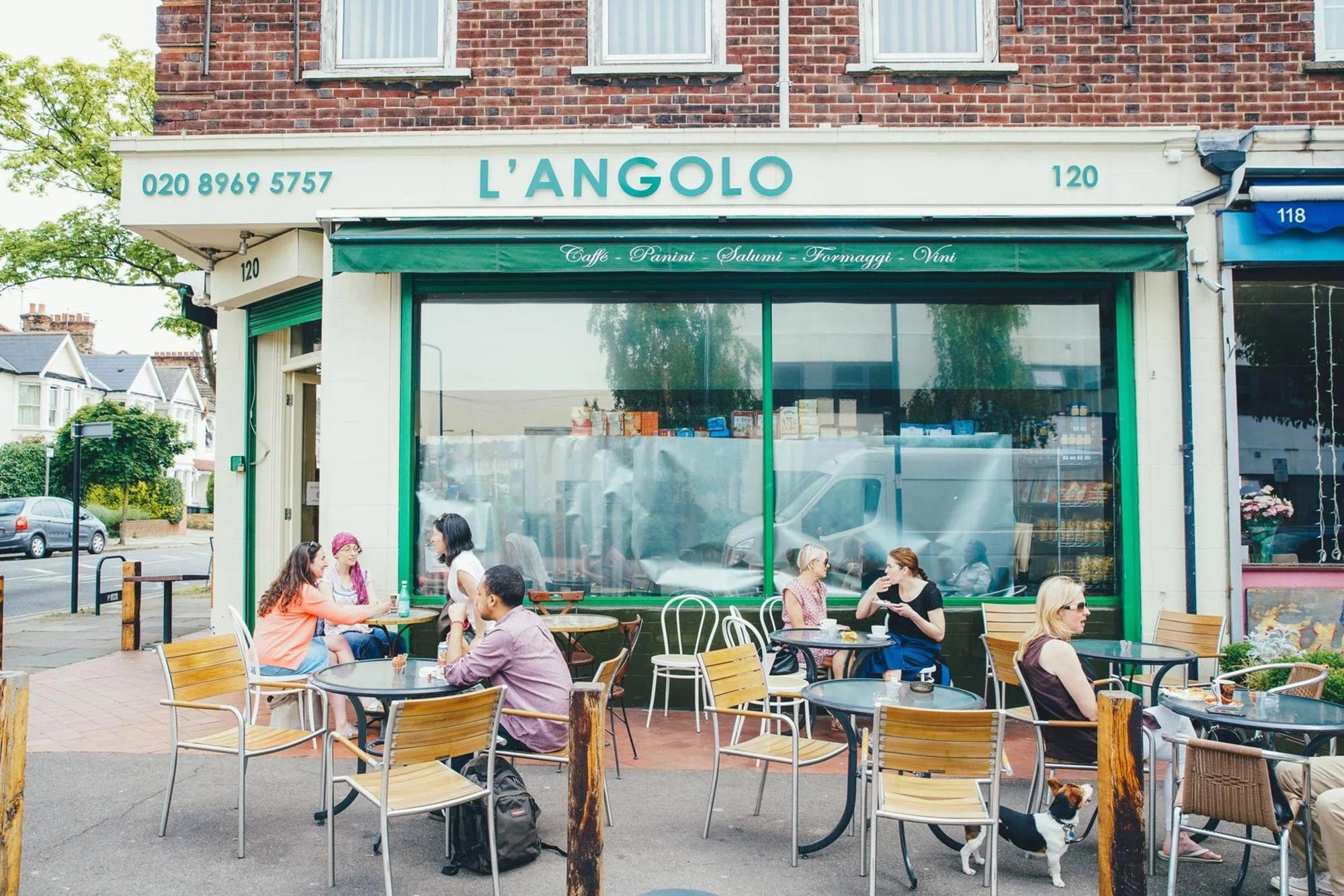
A Corner in Clerkenwell
St John Street runs north from Smithfield Market through one of London's more compositionally interesting dining corridors. The street carries the weight of Fergus Henderson's influence, with St. JOHN nearby, and that legacy has shaped what the neighbourhood expects from its restaurants. Not theatre. Not spectacle. Rooms that work. Food that means something without announcing it. L'angolo, at 180 St John Street, takes its name from the Italian for 'the corner', which is both a locational fact and a temperamental statement about how the space presents itself on this particular stretch of EC1V.
Clerkenwell is not a neighbourhood that rewards loudness. The design studios, converted warehouses, and legal chambers that define the area's working population tend to generate a dining clientele that is specific about what it wants: precision without fuss, a room that reads as considered rather than decorated, and cooking that doesn't interrupt conversation. It is a context that selects for a particular type of restaurant, and the Italian nomenclature at L'angolo points toward a tradition, corner trattoria, neighbourhood anchor, somewhere between casual and serious, that fits the street's general register.
The Room as Argument
In contemporary London dining, interior architecture has become a genuine differentiator, particularly in the mid-to-upper tiers where the food has largely converged on technical competence. Clerkenwell's building stock is useful here: Victorian and Edwardian commercial buildings offer high ceilings, generous windows, and a raw structural character that expensive fit-outs in Mayfair or Chelsea have to simulate. A corner address, specifically, brings two walls of natural light, a physical advantage that shapes the quality of an interior hour by hour in a way that a basement dining room or a side-street site cannot.
The design challenge for any room on this street is to work with the building's existing language rather than against it. The Italian restaurant tradition, particularly in its more serious northern expressions, has always favoured a certain material restraint: linen, wood, ceramic, a colour palette drawn from the earth rather than the fashion calendar. These are interiors that age well because they are not trying to trend. When that approach lands in a building with genuine structural character, exposed brick, original cornicing, proportioned windows, the result is a room that feels located rather than assembled. That sense of location, of a space that could only exist in this building on this street, is increasingly rare in a London dining scene where the same fit-out contractors and the same hospitality design firms cycle through predictable solutions.
Italian Cooking in a British Context
Italian cooking in London occupies a complicated position. At the summit of the market, restaurants like those in the Mayfair corridor operate more as destination addresses for international visitors than as functioning neighbourhood restaurants. Further down the price tiers, the category has been hollowed out by volume operators. Interesting space is the middle register: serious Italian cooking that is not performing for the Michelin inspector or the influencer audience, but is instead doing the harder, quieter work of becoming a genuine local resource.
London's Clerkenwell and Islington corridor has historically supported this kind of Italian presence. The area's working population, creative professionals, architects, legal practices, generates the kind of repeat customer base that allows a kitchen to build a vocabulary over time rather than chase novelty. A corner address on St John Street, with the name explicitly flagging its Italian identity and its geographic modesty, is positioning itself within that neighbourhood-anchor tradition rather than within the destination-restaurant competition that occupies the top tier at CORE by Clare Smyth, Restaurant Gordon Ramsay, Sketch, The Lecture Room and Library, The Ledbury, or Dinner by Heston Blumenthal.
That distinction matters for the reader making a decision. The serious destination restaurants in London demand advance planning: Le Bernardin in New York or Atomix operate in a register where the booking is itself an event. A neighbourhood address like L'angolo is offering something structurally different, the possibility of regularity, of a room you return to because it fits your life rather than one you visit once as an occasion. Those are different value propositions, and the leading Italian restaurants in London's inner zones have historically thrived by committing to the second model rather than the first.
Placing L'angolo in Its Wider comparable set
Outside London, particularly recognised addresses in British fine dining include Waterside Inn in Bray, Le Manoir aux Quat'Saisons in Oxford, L'Enclume in Cartmel, Moor Hall in Aughton, Gidleigh Park in Chagford, Hand and Flowers in Marlow, hide and fox in Saltwood, Midsummer House in Cambridge, Opheem in Birmingham, and Restaurant Andrew Fairlie in Auchterarder. These are destination restaurants drawing travellers and occasion diners. The restaurant's address, name, and Clerkenwell context place it in a different category entirely: the London neighbourhood restaurant for which proximity, consistency, and room quality carry more weight than accolades. For more on how Clerkenwell fits into London's broader dining picture, see our full London restaurants guide.
Planning a Visit
The restaurant's address, 180 St John Street, EC1V 4JY, puts it within a short walk of Farringdon station, which connects to the Elizabeth line, the Circle and Metropolitan lines, and the Thameslink rail network, making it one of the more accessible dining addresses in central London regardless of where you are staying. The corner position on St John Street means the entrance is readable from the street without requiring local knowledge. Prospective visitors should confirm current hours, booking arrangements, and menu details directly with the restaurant before arrival.
Cuisine Context
Comparable venues nearby, for context on price, style, and recognition.
| Venue | Cuisine | Price | Notes |
|---|---|---|---|
| L'angoloThis venue — the venue you are viewing | Mediterranean Italian Tapas & Sharing Plates | $$ | Not listed |
| Towpath | Seasonal Mediterranean Canal-Side Café | $$ | De Beauvoir Town |
| Ottolenghi Notting Hill | Modern Mediterranean Deli | $$ | Notting Hill |
| Wilderness Kitchen | Mediterranean-Inspired British | $$ | St Luke's |
| Aimer Restaurant | Mediterranean | $$ | Wimbledon |
| Morito Hackney Road | Moorish Tapas with Cretan Influences | $$ | Haggerston |
Continue exploring
More in London
Restaurants in London
Browse all →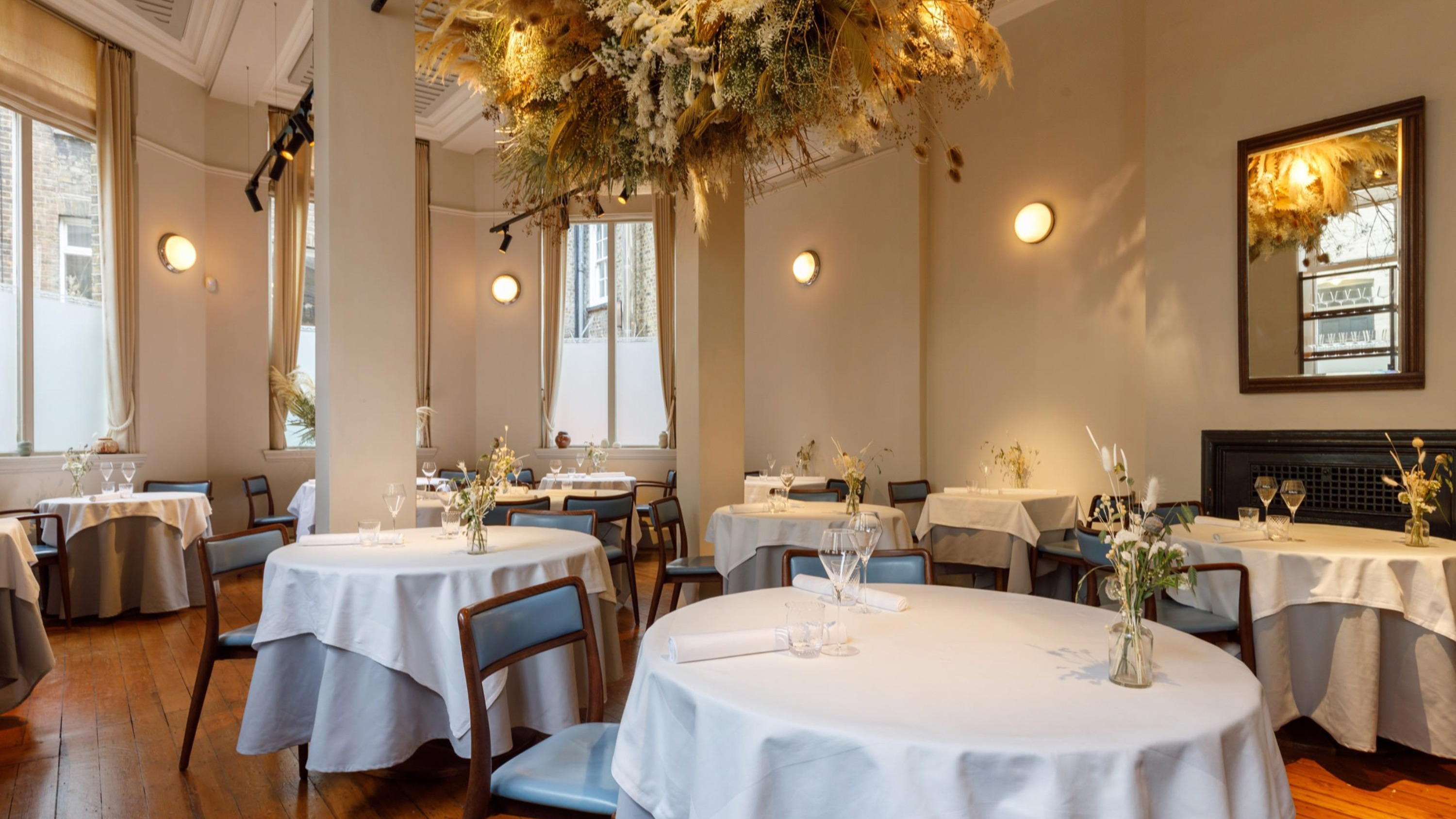
Bars in London
Browse all →
Hotels in London
Browse all →



At a Glance
- Cozy
- Romantic
- Intimate
- Casual Hangout
- Date Night
- Group Dining
- Family
- Terrace
- Open Kitchen
- Beer Program
- Organic
- Local Sourcing
- Street Scene
Current opening hours
- Monday
- 12–11 PM
- Tuesday
- 12–11 PM
- Wednesday
- 12–11 PM
- Thursday
- 12–11 PM
- Friday
- 12–11 PM
- Saturday
- 12–11 PM
- Sunday
- 12–10 PM
Hours can change for holidays and private events. Last verified .
Warm, inviting, and intimate with colorful outdoor seating; described as feeling like dining at someone's home with genuine hospitality and fresh aromas.