Ottolenghi Notting Hill
On Ledbury Road in Notting Hill, Ottolenghi occupies a particular position in London's all-day dining scene: a counter-style deli and café where vegetable-forward plates, layered spicing, and abundant salads set the format. The cooking draws on Middle Eastern, Mediterranean, and North African traditions, structured for grazing rather than formal service. It sits in a different tier to the neighbourhood's Michelin-starred Ledbury, but serves a consistent and loyal local audience.
Pearl is the En Primeur Club membership app — saves, bookings, and concierge access live there. Same editors, same standards.
- Address
- 63 Ledbury Rd, London W11 2AD, United Kingdom
- Phone
- +44 20 7727 1121
- Website
- ottolenghi.co.uk
- Directions
- Get directions
 Saves & bookings on Pearl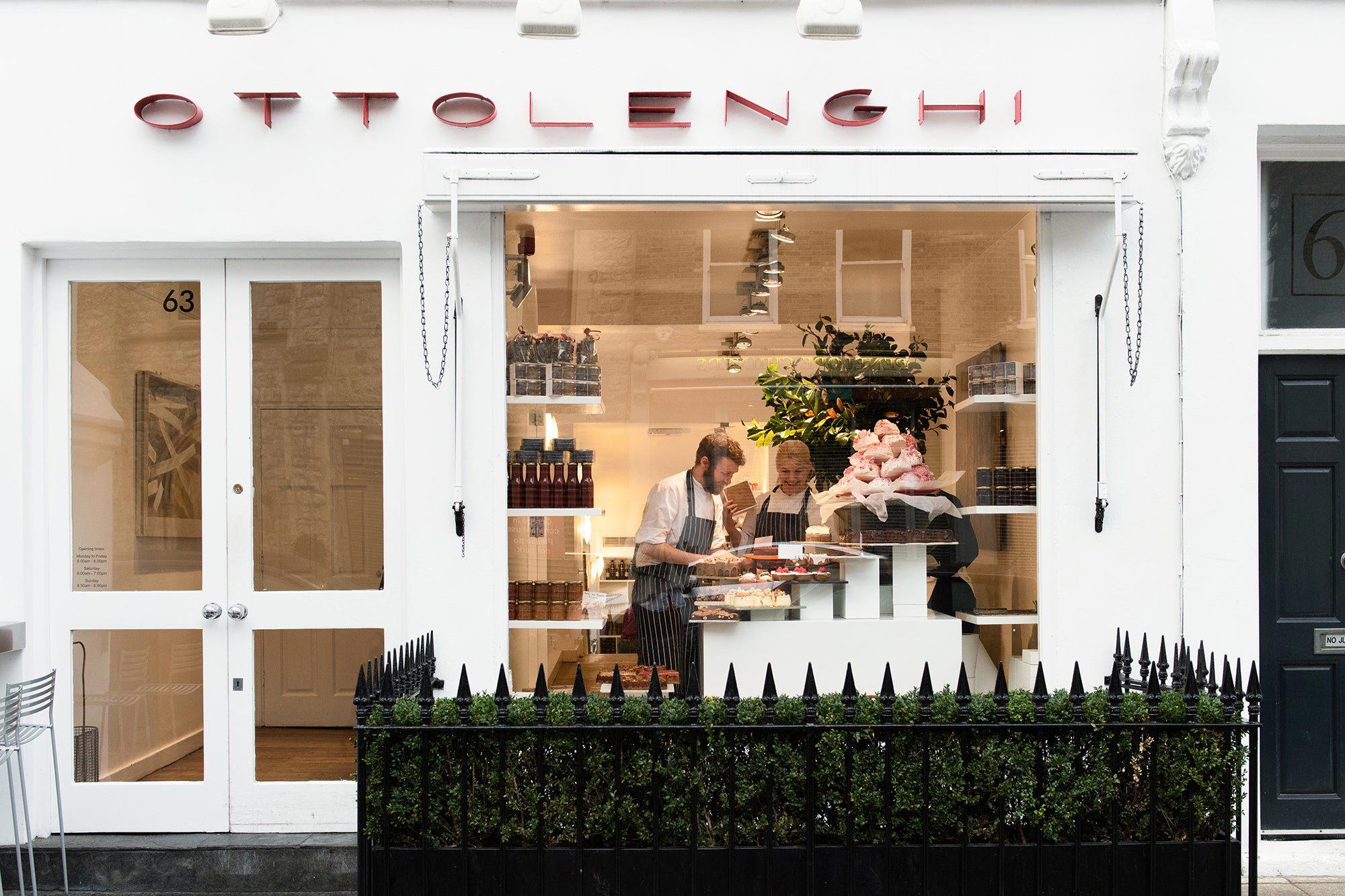
A Counter Built on Abundance
Ledbury Road in Notting Hill runs through one of London's more self-possessed neighbourhoods: Georgian terraces, independent boutiques, and a food culture that skews toward produce quality rather than culinary theatre. The Ottolenghi outpost at number 63 fits that register precisely. The format is deli-counter and café, not restaurant in the conventional sense. Long communal tables, white interiors, and glass cases packed with salads, pastries, and composed plates define the physical experience before you have ordered anything. The architecture of the space is itself a statement about how the food is meant to be approached: not sequentially, not formally, but in accumulation.
This is relevant context for understanding where the venue sits relative to the rest of Notting Hill's food offering. A short walk away, The Ledbury operates at the ££££ Michelin tier, with a tasting menu format and the focused progression that entails. Ottolenghi operates in a different register entirely, one where the menu structure encourages assembly rather than procession, and where the diner's choice carries more weight than the kitchen's sequence.
How the Menu Is Built, and What That Reveals
The menu architecture at Ottolenghi Notting Hill reflects the broader culinary logic that has made the brand a reference point in British food culture over the past two decades. Dishes are designed to be read laterally rather than vertically. There is no conventional starter-main-dessert scaffold. Instead, the counter presents salads, grain dishes, roasted vegetables, and protein elements that are composed to be combined, shared, or taken away. The same plate might function as a side dish in one context and a centrepiece in another.
This format draws openly on Middle Eastern and Mediterranean traditions where the table is set with many things at once, and where the meal's logic is abundance and variety rather than escalation. North African spicing, Levantine vegetable preparations, and Eastern Mediterranean dairy appear across the range. What distinguishes the Ottolenghi approach within that tradition is the layering: multiple textures within a single dish, herbs used as structural elements rather than garnish, and dressings calibrated to hold across the time it takes to move from counter to table.
The pastry and baked goods section operates as a largely separate register. Large meringues, layered cakes, and individual pastries occupy one end of the counter and attract a distinct audience from those assembling savoury plates. The scale of the baking programme is part of the visual identity of the space, and also signals something about the operational priorities: this is a venue that treats patisserie as a first-order concern, not an afterthought.
Ottolenghi in London's Broader Dining Context
London's premium dining tier has consolidated around a small number of formats. At the highest price point, the city's tasting-menu restaurants, including CORE by Clare Smyth, Restaurant Gordon Ramsay, Sketch, The Lecture Room and Library, and Dinner by Heston Blumenthal, operate in the ££££ bracket with advance booking requirements and formal service structures. Ottolenghi sits outside that tier on every axis: price, format, and the type of occasion it serves.
That positioning is not a limitation. The venue addresses a demand that formal restaurants do not meet: a high-quality, ingredient-led lunch or casual dinner that does not require advance planning or a dress code. In a city where the gap between a supermarket meal and a Michelin table can feel wide, Ottolenghi occupies middle ground with genuine culinary intent. The comparison set is not London's starred restaurants but rather the city's better neighbourhood cafés and all-day dining venues.
For those building a broader picture of British dining at the Michelin level, the EP Club guide covers venues across the country, from Waterside Inn in Bray and L'Enclume in Cartmel to Moor Hall in Aughton, Gidleigh Park in Chagford, Hand and Flowers in Marlow, hide and fox in Saltwood, Midsummer House in Cambridge, Opheem in Birmingham, Ynyshir Hall in Machynlleth, and Restaurant Andrew Fairlie in Auchterarder. Internationally, the counter-culture conversation extends to formats like Le Bernardin in New York City and Lazy Bear in San Francisco, which approach menu architecture from different premises.
Our full London restaurants guide maps the city's dining tiers in more detail, from neighbourhood all-day venues through to the formal tasting-menu tier.
Know Before You Go
- Address: 63 Ledbury Rd, London W11 2AD
- Format: Deli counter and café; communal and individual seating available
- Style: All-day dining, counter service, Middle Eastern and Mediterranean influence
- Booking: Walk-in format; reservations not typically required for the café
- Getting there: Notting Hill Gate or Westbourne Park are the closest London Underground stations
- Leading for: Lunch, weekend brunch, or a composed takeaway from the deli counter
Price and Recognition
Comparable venues nearby, for context on price, style, and recognition.
| Venue | Cuisine | Price | Notes |
|---|---|---|---|
| Ottolenghi Notting HillThis venue — the venue you are viewing | Notting Hill, Modern Mediterranean Deli | $$ | Not listed |
| Lulu’s | Brixton, Modern European Small Plates | $$ | Not listed |
| Jago Restaurant | Not listed | $$ | Spitalfields, Mediterranean & Middle Eastern Small Plates |
| The Barbary Notting Hill | Not listed | $$$ | Westbourne, Modern North African & Mediterranean Fire Cooking |
| Sessions | Belgravia, Modern European Seasonal | $$$ | Not listed |
| Ember at Horizons | Not listed | $$$ | Chinatown, Charcoal Grill with Global Flavours |
Continue exploring
More in London
Restaurants in London
Browse all →
Bars in London
Browse all →
Hotels in London
Browse all →


At a Glance
- Modern
- Trendy
- Cozy
- Brunch
- Casual Hangout
- Family
- Open Kitchen
Current opening hours
- Monday
- 8 AM–7 PM
- Tuesday
- 8 AM–7 PM
- Wednesday
- 8 AM–7 PM
- Thursday
- 8 AM–7 PM
- Friday
- 8 AM–7 PM
- Saturday
- 8 AM–7 PM
- Sunday
- 8 AM–6 PM
Hours can change for holidays and private events. Last verified .
Chic all-white interiors with resplendent counters loaded with salads, savouries, cakes, and oversized meringues creating a bright, enticing atmosphere.