


On a quieter stretch of the 7th arrondissement, L'Ami Jean has held its position as one of Paris's most serious casual bistros for years, earning a Michelin Plate in 2025 and a ranking of #40 in Opinionated About Dining's Casual Europe list for 2024. Chef Stéphane Jégo runs a kitchen shaped by Basque technique and an anti-waste ethos, where pork is grilled to order and vegetables are driven by what the season actually offers.
Pearl is the En Primeur Club membership app — saves, bookings, and concierge access live there. Same editors, same standards.
- Address
- 27 Rue Malar, 75007 Paris, France
- Phone
- +33 1 47 05 86 89
- Website
- lamijean.fr
- Directions
- Get directions
 Saves & bookings on Pearl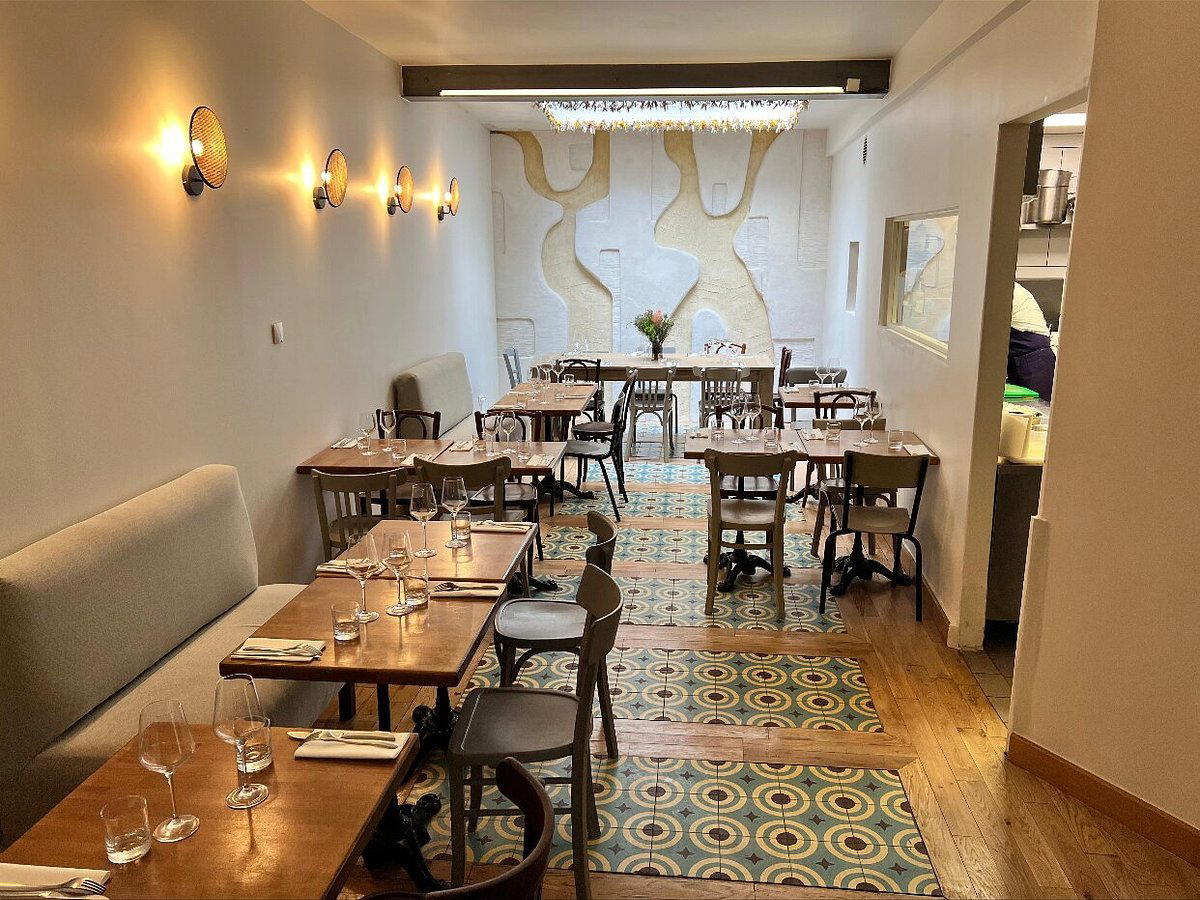
The Bistro Tradition and Where L'Ami Jean Fits
The 7th arrondissement runs on two registers. On one side, the formality of places like Le Violon d'Ingres and the grandeur of multi-course tasting menus that compete with Paris's leading creative tables. On the other, a smaller tier of neighbourhood anchors that have built reputations over decades through consistency rather than spectacle. L'Ami Jean belongs to the second category, though its recognition has long exceeded its arrondissement. It is a Basque-Inspired French Bistro at 27 Rue Malar in Paris.
Paris's casual bistro scene is currently caught between two pressures: the creeping formality of natural-wine dining rooms chasing contemporary cool, and the heritage-heavy brasserie format that can feel frozen in amber. The kitchens that hold ground in between, those that treat the bistro format as a living tradition rather than a museum piece or a trend vehicle, are rarer than the volume of the city's dining options might suggest. L'Ami Jean is one of the places that has kept that position without surrendering its character.
Across France, the bistro's most credible practitioners share a commitment to regional specificity over generalist cooking. Auberge Grand'Maison in Mûr-de-Bretagne grounds its menu in Breton produce and tradition. Auga in Gijón does the same for Asturian seafood. L'Ami Jean draws its own axis from the Basque country, and that regional specificity is what gives the kitchen its editorial coherence.
Local Technique, Basque Anchoring
What makes the restaurant's kitchen legible as a cooking philosophy rather than a general menu is the Basque thread that runs through it. Basque cuisine, on both sides of the French-Spanish border, operates from a different set of instincts than classic Parisian bistro cooking. Fat is treated as flavour infrastructure rather than something to moderate. Pork and its derivatives are understood in generational terms. Grilling is a technique that carries its own authority.
At the restaurant, pork is grilled on the spot, a detail that signals both the kitchen's priorities and its relationship to product. The grilling happens in the room or close to it, which means the cooking is a present-tense event rather than a backstage process. This is a structural choice as much as a culinary one: it keeps the kitchen honest about timing and conditions the pace of the meal.
The Basque influence is not deployed as theme-park regionalism. It functions instead as a set of standards: sourcing expectations, tolerance for richness, and a relationship to seasonal vegetables and herbs that is direct rather than decorative. The combination of grilled pork with seasonal vegetables and herbs that defines the kitchen's current output is both a product of that regional lens and a response to where consumer values have moved in the past decade.
The kitchen's approach to vegetables is worth noting in that context. A signed commitment to the anti-waste charter of Parisian chefs, which Chef Jégo holds, is not merely symbolic. It describes a working method: the entire vegetable is used, from carrot through to fruit, and the menu is built around what that discipline makes possible rather than defaulting to luxury add-ons. This places the restaurant in a specific sub-tier of Parisian bistros that have absorbed sustainability methodology without adopting the aesthetic posturing that often accompanies it.
Recognition and Competitive Position
2024 Opinionated About Dining ranking placed the restaurant at #40 in its Casual Europe list, up from #123 in 2023. OAD rankings aggregate diner and critic input rather than relying on a single inspection, which makes significant year-on-year movement a signal worth taking seriously: it reflects an accumulation of positive experiences across a broad tasting base rather than a single reviewer's opinion. The 2025 Michelin Plate, maintained from 2024, confirms the kitchen's consistency at a threshold that the guide associates with good cooking rather than mere competency.
In the context of the 7th arrondissement specifically, the restaurant's price point sits at €€€, which positions it below the formal multi-course operations. For comparison, the leading creative tables in Paris, including Allard and venues like Anecdote that occupy adjacent casual territory, approach the bistro format from different angles. The restaurant's OAD trajectory at this price tier suggests it is competing at the summit of the casual segment rather than in the shadow of its fine-dining neighbours.
France's most serious destination restaurants, from Flocons de Sel in Megève to Mirazur in Menton, and from Troisgros in Ouches to Bras in Laguiole, each operate with a clarity of regional identity that makes their menus readable as arguments. Paul Bocuse's Auberge du Pont de Collonges and Auberge de l'Ill in Illhaeusern represent the Alsatian and Lyonnais poles of that tradition. The restaurant operates at a different scale and price tier, but the same logic applies: the Basque identity is not decoration, it is the argument.
The Current Format
The kitchen has been fully redesigned as part of what the restaurant describes as a renewed direction: dishes retain their bistro quality from the last century but are calibrated to current expectations. That formulation is more precise than it might appear. It does not mean updating for trend purposes. It means that the kitchen takes the original register seriously enough to re-examine it rather than simply preserve it.
The result is a menu in which the bistro idiom is still the operating language, but the syntax has been tightened. Seasonal vegetables and herbs are not garnish; they are part of the compositional logic. The anti-waste framework means the kitchen works from a position of using everything, which tends to produce cooking that is more considered about what ends up on the plate than menus built on abundance and substitution.
5 across 1,270 reviews, a dataset large enough to be meaningful. At a restaurant with a format this specific and a price point this defined, a stable high average across that volume indicates that the experience is consistently meeting the expectations it sets rather than occasionally exceeding them from an inconsistent baseline.
Planning Your Visit
The restaurant is open Tuesday through Saturday, with lunch service running 12 to 2 pm and dinner from 7 to 11 pm. Saturday service is lunch only. The restaurant is closed Monday and Sunday. It sits at 27 Rue Malar in the 7th arrondissement, within walking distance of the Invalides and La Tour-Maubourg Métro stations.
The venue occupies a price tier and culinary register that makes it suitable for both serious dining occasions and the kind of recurring visit that builds over time. For readers planning a wider Paris itinerary, the full Paris restaurants guide covers the city's range across price tiers and cuisine types. The Paris hotels guide, bars guide, wineries guide, and experiences guide round out the planning picture.
What People Recommend at L'Ami Jean
The clearest guide to what regulars return for comes from the kitchen's stated priorities: the grilled pork, prepared to order and always paired with seasonal vegetables and herbs, is the structural anchor of the menu. The anti-waste framework means the vegetable composition changes with the season, so what arrives alongside the pork in spring differs materially from what appears in autumn. Visitors who follow the seasonal logic of the menu rather than looking for fixed benchmarks tend to get full value from the kitchen's current direction. The restaurant's OAD ranking at #40 in Casual Europe for 2024, up from #123 the previous year, reflects broad agreement that the cooking rewards engagement with what the kitchen is doing on a given service rather than a fixed set of expectations. For venues at comparable recognitional tiers, see 19.20 by Norbert Tarayre and 20 Eiffel for context on the broader Paris casual-dining field.
Cuisine and Recognition
Comparable venues nearby, for context on price, style, and recognition.
| Venue | Cuisine | Price | Awards | Notes |
|---|---|---|---|---|
| L'Ami JeanThis venue — the venue you are viewing | Basque-Inspired French Bistro | $$$ | Michelin Plate | Not listed |
| Le Comptoir du Relais | Classic French Bistro | $$$ | Michelin Plate | Saint-Germain-des-Prés |
| L'Assiette | Classic French Bistro | $$$ | Michelin Plate | 14e Arr. |
| Aux 2 K | Modern French Bistro | $$$ | Bib Gourmand | 9th arrondissement |
| Le Villaret | Traditional French Bistro | $$$ | Michelin Plate | 11th arrondissement |
| Vantre | Modern French Bistro | $$ | Michelin Plate | 11e arrondissement |
Recognition history
Dated appearances from independent guides and award organizations, with the underlying list record or original source where available.
Michelin Plate
Michelin
Opinionated About Dining Casual in Europe Ranked #61
Opinionated About Dining
Michelin Plate
Michelin
We're Smart World 3 Radishes
We're Smart World
Michelin Plate
Michelin
Opinionated About Dining Casual in Europe Ranked #40
Opinionated About Dining
Opinionated About Dining Casual in Europe Ranked #123
Opinionated About Dining
Continue exploring
More in Paris
Restaurants in Paris
Browse all →
Bars in Paris
Browse all →
Hotels in Paris
Browse all →


At a Glance
- Lively
- Cozy
- Rustic
- Classic
- Date Night
- Special Occasion
- Open Kitchen
- Extensive Wine List
Current opening hours
- Monday
- Closed
- Tuesday
- 12–2 PM, 6:30–11 PM
- Wednesday
- 12–2 PM, 6:30–11 PM
- Thursday
- 12–2 PM, 6:30–11 PM
- Friday
- 12–2 PM, 6:30–11 PM
- Saturday
- 12–2 PM
- Sunday
- Closed
Hours can change for holidays and private events. Last verified .
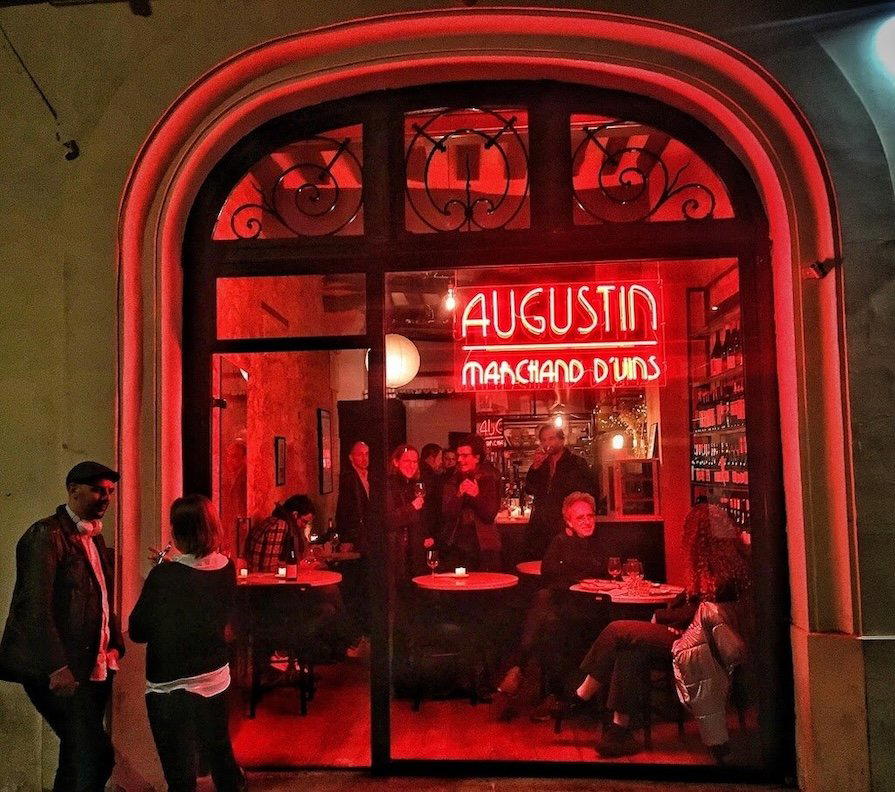
Cozy and lively bistro with crowded small tables, open kitchen, warm rustic atmosphere, and frenetic energy from staff and diners