
A Michelin-starred address on the western shore of Lake Garda, La Tortuga has anchored Gargnano's dining identity since 1980, drawing on the lake's zander and whitefish to build a menu where classic Italian technique and the citrus-scented agricultural character of Garda converge. The wine list reaches into Lugana's leading producers, and the room carries the particular warmth of a place where regulars have been returning for decades.
Pearl is the En Primeur Club membership app — saves, bookings, and concierge access live there. Same editors, same standards.
- Address
- via XXIV Maggio 5, Gargnano, 25084, Italy
- Phone
- +39 0365 71251
- Website
- ristorantelatortuga.it
- Directions
- Get directions
 Saves & bookings on Pearl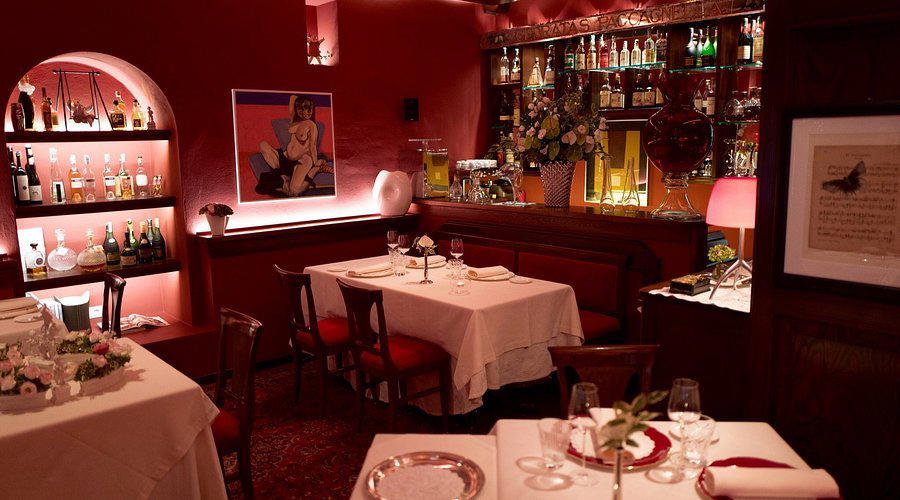
Where the Lake Comes to the Table
Via XXIV Maggio runs close enough to the water that the air carries a mineral coolness even in summer, a mixture of lake spray and the lemon groves that have defined Gargnano's agricultural identity for centuries. The western shore of Lake Garda is not a dining destination in the way that Sirmione or Desenzano attract broad tourist traffic; it is quieter, more residential, and the restaurants that have lasted here have done so by serving a specific community with a specific product. La Tortuga sits on that street, in that town, inside that logic. It opened in 1980, it holds a Michelin star, and it earns a 4.8 on Google across 167 reviews, a combination that signals durability rather than trend.
La Tortuga occupies a different register: it is the address where the ingredient, not the technique, is the starting argument.
The Logic of the Lake Larder
Lake Garda is the largest lake in Italy, and its freshwater fishery has a character that distinguishes it sharply from the Adriatic or Tyrrhenian seafood traditions that dominate Italian fine dining. Zander and whitefish, the two species that anchor La Tortuga's menu, are cold, clean-water fish with a delicate mineral quality that responds poorly to heavy treatment. Across the northern Italian lake-country tradition, from the Maggiore to the Como to the Garda, the leading kitchen discipline applied to these fish is essentially restrained: remove heat too early, keep fat selective, let the water the fish came from speak through the flesh.
That philosophy aligns La Tortuga with a broader current in Italian regional cooking, where the relationship between geography and ingredient is at its most direct. The restaurant's star signals that this approach has been assessed, not merely celebrated locally. At the €€€€ price tier, it sits alongside the top end of northern Italian regional cooking, kitchens where the sourcing geography is non-negotiable and the technique exists to clarify rather than obscure it.
Garda's Agricultural Register on the Plate
The ingredient sourcing argument at the restaurant extends beyond the lake itself. The Garda microclimate, one of the warmest in the Alpine foothills, sheltered by the Adamello range to the north, produces olives, lemons, and capers at latitudes that would otherwise make them impossible. The extra virgin olive oils from this stretch of the western shore carry a particular herbaceous freshness that distinguishes them from Tuscan or Sicilian equivalents. Lemon groves, some of which occupy the old limonaie structures that are themselves protected heritage, give the local cooking its characteristic citric lift.
These are not garnishes or affectations at a kitchen like La Tortuga; they are the aromatic framework within which the lake fish is placed. The Mediterranean flavors mentioned in descriptions of the restaurant reflect an actual agricultural geography: this is the northernmost point at which Mediterranean produce grows in any quantity in Italy, and using it in a kitchen that also draws on freshwater fish creates a register that has no direct equivalent elsewhere in the country. Spaghetti preparations and warm appetizers built on this framework have the mineral depth of the lake against the brightness of citrus and oil, a pairing that is a product of geography before it is a product of menu design.
The approaches are different in character but share a rejection of imported luxury product in favour of hyper-local sourcing depth.
Classic Cuisine in a Regional Frame
The cuisine type designation, Classic Cuisine, is worth examining against the broader Italian fine dining picture. At the €€€€ tier, the Italian restaurant field is dominated by creative and progressive formats: Osteria Francescana in Modena, Le Calandre in Rubano, Piazza Duomo in Alba, Enrico Bartolini in Milan, all operating at the intersection of regional Italian product and avant-garde technique. The restaurant sits at a different coordinate. Its comparable set within the Classic Cuisine category at this price point includes restaurants like Maison Rostang in Paris and KOMU in Munich, where the argument is for accumulated expertise and ingredient fidelity over novelty.
This is not a conservative choice by default. In a period when Italian fine dining has largely moved toward technique-forward presentation, maintaining a classic register while holding Michelin recognition is itself a position. The inspectors who awarded the star were assessing the cooking on its own terms, not on whether it aligned with dominant trends at three-star level restaurants like Enoteca Pinchiorri in Florence or Reale in Castel di Sangro. The star says the execution is rigorous. The classic designation says the kitchen has no interest in reframing what it does in contemporary styling.
For those drawn to the creative end of Italian coastal cooking, Quattro Passi in Marina del Cantone offers an instructive contrast: seafood at the same price tier, but through a lens of modern Italian refinement. The restaurant occupies a fundamentally different position in that conversation.
A Wine Cellar with Depth
Lugana, produced from Turbiana grapes on the southern shores of Lake Garda, is one of northern Italy's most underexamined white wine appellations outside the specialist market. The Lugana Orestilla cited among the cellar's reference bottles points to a list built with the same regional logic that informs the kitchen: wines that come from the same water and soil system as the fish on the plate. That coherence is rarer than menus claiming local sourcing might suggest. Most restaurant wine lists at this tier default toward prestige appellations from outside the region regardless of what the kitchen is doing. A cellar that features Lugana as a genuine reference point rather than a token local option reflects a buying philosophy aligned with the sourcing argument the food makes.
Planning a Visit
The format is dinner-only, which positions it as an evening destination rather than a casual all-day address. At €€€€, the meal represents a considered spend, and the combination of Michelin recognition and decades of repeat custom means that advance booking is the operative assumption rather than an option. Gargnano itself is a small town on the western Garda shore, accessible by car from Brescia and served by the lake ferry network that connects the western shore villages.
The restaurant's address is via XXIV Maggio 5, Gargnano, 25084, Italy. The dress code is smart casual, and reservations are essential.
Comparable Spots, Quickly
Comparable venues nearby, for context on price, style, and recognition.
| Venue | Cuisine | Price | Awards | Notes |
|---|---|---|---|---|
| La TortugaThis venue — the venue you are viewing | Traditional Italian Lake Garda Fine Dining | $$$ | Michelin 1 Star | Not listed |
| Villa Feltrinelli | Modern Italian Fine Dining | $$$$ | Michelin 2 Star | Gargnano |
| Gramen | Plant-based Italian Fine Dining | $$$$ | Not listed | Gargnano |
| Trattoria S. Martino - Le 3 oche | Lake Garda Italian Trattoria | $$ | Not listed | Gargnano |
| LoRo | Modern Italian Fine Dining | $$$ | Michelin 1 Star | Trescore Balneario |
| Damini Macelleria & Affini | Modern Italian Meat-Focused Fine Dining | $$$$ | Michelin 1 Star | Arzignano |
Recognition history
Dated appearances from independent guides and award organizations, with the underlying list record or original source where available.
Michelin 1 Star
Michelin
Michelin 1 Star
Michelin
Michelin 1 Star
Michelin
Continue exploring
More in Gargnano
Restaurants in Gargnano
Browse all →
Bars in Gargnano
Browse all →
Hotels in Gargnano
Browse all →

At a Glance
- Romantic
- Cozy
- Elegant
- Intimate
- Rustic
- Date Night
- Special Occasion
- Historic Building
- Extensive Wine List
- Local Sourcing
- Street Scene
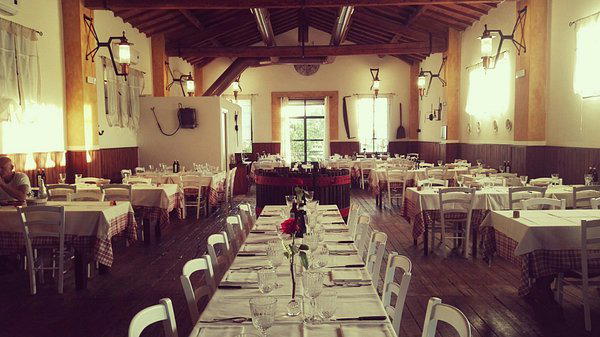
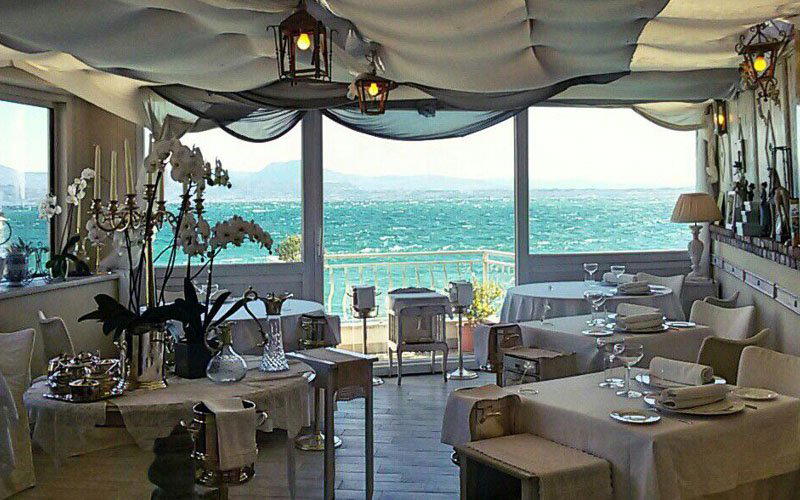
Cozy and romantic with refined furnishings, beautiful tableware, and a welcoming, pampering atmosphere.