La Tête d’Or
.png)

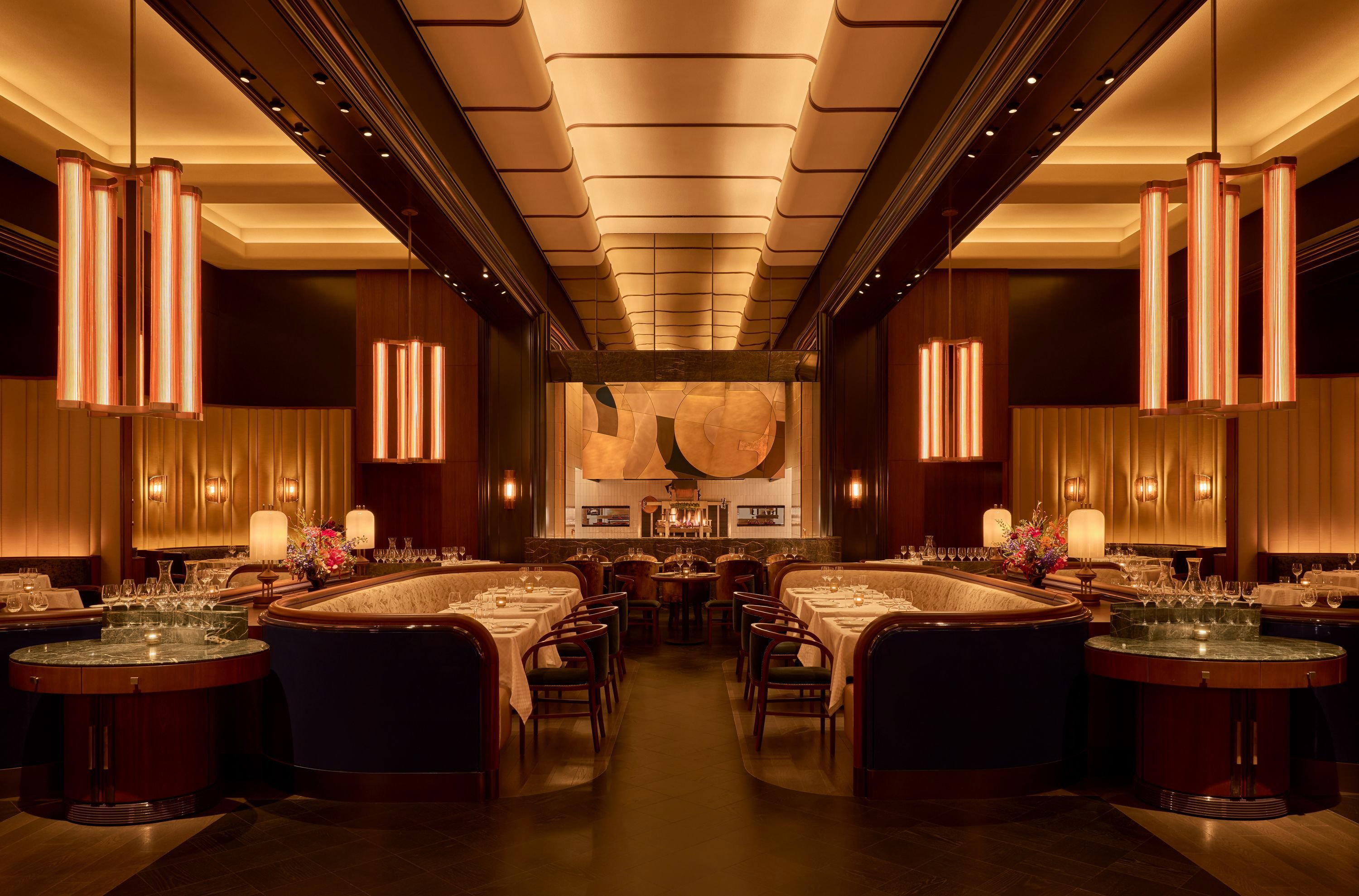
Opened in November 2024 at One Madison Avenue, La Tête d'Or is Daniel Boulud's first dedicated steak restaurant, bringing French technique to the American steakhouse format. The Flatiron room features Art Deco design with walnut floors, marble, and blue velvet, while the menu pairs dry-aged and oak-grilled cuts with French sauces and a prime rib trolley that arrives tableside.
 Discover on Pearl
Pearl is the En Primeur Club membership app — saves, bookings, and concierge access live there. Same editors, same standards.
- Address
- 318 Park Ave S, New York, NY 10010
- Phone
- (212) 597-9155
- Website
- latetedorbydaniel.com
A Room Built for the Occasion
The American steakhouse has always been as much about the room as the beef. At its most serious, the format demands height, weight, and a certain theatrical gravity, the kind of space where a conversation carries consequence. La Tête d'Or, which opened at One Madison Avenue in the Flatiron District in November 2024, lands squarely in that tradition while pulling it toward something more Franco-American in its references. Walnut floors, brown marble, blue velvet accents, and Art Deco proportions combine to produce an interior that reads as deliberate rather than decorative. The soaring ceilings do the work that low lighting does elsewhere: they signal occasion before a menu has been opened.
The bar arrives first, as it should in a room of this type. Leather-paneled walls and composed cocktails position it as a proper stage rather than a waiting area. That distinction matters because the bar at a serious steakhouse functions as a pressure valve, somewhere to settle in, recalibrate, and let the room's rhythm take hold before committing to the main event. The transition from bar to table at La Tête d'Or is a studied progression, not an afterthought.
Dining room itself operates at scale. Servers are positioned with clear field awareness, described in early coverage as arranged like turrets, a phrase that captures the attentive but unobtrusive service choreography common to the upper tier of New York power-dining rooms. This is a restaurant where expense accounts feel at home and where the architecture of the space quietly reinforces whatever is being discussed across the table.
Where This Restaurant Sits in the New York Steakhouse Conversation
New York's steakhouse tier has long been stratified. At one end, the established institutions: Keens, with its mutton chops and centuries of accumulated character; Benjamin Steak House and Bobby Van's Steakhouse, holding their corners of the midtown business-dining market. At another end, venues like 4 Charles Prime Rib and Bowery Meat Company, which have attracted a younger clientele by tightening formats and sharpening sourcing narratives. La Tête d'Or occupies a third position: the grand-format, chef-driven steakhouse where French technique becomes a structural argument rather than a garnish.
That framing places it among restaurants where a named chef brings a defined culinary framework to the steakhouse genre rather than simply sourcing well and grilling correctly. The French-American steakhouse hybrid has precedents, but the Flatiron execution is more complete in its design and more specific in its technique than most attempts at the format.
The Menu: Structure and Method
The cooking at La Tête d'Or operates from a clear framework that Daniel Boulud has described through what he calls the 'triple S' philosophy: soul, seasoning, and sauces. The menu's architecture reflects this. Steaks are the spine, but the French sauce vocabulary, compound butters, classical preparations, functions as the actual differentiator between this and the conventional American chop house.
The beef program draws from the United States, Japan, and Australia, using both wet and dry aging, which gives the kitchen range across different texture and flavor profiles. The primary cooking method is a wood-fired grill burning oak, a choice that introduces a smoky register to the meat rather than the neutral char of gas or the controlled crust of cast iron. Oak smoke sits at a specific intensity, less sweet than cherry or apple, less aggressive than hickory, and its use signals a kitchen that has thought carefully about wood as an ingredient rather than just a heat source.
Prime rib arrives after eight hours of slow roasting, then is carved tableside from a trolley, a format that 4 Charles Prime Rib has made its entire identity downtown. Here it operates as one centerpiece among several, accompanied by creamed spinach and pommes purées. Wagyu beef from the multi-origin sourcing program also features, placing the restaurant in a category where provenance is documented rather than implied.
Tableside preparation extends to Caesar salads, which keeps a tradition that most contemporary restaurants have quietly retired. Ice cream sundaes close the meal, which is either a piece of confident nostalgia or a structural statement about what the steakhouse format is supposed to feel like at its conclusion, probably both.
The wine list tilts toward top-shelf Bordeaux, a natural pairing axis for a room with these references and this price point. Private dining rooms accommodate the deal-making social function that has always been central to what the New York steakhouse is for.
Daniel Boulud in This Context
At the $$$$ price tier in New York, the named-chef steakhouse requires a chef whose credentials can anchor the premium positioning. Among the city's four-dollar-sign restaurants, comparison points include venues like Le Bernardin, Per Se, and Eleven Madison Park, all operating at Michelin three-star level and representing different arguments about what that tier means in New York. La Tête d'Or does not position itself against those rooms; it occupies the steakhouse category within the same price bracket, which is a different kind of ambition.
Boulud's involvement here is primarily curatorial and directional. The kitchen's daily operations run through his deputies Mitchell Lienhard and Andreas Seidel, a structure common to multi-restaurant chef operations at this level. The Boulud name carries verifiable weight in this city; his flagship Daniel has held Michelin stars across multiple cycles, and his restaurant group has demonstrated consistency across formats. That track record is the relevant credential here, not any specific award attached to La Tête d'Or in its first months of operation.
The restaurant's name references Lyon's Parc de la Tête d'Or. It is worth noting in the same way that a wine's region is worth noting: it explains orientation without dictating expectation.
Planning Your Visit
La Tête d'Or is located at 318 Park Avenue South, at One Madison Avenue in the Flatiron District, a neighborhood with strong foot traffic from both the tech and finance sectors that has made it a natural address for this kind of room. The restaurant carries a Google rating of 4.6. The price range sits at $$$$, consistent with the chef-driven premium steakhouse tier in New York.
Quick reference: 318 Park Ave S, Flatiron District, New York, NY 10010. Price tier: $$$$. Google rating 4.6.
What to Order at La Tête d'Or
The prime rib is the most discussed single item: eight hours of slow roasting, trolley service, and tableside carving make it the room's clearest statement of intent, and the creamed spinach and pommes purées that accompany it are the right frame for that preparation. For the steaks, the wood-fired oak cooking method is the defining technique, the smoke is present but structured, and the menu's range across US, Japanese, and Australian beef means different fat structures and aging profiles are available across one sitting. The wagyu selection represents the Japanese end of that sourcing range. French sauces and compound butters are the functional differentiators from a standard chop house menu; ordering without them misses the point of what this kitchen is doing. The Caesar salad, prepared tableside, and the ice cream sundae at the end are not afterthoughts, they are part of the format's argument about what a complete steakhouse meal should feel like. The Bordeaux-heavy wine list is the natural pairing axis; top-shelf selections are available and the room's clientele and price point mean the list has depth at the upper end. Chef Daniel Boulud's French training informs the sauce and seasoning approach throughout, which is the most useful framing for reading the menu: a classical French kitchen operating inside an American steakhouse structure.
Accolades, Compared
Comparable venues nearby, for context on price, style, and recognition.
| Venue | Cuisine | Price | Awards | Notes |
|---|---|---|---|---|
| La Tête d’Or | French Steakhouse | $$$$ | Michelin Plate | Midtown South-Flatiron-Union Square |
| Gallaghers | Classic American Steakhouse | $$$$ | Michelin Plate | Midtown-Times Square |
| Wolfgang’s Steakhouse | Classic New York Steakhouse | $$$$ | Midtown-Times Square | |
| 4 Charles Prime Rib | Prime Rib Steakhouse | $$$$ | Michelin Plate | West Village |
| Strip House | Classic Steakhouse | $$$$ | Greenwich Village | |
| Bartolo | Modern Spanish Taverna | $$$$ | Michelin Plate | West Village |
Continue exploring
More in New York City
More from Chef Daniel Boulud
Browse all →
Restaurants in New York City
Browse all →
Bars in New York City
Browse all →
Hotels in New York City
Browse all →


At a Glance
- Elegant
- Sophisticated
- Opulent
- Date Night
- Business Dinner
- Special Occasion
- Celebration
- Open Kitchen
- Private Dining
- Extensive Wine List
- Craft Cocktails
Glamorous and grand with soaring ceilings, walnut floors, leather-paneled bar, silk-upholstered walls, Art Deco influences, and attentive service.