La Table de l'Epicerie
In the small commune of Mondercange, La Table de l'Epicerie takes its name from the épicerie tradition, the neighbourhood provisions shop where sourcing was the point. The kitchen works within a regional dining scene that prizes local supply chains and direct producer relationships. For visitors covering southern Luxembourg's quieter restaurant circuit, it sits alongside a handful of addresses worth tracking.
Pearl is the En Primeur Club membership app — saves, bookings, and concierge access live there. Same editors, same standards.
- Address
- 1 Rue de Reckange, 3943 Mondercange, Luxembourg
- Phone
- +35226550223
- Website
- latable.lu
- Directions
- Get directions
 Saves & bookings on Pearl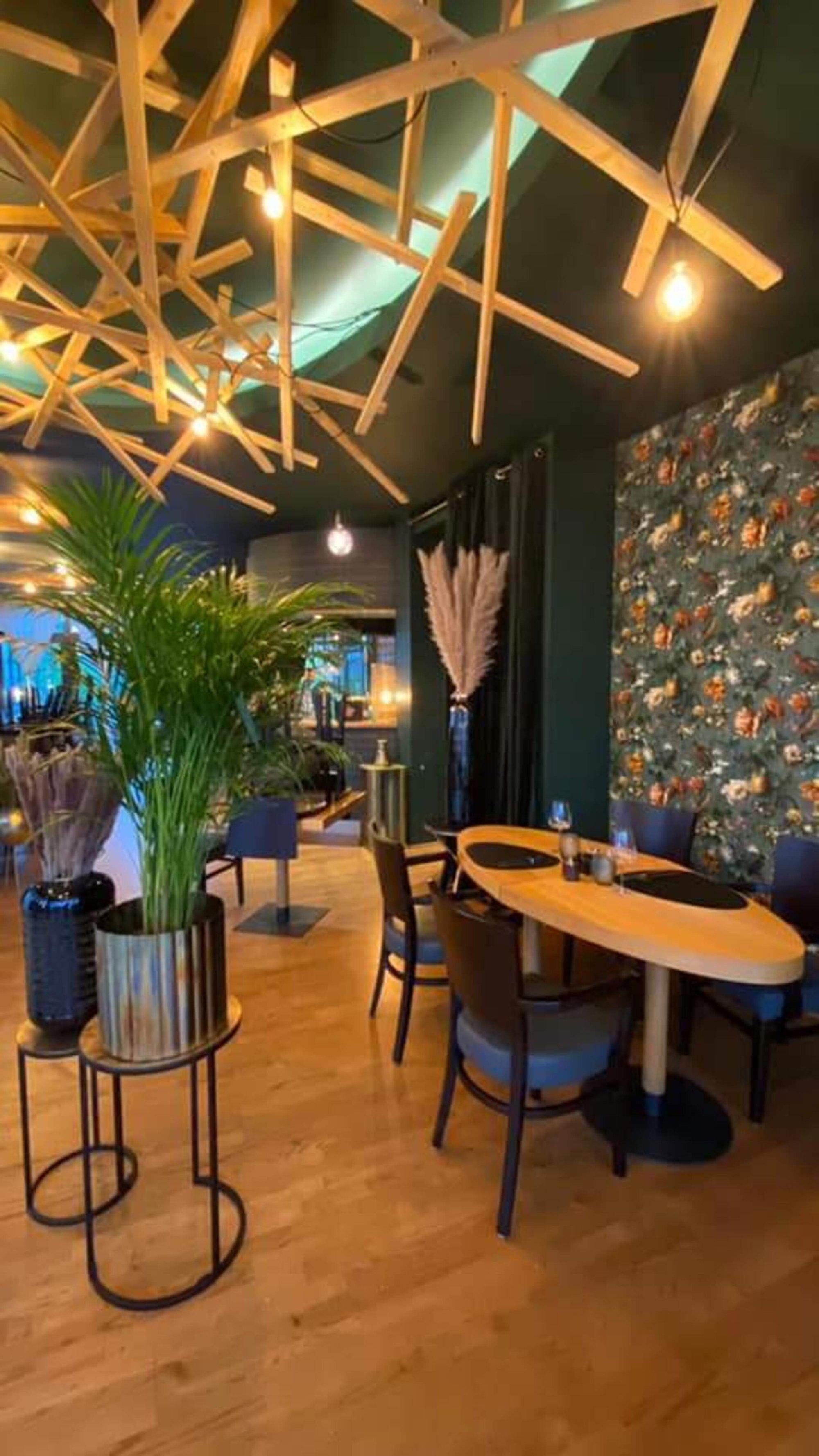
Where Provisions Meet the Plate: Dining in Luxembourg's Southern Communes
The épicerie, the provisions shop, the place where ingredients matter before cooking even begins, is an older organizing idea for a restaurant than the chef-as-auteur model that dominated the last two decades. In Luxembourg's southern communes, where the restaurant scene runs quieter and more local than the capital's, that sourcing-first sensibility has particular weight. La Table de l'Epicerie, addressed at 1 Rue de Reckange in Mondercange, takes its name from that tradition directly. The address places it within a cluster of villages where dining out means something closer to community infrastructure than destination dining.
Mondercange sits roughly at the midpoint between Luxembourg City and the French border, a position that shapes its food culture in practical ways. Cross-border sourcing, from the Lorraine basin, from the Moselle valley producers who supply both French and Luxembourgish kitchens, is standard practice in this part of the Grand Duchy. The commune itself is small enough that a restaurant here draws from a radius, not a walk-in neighbourhood. That radius includes the local markets at Esch-sur-Alzette to the south and the producers threading through the Alzette valley.
The Épicerie Idea and Why It Matters Here
Restaurants named after the épicerie concept are making an argument: that the sourcing end of cooking deserves as much attention as the preparation end. In Luxembourg, this argument lands in a specific agricultural context. The country produces wine along the Moselle, where producers like those covered in our Domaine La Forêt in Remich entry operate, alongside orchard fruit, dairy from the Oesling plateau in the north, and a cross-border proximity to some of France's more serious charcuterie and cheese producers. A kitchen that structures itself around provisions rather than around a single chef's signature is positioning itself differently from the formal fine dining tier.
That formal tier in Luxembourg is anchored by places like Léa Linster, one of the country's most recognised kitchens, operating at the €€€€ level with a Modern French approach. La Table de l'Epicerie operates in a different register, community-facing, provisions-conscious, smaller in scale. The comparison is useful not to rank one against the other but to map the range. Luxembourg's dining scene is compact enough that the distance between a village address in Mondercange and the country's most decorated kitchens is measured in minutes rather than hours.
The Southern Luxembourg Restaurant Circuit
Southern Luxembourg has developed its own cluster of addresses worth travelling for, distinct from both the capital's concentration and the Moselle valley's wine-tourism circuit. Beim Bertchen in Wahlhausen anchors the southwest. Le Bistrot Gourmand in Remerschen covers the Moselle-adjacent south. Kore in Steinfort and B13 in Bertrange sit closer to the capital's western approach. Within that circuit, a Mondercange address like La Table de l'Epicerie occupies the central-south position, accessible from Esch-sur-Alzette (Luxembourg's second city, roughly five kilometres to the south) as well as from the capital itself.
That geography matters for planning. Visitors building a day around the southern communes might combine the restaurant with a stop at La Table du Curé in Lasauvage to the southwest, or extend east toward Côté Cour in Bourglinster for a full arc through the Grand Duchy's quieter dining corridors. Luxembourg's scale makes multi-stop days feasible in a way that larger countries rarely allow.
Reading the Name: What L'Epicerie Signals
In French culinary vocabulary, the épicerie occupies a specific position. It is not the boucherie (butcher), not the boulangerie, not the marché. It is the general provisions shop, the place that stocks dry goods, preserves, condiments, the supporting cast of a kitchen. A restaurant that borrows this name is usually gesturing toward a certain humility about technique and an emphasis on the quality of raw materials. The cooking serves the ingredient rather than transforming it beyond recognition.
This is a different aesthetic from the creative tasting menu format at places like Laotse in Moutfort or the organic positioning at Archibald De Prince (rated €€€€ among Luxembourg's fine dining addresses). It also differs from the focused Italian approach at Fani, or the high-protein precision of Beefbar Smets in Strassen. The provisions-led model asks the kitchen to let sourcing do the argumentative work, a bet that pays off when the supply chain is genuinely strong and founders when it is not.
Luxembourg's cross-border position gives that bet reasonable odds. Proximity to Lorraine's vegetable producers, to the Moselle's wine growers, to German and Belgian dairy traditions means the raw materials available to a serious provisions-focused kitchen here are more varied than the country's small size might suggest.
Placing It in Context: What to Expect
The restaurant is open Tuesday to Saturday for lunch and dinner, with Mondays and Sundays closed; reservations are recommended. What the address and name signal is a neighbourhood-scale dining room rather than a destination-format restaurant. For visitors used to the capital's more formal options, the register here is deliberately quieter. That is the point.
In the broader Luxembourg dining picture, which also includes Les Roses in Mondorf-les-Bains, Der Napf in Wilwerdange, Bo Zai Fan in Luxembourg City, and Victoria vum Berdorfer Eck in Berdorf, the restaurant occupies a local, provisions-conscious position. That niche is underrepresented in the Grand Duchy's restaurant conversation, which skews toward fine dining credentials and Michelin tracking. A restaurant that argues from sourcing rather than from stars is making a different case, and in a country with Luxembourg's agricultural geography, it is a case worth hearing.
Planning Your Visit
The restaurant is located at 1 Rue de Reckange, 3943 Mondercange. Reservations are recommended before making a trip from the capital or from further afield. Mondercange is accessible by car from Luxembourg City in under fifteen minutes via the A4 motorway, and from Esch-sur-Alzette in approximately ten minutes.
Comparable Venues
Comparable venues nearby, for context on price, style, and recognition.
| Venue | Cuisine | Price | Notes |
|---|---|---|---|
| La Table de l'EpicerieThis venue — the venue you are viewing | Creative French-Local Fusion | $$ | Not listed |
| Namur | French Pâtisserie and Café | $$ | Bertrange |
| Bo Zai Fan | Hong Kong Clay Pot Rice & Dim Sum | $$ | Limpertsberg |
| Le Quai Steffen | French Brasserie & Rotisserie | $$ | Gare |
| Boutique Léa Linster Delicatessen | Luxembourg Delicatessen | $$ | Ville Haute |
| Bao 8 | Modern French-Asian Fusion Bao House | $$$ | Gare |
Continue exploring
More in Mondercange
Restaurants in Mondercange
Browse all →
Bars in Mondercange
Browse all →
At a Glance
- Cozy
- Casual
- Family
- Group Dining
- Casual Hangout
- Standalone
- Local Sourcing
Current opening hours
- Monday
- Closed
- Tuesday
- 12–2 PM, 7–10 PM
- Wednesday
- 12–2 PM, 7–10 PM
- Thursday
- 12–2 PM, 7–10 PM
- Friday
- 12–2 PM, 7–10 PM
- Saturday
- 12–2 PM, 7–10 PM
- Sunday
- Closed
Hours can change for holidays and private events. Last verified .
Pleasant and calm atmosphere with familial décor; attentive service creates a welcoming environment despite busy periods.