La Socca d'Or at 45 Rue Bonaparte puts one of Nice's most debated street foods at the centre of the table. Socca, the thick, blistered chickpea crêpe cooked in wood-fired copper pans, has anchored Niçoise identity for centuries, and this address keeps that tradition close to its origins. For visitors trying to read the city's food culture beyond the tourist circuit, it is a reliable entry point.
Pearl is the En Primeur Club membership app — saves, bookings, and concierge access live there. Same editors, same standards.
- Address
- 45 Rue Bonaparte, 06300 Nice, France
- Phone
- +33493565293
- Website
- restaurant-soccador-nice.fr
- Directions
- Get directions
 Saves & bookings on Pearl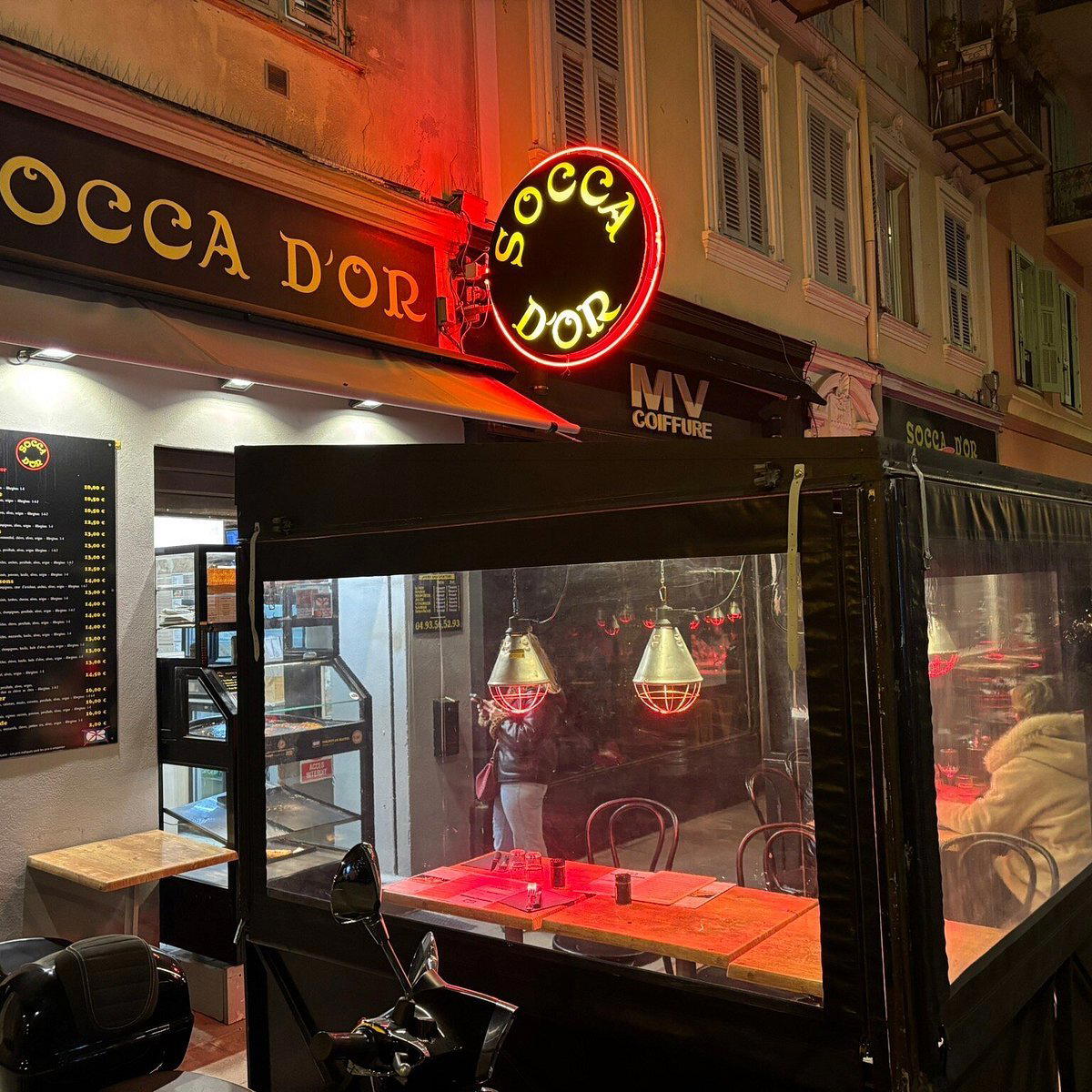
Chickpea, Fire, and the Question of Authenticity
Nice has a longer argument with its own food culture than most French cities. The socca debate is a good example: what counts as the real thing, who makes it correctly, and whether the wood-fired copper pan is a non-negotiable or a romantic detail that obscures what actually matters in the dough. La Socca d'Or, at 45 Rue Bonaparte in the eastern part of the city, enters that debate from the traditionalist side. The address alone tells you something. Rue Bonaparte sits away from the Cours Saleya market strip where tourist-facing socca vendors cluster, which means the clientele skews local and the production rhythm runs on a different logic than venues designed for lunchtime foot traffic.
Socca's origins are worth understanding before you arrive. The dish is a direct product of the Ligurian coast's chickpea culture, shared between Nice and Genoa across centuries of overlapping trade and governance. The flour is coarse-ground dried chickpea, mixed with water, olive oil, and salt, spread thin across a wide copper tray, and cooked at high heat until the surface blisters and chars at the edges while the interior stays just short of set. The result is simultaneously crisp and yielding, with the slight bitterness of legume protein cutting against the fat of the oil. It is served hot, usually in torn portions, with coarse black pepper as the only addition. This is not a dish that tolerates modification or improvement. Venues that understand that tend to produce better socca than those that treat it as a base for elaboration.
Where La Socca d'Or Sits in Nice's Food Scene
Nice's restaurant scene in 2024 operates across a wide range of registers. At the formal end, Michelin-recognised addresses like Flaveur, L'Aromate, and Le Chantecler anchor a contemporary fine dining conversation. Further along the creative axis, Les Agitateurs and ONICE represent a younger, technique-led generation. La Socca d'Or occupies a more casual register. Its competitive set is the handful of socca specialists and pan-Niçois street food vendors who serve the old repertoire: socca, pissaladière, pan bagnat, and tourte de blettes. In that peer group, consistency and ingredient quality separate the serious from the serviceable. The test is simple and unforgiving because there is almost nowhere to hide in a four-ingredient dish cooked in front of you.
This is also the category of Nice dining that the Côte d'Azur's broader fine dining conversation sometimes obscures. Visitors who arrive after reading about Mirazur in Menton, or who are calibrating their trip around France's multi-starred addresses like Flocons de Sel in Megève, Troisgros in Ouches, or Auberge de l'Ill in Illhaeusern, can miss that Nice's most durable food identity is not haute cuisine but something much older and more specific to place. The chickpea traditions that produced socca predate the region's integration into France and belong to a culinary lineage that connects to terroir-driven thinking at a more elemental level than tasting menus allow.
Planning a Visit: What to Expect at 45 Rue Bonaparte
The editorial angle here is practical, because at this tier of Nice dining, the booking question is almost as important as the food question. Venues of this type typically operate without reservation systems, on a walk-in basis during fixed service hours that align with traditional meal times and the speed of the production cycle. Socca is cooked in batches, which means timing matters more than table booking: arrive when a fresh tray is coming out of the oven, and the dish is at its peak. Arrive between batches, and you wait or accept a portion that has sat for ten minutes. Experienced visitors to Niçois socca specialists know to position themselves for the first service window, typically from late morning through early afternoon, before the copper trays run into their natural break rhythm.
The practical approach is to treat the visit as a walk-in proposition, arrive early in the service window, and build your Nice day around the address rather than trying to fit it around other bookings. Visitors also planning meals at Alléno Paris au Pavillon Ledoyen, Paul Bocuse's Auberge du Pont de Collonges, Assiette Champenoise in Reims, Au Crocodile in Strasbourg, or AM par Alexandre Mazzia in Marseille will recognise that lead times of weeks or months are standard at those levels. The restaurant operates in a completely different mode: the barrier is not booking months ahead but showing up at the right moment in the day's production cycle.
The Rue Bonaparte address is in the 06300 postal zone, in the area east of the Vieille Ville. On foot, the neighbourhood feels less trafficked than the Cours Saleya or the Promenade corridor, which suits the kind of eating the restaurant represents. This is not a venue you pass by accident on the tourist route. Getting there requires intent, and that self-selecting dynamic is part of what keeps the clientele oriented toward the city rather than toward visitors looking for an experience to photograph.
The contrast with decorated dining addresses in France and abroad illustrates something important: the depth of a food culture is not measured only at its most decorated tier. Nice's chickpea tradition is as structurally interesting, and as technically demanding in its own terms, as anything produced in a formal kitchen. Getting that right, consistently, in a four-ingredient dish cooked over high heat, requires a specific discipline that the Michelin framework was never designed to measure.
Standing Among Peers
Comparable venues nearby, for context on price, style, and recognition.
| Venue | Cuisine | Price | Notes |
|---|---|---|---|
| La Socca d'OrThis venue — the venue you are viewing | Traditional Niçoise Cuisine | $$ | Not listed |
| L'Ovale | Southwest French Brasserie | $$ | Cœur de Nice |
| Chez Pipo | Niçoise Socca Specialist | $ | Nice Historique |
| Lou Balico | Authentic Niçoise | $$ | Cœur de Nice |
| Le Bistrot des Serruriers | Niçois Bistro | $$ | Nice Historique |
| Socca'Tram | Niçoise Socca Street Food | $$ | Cœur de Nice |
Continue exploring
More in Nice
Restaurants in Nice
Browse all →
Bars in Nice
Browse all →
Hotels in Nice
Browse all →

At a Glance
- Cozy
- Rustic
- Family
- Casual Hangout
- Group Dining
- Terrace
- Local Sourcing
- Street Scene
Current opening hours
- Monday
- 11 AM–2 PM, 6–10 PM
- Tuesday
- 11 AM–2 PM, 6–10 PM
- Wednesday
- Closed
- Thursday
- 11 AM–2 PM, 6–10 PM
- Friday
- 11 AM–2 PM, 6–10 PM
- Saturday
- 11 AM–2 PM, 6–10 PM
- Sunday
- Closed
Hours can change for holidays and private events. Last verified .
Family atmosphere with convivial, simple, and welcoming vibe in air-conditioned rooms and heated terraces.