.png)
A Michelin Bib Gourmand holder in the hilltop village of La Turbie, Café de la Fontaine serves Provençal cooking that draws on the region's produce with the kind of confidence rarely found at its price point. Chef Graziano Duca runs a kitchen that earns serious recognition without the formality of higher-bracket neighbours. With 778 Google reviews averaging 4.2, it reads as a local institution with real staying power.
Pearl is the En Primeur Club membership app — saves, bookings, and concierge access live there. Same editors, same standards.
- Address
- 4 Av. du Général de Gaulle, 06320 La Turbie, France
- Phone
- +33 4 93 04 48 47
 Saves & bookings on Pearl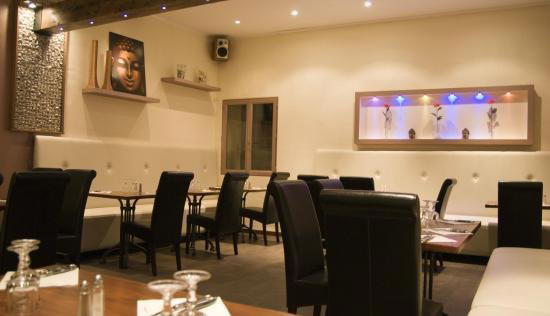
La Turbie's Village Square and What It Says About Provençal Cooking
The hilltop village of La Turbie sits at roughly 480 metres above sea level on the Grande Corniche, the old Roman road that links Nice to the Italian border. From the square where Café de la Fontaine occupies its address on Avenue du Général de Gaulle, the logic of Provençal cuisine becomes clear. That geography is not incidental. The cooking traditions of this corner of France have always been a product of altitude meeting sea air, of olive groves sharing terrain with mountain herbs, of Italian influence pressing against a distinctly southern French pantry.
In that context, a village café holding a Michelin Bib Gourmand is less surprising than it might initially appear. The Bib Gourmand category, awarded by Michelin for cooking that delivers quality at a moderate price, has long recognised that the leading expression of a regional cuisine is not always found at the starred table. In Provence and along the Riviera hinterland, the bistro and the café have historically carried as much culinary weight as the formal restaurant, and Michelin's assessors have consistently reflected that reality in their awards across southern France.
Provençal Cooking at This Altitude
Café de la Fontaine positions itself in the €€ bracket, a price band that in the Alpes-Maritimes sits well below the tasting-menu territory of neighbours like Hostellerie Jerome and Hostellerie de Plaisance, both of which operate at a different register of formality and ambition within the same village. The distinction matters for how you read what Café de la Fontaine is doing. It is not competing with the gastronomic room uphill; it is operating in the tradition of the French village restaurant, where the measure of quality is what arrives on the plate relative to what you paid, and where the connection to local produce is the primary credential.
Chef Graziano Duca leads the kitchen, and the Provençal designation on the menu points toward the defining characteristics of the region's cooking: olive oil over butter, herbs that arrive from the garrigue rather than a greenhouse, fish and shellfish from the nearby Mediterranean, and vegetables that reflect the growing season of the southern French interior. The cuisine of the Alpes-Maritimes is among the more distinctive regional expressions in France, shaped by centuries of Piedmontese and Ligurian influence that pushed across what is now the Italian border. Socca from Nice, pissaladière from the coast, and the slow-cooked preparations of the backcountry all belong to the same tradition that a Provençal kitchen in La Turbie draws from.
For comparison, the broader arc of southern French cooking can be traced through restaurants like Mirazur in Menton, where Mauro Colagreco's three-star operation works the same coastal-to-mountain gradient at an entirely different price point, or AM par Alexandre Mazzia in Marseille, which reinterprets Mediterranean produce through a more technically demanding lens. What distinguishes the Bib Gourmand bracket from those operations is not ambition in the negative sense but a different kind of constraint: the discipline of cooking well within a tight price structure, using ingredients that are seasonal and regional without the luxury of rare or imported produce to fall back on.
Recognition and What It Signals
The awards record here is worth reading carefully. The 2024 Michelin Bib Gourmand and the 2025 Michelin Plate represent two different signals. The Bib Gourmand is a positive recommendation for quality at moderate prices; the Plate, introduced by Michelin in 2016, indicates that a restaurant uses quality ingredients and prepares food well, but stops short of the Bib Gourmand's value-for-money emphasis. Holding both across consecutive years suggests a kitchen operating consistently in Michelin's field of view, even if not at the level that attracts star consideration.
Across the broader French Provençal category, the Michelin-recognised table at a village price point is a reasonably specific position to occupy. It places Café de la Fontaine in a different competitive conversation than the formally ticked Provençal restaurants elsewhere in the region, such as Alain Llorca in La Colle-sur-Loup or La Bastide Bourrelly in Cabriès. It operates closer to the model of what a well-run regional French table should do: cook the local cuisine with fidelity to its ingredients, charge a price that reflects the village rather than the resort economy, and sustain the quality that earns repeat recognition from the guide.
With 839 Google reviews at a 4.3 average, the restaurant also carries a volume of public opinion unusual for a village address. That number reflects sustained footfall across locals, day-trippers from Monaco and Nice (both within 20 minutes by road), and travellers working the Corniche route. The review volume is itself a practical signal: this is not a reservation that demands weeks of advance planning, but it is a table worth booking ahead, particularly during the spring and summer months when the Côte d'Azur hinterland fills with visitors and the terrace-facing tables at any address on the square become scarce.
The Broader Table at La Turbie
La Turbie's dining scene is small and concentrated. The village sits above Monaco on the Grande Corniche and attracts diners who want a departure from the coastal resort pricing that dominates the Principality. The full range of restaurants in the village is covered in our full La Turbie restaurants guide. For those building a longer stay, the La Turbie hotels guide covers the accommodation options, and the La Turbie experiences guide maps the wider area. The wineries guide is relevant for anyone curious about the Bellet appellation, Nice's own small AOC, which sits within driving distance and produces wines that pair naturally with the Provençal table. The La Turbie bars guide rounds out the options for a full evening on the Corniche.
For those contextualising Café de la Fontaine within the wider tradition of distinguished French regional cooking, the reference points include Auberge de l'Ill in Illhaeusern and Bras in Laguiole, both of which demonstrate how deeply a kitchen rooted in a specific terroir can sustain long-term recognition. At the other end of the scale, Alléno Paris au Pavillon Ledoyen, Flocons de Sel in Megève, Troisgros in Ouches, and Paul Bocuse in Collonges-au-Mont-d'Or represent the formal tier of French gastronomy against which Café de la Fontaine makes no claim to compete, but from which it draws an indirect lineage: the same national guide, the same criteria of ingredient quality and technical care, applied to a very different price bracket.
Planning a Visit
Café de la Fontaine is located at 4 Avenue du Général de Gaulle in La Turbie, accessible from Nice in roughly 20 minutes and from Monaco in under 15 by the Grande Corniche. The €€ price range signals a menu positioned for everyday dining rather than occasion spend. For tables during peak season (June through August), booking ahead is the sensible approach given the village's limited total seating across all venues. The Michelin recognition across two consecutive years makes this a strong address in La Turbie for Provençal cooking at accessible prices.
Comparable Venues
Comparable venues nearby, for context on price, style, and recognition.
| Venue | Cuisine | Price | Awards | Notes |
|---|---|---|---|---|
| Café de la Fontaine | Provençal Bistro | $$ | Bib Gourmand | La Turbie |
| Hostellerie Jérôme | Modern Mediterranean Fine Dining | $$$$ | La Turbie | |
| Hostellerie de Plaisance | Provençal Fine Dining | $$$ | La Turbie | |
| Jérome | Modern French Gastronomic | $$$$ | , | La Turbie |
| Le Café de la Fontaine | wine_bar | $$ | , | La Turbie |
| Le Lodge | Contemporary Savoyard Cuisine | $$ | Bib Gourmand | Samoëns village center |
Continue exploring
More in La Turbie
Restaurants in La Turbie
Browse all →
Bars in La Turbie
Browse all →

Hotels in La Turbie
Browse all →
Wineries in La Turbie
Browse all →
At a Glance
- Rustic
- Cozy
- Classic
- Lively
- Casual Hangout
- Family
- Group Dining
- Open Kitchen
- Terrace
- Standalone
- Extensive Wine List
- Local Sourcing
- Farm To Table
- Street Scene
Warm, convivial village café atmosphere with tightly packed tables, rustic charm, and an open kitchen; casual and unpretentious with genuine local character.