Royal Riviera



1 Michelin Key · Virtuoso Luxury Hotel Partner · Leading Hotels of World Member
A Virtuoso Collection property and Leading Hotels of the World member, the Royal Riviera has occupied its position on the Cap Ferrat peninsula since 1904. With 94 rooms across the original building and the Villa Orangerie, a Michelin-keyed restaurant, a private beach, and proximity to both Monaco and Nice, it represents one of the Riviera's most considered grand-hotel propositions from approximately $407 per night.

Pearl is the En Primeur Club membership app — saves, bookings, and concierge access live there. Same editors, same standards.
- Address
- 3 Av. Jean Monnet, 06230 Saint-Jean-Cap-Ferrat
- Phone
- +33 4 93 76 31 00
- Website
- royal-riviera.com
- Directions
- Get directions
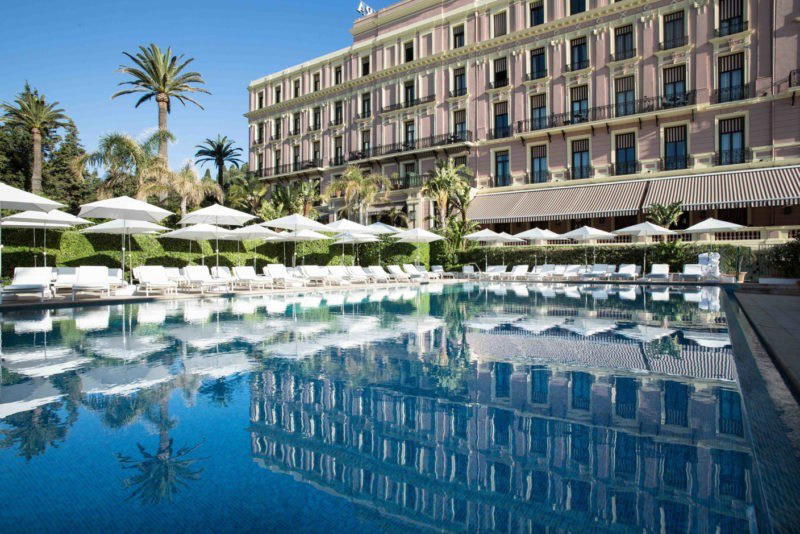
The Grand-Hotel Tradition on Cap Ferrat
The stretch of coastline between Nice and Monaco has always attracted a particular kind of property: large enough to feel palatial, positioned to command the sea, and old enough to carry the weight of the Belle Époque era that defined the French Riviera's early identity. The Royal Riviera, which opened in 1904 and sits at 3 Avenue Jean Monnet on the Cap Ferrat peninsula, belongs to that lineage. For a point of comparison within that broader French luxury hotel conversation, properties like Hotel Du Cap-Eden-Roc in Cap d'Antibes or The Maybourne Riviera in Roquebrune-Cap-Martin occupy a similar coastal, historically anchored position.
What the Architecture Actually Tells You
The Royal Riviera's design history is instructive not because it documents a single coherent vision but because it captures what happens when a building survives long enough to absorb multiple eras without losing its fundamental character. The original 1904 structure established the hotel in the Belle Époque idiom: formal proportions, seaside orientation, the kind of architectural confidence that assumed permanence. Subsequent renovations, including the most recent cycle, introduced contemporary elements without attempting to erase the historical layers beneath them. The result is an interior that functions as an era-spanning collage rather than a period recreation or a wholesale modernisation.
That approach runs through the room categories. The 78 rooms in the main building retain the proportional logic of the original structure, and many of the higher categories are oriented toward the sea. The Junior Suites come in either classic or contemporary decoration, a distinction that acknowledges the hotel's refusal to commit to a single design decade. The four corner Junior Suites carry panoramic sea views. The 24 Deluxe rooms and 26 Superior rooms in the main building share sea and garden orientations, with the same dual-style decoration option available across both categories.
The 15 Mountain View rooms are worth noting candidly: at 215 square feet with a north-facing orientation, positioned near the hotel entrance and the railway track, they sit at a meaningful remove from the experiential proposition of the rest of the property. The hotel itself describes them as appropriate for travelling nannies or guests with no priority on space or views, and specifies that Virtuoso amenities do not apply to this category. That kind of transparency about a room tier is unusual in this price bracket and worth taking seriously when planning.
The Villa Orangerie: A Different Register
Sixteen rooms occupy a separate structure entirely: the Villa Orangerie, positioned beside the pool within the hotel's Provençal garden. The design language shifts here to a palette of lavender and orange, and the finish level steps up noticeably. Bathrooms feature white Calacatta marble, with separate showers and oversized bathtubs. Each room has either a large terrace overlooking the garden and pool, or a balcony. The suite configurations in the Orangerie extend to one, two, and three bedrooms, making this building the natural landing point for families travelling with children, for whom connecting rooms are available subject to availability and complimentary baby cots are provided.
The spatial logic of having two buildings with distinct atmospheres is not uncommon among Riviera properties of this scale. What the Royal Riviera does with it is maintain a genuine difference in character between the main building's sea-facing grandeur and the Orangerie's enclosed, garden-pool intimacy, rather than using the secondary building purely as overflow capacity. That distinction matters when choosing a room category. Guests whose primary draw is the Mediterranean view and the original building's atmosphere will be better served in the main house. Those who want garden seclusion, family-suite configurations, or the Calacatta marble finish will find the Orangerie the more purposeful choice. For more Provençal design sensibility across French luxury properties, La Bastide de Gordes and Villa La Coste in Le Puy-Sainte-Réparade offer useful comparison points, though with distinctly different architectural contexts.
Two Restaurants, Two Orientations
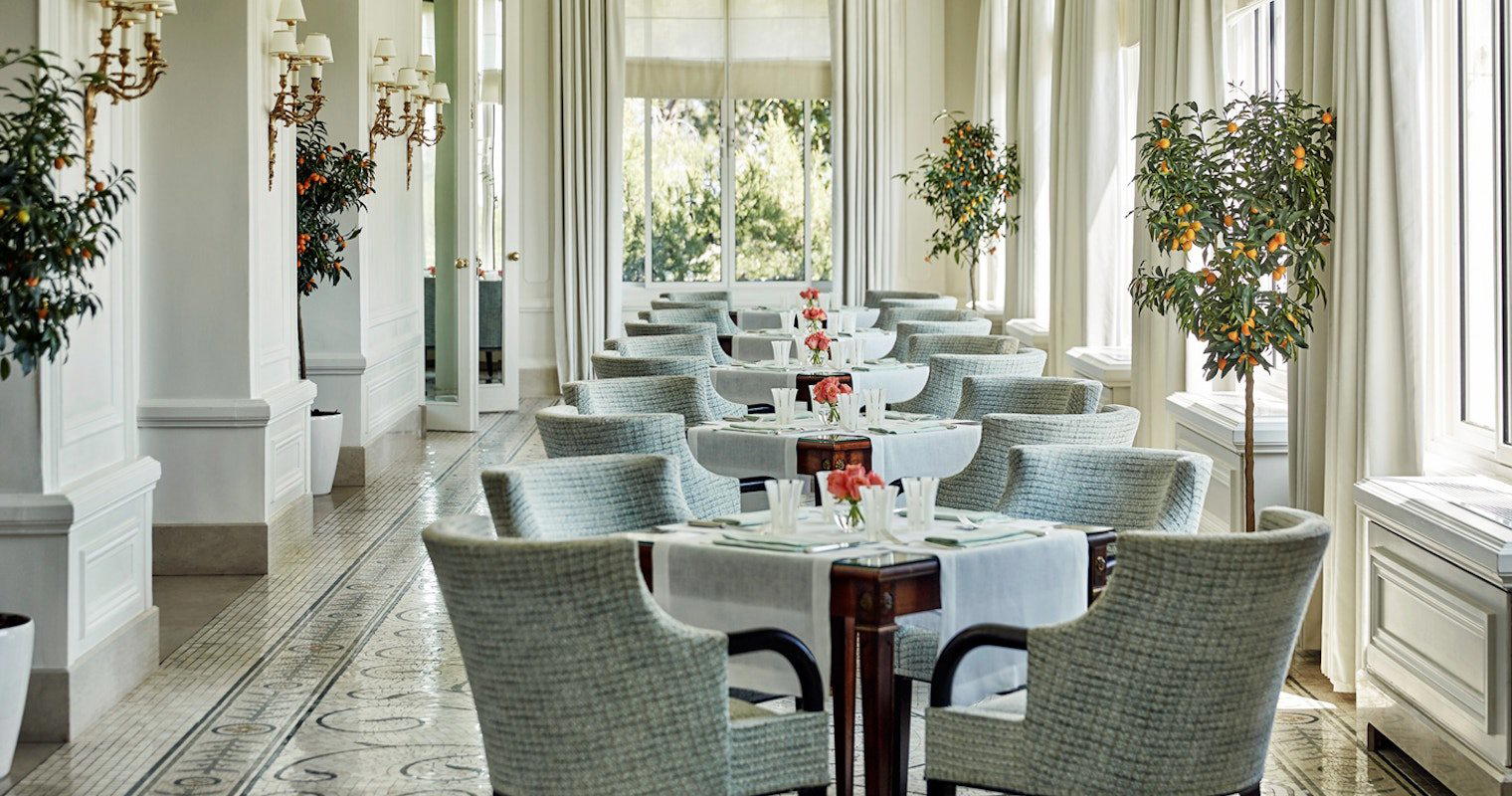
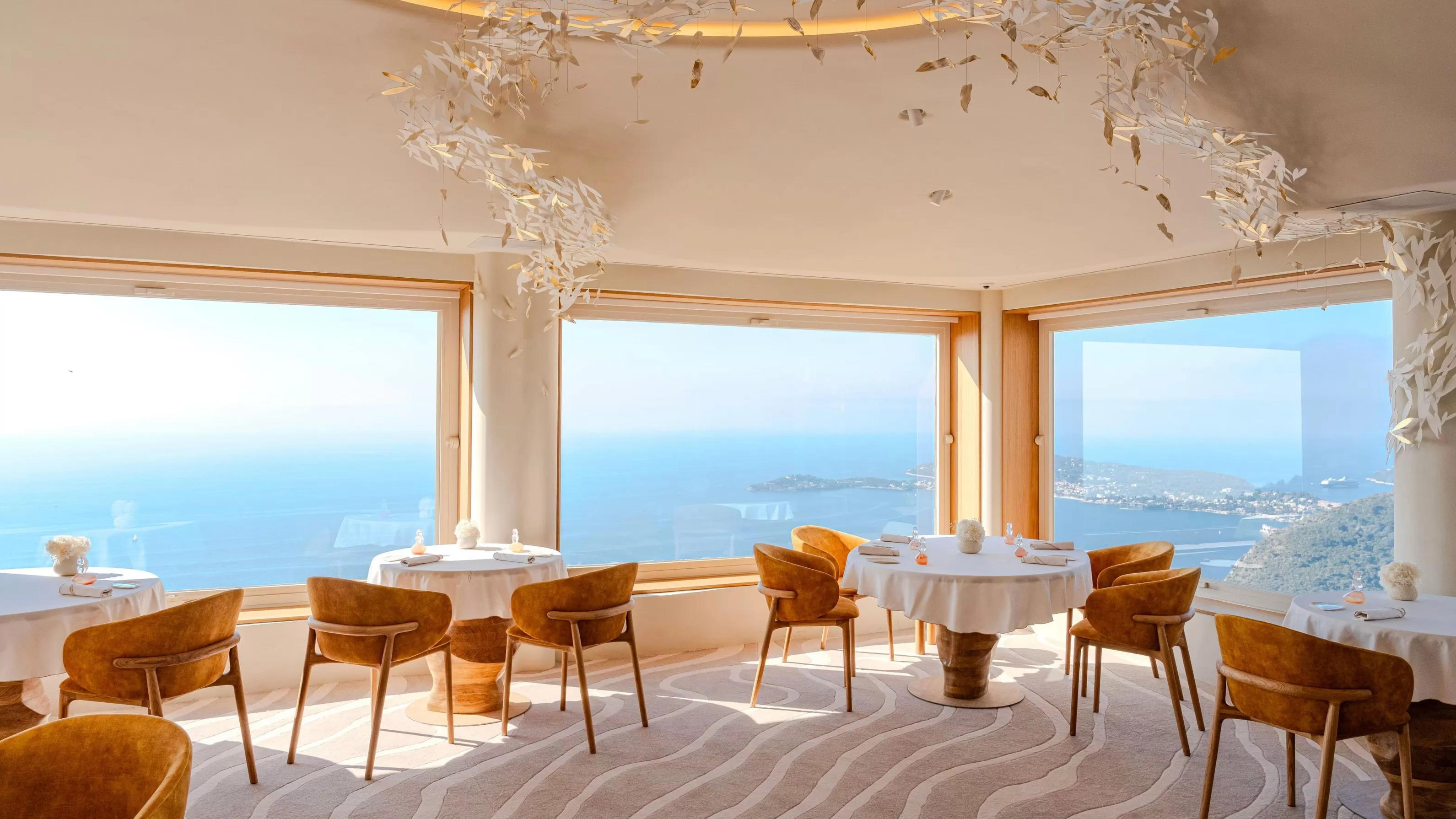
The food-and-beverage structure at the Royal Riviera reflects the hotel's dual-register approach to atmosphere. La Table du Royal, the gastronomic restaurant, earned a Michelin One Key recognition in 2024. Its focus is modern French cooking built around locally sourced ingredients, with a terrace that positions diners against a panoramic sea view. The Michelin Key designation, introduced in 2024 as the guide's hospitality-specific recognition category, signals a standard of experience across the hotel rather than purely culinary distinction, but its presence places the Royal Riviera in a formally recognised tier within Riviera hospitality.
Poolside Jasmin Grill and Lounge operates at a different register: more casual, with Indian dishes from a tandoori oven alongside Mediterranean fare. That tandoori component is not a common fixture at Côte d'Azur grand hotels, and it speaks to the property's willingness to hold two different culinary orientations simultaneously rather than forcing the entire food program into a single, unified identity. For guests comparing dining propositions across Riviera properties, Château de la Chèvre d'Or in Èze operates in a similar coastal-clifftop register, while further afield in Provence, Baumanière Les Baux-de-Provence represents the Michelin-weighted end of the region's gastronomic hotel spectrum.
The Beach, the Pool, and the Outdoor Program
Royal Riviera's private sandy beach is a meaningful differentiator on a peninsula where beach access is tightly controlled by geography and ownership. It is included as a complimentary amenity from May through September, with sunbeds and umbrellas provided. The outdoor heated pool operates year-round in conjunction with the Provençal gardens that form the visual backdrop of the Orangerie. A fitness and wellness centre with sauna and steam bath rounds out the amenity package, and the hotel operates a THALGO spa.
All of this, including parking with valet service and Wi-Fi throughout, is included without supplement for most room categories. The exception, again, is the Mountain View rooms, where Virtuoso benefits do not apply.
Planning Your Stay
The Royal Riviera closes annually from the end of November to mid-January, a pattern typical of Riviera properties that calibrate their seasons to the Mediterranean climate rather than operating year-round. The window from May through September represents the core season, when the private beach program is active and the outdoor experience is at its fullest. The hotel is a 15-minute drive from both Monaco and Nice, and approximately 25 minutes from Nice Côte d'Azur International Airport, making transfers predictable.
Rates begin from approximately $407, placing the Royal Riviera in the mid-tier of five-star Riviera pricing, below the leading bracket occupied by properties like the Hotel Du Cap-Eden-Roc or the residential-villa model that defines certain smaller competitors. As a Virtuoso Collection property, it carries Virtuoso programme benefits for guests booking through qualifying channels, though, as noted, those benefits do not extend to the Mountain View room category.
For guests comparing the Royal Riviera against other French grand-hotel experiences in different regions, the design-and-heritage conversation extends to properties like Domaine Les Crayères in Reims, Royal Champagne Hotel and Spa in Champillon, or Castelbrac in Dinard, each of which works within a different French architectural and culinary tradition. On the Riviera itself, Airelles Saint-Tropez Château de la Messardière and La Réserve Ramatuelle offer alternative luxury framings along the same coastline. See our full Saint-Jean-Cap-Ferrat restaurants and hotels guide for broader context on the peninsula's offerings.
Comparable Spots, Quickly
Comparable venues nearby, for context on price, style, and recognition.
| Venue | Cuisine | Price | Awards | Notes |
|---|---|---|---|---|
| Royal RivieraThis venue — the venue you are viewing | Belle Époque luxury beachfront hotel with modern updates | Not listed | 1 Michelin Key · Virtuoso Luxury Hotel Partner | Not listed |
| Toile Blanche | Modern rustic Provençal farmhouse with contemporary elegance | $200–300 | 1 Michelin Key · Vogue 2026 Vogue Best Hotels in Provence | Saint-Paul de Vence |
| La Réserve de Beaulieu | Classic Florentine Renaissance-style luxury hotel with pink and white facade dating from 1880. | $750–1,000 | 2 Michelin Keys · La Liste Top Hotels | Beaulieu-sur-Mer |
| Les Lodges Sainte-Victoire | Elegant 18th-century Provençal estate with modern luxury. | Not listed | 1 Michelin Key | Le Tholonet |
| Maison Aribert | Restored 19th-century chalet with eco-friendly design | $200–300 | 1 Michelin Key | Saint-Martin-d'Uriage |
| La Bonne Étape | 18th-century Provençal coaching inn with beautiful gardens and pool | Not listed | Michelin 1 Key | Château-Arnoux-Saint-Auban |
Recognition history
Dated appearances from independent guides and award organizations, with the underlying list record or original source where available.
Michelin 1 Key
Michelin
Virtuoso Luxury Hotel Partner
Virtuoso
Leading Hotels of World Member
Leading Hotels of World
Full recognition history (5 entries)
Michelin 1 Key
Michelin
Michelin 1 Key
Michelin
Continue exploring
More in Saint-Jean-Cap-Ferrat
Hotels in Saint-Jean-Cap-Ferrat
Browse all →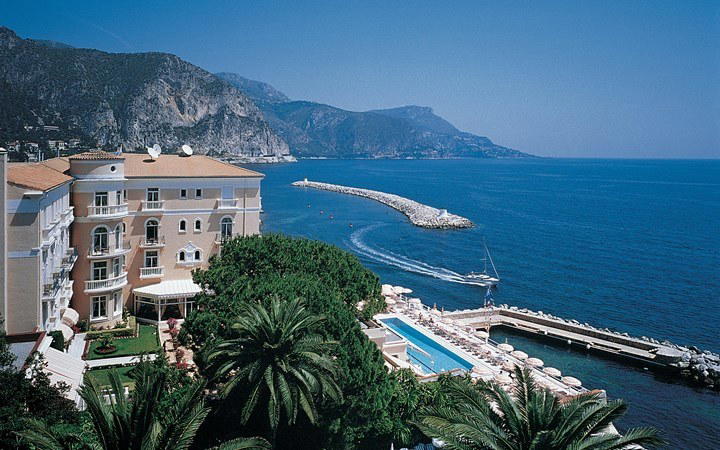
Bars in Saint-Jean-Cap-Ferrat
Browse all →
Restaurants in Saint-Jean-Cap-Ferrat
Browse all →
Wineries in Saint-Jean-Cap-Ferrat
Browse all →
Details
- Elegant
- Romantic
- Sophisticated
- Scenic
- Classic
- Romantic Getaway
- Honeymoon
- Anniversary
- Weekend Escape
- Beachfront
- Infinity Pool
- Panoramic View
- Terrace
- Pool
- Spa
- Fitness Center
- Room Service
- Concierge
- Restaurant
- Bar
- Wi Fi
- Private Beach
- Sauna
- Valet Parking
- Waterfront
- Garden
- Wheelchair Accessible
- Elevator
- Accessible Parking
Elegant and refined with calm, luxurious rooms, peaceful manicured grounds, and a timeless Riviera atmosphere featuring subtle lighting and memorable floral aromas.