
Michelin Plate
Our verdict
A Michelin Plate-recognised address in Chamartín, La Maruca López de Hoyos brings the cooking of Cantabria's coastline and mountain interior to one of Madrid's residential northern corridors. Part of a small group anchored around Castellana and Velázquez, it channels anchovies, Santander-style squid, and Lebaniego stew through a contemporary dining room with rear terrace.

Pearl is the En Primeur Club membership app, where members save venues, book tables and use the concierge.
The menu
What to order
- Tortilla skewer
- Rabas
- Cheesecake
Cantabrian cooking in Madrid's northern tier
Madrid's restaurant scene separates, fairly cleanly, into two operating modes. In one camp sit the creative tasting-menu houses: the multi-star laboratories clustered around the city centre where a meal at DiverXO or Coque or Deessa is less about regional heritage and more about technical ambition. In the other sits a quieter but equally disciplined tradition: restaurants that stake their reputation on ingredient provenance and the integrity of a specific regional cuisine. La Maruca López de Hoyos belongs firmly in the second camp.
The address is Chamartín, one of Madrid's quieter residential districts to the north, where the dining offer has historically been driven by neighbourhood regulars rather than destination visitors. C. de López de Hoyos runs through this part of the city at a remove from the tourist corridors, which means the room functions as it was likely intended: a place where Cantabrian cooking travels the 450 kilometres from the Bay of Biscay coast to a table in the Spanish capital without losing too much in transit.
What the Cantabrian kitchen actually looks like
Spain's regional cuisines are not a single story, and Cantabria's is specific enough to demand a brief orientation. The region occupies a narrow coastal strip along the northern Atlantic, where cold, clean waters produce anchovies of a quality that has made the Cantabrian coast the benchmark for the ingredient across Spain and much of Southern Europe. But Cantabria also has a mountainous interior, the Picos de Europa range runs directly through it, and that duality, coast and mountain, shows up clearly on tables that take the region seriously.
La Maruca's kitchen across its Madrid locations treats that duality as the organising principle of the menu. Anchovies appear as a headliner, not a garnish. Santander-style fried squid, a preparation that prioritises lightness and correct oil temperature over batter weight, sits alongside brandade fritters that pull from the preserved-fish tradition common to Spain's northern coast. The mountain side of Cantabria arrives in two stews: a mountain stew and the Lebaniegan preparation from the town of Liébana in the Picos foothills. Cachopo, the Asturian and Cantabrian staple of steak filled with ham and cheese, rounds out the list of defining dishes.
The significance of this approach, from an ingredient standpoint, is that it resists the drift toward generic Spanish comfort food that can affect regional-cuisine restaurants once they move to a metropolitan address. The commitment to specific preparations from specific places is what separates a Cantabrian restaurant from a restaurant that happens to serve some Cantabrian dishes.
Sourcing, simplicity, and the sustainability angle
Regional fidelity of this kind carries an implicit sourcing argument. Anchovies from Cantabrian waters, prepared in the traditional manner, require supply chains that connect directly to the coast rather than drawing from aggregated wholesale sources. The emphasis on simply prepared dishes that retain strong detail, as described in the restaurant's own framing and recognised by Michelin's Plate designation in both 2024 and 2025, points to a kitchen philosophy where ingredient quality does the work rather than technique masking average raw material.
This matters because it aligns with a broader movement in Spanish cooking toward what might be called transparent sourcing: letting the provenance of an ingredient speak rather than burying it in layered preparation. The Cantabrian anchovy is, in that context, a sustainability signal as much as a culinary one. The fishing practices around the Bay of Biscay for anchovies (engraulis encrasicolus) are closely regulated, and the preference for traditionally cured anchovies over industrially processed alternatives supports smaller-scale production. Restaurants in Madrid that maintain these supply chains are participating in a version of the same conversation that higher-profile Spanish kitchens like Aponiente in El Puerto de Santa María or Azurmendi in Larrabetzu engage with at a more publicised level.
The room and the rear terrace
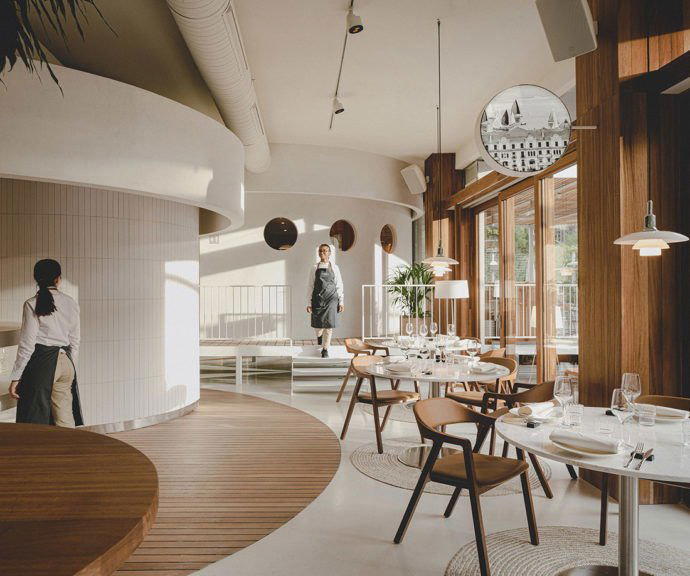
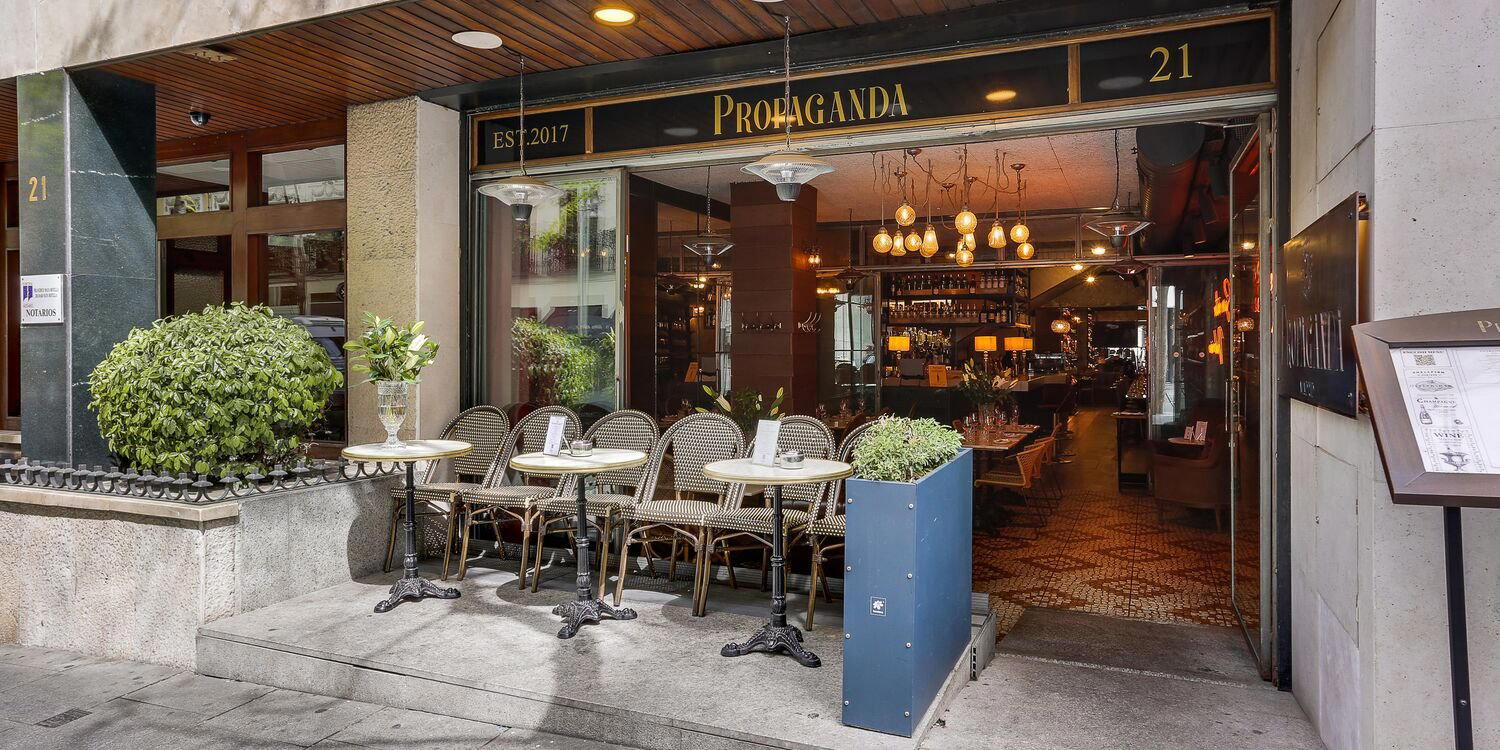
The physical setting reinforces the positioning. The dining room is described as spacious and contemporary, with large windows facing the street, a format that reads as neighbourhood-anchored rather than destination-theatrical. The rear terrace is the room's standout feature when weather permits, a usable outdoor space that adds to the appeal during Madrid's extended spring and early autumn seasons, when the city's heat is manageable and outdoor dining is genuinely comfortable rather than performative.
This type of terrace space, in residential Madrid rather than the tourist-heavy centre, tends to attract a local customer base: the kind of repeat visitors who return for a specific anchovy preparation or a particular stew, and who provide the sustained demand that allows a kitchen to maintain ingredient standards over time.
Where it sits among its peers
Madrid's mid-range restaurant tier at the €€ price point covers a wide range of quality levels and culinary commitments. Within that band, La Maruca López de Hoyos operates differently from the general-Spanish or modern-European addresses that populate much of the city's mid-market. Its specific regional anchor, reinforced by the presence of sister restaurants on Castellana and Velázquez, suggests an operator that has made a deliberate editorial decision about what kind of food it wants to serve and has not drifted from it.
For context on the variety of approaches at this tier in Madrid, Alcotán, Amparito Roca, Ayantar, Bambú, and Casa de Comidas each represent distinct positions within the same approximate price band. The Michelin Plate, which both La Maruca locations have carried consecutively, is not a starred designation but it is a quality signal that Michelin inspectors felt the cooking warranted specific acknowledgement, placing it in a narrower sub-tier within the mid-range.
Comparable regional-cuisine commitments elsewhere in Spain, Auga in Gijón for Asturian seafood, or Auberge Grand'Maison in Mûr-de-Bretagne for the French equivalent of coastal-regional fidelity, operate on the same principle at different price and acclaim levels. The point is not that La Maruca competes with starred houses but that it participates in the same underlying argument: that regional specificity is worth preserving and worth travelling to.
When to go and how to approach it
Madrid's terrace season peaks in April through June and again in September and October, when temperatures drop from summer extremes and the rear terrace becomes the most appealing seat in the room. The Cantabrian stews read as autumn and winter dishes by nature, while the anchovy and fried-squid preparations are year-round in the kitchen's logic but feel most at home in the transitional months when the full menu makes structural sense.
Arriving with some familiarity with the Cantabrian canon helps: knowing that the Lebaniegan stew comes from the Liébana valley in the mountain interior, or that Cachopo is a preparation with Asturian and Cantabrian roots, adds a layer of engagement that the kitchen's ingredient-led approach rewards.
Plan your Madrid visit
For broader context on where La Maruca fits within Madrid's dining options, see our full Madrid restaurants guide. If you are structuring a longer visit, our full Madrid hotels guide, our full Madrid bars guide, our full Madrid wineries guide, and our full Madrid experiences guide cover the city's other categories in the same editorial framework. For the wider Spanish scene, Arzak in San Sebastián, Martin Berasategui in Lasarte-Oria, El Celler de Can Roca in Girona, and Cocina Hermanos Torres in Barcelona anchor the starred end of the national conversation.
Practical comparison
| Venue | Price tier | Cuisine focus | Michelin recognition | Setting |
|---|---|---|---|---|
| La Maruca López de Hoyos | €€ | Traditional Cantabrian | Plate (2024, 2025) | Chamartín neighbourhood, rear terrace |
| DiverXO | €€€€ | Progressive Asian-Spanish | 3 Stars | City centre destination |
| Coque | €€€€ | Spanish Creative | 2 Stars | City centre tasting menu |
| Deessa | €€€€ | Modern Spanish Creative | 2 Stars | Hotel dining room |
| Smoked Room | €€€€ | Progressive Asador | 2 Stars | Counter format |
Frequently asked questions
Is La Maruca - López de Hoyos award-winning?
La Maruca - López de Hoyos has received recognition including: In keeping with the focus in its sister restaurants along the city’s Castellana and Velázquez streets, the region of Cantabria takes complete centre-stage here. The standout features in this spacious, contemporary eatery with its large wind….
What's the signature dish at La Maruca - López de Hoyos?
The kitchen's clearest statement is its anchovies sourced from Cantabrian waters, prepared in the traditional manner that defines the region's coastal identity. Santander-style fried squid and brandade fritters sit alongside those as established house signatures. For something more substantial, Cachopo, a baked or fried combination of steak, ham, and cheese native to the Cantabrian-Asturian north, represents the heartier register of the menu. The restaurant holds a Michelin Plate (2024 and 2025), a recognition tied directly to the quality of these time-honoured preparations.
Peers in This Market
| Venue | Cuisine | Price | Awards | Notes |
|---|---|---|---|---|
| La Maruca - López de HoyosThis venue (the venue you are viewing) | Modern Spanish Cantabrian Tapas | $50–100 | Michelin Plate | Not listed |
| DiverXO | Avant-Garde Spanish Tasting Menu | $300–500 | 3 Michelin Stars · World's 50 Best #9 | Progressive - Asian, Creative |
| Deessa | Modern Valencian Fine Dining | $150–200 | 2 Michelin Stars · La Liste Top Restaurants | Modern Spanish, Creative |
| Smoked Room | Modern Japanese Fire Omakase | $200–300 | 2 Michelin Stars · La Liste Top Restaurants | Progressive Asador, Contemporary |
| Coque | Modern Spanish Fine Dining | $300–500 | 2 Michelin Stars · La Liste Top Restaurants | Spanish, Creative |
| Paco Roncero | Avant-Garde Spanish Fine Dining | $150–200 | 2 Michelin Stars · La Liste Top Restaurants | Creative |
Recognition history
Dated appearances from independent guides and award organizations, with the underlying list record or original source where available.
Michelin Plate
Michelin
Full recognition history (3 entries)
Michelin Plate
Michelin
Michelin Plate
Michelin
Continue exploring
More in Madrid
Restaurants in Madrid
All restaurants in Madrid →
Bars in Madrid
All bars in Madrid →

Details
- Modern
- Cozy
- Lively
- Family
- Group Dining
- Casual Hangout
- Open Kitchen
- Terrace
- Extensive Wine List
- Street Scene
- Small Plates
- A La Carte
- Vegetarian Friendly
- Gluten Free Options
Current opening hours
- Monday
- 8 AM–1 AM
- Tuesday
- 8 AM–1 AM
- Wednesday
- 8 AM–1 AM
- Thursday
- 8 AM–1 AM
- Friday
- 8 AM–1 AM
- Saturday
- 9:30 AM–1 AM
- Sunday
- 9:30 AM–1 AM
Hours can change for holidays and private events. Hours as of .
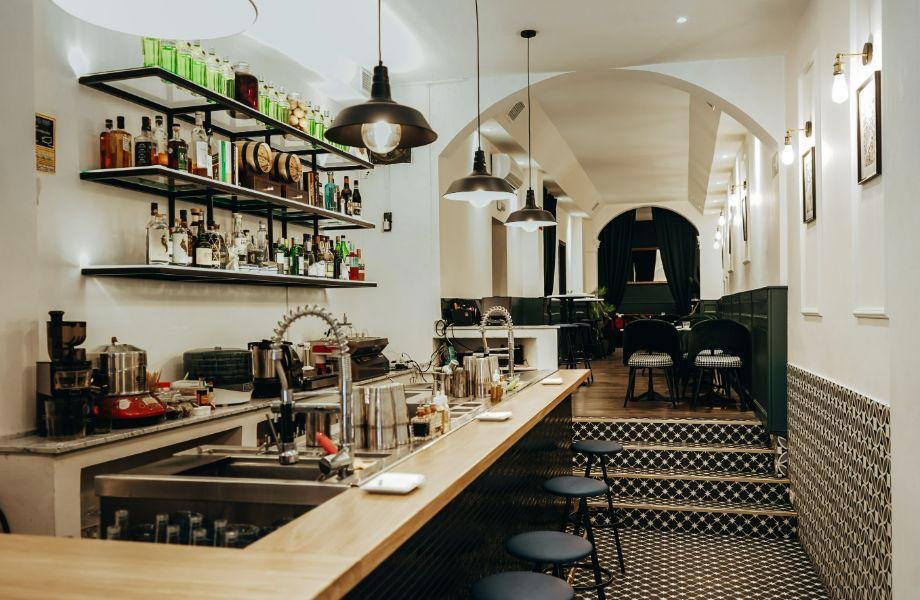
Contemporary and spacious with pleasant lighting, minimalist decor, and an open kitchen; cozy yet can be noisy and lively during peak times.