Our verdict
La Marmite de Pierrot sits on Rue Poincaré in Capinghem, a commune pressed close to the Lille metropolitan edge where northern France's market-garden tradition meets the city's appetite for honest, ingredient-led cooking. The address places it in a dining tier that rewards locals over tourists, making it the kind of room where what arrives on the plate tends to reflect what the season is actually doing outside.

Pearl is the En Primeur Club membership app — saves, bookings, and concierge access live there. Same editors, same standards.
- Address
- 93 Rue Poincaré, 59160 Capinghem, France
- Phone
- +33320921241
- Hours
- Mon–Tue ClosedWed–Thu 12–2 PMFri–Sat 12–2 PM, 7–9:15 PMSun 12–2 PM
- Website
- marmite-de-pierrot.com
- Directions
- Get directions
The menu
What to order
- Flamiche au maroilles
- Andouillette
- Carbonade
- Potjevleesch
- Filet américain
- Tripes
Where the Northern Terroir Reaches the Table
The communes that ring Lille — Capinghem among them — occupy a distinct position in the French dining conversation. Close enough to the city to draw an urban clientele, far enough outside the centre to operate without the performance overhead of a prestige address, these suburban restaurants have historically been where regional cooking stays most honest. The sourcing traditions of the Nord-Pas-de-Calais run deep here: endive fields, chicory, coastal fish from Boulogne-sur-Mer an hour up the A16, and the slower rhythms of a market-garden economy that has fed this corner of France for centuries. La Marmite de Pierrot, at 93 Rue Poincaré, sits inside that tradition rather than apart from it.
The name itself signals something. La marmite, the stockpot, is not the vocabulary of a restaurant trying to impress. It is the vocabulary of a kitchen that takes the long-cooked, the slow-reduced, and the properly extracted seriously. In a region where carbonade flamande and hochepot are as culturally embedded as any southern cassoulet, a name built around the stockpot carries local meaning that a more abstract restaurant identity would not.
Ingredient Sourcing and the Northern Supply Chain
Northern France's ingredient geography is underrated by travelers who move straight from Paris to Burgundy or Alsace. The coastline between Calais and Dunkerque feeds some of the country's most active fish markets, landing sole, turbot, and crevettes grises in quantities that make proximity to that supply chain a genuine kitchen advantage. Inland, the Plaine de la Scarpe produces leeks, potatoes, and root vegetables that form the structural base of regional cooking. The agricultural calendar here runs cooler and later than in the south, which means the kitchen at a place like La Marmite de Pierrot is working with produce shaped by long growing seasons and heavy northern soil, different raw material than what defines the menus at Mirazur in Menton or AM par Alexandre Mazzia in Marseille, both of which draw from Mediterranean supply chains with entirely different seasonal logic.
That distinction matters when thinking about what ingredient-led cooking actually means across France. The country does not have a single terroir; it has dozens, each with its own sourcing rhythms, preservation traditions, and historical constraints. In the north, those constraints produced a cuisine built around fermentation, slow cooking, and making full use of every part of an animal or vegetable, a practical tradition that sits closer to the ethos of Bras in Laguiole, where the Aubrac plateau shapes the menu, than to the more technically elaborate programs found at Alléno Paris au Pavillon Ledoyen in Paris.
Capinghem in Context: The Suburban Dining Tier
Capinghem is not a dining destination in the way that Vonnas is a destination because of Georges Blanc, or Illhaeusern because of Auberge de l'Ill. It is a commune of roughly 2,000 residents on the western edge of Lille's built-up area, leading understood as part of the metropolitan fabric rather than a standalone culinary address. Restaurants here serve a different function: they are anchors for a local clientele rather than magnets for traveling diners. That means the pressures shaping the kitchen differ from those at destination addresses like Flocons de Sel in Megève or Auberge du Vieux Puits in Fontjoncouse. Consistency and value density matter more than spectacle; reputation is built through return visits rather than single-occasion set-pieces.
That dynamic shapes the kind of cooking that tends to survive and persist in suburban French addresses: technically grounded, seasonally responsive, and built around repeat satisfaction rather than first-impression drama. It is a dining register that international travelers often overlook in favor of city-centre restaurants or destination addresses, but it is where a significant proportion of France's serious everyday cooking happens. For a sense of the contrast, consider that the highest-decorated restaurants in France, Troisgros - Le Bois sans Feuilles in Ouches, Paul Bocuse - L'Auberge du Pont de Collonges, Assiette Champenoise in Reims, occupy a completely separate competitive tier, one defined by international recognition and corresponding price architecture. La Marmite de Pierrot operates well below that tier, in a space where the local diner, not the international critic, sets the standard.
Reading the Room: Atmosphere and Format
The physical address on Rue Poincaré places the restaurant in a residential-commercial strip typical of inner-ring suburbs across northern France, the kind of street where a boulangerie, a pharmacie, and a restaurant can all coexist without any of them being remarkable from the outside. That external modesty is characteristic of the format. The dining experience at suburban French addresses of this type tends to be anchored by the room's regulars: the couple who come every Friday, the extended family celebrating a birthday in the private corner, the contractor who knows to book a week ahead on Saturdays. The atmosphere that results is less curated than at a prestige city address and more genuinely social, a function of cooking for people who will return rather than people who flew in for the occasion.
Planning a Visit
Capinghem sits immediately west of Lille, accessible by car in under fifteen minutes from the city centre and reachable via public transport on the Lille Métro network. Visitors staying in Lille for business or leisure have no logistical barrier to reaching the address. As with most French suburban restaurants of this type, booking ahead is advisable for weekend services; walk-in availability on weekday lunches is typically more generous. For broader planning across the city's dining options, our full Capinghem restaurants guide covers the wider picture.
Travelers who want to extend a northern France itinerary into the region's more celebrated dining addresses can look east toward Alsace and Au Crocodile in Strasbourg, or follow the Atlantic coast south toward Christopher Coutanceau in La Rochelle and La Marine in Noirmoutier-en-l'île, both of which anchor their menus to coastal sourcing in a way that parallels northern France's own relationship with the Channel and the North Sea. For a transatlantic comparison in seafood-led cooking at a different price tier entirely, Le Bernardin in New York City represents what French technique applied to premium marine sourcing looks like at its most decorated. And for those curious how contemporary tasting formats are reshaping expectations globally, Atomix in New York City and L'Oustau de Baumanière in Les Baux show the range of directions that serious cooking has moved in recent years.
Frequently asked questions
Can I bring kids to La Marmite de Pierrot?
La Marmite de Pierrot sits on Rue Poincaré in Capinghem, a residential-commercial strip that typically supports a neighbourhood clientele rather than a destination-dining crowd. That setting tends to favour relaxed, family-friendly formats. check the venue's official channels before visiting with children to confirm seating arrangements and any set-menu constraints.
Is La Marmite de Pierrot better for a quiet night or a lively one?
Capinghem's inner-ring suburban position, immediately west of Lille, points toward a local-regular trade rather than a high-turnover city-centre crowd. Rue Poincaré is a mixed residential and commercial street, which typically produces a measured pace rather than a loud room. For a reliably quiet dinner, the location works in your favour; for a buzzing night out, Lille's city centre is under fifteen minutes away.
Is La Marmite de Pierrot worth the trip from central Lille for a long lunch?
Capinghem is accessible from Lille city centre by car in under fifteen minutes, and public transport connections via the Lille metro network serve the area. The suburban format on Rue Poincaré, 59160 Capinghem, suits an unhurried midday meal away from the city-centre pace. Whether the kitchen justifies a dedicated trip depends on your appetite for the neighbourhood dining tier that rings Lille — a category that rewards local knowledge over tourist routing.
What dish is La Marmite de Pierrot famous for?
The venue name references a marmite — the deep French stew pot associated with slow-cooked, hearty northern cooking — which signals a kitchen oriented toward traditional regional preparation rather than contemporary plating. No specific signature dish is documented. Arriving with appetite for northern French comfort cooking is the reasonable expectation.
A Quick Peer Check
Comparable venues nearby, for context on price, style, and recognition.
| Venue | Cuisine | Price | Notes |
|---|---|---|---|
| La Marmite de PierrotThis venue — the venue you are viewing | Traditional Northern French Bistro | $50–100 | Not listed |
| La Table du Colysée | Modern French Bistro | $30–50 | Lambersart |
| Brasserie André | Traditional French Brasserie | $30–50 | Lille Centre 12 |
| Le Comptoir | French Bistronomique | $30–50 | Labourse |
| Les Tuileries | Refined French Bistro | Not listed | Beuvry-la-Foret |
| Le Barbier qui Fume | French Smoked Meats Bistro | $30–50 | Vieux Lille 3 |
Continue exploring
More in Capinghem
Restaurants in Capinghem
Browse all →
Hotels in Capinghem
Browse all →

Wineries in Capinghem
Browse all →
Details
- Classic
- Cozy
- Rustic
- Casual Hangout
- Family
- Standalone
- Beer Program
- Local Sourcing
- A La Carte
- Wine
- Beer
Current opening hours
- Monday
- Closed
- Tuesday
- Closed
- Wednesday
- 12–2 PM
- Thursday
- 12–2 PM
- Friday
- 12–2 PM, 7–9:15 PM
- Saturday
- 12–2 PM, 7–9:15 PM
- Sunday
- 12–2 PM
Hours can change for holidays and private events. Last verified .
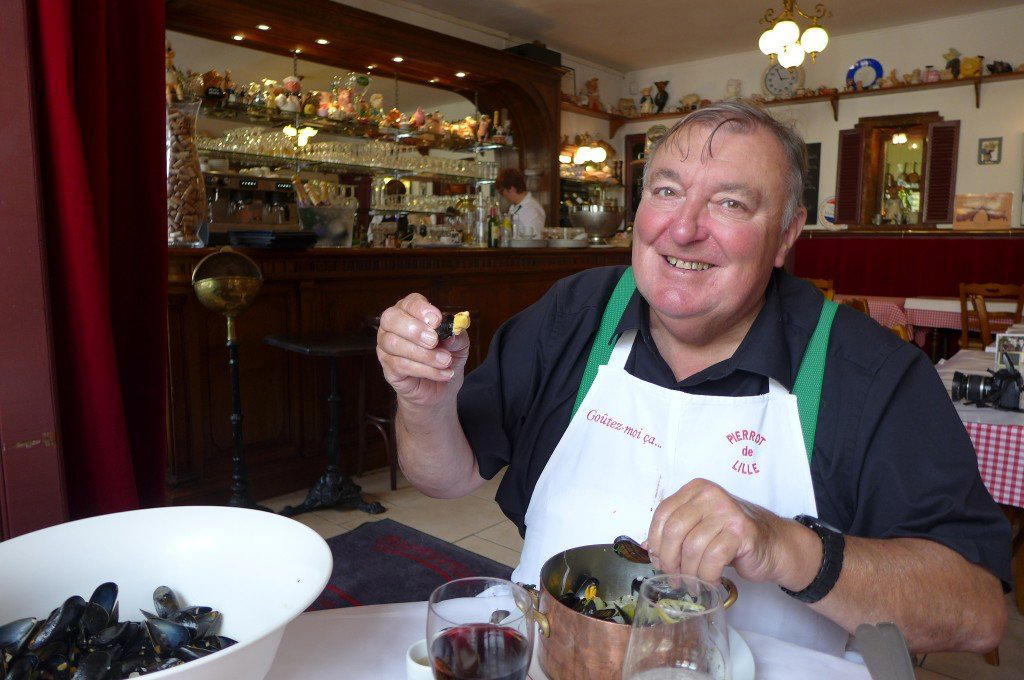
An old-fashioned bistro atmosphere with a wooden bar, close-set tables, velvet banquettes, and a warm, traditional regional feel.