La Mariana Sailing Club
La Mariana Sailing Club on Sand Island is one of Honolulu's last surviving tiki bars, a mid-century relic that has outlasted every trend cycle since the 1950s. The setting — salvaged nautical artifacts, puffer fish lanterns, and a waterfront position away from Waikiki's main drag — places it in a category of its own among the city's drinking and dining institutions.
Pearl is the En Primeur Club membership app — saves, bookings, and concierge access live there. Same editors, same standards.
- Address
- 50 Sand Island Access Rd, Honolulu, HI 96819
- Phone
- +1 808 848 2800
- Website
- la-mariana-sailing.club
- Directions
- Get directions
 Saves & bookings on Pearl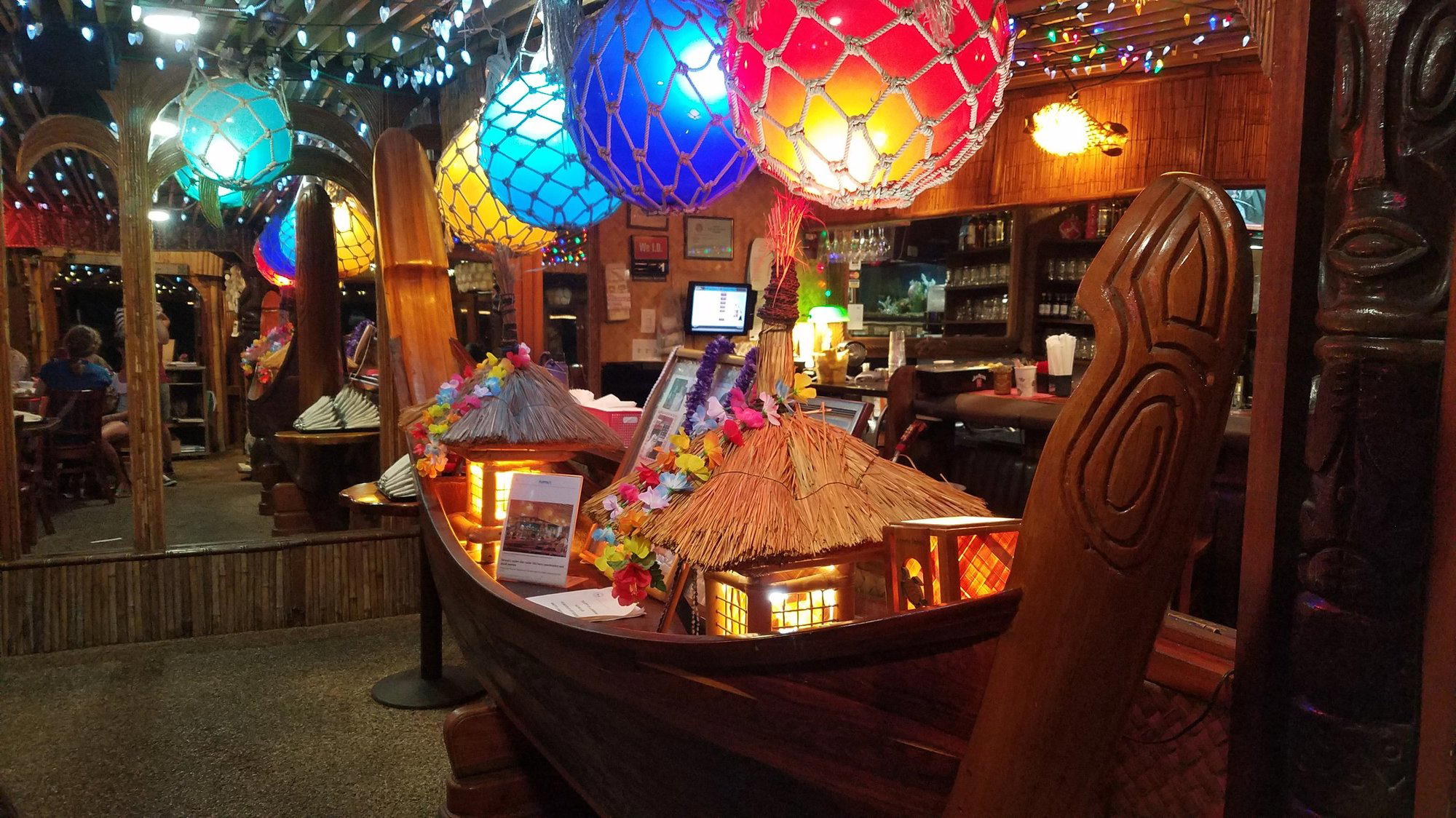
A Mid-Century Waterfront Relic in a City That Keeps Reinventing Itself
Sand Island Access Road is not where most visitors to Honolulu expect to find anything worth seeking out. The route cuts through an industrial corridor west of downtown, past shipping containers and warehouses, before arriving at the water. That geographic remove is part of what has allowed La Mariana Sailing Club to persist, largely intact, since the mid-1950s. While Waikiki has cycled through hotel renovations, restaurant openings, and chef-driven concepts at a pace common to any resort destination, this spot has held its ground as a document of an earlier era in Hawaiian hospitality.
Tiki culture in Hawaii sits in a complicated historical position. It emerged as a commercial phenomenon in the postwar decades, drawing on Polynesian visual vocabulary and translating it into a distinctly American bar format — rum drinks, carved wooden figures, dim lantern light. Most venues that embodied that aesthetic have since closed or been stripped out. La Mariana survives as one of the last coherent examples on the islands, which gives it value that extends well beyond nostalgia.
What the Setting Actually Looks Like
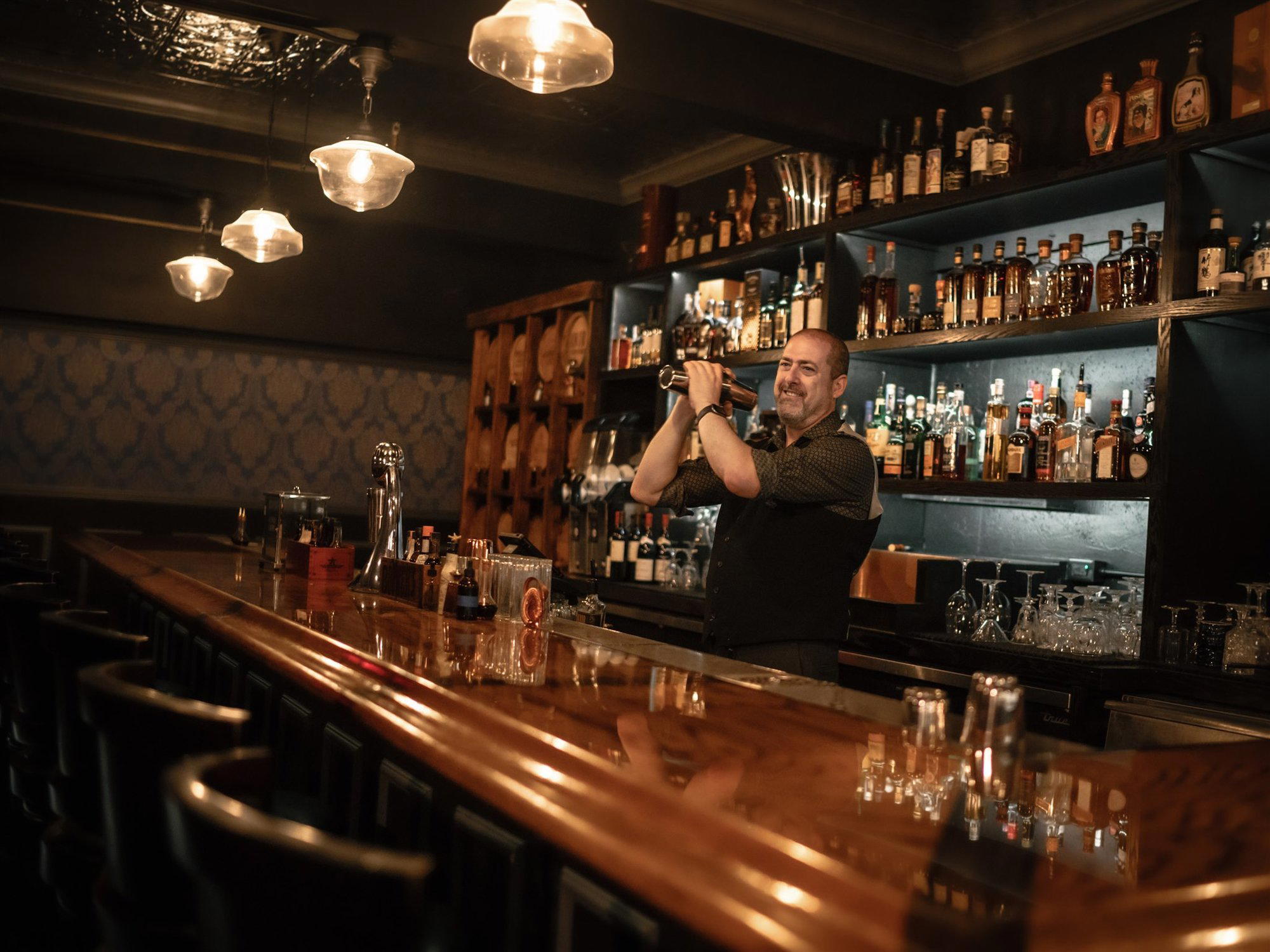
The interior reads as an accumulation rather than a designed environment. Puffer fish lanterns hang from the ceiling alongside salvaged nautical items collected over decades. Carved tiki figures occupy corners and ledges. The back bar is dense with the kind of layered decoration that takes genuine time to assemble and cannot be replicated quickly by a design firm. The waterfront position means that outside seating looks across the harbor, and on clear evenings the light off the water is the room's leading feature.
This is the visual register that places La Mariana in a different competitive set from the polished contemporary dining options in Kakaako or the hotel restaurants along Kalakaua Avenue. It is not competing with Beachhouse at the Moana on presentation, nor with the modern Hawaii Regional Cuisine lineage exemplified by Alan Wong's Honolulu. It is doing something different: preserving a physical record of mid-century island leisure that the rest of the city has largely demolished.
Local Ingredients, Mid-Century Framework
The editorial angle of local ingredients meeting imported technique plays out at La Mariana in a way that differs from the farm-to-table framing now common across premium American dining. The technique here is not French or Japanese in origin — it is the tiki bar format itself, which arrived as an import and then embedded itself into local culture over several generations. Hawaii's agricultural and oceanic abundance, fresh fish, tropical fruit, cane-based spirits, runs through the drinks and food menu in ways that reflect the mid-century American imagination of the Pacific rather than any strict culinary nationalism.
That framing matters because it distinguishes La Mariana from both ends of the Honolulu dining spectrum. At one end, venues like 1050 Ala Moana Blvd and Bread & Butter occupy the contemporary casual register. At the other, nationally recognized fine dining formats, the kind of rigorously sourced, technique-driven cooking found at Single Thread Farm in Healdsburg, Blue Hill at Stone Barns in Tarrytown, or Smyth in Chicago, bring a different set of intentions to local sourcing entirely. La Mariana sits outside both categories. Its relationship to Hawaiian ingredients is filtered through a specific historical moment, and that specificity is what makes it legible as a cultural artifact rather than simply a bar with old decorations.
Honolulu's Drinking Scene and Where This Fits
Honolulu's bar culture has evolved considerably in the past decade. The craft cocktail movement reached the city, and venues focused on technical programs, local spirits, and serious bartending have opened in Kakaako and around the downtown core. AGU Ramen - Ward Centre represents the kind of focused, category-specific operation that now defines parts of the city's dining identity. Lucky Belly brought a more urban sensibility to the bowl format. These are all expressions of a modernizing restaurant city.
La Mariana predates that modernization by half a century and has not followed it. That is not a failure of ambition, it is a different kind of durability. The venue has outlasted competitors, trends, and several rounds of development pressure on Sand Island. For readers oriented toward the most technically sophisticated dining available in the United States, the reference points are venues like Le Bernardin in New York City, The French Laundry in Napa, or Atomix in New York City. La Mariana does not belong to that conversation. It belongs to a different and arguably rarer category: places that have survived intact long enough to become the thing they were always pretending to be.
Planning a Visit
Sand Island Access Road requires a car or rideshare, this is not walkable from Waikiki or Kakaako, and the industrial approach is disorienting if you are not expecting it. That distance from the main tourist corridor is also what keeps the atmosphere from being overwhelmed by volume. The venue draws a local crowd alongside visitors who have done the research to find it, which affects the room's character in ways that a centrally located tiki bar would not replicate. Given its reputation and the finite nature of its physical space, visiting on a weekday or arriving early on weekends is the lower-friction approach. For travelers building a broader Honolulu itinerary, the full Urban Honolulu restaurants guide maps the city's dining options across neighborhoods and price points.
Visitors with a broader appetite for American dining institutions that have developed over decades, comparable in spirit, if not in format, to places like Emeril's in New Orleans or The Inn at Little Washington in Washington, will find La Mariana occupying a distinct register: a venue whose age and physical coherence have become the primary credential. Venues like Lazy Bear in San Francisco, Providence in Los Angeles, Addison in San Diego, and Atelier Moessmer Norbert Niederkofler in Brunico each earn their position through culinary precision and critical recognition. La Mariana earns its position through persistence and irreplaceability, a different standard, but a defensible one.
Continue exploring
More in Urban Honolulu
Restaurants in Urban Honolulu
Browse all →
Bars in Urban Honolulu
Browse all →
At a Glance
- Classic
- Well Known
- Rustic
- Casual Hangout
- Late Night
- Live Music
- Waterfront
- Historic Building
- Craft Cocktails
- Waterfront
Current opening hours
- Monday
- Closed
- Tuesday
- 11 AM–8 PM
- Wednesday
- 11 AM–8 PM
- Thursday
- 11 AM–8 PM
- Friday
- 11 AM–8 PM
- Saturday
- 11 AM–8 PM
- Sunday
- Closed
Hours can change for holidays and private events. Last verified .
Dimly lit with kitschy 1950s tiki ambiance, blowfish lamps, rattan furniture, waterfalls, and live piano music creating a nostalgic, authentic Polynesian atmosphere.
Know Before You Go
- Getting there
- 50 Sand Island Access Rd, Honolulu, HI 96819