La Cueva de Castilla
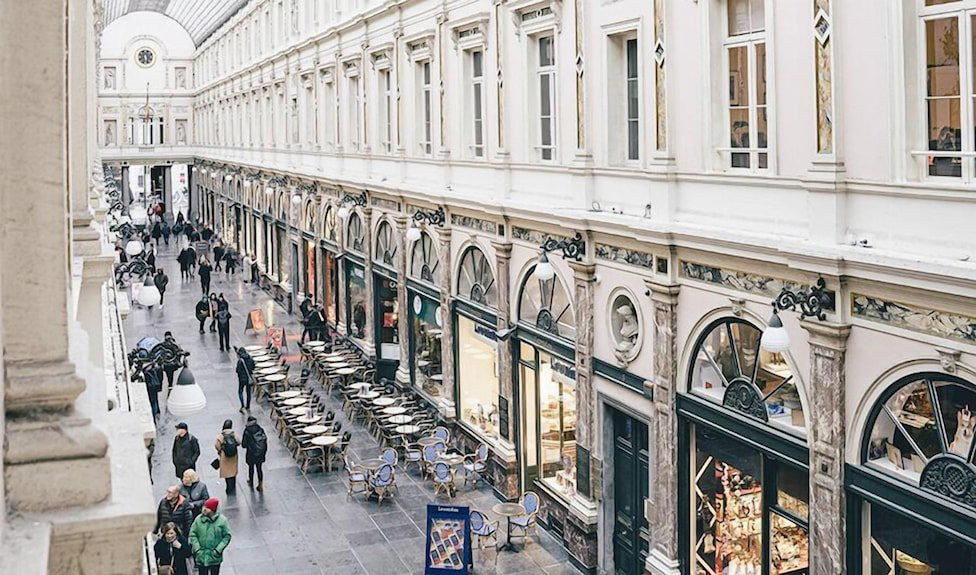
La Cueva de Castilla serves authentic Spanish tapas and paella at Pl. Colignon 8, with terrace seating and a street-scene view for leisurely lunch or dinner.
Pearl is the En Primeur Club membership app — saves, bookings, and concierge access live there. Same editors, same standards.
- Address
- Pl. Colignon 8, 1030 Schaerbeek, Belgium
- Phone
- +3222418180
- Website
- cuevadecastilla.be
- Directions
- Get directions
 Saves & bookings on Pearl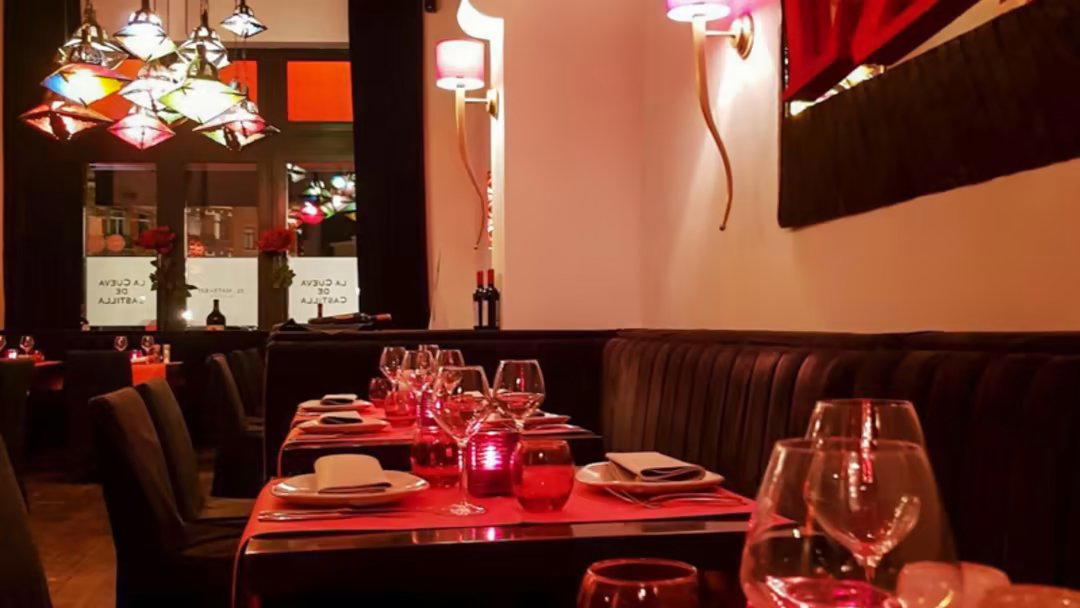
Place Colignon and the Spanish Quarter in Schaerbeek
Place Colignon sits at the civic heart of Schaerbeek, a commune that stretches north of the Brussels city center and carries a distinct character: Art Nouveau facades, a large North African and Mediterranean immigrant population, and a neighbourhood-level food culture that operates almost entirely outside the orbit of the tourist trail. The square itself is anchored by the ornate Schaerbeek Town Hall and a covered market, and the addresses around its perimeter represent a cross-section of the commune's layered identity. La Cueva de Castilla occupies a position on that perimeter, at Pl. Colignon 8, and serves authentic Spanish tapas and paella in Schaerbeek.
Schaerbeek has long been home to a substantial Spanish-speaking community, a legacy of mid-twentieth-century labour migration to Belgium's industrial and administrative economy. That demographic history produced a network of neighbourhood restaurants that serve as social anchors as much as eating establishments, places where the food on the table is a direct argument for a regional identity. La Cueva de Castilla participates in that tradition, framing its offer around the Castilian kitchen rather than the broader and more commercially familiar idea of generic Spanish cuisine.
Castilian Sourcing Logic and Why It Matters
The Castilian tradition is one of the more ingredient-driven in Spain, precisely because the terrain offers relatively little variety. The Castilian plateau, cold in winter and dry in summer, produces ingredients that survive through preservation, curing, and slow cooking rather than through abundance or freshness. Lechazo (suckling lamb from Churra sheep), cochinillo (suckling pig), morcilla de Burgos (blood sausage made with rice and spices rather than the onion-based versions found further south), and the hard aged cheeses of the Castilla y León region are all products of an agricultural economy that developed preservation techniques over centuries of necessity.
When a restaurant in Brussels frames itself around that specific regional kitchen, the sourcing question becomes central. The credibility of a Castilian restaurant in northern Europe rests on whether the key products, particularly the cured meats and aged cheeses, which are geographically protected under Spanish and EU law, are actually brought in from the relevant denominations of origin, or whether they are approximated with local substitutes. Belgium's EU membership means that Spanish Protected Designation of Origin (PDO) products circulate freely in the Belgian market, and the city has specialist importers supplying restaurants across the Iberian diaspora. The presence of those supply chains in Brussels is one reason neighbourhood restaurants like those around Place Colignon can sustain a degree of authenticity that would have been logistically harder a generation earlier.
For context on how ingredient sourcing defines a restaurant's credibility within a tradition, the gap between Spanish-themed restaurants and those genuinely built around a regional supply chain is roughly analogous to the gap between a French-influenced brasserie and a kitchen like L'air du temps in Liernu, which has built a documented sourcing philosophy around hyperlocal Belgian producers. The ambition differs in scale, but the underlying logic is the same: the food means something different when the ingredients are traceable to a specific place.
The Neighbourhood Context
Place Colignon is not a destination dining address in the way that central Brussels squares attract restaurant tourists. The dining around it is local by design, serving the commune's residents rather than visitors arriving by taxi from the Grand Place. That insularity is part of its value: the restaurants here are priced and calibrated for repeat customers, which tends to produce consistency and portion generosity over theatrics and presentation.
Schaerbeek's broader dining scene includes several addresses worth noting for visitors building a half-day in the commune. Concept Chocolate represents the artisan-craft end of the local food economy, while Fox Den and Groseille operate in different registers of the neighbourhood bistro format. Le Zinneke and Les Caprices d'Harmony (Classic Cuisine) round out a locally anchored offer that collectively illustrates how Schaerbeek functions as a genuinely multi-strand food commune rather than a single-cuisine enclave.
For comparison, the formal end of Brussels dining runs through addresses like Bozar Restaurant in Brussels, where the price tier and format differ substantially from what Place Colignon offers. Belgium's most decorated kitchens, Hof van Cleve in Kruishoutem, Boury in Roeselare, Zilte in Antwerp, Willem Hiele in Oudenburg, Bartholomeus in Heist, Castor in Beveren, d'Eugénie à Emilie in Baudour, and De Jonkman in Sint-Kruis, operate in a different tier and a different tradition entirely. La Cueva de Castilla is not competing in that arena; it is competing within the logic of the neighbourhood Spanish restaurant, where fidelity to regional identity and consistent execution carry more weight than tasting-menu innovation.
Internationally, kitchens that have built reputations on rigorous sourcing within a specific tradition, Le Bernardin in New York City for seafood provenance, Atomix in New York City for Korean ingredient fidelity, operate at a different price point and with a different public profile, but the underlying discipline of tracing ingredients to a defined origin is the same quality signal, regardless of the price tier.
Planning a Visit
The restaurant is located at Pl. Colignon 8, 1030 Schaerbeek, a short tram or metro journey from central Brussels. The square is served by public transport connections that make it accessible without a car, and it is walkable from the Helmet and Meiser areas of the commune. Given that this is a neighbourhood restaurant operating in a community-facing model rather than a reservations-led destination format, turning up on the early side of an evening service is a reasonable approach if you are visiting without advance planning. Reservations are recommended, and the restaurant is open Mon to Fri from 12 to 2 PM and 7 to 10 PM, Saturday from 7 to 10 PM, and closed on Sunday.
Quick Comparison
Comparable venues nearby, for context on price, style, and recognition.
| Venue | Cuisine | Price | Awards | Notes |
|---|---|---|---|---|
| La Cueva de CastillaThis venue — the venue you are viewing | Authentic Spanish Tapas & Paella | $$ | Not listed | Not listed |
| Le Zinneke | Traditional Belgian Bistro - Mussels & Frites | $$ | Not listed | Schaerbeek |
| Groseille | Modern French Market Bistro | $$ | Not listed | Schaerbeek |
| Fox Den | Craft Cocktails & Spirits Bar | $$ | Not listed | Schaerbeek |
| Concept Chocolate | Artisanal Chocolate Workshop | $$ | Not listed | Schaerbeek |
| Yoka Tomo | Dining | Not listed | Bib Gourmand | Schaerbeek |
Continue exploring
More in Schaerbeek
Restaurants in Schaerbeek
Browse all →
Bars in Schaerbeek
Browse all →


At a Glance
- Cozy
- Rustic
- Intimate
- Date Night
- Group Dining
- Special Occasion
- Terrace
- Street Scene
Current opening hours
- Monday
- 12–2 PM, 7–10 PM
- Tuesday
- 12–2 PM, 7–10 PM
- Wednesday
- 12–2 PM, 7–10 PM
- Thursday
- 12–2 PM, 7–10 PM
- Friday
- 12–2 PM, 7–10 PM
- Saturday
- 7–10 PM
- Sunday
- Closed
Hours can change for holidays and private events. Last verified .
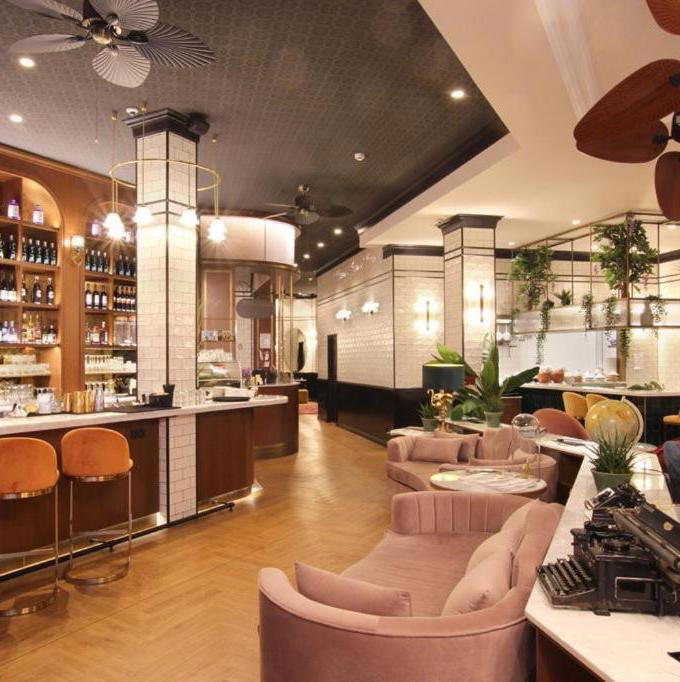
Cozy, warm atmosphere with comfortable seating and a home-like feel.