Our verdict
One of Madrid's most persistent tapas addresses, La Casa del Abuelo on Calle de Toledo has drawn a loyal crowd for generations. Ranked in Opinionated About Dining's Casual Europe list in both 2024 and 2025, it represents the city's working tavern tradition at its most direct: no reservations theatre, no tasting menus, just sherry-ready small plates and the kind of crowd that knows exactly what it came for.

Pearl is the En Primeur Club membership app, where members save venues, book tables and use the concierge.
The menu
What to order
- Gambas al ajillo
- Gambas a la plancha
Calle de Toledo and the Tavern Tradition
Madrid's old-town tavern circuit runs through the streets south of Sol and Ópera, where the density of working tapas bars per block is higher than almost anywhere else in the city. Calle de Toledo sits at the thicker end of that concentration, threading down from the Plaza Mayor toward the Rastro. The bars here are not concept restaurants or wine-bar hybrids; they are functional, long-established houses where the format has changed little across decades. La Casa del Abuelo sits inside that tradition rather than commenting on it from a distance.
That continuity matters. Madrid's central tapas scene has split in recent years between historic standbys with loyal local bases and newer, social-media-legible operations that trade on aesthetics over substance. La Casa del Abuelo belongs firmly to the former category, which is precisely why it holds a position on Opinionated About Dining's Casual Europe ranking, placed at #240 in 2024 and rising to #225 in 2025. OAD's methodology weights the judgement of frequent diners and serious eaters over general popularity, which makes the recognition a more targeted signal than a broad review aggregate.
The Sherry Lens: Reading a Tapas Bar Through Its Glass
The editorial angle that makes most sense for a bar like this is not the food alone, but what the food is designed to accompany. Classic Madrid tapas, gambas al ajillo, calamares, croquetas, were constructed as vehicles for wine and sherry long before the word pairing entered the vocabulary. The logic is architectural: salinity, fat, and a hit of heat from garlic call for something dry and oxidative to cut through and reset the palate.
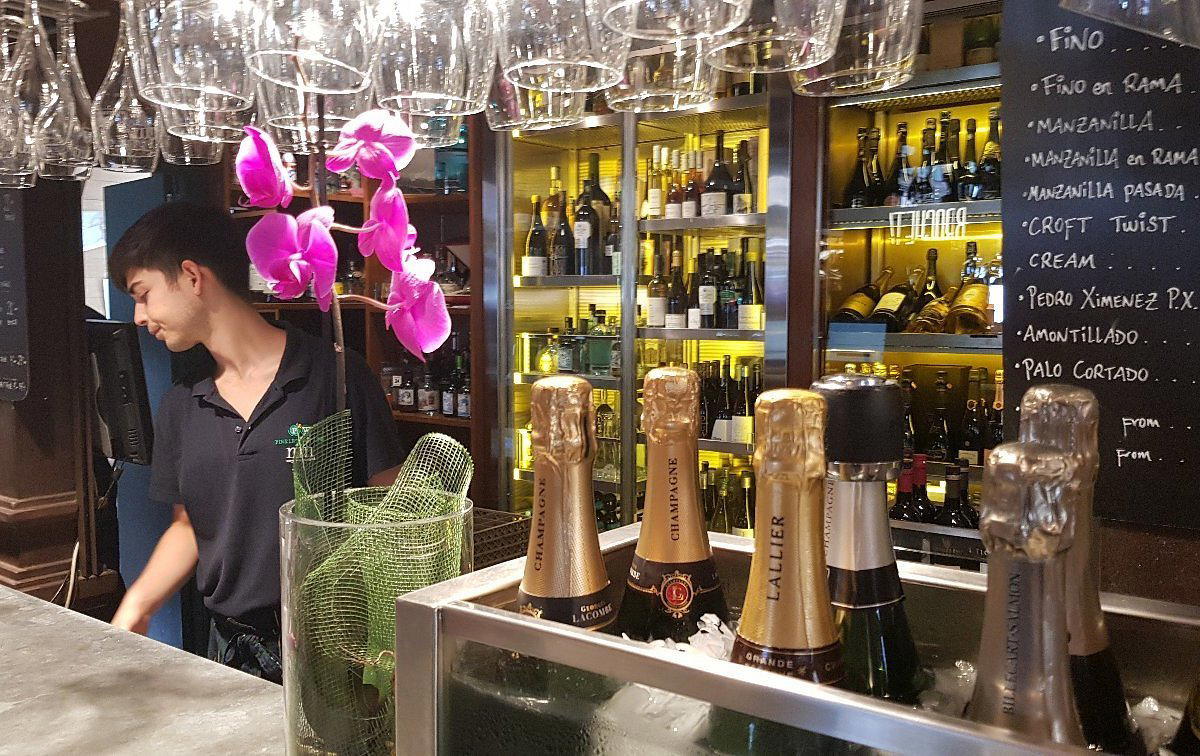
Fino and manzanilla, the driest expressions from Jerez and Sanlúcar de Barrameda respectively, are the natural references here. Fino's chamomile and almond register sits cleanly against fried or oil-cooked seafood. Manzanilla, with its additional coastal salinity from the Sanlúcar microclimate, goes further still with anything involving prawns or anchovies. These are not aspirational pairing choices; they are the historically correct ones for this format of eating, and any bar on Calle de Toledo worth visiting should be offering them by the glass without ceremony.
Amontillado, a fino that has passed through further oxidative ageing, deepens the conversation when you move toward richer or more savoury plates. Its nutty, amber character handles cured or fried pork preparations in a way that younger, lighter whites cannot. For readers building their Spanish wine education from the ground up, a round at a bar like this, ordered with attention to what's in the glass, teaches more than most formal tastings. This is the format in which sherry was always meant to be consumed: standing, with small plates, at a counter that's been doing the same thing for longer than most wine merchants have been in business.
For context at the other end of Madrid's dining spectrum, DiverXO (Progressive - Asian, Creative), Coque (Spanish, Creative), and Deessa (Modern Spanish, Creative) represent Madrid's Michelin-weighted tier. They are different propositions entirely, tasting menus, formal rooms, wine lists of a different register. The tapas bar and the fine dining counter serve different functions in the city's eating culture, and both are worth understanding on their own terms.
Where It Sits in Madrid's Casual Bar Circuit
Madrid has several working bars with genuine critical standing. Bodega La Ardosa and El Boqueron occupy a comparable casual tier in the city. Each has its own character and neighbourhood footing. What distinguishes the older Centro-district addresses is the physical environment: tiled walls, cask storage visible behind the bar, counters worn smooth at elbow height. These are not decorative choices; they are what the place actually is, and La Casa del Abuelo on Calle de Toledo reads the same way.
The San Sebastián pintxos bar tradition offers a useful comparison point. Antonio Bar and Bar Bergara in San Sebastián show how the northern format of the pintxos counter differs from the Madrid model: more architectural plating, broader use of txakoli, a different energy at the bar leading. Neither tradition is superior; they are regional expressions of the same underlying culture of standing, eating, and drinking with purpose. Understanding both sharpens the reader's picture of how Spain organises casual eating by geography.
At the broader national level, the conversation around Spanish fine dining, Aponiente in El Puerto de Santa María, Arzak in San Sebastián, Azurmendi in Larrabetzu, El Celler de Can Roca in Girona, Martin Berasategui in Lasarte-Oria, and Cocina Hermanos Torres in Barcelona, rests on a foundation of precisely this kind of bar culture. The ingredients, the instincts, the seasonal attentiveness to seafood and cured pork: all of it starts at counters like the one on Calle de Toledo.
Practical Considerations
Know Before You Go
- Address: C. de Toledo, 11, Centro, 28012 Madrid, Spain
- Recognition: Opinionated About Dining Casual Europe #225 (2025), #240 (2024)
- Format: Classic tapas bar; standing counter and small tables
- Booking: Walk-in format; no reservation system confirmed
- Timing: Quieter on weekday lunchtimes; expect a crowd on weekend evenings
- Getting there: Close to La Latina and Tirso de Molina metro stations
For a broader picture of where to eat, drink, and stay across the city, see our full Madrid restaurants guide, our full Madrid bars guide, our full Madrid hotels guide, our full Madrid wineries guide, and our full Madrid experiences guide.
Frequently asked questions
What kind of cuisine does La Casa del Abuelo serve?
Is La Casa del Abuelo Michelin-listed?
La Casa del Abuelo has received recognition including: Opinionated About Dining Casual in Europe Ranked #225 (2025); Opinionated About Dining Casual in Europe Ranked #240 (2024).
What should I order at La Casa del Abuelo?
The bar's Opinionated About Dining Casual Europe ranking (225th in 2025) reflects a kitchen built around Madrid tavern staples rather than creative departures. Gambas al ajillo and fried prawns are the format anchors that define this style of Calle de Toledo bar. Order alongside a glass of fino or manzanilla, the food is structured to accompany sherry, not compete with it.
How do I find La Casa del Abuelo?
La Casa del Abuelo is located at C. de Toledo, 11, Centro, 28012 Madrid, Spain, Madrid.
Who is the chef or culinary lead at La Casa del Abuelo?
The chef associated with La Casa del Abuelo is Various.
Can I walk in to La Casa del Abuelo?
The Calle de Toledo tavern format operates on walk-in trade; advance reservations are not part of the model. On weekend evenings and during peak Madrid tourist hours, expect to wait for counter or standing space, particularly given the bar's OAD Casual Europe recognition driving foot traffic. A midweek lunch or early evening visit on a weekday gives you the best chance of walking straight in.
At-a-Glance Comparison
| Venue | Cuisine | Price | Awards | Notes |
|---|---|---|---|---|
| La Casa del AbueloThis venue (the venue you are viewing) | Traditional Spanish Tapas | $20–30 | Not listed | Not listed |
| DiverXO | Avant-Garde Spanish Tasting Menu | $300–500 | 3 Michelin Stars · World's 50 Best #4 | Progressive - Asian, Creative |
| Deessa | Modern Valencian Fine Dining | $150–200 | 2 Michelin Stars · La Liste Top Restaurants | Modern Spanish, Creative |
| Smoked Room | Modern Japanese Fire Omakase | $200–300 | 2 Michelin Stars · La Liste Top Restaurants | Progressive Asador, Contemporary |
| Coque | Modern Spanish Fine Dining | $300–500 | 2 Michelin Stars · La Liste Top Restaurants | Spanish, Creative |
| Paco Roncero | Avant-Garde Spanish Fine Dining | $150–200 | 2 Michelin Stars · La Liste Top Restaurants | Creative |
Recognition history
Dated appearances from independent guides and award organizations, with the underlying list record or original source where available.
Opinionated About Dining Casual in Europe Ranked #225
Opinionated About Dining
Full recognition history (2 entries)
Opinionated About Dining Casual in Europe Ranked #240
Opinionated About Dining