La Cantine de Mémé serves French-Mediterranean bistro cooking in a standalone spot with a terrace on Rue Longchamp, with local sourcing and a conversational pace.
Pearl is the En Primeur Club membership app — saves, bookings, and concierge access live there. Same editors, same standards.
- Address
- 5 Rue Longchamp, 06000 Nice, France
- Phone
- +33967388531
- Website
- lacantinedememe.fr
- Directions
- Get directions
 Saves & bookings on Pearl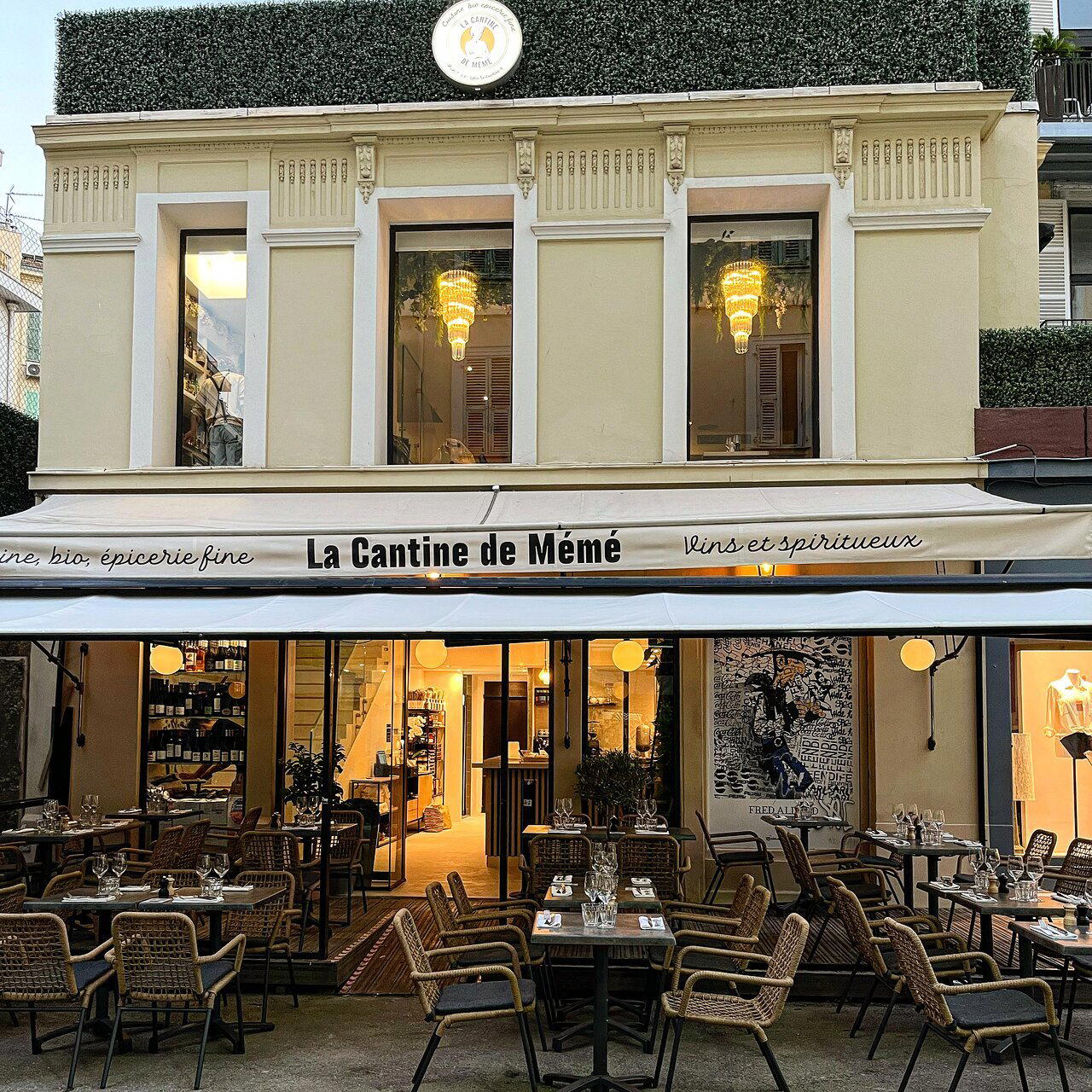
Rue Longchamp and the Logic of the Niçoise Table
Rue Longchamp sits in the quieter residential grid behind Nice's old port quarter, a street that functions more as a neighbourhood artery than a tourist corridor. The buildings here are the broad-shouldered Belle Époque style common to this part of the city: tall shuttered windows, ochre and cream facades, ground floors given over to small commerce. La Cantine de Mémé occupies one of those ground-floor spaces at number 5. Mémé is the familiar French term for grandmother, and the word cantine carries its own freight: communal, unglamorous, nourishing. Neither word reaches for the vocabulary of fine dining, and that positioning tells you more about the place.
Nice's restaurant scene divides fairly cleanly into tiers. At the leading, places like Flaveur, L'Aromate, and Les Agitateurs operate in the modern French creative register at the €€€€ price point, drawing diners who are also likely to cross the border to Mirazur in Menton or route through Marseille for AM par Alexandre Mazzia. At the lower tier, places like La Merenda on Rue Raoul Bosio hold to the Niçoise canon without apology: socca, pissaladière, daube, stockfish. La Cantine de Mémé belongs to neither extreme. It occupies the middle ground where home cooking meets trained attention, where the kitchen draws on the same Provençal and Niçoise larder as the city's older trattoria-style restaurants but applies it with more care and less dogma.
The Niçoise Larder as Starting Point
What defines Niçoise cooking is its position at the crossroads of Ligurian Italy and Provençal France. The cuisine was shaped by the same olive groves and fishing grounds that fed the Italian-speaking population before the city's annexation by France in 1860. The result is a table that uses olive oil rather than butter, that reaches for anchovies where northern France would use cream, that treats vegetables as the main event rather than the supporting cast. Socca made from chickpea flour, ratatouille built from courgette and aubergine that actually have flavour in summer, pan bagnat as a working lunch rather than a tourist prop, these are the coordinates of the tradition.
The interest in a place like La Cantine de Mémé lies in how that tradition gets handled by a kitchen with evident technique. Across French regional cuisine more broadly, from Bras in Laguiole to Auberge de l'Ill in Illhaeusern, the question that animates serious regional cooking is the same: how much technique can you apply before the dish stops being regional and becomes something else? The cantine format, by framing itself as grandmotherly and domestic, makes a strong implicit claim about where it sits on that spectrum. It is presenting restraint as a value, not a limitation.
Local Products and the Seasonal Argument
The south of France gives its kitchens a significant seasonal argument. Spring brings asparagus from the Var, violet artichokes from Paillon, broad beans that need little done to them. Summer loads the markets at Cours Saleya with courgette flowers, different varieties of tomato, and stone fruit that travels badly but tastes completely different bought within twenty kilometres of where it was grown. Autumn shifts the table toward mushrooms from the pre-Alps, game from the hills above Vence, and the first pressing of olive oil from the groves around Nice and Grasse. Winter, when the tourist volume drops sharply, is when the city's resident dining population returns to the table and the cooking tends toward the more substantial: soupe au pistou, daube de boeuf, tapenade on good bread.
A kitchen that wants to engage with local ingredients seriously has to move with that calendar. The cantine model, with its emphasis on daily cooking rather than fixed tasting menus, is better positioned to do this than the more elaborate formats at Le Chantecler or ONICE, where the kitchen's investment in a particular technique or presentation creates its own inertia. The domestic register allows, even requires, a certain responsiveness to what's good on a given Tuesday in March rather than what fits the menu architecture.
The global technique question enters here through the back door. Modern culinary training, whether at French grandes écoles or through the lineage running from Paul Bocuse in Collonges-au-Mont-d'Or down through a generation of alumni, instils a set of habits around heat control, seasoning, and timing that improve even the simplest preparations. A stock built correctly changes what a simple pasta or a braise can taste like. These methods are not visible on the plate in the way that modernist technique is, but they are present in the result. Regional kitchens that absorb classical training without advertising it tend to produce food that is better than their pricing suggests and more consistent than their informality implies.
Finding the Address and Planning the Visit
La Cantine de Mémé sits at 5 Rue Longchamp in the 6th arrondissement of Nice, a neighbourhood that sees relatively little dedicated restaurant tourism compared with the Vieux-Nice quarter or the promenade. The walk from the Massena tram stop takes under ten minutes. Nice itself is accessible by TGV from Paris in approximately five and a half hours, and the airport sits four kilometres west of the city centre. For travellers building an itinerary around the Côte d'Azur dining circuit, the route from Nice to Menton and Mirazur is a logical pairing; those extending further into France might reference Flocons de Sel in Megève or the three-star reference points further north such as Troisgros in Ouches or Assiette Champenoise in Reims for the broader French regional context.
Where It Sits in the City's Dining Picture
Nice's restaurant scene has been pulled in competing directions over the past decade. The city's growing profile as a gastronomic destination has brought more investment into the higher tiers, with kitchens referencing the same training lineages and product sourcing networks as Paris or Lyon. The comparison set for ambitious Nice dining now extends internationally: the technique density at Alléno Paris au Pavillon Ledoyen, the conceptual rigour of Atomix in New York, and the refined coastal focus at Le Bernardin all represent a set of reference points that inform how serious French provincial kitchens position themselves. Against that backdrop, a place framing itself as a grandmother's canteen is making a considered choice about what it wants to be. The risk is that the domestic register becomes an excuse for slackness. The opportunity, when it works, is a table that feels genuinely local in an era when most restaurants in tourist cities feel designed for an international audience.
Au Crocodile in Strasbourg and the Alsatian tradition of marrying regional product to classical French structure, a dynamic that maps onto the Niçoise situation in interesting ways.
Peers in This Market
Comparable venues nearby, for context on price, style, and recognition.
| Venue | Cuisine | Price | Notes |
|---|---|---|---|
| La Cantine de MéméThis venue — the venue you are viewing | French-Mediterranean Bistro | $$ | Not listed |
| La Socca d'Or | Traditional Niçoise Cuisine | $$ | Nice Historique |
| La Ratapignata | Traditional Niçoise & French Bistro | $$ | Hauts de Nice |
| L'Ovale | Southwest French Brasserie | $$ | Cœur de Nice |
| 21 PAYSANS | Organic French Bistro | $$ | Hauts de Nice |
| Le Panier | Modern French Tasting Menus | $$$ | Nice Historique |
Continue exploring
More in Nice
Restaurants in Nice
Browse all →
Bars in Nice
Browse all →
Hotels in Nice
Browse all →

At a Glance
- Romantic
- Cozy
- Intimate
- Classic
- Date Night
- Family
- Group Dining
- Casual Hangout
- Terrace
- Standalone
- Local Sourcing
Current opening hours
- Monday
- Closed
- Tuesday
- 12–2 PM, 7:30–9:45 PM
- Wednesday
- 12–2 PM, 7:30–9:45 PM
- Thursday
- 12–2 PM, 7:30–9:45 PM
- Friday
- 12–2 PM, 7:30–10 PM
- Saturday
- 12:30–2:30 PM, 7:30–10 PM
- Sunday
- 12:30–1:45 PM, 7:30–9:30 PM
Hours can change for holidays and private events. Last verified .
Warm, homey lighting and decor evoking a family home; intimate terrasse sheltered from street noise; upstairs dining room with sincere, unpretentious charm that feels like a beloved second home.