Kuruma Zushi

Our verdict
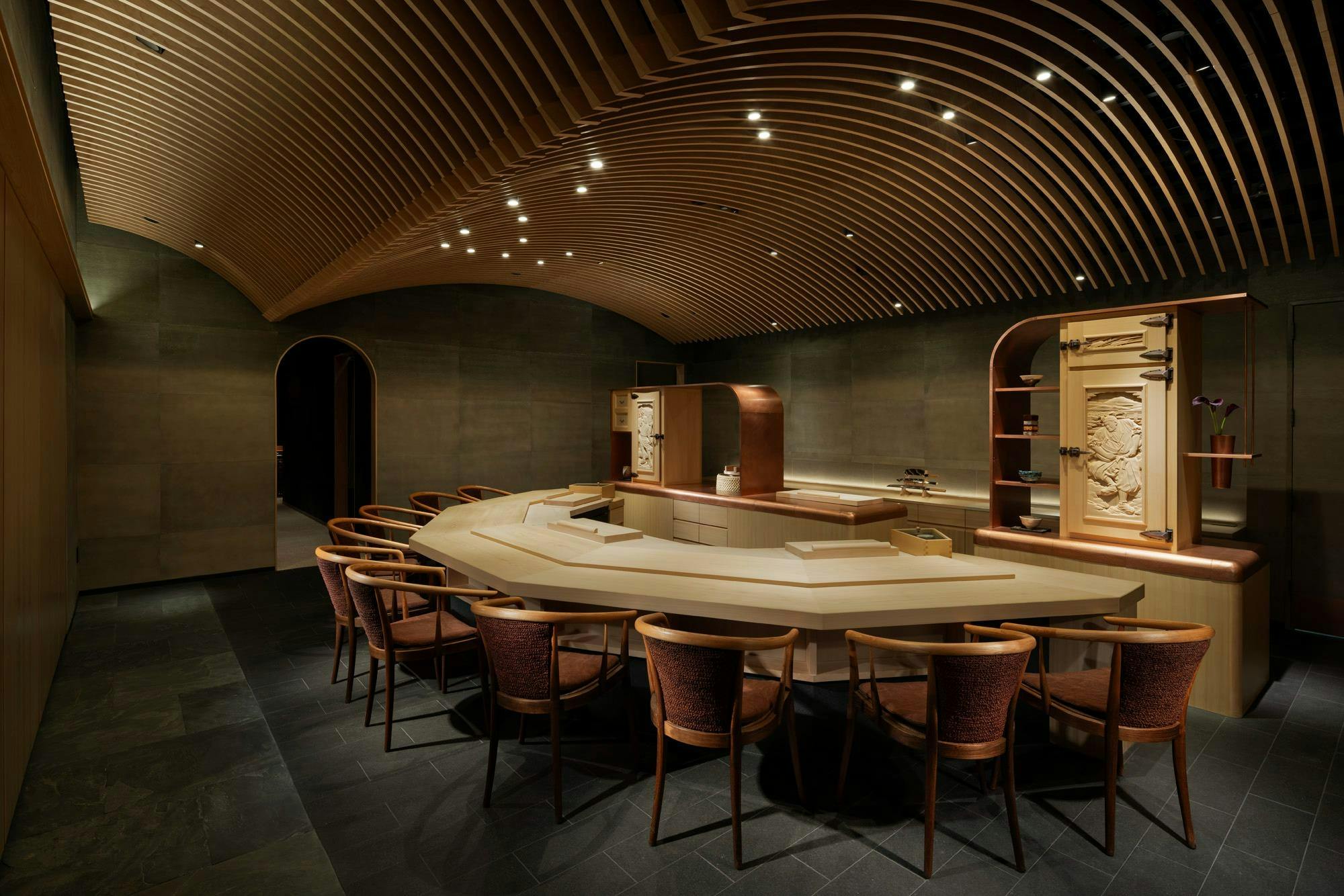
Chef Toshihiro Uezu runs one of New York's most consistently recognized sushi counters, ranked in Opinionated About Dining's North America top 125 for three consecutive years. The format is traditional Edomae, the fish sourced with precision, and the room rewards those who book early and dress accordingly.

Pearl is the En Primeur Club membership app, where members save venues, book tables and use the concierge.
Edomae in Manhattan: The Technique Behind the Counter
Edomae sushi is a Tokyo tradition built on two parallel skills: sourcing fish of sufficient quality to withstand scrutiny, and applying preparation techniques that extend, deepen, or transform what the fish alone cannot provide. The word itself refers to the waters in front of Edo, the historical name for Tokyo Bay, and the style that developed there over the nineteenth century depended on curing, marinating, and pressing fish at a time when refrigeration did not exist. Those techniques survived refrigeration not as nostalgia but because they genuinely improve certain fish, concentrating flavor and altering texture in ways that raw presentation cannot replicate.
In New York, Edomae practice has developed its own tier structure. At the entry level, omakase counters offer the format without deep sourcing infrastructure or technical range. At the upper tier, a smaller group of counters sources fish directly from Japan through specialist importers, applies Edomae preparation across a wider portion of the menu, and prices accordingly. Kuruma Zushi sits in that upper bracket, where the fish program is the primary competitive argument and where comparison against counters like Sushi Sho, Joji, and Shion 69 Leonard Street is the relevant frame, not comparison against mid-market omakase.
The Sourcing Argument
The editorial angle on Kuruma Zushi that holds up across years of critical observation is this: the venue has built its reputation primarily on the quality and provenance of its fish rather than on theatrical presentation or a narrative identity around the chef's personal journey. That is a specific and defensible position in a city where tasting menus at this price point often compete on spectacle as much as substance.
For context on how demanding that field is, consider that the same list includes venues like The French Laundry in Napa, Alinea in Chicago, Single Thread Farm in Healdsburg, and Lazy Bear in San Francisco.
The sourcing network that Edomae counters at this level maintain is the operational foundation that justifies both the ranking and the price. Fish imported from Japan through specialist channels arrives with traceability that commodity seafood markets cannot provide, and the preparation decisions made at the counter reflect the specific characteristics of each delivery. This is the intersection of imported method and specific ingredient that defines the upper end of Japanese counter dining outside Japan. Kuruma Zushi's location near 47th Street places it within reach of office lunch trade at midday and dinner service that draws from across the city. Its Monday-through-Friday schedule, with service running 12 to 2 pm and 5 to 9 pm, closes Saturday and Sunday entirely, a calendar that reflects a deliberate operating model rather than a capacity constraint.
That schedule distinguishes it from counters like Bar Masa, which operates in a different format register, or Blue Ribbon Sushi, which serves a later-night crowd on a broader weekly calendar. The five-day week at Kuruma Zushi is consistent with the operational logic of high-volume sourcing counters that need delivery cadence aligned with specific fish suppliers, most of whom operate on Japanese business schedules.
Harutaka in Tokyo and Sushi Shikon in Hong Kong represent the same Edomae tradition applied in different urban contexts, with Tokyo setting the sourcing benchmark that New York counters measure themselves against. Service runs Monday through Friday, lunch from 12 to 2 pm and dinner from 5 to 9 pm. The venue is closed Saturday and Sunday. Booking in advance is advisable given the limited weekly service windows and the consistent recognition this counter has received from Opinionated About Dining across three consecutive years.
For a fuller picture of where Kuruma Zushi sits within New York's dining range, see our full New York City restaurants guide. Those building a broader itinerary around the city can also reference our New York City hotels guide, bars guide, wineries guide, and experiences guide.
For reference across the broader North American fine dining map, Emeril's in New Orleans and Providence in Los Angeles represent the kind of sustained institutional recognition that, in different cuisine categories, places a venue in the same conversation about long-term consistency.
Frequently asked questions
What style of cooking does Kuruma Zushi do?
Where do I go for Kuruma Zushi?
Kuruma Zushi is located at 7 E 47th St 2nd Floor, New York, NY 10017, New York City.
What awards or recognition does Kuruma Zushi have?
Kuruma Zushi has received recognition including: Opinionated About Dining Top Restaurants in North America Ranked #122 (2025); Opinionated About Dining Top Restaurants in North America Ranked #112 (2024); Opinionated About Dining Top Restaurants in North America Ranked #102 (2023).
What's the must-try dish at Kuruma Zushi?
No single dish appears in verified records for this counter, and naming one speculatively would shortchange the sourcing-led approach that has placed Kuruma Zushi in OAD's Top 125 restaurants in North America three consecutive years through 2025. Chef Toshihiro Uezu's reputation rests on seasonal fish selection and edomae preparation technique rather than a fixed signature item. The counter operates Monday through Friday for both lunch and dinner, which gives repeat visitors reason to track what the sourcing dictates on any given service.
What are the opening hours for Kuruma Zushi?
Hours at Kuruma Zushi: Hours: Monday 12–2 pm, 5–9 pm Tuesday 12–2 pm, 5–9 pm Wednesday 12–2 pm, 5–9 pm Thursday 12–2 pm, 5–9 pm Friday 12–2 pm, 5–9 pm Saturday Closed Sunday Closed.
Accolades, Compared
A quick snapshot of similar venues for side-by-side context.
| Venue | Cuisine | Price | Awards | Notes |
|---|---|---|---|---|
| Kuruma ZushiThis venue (the venue you are viewing) | Traditional Japanese Omakase | $300–500 | Not listed | Not listed |
| Le Bernardin | French Seafood Fine Dining | $300–500 | 3 Michelin Stars · World's 50 Best #13 | French, Seafood |
| Atomix | Modern Korean Tasting Menu | $300–500 | 2 Michelin Stars · World's 50 Best #7 | Modern Korean, Korean |
| Masa | Seasonal Hokkaido Tempura Omakase | $150–200 | Tabelog 100 #34 | Sushi, Japanese |
| Per Se | French Fine Dining Tasting Menu | $300–500 | 3 Michelin Stars · World's 50 Best #40 | French, Contemporary |
| Eleven Madison Park | Contemporary Plant-Based Fine Dining | $300–500 | 3 Michelin Stars · World's 50 Best #4 | French, Vegan |
Recognition history
Dated appearances from independent guides and award organizations, with the underlying list record or original source where available.
Opinionated About Dining Top Restaurants in North America Ranked #136
Opinionated About Dining
Full recognition history (4 entries)
Opinionated About Dining Top Restaurants in North America Ranked #122
Opinionated About Dining
Opinionated About Dining Top Restaurants in North America Ranked #112
Opinionated About Dining
Opinionated About Dining Top Restaurants in North America Ranked #102
Opinionated About Dining