
Kurosugi sits in Osaka’s serious sushi tier: a 16-seat Dojimahama counter with private rooms, lunch and dinner price bands that separate it from casual sushi bars, and selection for Tabelog Sushi WEST “Tabelog 100” in 2025, 2022 and 2021. The appeal is less spectacle than format discipline: counter seating, fish-led sourcing, sake and wine depth, and a location that suits a planned Kita Ward dining night.
Pearl is the En Primeur Club membership app — saves, bookings, and concierge access live there. Same editors, same standards.
- Address
- Japan, 〒530-0004 Osaka, Kita Ward, Dojimahama, 1 Chome−2−1 新ダイビル 2階
- Phone
- +81 6-6342-0919
- Website
- sushi-kurosugi.com
 Saves & bookings on Pearl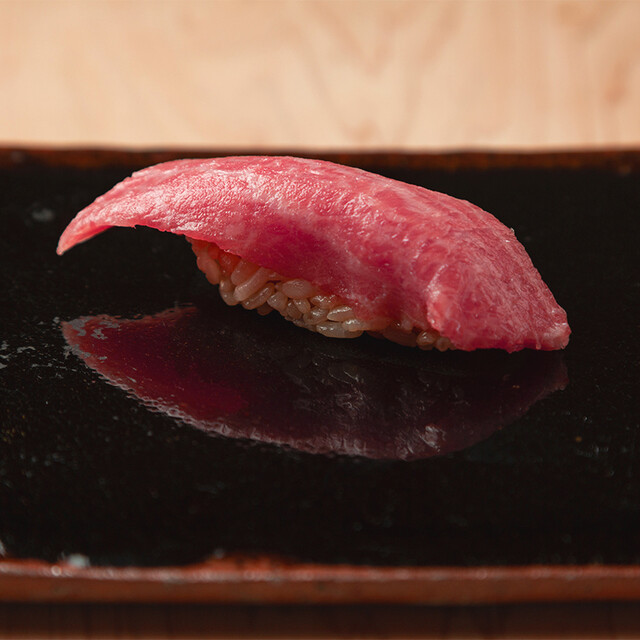
Approaching Dojimahama after dark, Osaka shifts from louder eating districts to Kita Ward’s controlled rhythm: office towers, river-adjacent streets, nearby Kitashinchi, and dining rooms expecting guests to arrive with intent. Sushi here is not the city’s street-food shorthand. It sits in a smaller, higher-priced category where counter timing, seat count, and reservation discipline shape the experience before the first course.
Kurosugi belongs to that bracket. The room has counter seating with 16 seats total, plus private rooms for four or six, placing it between a tiny omakase counter and a business-dinner restaurant. That hybrid matters in Osaka. The city is often flattened into takoyaki, okonomiyaki and casual abundance, but the Kita corridor supports another habit: expensive, appointment-led restaurants structured around a precise start time and few seats.
Dojimahama sushi in Osaka's reservation-led dining tier
The comparison is not everyday sushi counters near stations, but the more formal Japanese restaurants around Kitashinchi and Dojimahama. In the supplied Osaka peer group, Kitashinchi Shabushabu Sukiyaki Kiraku sits in the JPY 15,000–19,999 band, Shinchi Yamamoto operates in a ¥¥¥¥ Japanese category, and Man-u represents the area’s serious oden lane. Kurosugi’s dinner band, JPY 30,000–39,999, puts it in a more selective spend category, while lunch, JPY 6,000–7,999, gives the restaurant a different daytime logic from the city’s expense-account evening rooms.
That split helps travelers planning Osaka around meals rather than landmarks. Lunch can be a controlled entry point into a restaurant otherwise priced for a deliberate dinner, while evening service competes with the city’s formal Japanese dining rooms rather than casual sushi. The restaurant’s repeated selection for Tabelog Sushi WEST “Tabelog 100” in 2025, 2022 and 2021 is the cleanest public signal. It is not a Michelin claim and should not be read as one. It does place the restaurant inside a regional sushi list Japanese diners use to sort serious counters in western Japan.
For a broader read on how this fits the city, Our full Osaka restaurants guide is the better frame than a single-district crawl. Osaka rewards range: a premium sushi booking in Kita, bread at 52CHO-ME BAKERY, casual pork buns at 551 Horai (551蓬莱), Italian at a canto (Italian), or a sharper casual stop such as 99 Pizza Napoletana Gourmet. The point is not to rank them, but to understand Osaka’s breadth, and that sushi at this level occupies a planned slot rather than a spontaneous one.
Counter format, private rooms and the Osaka business-dining overlap
The counter remains serious sushi’s primary language because it compresses preparation, pacing and guest attention into a narrow field of view. Kurosugi lists counter seating, non-smoking dining and private rooms, giving it a broader use case than counters designed only for two-person omakase. In Osaka’s Kita Ward, that matters. Business dining, family meals with older children, and small-group celebrations often overlap with restaurants that would be more rigid in Tokyo’s Ginza sushi ecosystem.
The birthday and anniversary policy is practical: the restaurant does not provide birthday plates, but whole cakes and flowers can be arranged for an added fee on some days. Read culturally, the format does not bend toward Western celebration theater; it allows some occasion planning without turning the sushi counter into a stage set. Preschool children are not admitted, while children more broadly are welcomed, signaling that the room draws boundaries without becoming adults-only by default.
Drink positioning gives the meal a wider register than sake-only orthodoxy. The program includes sake, shochu and wine, with particular attention to sake and wine. That breadth is now common among ambitious Japanese restaurants in Osaka and Kyoto, where guests may want nihonshu with early courses and wine later. Without named bottles or a sommelier record, the safe conclusion is category-level rather than label-specific: this sushi room supports more than a perfunctory drink order.
Travelers building a wider Kansai itinerary can use Our full Osaka hotels guide, Our full Osaka bars guide, Our full Osaka wineries guide, and Our full Osaka experiences guide to avoid treating dinner as the only fixed point. In this category, the meal works better when the day stays clean: not too many snacks beforehand, not too much cross-city transit, and no assumption that a premium counter will absorb late arrivals casually.
How to read Kurosugi within Japan's wider restaurant map
Japanese restaurant planning increasingly rewards specificity. A traveler comparing regions should not read Osaka sushi like a Tokyo tuna specialist, a Kyoto counter, a Kamakura sukiyaki room, or a Los Angeles sake bar. For contrast, the broader EP Club map includes -Grilled beef Sukiyaki- KAMAKURA TANUKIAN 鎌倉 たぬき庵 in Kamakura. 鮪と炭火焼き うお炭 秋葉原店 in Tokyo.know in Kumamoto, (Shoku) Vietnam in Kawasaki, [Curry Senmon Ten] Maruyama Kyoju. in Sapporo, and [ki:] in Kyoto. Outside Japan, Jōdo Saké Bar in Los Angeles and Onigiri Time in Pasadena show how Japanese formats change when they leave their home market.
Within Osaka, Kurosugi is not trying to express the city’s democratic eating culture. It represents the other Osaka: planned, compact, expensive, and restrained. The 2015 opening date gives it enough operating history to have moved beyond novelty, while repeated Tabelog Sushi WEST recognition keeps it visible in a competitive regional sushi category. Add the 16-seat scale and lunch/dinner budget split, and the decision is clear: this is for travelers who want Osaka’s formal sushi register, not a casual add-on between Dotonbori stops. For a lighter counterpoint elsewhere in the city.cafe belongs to a different rhythm entirely.
A Lean Comparison
Side-by-side context: comparable cuisine and price.
| Venue | Cuisine | Price | Notes |
|---|---|---|---|
| KurosugiThis venue — the venue you are viewing | Kita, Edomae Sushi Omakase | $$$$ | Not listed |
| Pegopa | Nishi, High-end Yakiniku & Horumon | $$$$ | Not listed |
| Oimatsu Miyamoto | Kita, High-end Yakitori Counter | $$$$ | Not listed |
| Yakitori Ichimatsu | Not listed | $$$$ | Kita, Michelin-starred Yakitori Chicken Kaiseki |
| Yakitori Shidare | Kita, Premium Yakitori Omakase | $$$$ | Not listed |
| Kizuna | Chūō, Edo-style Omakase Sushi | $$$$ | Not listed |
Recognition history
Dated appearances from independent guides and award organizations, with the underlying list record or original source where available.
Tabelog 100 #21 · No. 21
Tabelog · Tabelog 100 - Sushi - WEST - 2025
Continue exploring
More in Osaka
Restaurants in Osaka
Browse all →




Bars in Osaka
Browse all →




Hotels in Osaka
Browse all →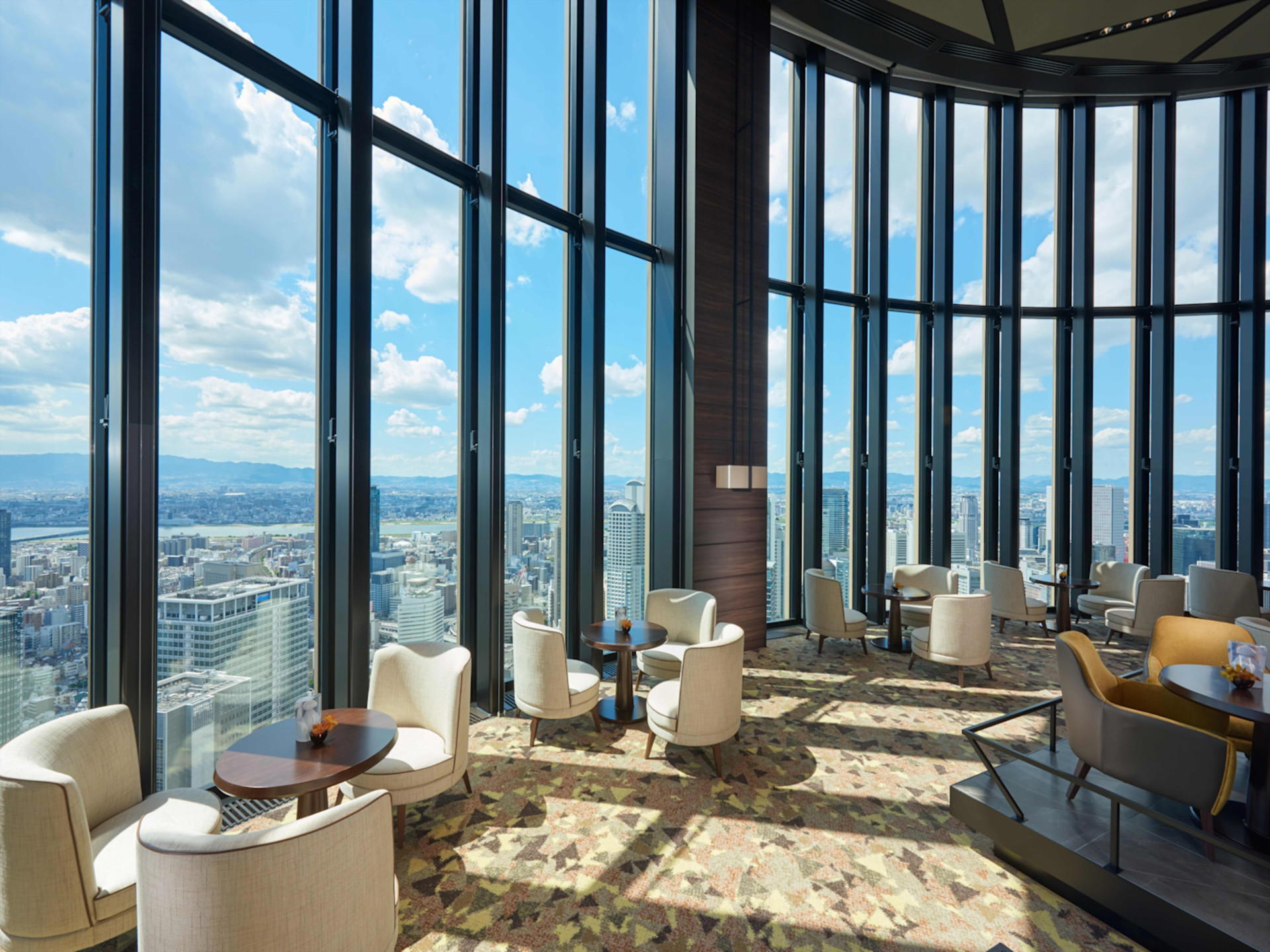




Wineries in Osaka
Browse all →
At a Glance
- Elegant
- Intimate
- Sophisticated
- Modern
- Special Occasion
- Date Night
- Business Dinner
- After Work
- Solo
- Chefs Counter
- Private Dining
- Design Destination
- Standalone
- Sake Program
- Extensive Wine List
- Local Sourcing
- Sustainable Seafood
Current opening hours
- Monday
- 6–7 PM, 8:30–10 PM
- Tuesday
- 11:30 AM–2 PM, 6–7 PM, 8:30–10 PM
- Wednesday
- 11:30 AM–2 PM, 6–7 PM, 8:30–10 PM
- Thursday
- 11:30 AM–2 PM, 6–7 PM, 8:30–10 PM
- Friday
- 11:30 AM–2 PM, 6–7 PM, 8:30–10 PM
- Saturday
- 11:30 AM–2 PM, 6–7 PM, 8:30–10 PM
- Sunday
- Closed
Hours can change for holidays and private events. Last verified .
A stylish, modern Japanese space centered on a hinoki-wood counter, quiet and refined with relaxed lighting, designed for an intimate, traditional sushi counter experience rather than a bustling izakaya atmosphere.