
Tabelog 100 #41
Our verdict
A 12-seat tachinomi in Osaka’s Temma area, Kuro Hitsuji Youniku Kushiten BLACK SHEEP sits where stand-up drinking, charcoal-grilled lamb, Chinese cooking, shochu and wine overlap. Its inclusion in Tabelog 100 - Tachinomi - 2025 places it within Japan’s sharper casual-drinking tier, not the city’s formal tasting-menu circuit.

Pearl is the En Primeur Club membership app, where members save venues, book tables and use the concierge.
The menu
What to order
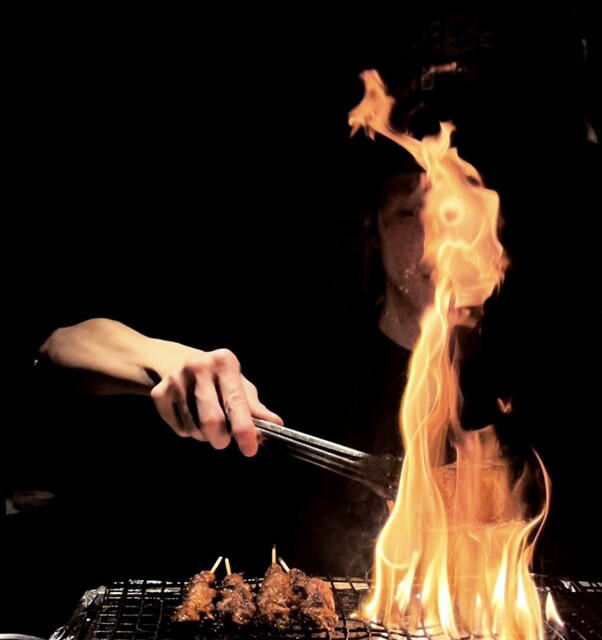
- Charcoal-grilled lamb skewers
- Vinegar lamb chop
Osaka rewards small rooms with strong point of view. Around the city, the evening rhythm is often less about white-tablecloth dining than short orders, counter proximity and drink-led pacing. In that setting, Kuro Hitsuji Youniku Kushiten BLACK SHEEP reads as part of Osaka’s compact tachinomi culture: a stand-up bar format with Chinese category framing and a casual price band that keeps the focus on immediacy rather than ceremony.
Osaka’s casual dining grammar is broad. The city can move from quick snacks to counter cooking, specialist kitchens and drink-led rooms without needing a single template. Kuro Hitsuji Youniku Kushiten BLACK SHEEP belongs to a different side of that map: tight footprints, fast decision-making and food that works with the glass in hand rather than against it.
Chinese framing inside Osaka's tachinomi rhythm
The defining idea here is not a long menu or chef-led biography. It is the collision of two signals that sit tightly together: stand-up bar energy and Chinese category framing. That matters in Osaka because much of the city’s drinking-food identity depends on speed, proximity and a clear sense of format. Kuro Hitsuji Youniku Kushiten BLACK SHEEP shifts the register by keeping the experience compact and drink-compatible rather than building toward a long, formal meal.
The venue’s Tabelog score of 3.59 and selection for Tabelog 100 - Tachinomi - 2025 give the format outside validation without pushing it into formal fine dining territory. The price band belongs to casual evening drinking, while the award category places it among recognized stand-up bar addresses rather than standard restaurants. That distinction is useful: expectations should be calibrated toward density, quick turnover and drink compatibility, not linen, coursing or ceremony.
Within Osaka, that positions the room closer to the city’s serious casual tier than to destination dégustation dining. Men Genso and Tamaichi offer other casual reference points, while Hoch, Gomenne JIRO and Gochiso nene help show how varied Osaka’s compact dining map can be. The Chinese-and-tachinomi combination gives this address a narrower editorial lane.
A compact room where the format does the editing
Scale changes how a bar cooks and serves. A compact room cannot hide behind sprawl, private corners or a long list designed for every appetite. The format forces compression: fewer distractions, closer proximity to the action and less distance between order and drink. That is why tachinomi can feel more precise than its informal reputation suggests. The room edits the experience before the menu does.
The stand-up bar tradition also changes the tempo of eating. Dishes are expected to hold their own alongside alcohol, arrive in manageable portions and keep conversation moving. That context suits a venue whose public listing places it in the stand-up bar and Chinese categories rather than in a formal restaurant lane. Osaka tends to let this kind of room stay loud, quick and unprecious.
There is no need to over-romanticize the category. Tachinomi is practical by design: compact rooms, limited space, food built for drinking and a social register that favors short distances over staged service. The appeal lies in how much signal can be packed into a modest footprint. Here, the useful signal is the way a Chinese-framed stand-up bar sits inside an Osaka evening rather than imitating a larger restaurant.
For a broader map of how Osaka eats, the comparison should extend beyond one neighborhood. Other Osaka dining rooms tell different stories about daytime pacing, counter service, hotel dining and late-night drinking, while the city’s wider restaurant and bar landscape shows how Osaka splits between street-level eating, serious counters and compact specialist rooms.
How to read the room before committing
The useful approach is to treat this as a focused stop rather than a sprawling dinner plan. The appeal is strongest for travelers who value format as much as cuisine: compact pacing, stand-up bar energy, Chinese category framing and a price band listed at JPY 3,000 - JPY 3,999. Diners with specific seating, dietary or service needs should confirm directly, since the public signals point most clearly to a compact, format-led room.
That same logic applies across Japan’s tighter specialist venues. A compact grill room, a counter-led Osaka address or a drink-focused bar each asks the same question in a different way: is the guest there for breadth, or for a sharply edited format?
Osaka is particularly good at the latter. The city’s strongest casual rooms often work because they refuse to behave like generalists. That can mean narrow menus, concise service, limited space or a format that makes its priorities clear from the start. The through-line is restraint by format, not luxury by decoration.
For travelers building a Japan itinerary, this address belongs in the same mental category as small-format rooms that make a clear trade: less range, more definition. Kuro Hitsuji Youniku Kushiten BLACK SHEEP is compelling because its constraints are visible from the first read: Tabelog-recognized tachinomi status, a 3.59 score, Chinese framing and a casual Osaka price band.
Frequently asked questions
What's the price range at Kuro Hitsuji Youniku Kushiten BLACK SHEEP?
Pricing at Kuro Hitsuji Youniku Kushiten BLACK SHEEP is listed as JPY 3,000 - JPY 3,999.
What part of town is Kuro Hitsuji Youniku Kushiten BLACK SHEEP in?
Osaka.
What's the defining dish or idea at Kuro Hitsuji Youniku Kushiten BLACK SHEEP?
The core idea is a stand-up bar format with Chinese category framing. Its Tabelog 100 Tachinomi 2025 recognition is a stronger signal than any single menu item.
Can Kuro Hitsuji Youniku Kushiten BLACK SHEEP handle vegetarian requests?
The venue is listed as Chinese and stand-up bar, so vegetarian diners should confirm options directly before visiting. It is located in Osaka and appears best understood as a narrow, format-led venue rather than a broad custom-ordering restaurant.
A Quick Peer Check
Comparable venues by cuisine and price in the same metro.
| Venue | Cuisine | Price | Awards | Notes |
|---|---|---|---|---|
| Kuro Hitsuji Youniku Kushiten BLACK SHEEPThis venue (the venue you are viewing) | Charcoal-grilled lamb Chinese with natural wine | $30–50 | Tabelog 100 #41 | Not listed |
| Fukuryu En | Sichuan & Tantanmen Chinese | $20–30 | Tabelog 100 #27 | Kita |
| Bakabon | Ramen & Sichuan Chinese | $30–50 | Tabelog 100 #96 | Kita |
| Kaen | Casual Chinese lunch counter | $10–20 | Tabelog 100 #72 | Nishi |
| Fukushima Koto | Cantonese Chinese | Not listed | Tabelog 100 #89 | Kita |
| Patisserie Ravi,e relier | French Patisserie | $1–10 | Tabelog 100 #57 | Kita |
Recognition history
Dated appearances from independent guides and award organizations, with the underlying list record or original source where available.
Tabelog 100 #41 · No. 41
Tabelog · Tabelog 100 - Tachinomi - 2025
Continue exploring
More in Osaka
Restaurants in Osaka
All restaurants in Osaka →


Bars in Osaka
All bars in Osaka →


Hotels in Osaka
All hotels in Osaka →




Wineries in Osaka
Browse all →
Kuro Hitsuji Youniku Kushiten BLACK SHEEP
The wine
- Extensive wine list
Details
- Lively
- Cozy
- Trendy
- Energetic
- Casual Hangout
- After Work
- Group Dining
- Late Night
- Date Night
- Standalone
- Extensive Wine List
- A La Carte
- Small Plates
- Natural Wine
- Shochu
Current opening hours
- Monday
- 4 PM–12 AM
- Tuesday
- 4 PM–12 AM
- Wednesday
- 4 PM–12 AM
- Thursday
- 4 PM–12 AM
- Friday
- 4 PM–12 AM
- Saturday
- 4 PM–12 AM
- Sunday
- 4 PM–12 AM
Hours can change for holidays and private events. Hours as of .
A small non-smoking standing bar with about a dozen seats, creating a lively yet cozy atmosphere that blends Chinese street-food culture with the feel of a trendy Osaka tachinomi spot.