Our verdict
Kunga Cafe & Restaurant sits in Majnu-ka-tilla, New Delhi's compact Tibetan enclave north of the city centre, where the cooking tradition runs closer to Lhasa than to Chandni Chowk. The cafe operates as a neighbourhood anchor for a community that has maintained its food culture across decades of displacement, making it one of the more geographically specific eating experiences the capital offers.

Pearl is the En Primeur Club membership app — saves, bookings, and concierge access live there. Same editors, same standards.
- Address
- house no 5, New Camp, Kunga Cafe & Restaurant, Street Number 6, New Aruna Colony, Majnu-ka-tilla, New Aruna Nagar, New Delhi, Delhi 110054, India
- Phone
- +918052653645
- Hours
- Daily 8 AM–11 PM
- Website
- kungacafe.wcom.site
- Directions
- Get directions
- Booking
- Book on the venue's website
The menu
What to order
- Chicken thukpa
- Crispy fried lotus stems
- Chicken chive waterchestnut dumplings
- Japanese jiggly cheese cake
Where Delhi's Tibetan Quarter Puts Food on the Table
Majnu-ka-tilla, the Tibetan refugee settlement on the Yamuna's western bank, runs on its own internal logic. The lanes are narrow, the signage mixes Tibetan script with Hindi and English, and the cooking that comes out of its kitchens references a culinary tradition shaped more by altitude and cold-storage necessity than by the spice arithmetic that governs most of Delhi's eating. Kunga Cafe & Restaurant, on Street Number 6 in the New Camp section of the colony, sits squarely inside that tradition. It is not a crossover restaurant attempting to translate Tibetan food for an outside audience. It is a neighbourhood cafe that happens to draw visitors who have made the trip up the GT Road specifically because the enclave's food culture is not replicated elsewhere in the city.
The Sensory Register of Majnu-ka-tilla
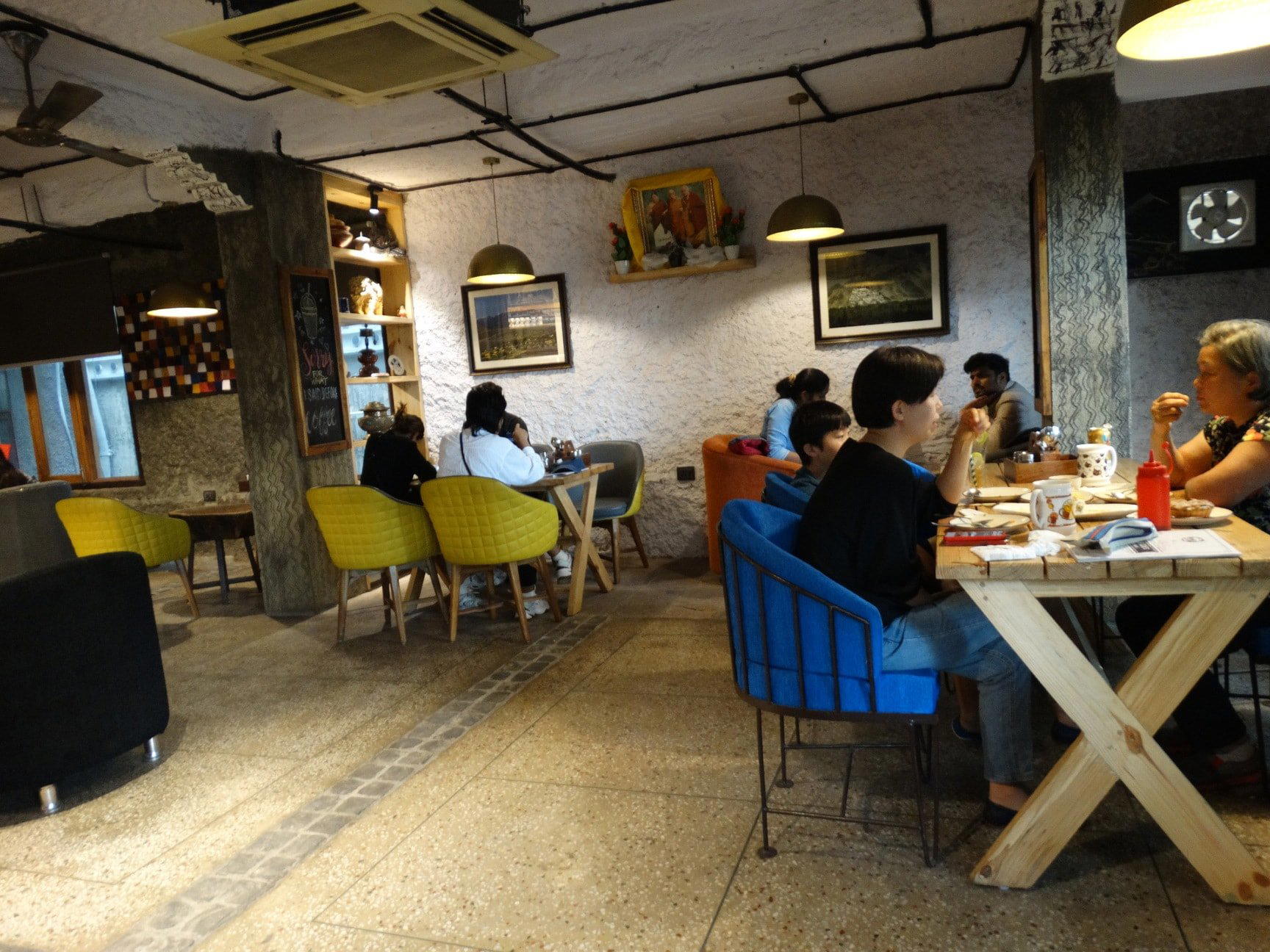
Approaching the settlement from the main road, the change in register is immediate. The smell shifts: less diesel and fried dough from roadside stalls, more of the particular warmth that comes from butter tea brewing and thukpa stock held at a low simmer for hours. Tibetan settlements across South Asia share this olfactory signature, a product of yak butter in its various dairy approximations, barley flour, and the slow cooking of noodle soups that are assembled to order rather than prepared in advance. Inside a place like Kunga, that sensory environment is intensified. The room tends to be small, the tables close together, and the sounds of the kitchen, the clatter of momos being steamed, the periodic hiss of a pressure vessel, carry clearly to anyone seated near the back.
This is a format that has more in common with a Chengdu neighbourhood canteen or a Kathmandu trekker's lodge than with the formal dining rooms of central Delhi. The food is not plated for photography. It arrives in the vessel appropriate to the dish: thukpa in a deep bowl with the noodles visible through a clear or mildly spiced broth, momos on a plate with a sauce that runs toward chile heat without the layered complexity of an Indian masala. The logic is sustenance first, and that is not a criticism. It reflects a food tradition built for high-altitude winters where caloric density and warmth matter more than presentation.
Tibetan Food in Delhi's Wider Dining Picture
Delhi's most-discussed restaurants operate in a different register entirely. Indian Accent and Bukhara anchor the upper tier of the city's restaurant economy, the former through contemporary Indian tasting menus, the latter through four decades of tandoor cooking at ITC Maurya. Dum Pukht and Inja occupy adjacent positions in the formal-dining tier. Kunga exists in a category that none of those restaurants approach: hyper-specific community cooking from a displaced population that has maintained its culinary identity across generations in India.
That specificity is what draws food writers and serious eaters to Majnu-ka-tilla. The Tibetan refugee community first arrived in Delhi in significant numbers after 1959, and the colony has developed its own micro-economy, including a cluster of cafes and restaurants whose menus have not substantially changed because the community they serve has not asked them to. This is food preservation by necessity rather than by curatorial intent, and the eating reflects it. For a fuller picture of where Kunga sits in the capital's dining geography, the full New Delhi restaurants guide maps the city's categories and neighbourhoods. Elsewhere in India, restaurants with similarly specific regional or community anchors include Farmlore in Bangalore, which draws on Karnataka's farming traditions, and Beera Chicken House in Amritsar, where a single preparation method has defined the operation for decades.
Getting There and What to Expect
Majnu-ka-tilla is accessible by metro on the Yellow Line, with the Vidhan Sabha station serving as the practical entry point for visitors arriving from central Delhi. From the station, the colony is a short auto-rickshaw ride. The settlement itself is compact enough to walk once inside. Kunga's address, House No. 5 on Street Number 6 in New Camp, places it within the colony rather than on the main road, which means first-time visitors should expect to ask directions once they are inside the lanes. This is not a hardship in a settlement where most residents are accustomed to directing visitors.
The cafe operates in a neighbourhood that sees lunch and early dinner as its primary service windows, consistent with the patterns of most small Tibetan eating establishments across South Asia. Arriving at off-peak hours on weekdays reduces the chance of finding the room full.
The price point, while not formally listed, is consistent with what the neighbourhood context suggests: Majnu-ka-tilla's cafes operate at the accessible end of Delhi's eating economy, making this a significant departure from the pricing structure of, say, Esphahan in Agra or AQUA in New Delhi. The draw is not value as a selling point but specificity: the food here is not available at this level of authenticity in other parts of the city.
For reference points outside India, the neighbourhood-cafe format that Kunga represents has parallels in the approach of community-anchored establishments in other major cities. Atomix in New York City and Le Bernardin in New York City occupy the formal-dining end of a very different spectrum, but the principle of cooking rooted in a specific cultural tradition rather than a market-facing concept applies across categories. Closer to home, Naar in Kasauli draws on Himalayan food traditions in a more structured format; Kunga represents the unmediated version of what that broader region actually eats.
Frequently asked questions
Where exactly is Kunga Cafe & Restaurant?
Kunga Cafe & Restaurant is located at house no 5, New Camp, Kunga Cafe & Restaurant, Street Number 6, New Aruna Colony, Majnu-ka-tilla, New Aruna Nagar, New Delhi, Delhi 110054, India, New Delhi.
Is Kunga Cafe & Restaurant a good base for exploring Majnu-ka-tilla's Tibetan community in New Delhi?
Located at Street Number 6, New Aruna Colony inside Majnu-ka-tilla, Kunga sits at the heart of Delhi's largest Tibetan settlement rather than on its commercial periphery. The Yellow Line metro (Vidhan Sabha station) makes the neighbourhood reachable from central Delhi without a cab. For visitors interested in the settlement's monastery, market lanes, and community shops, Kunga functions as a practical starting point given its position within the colony grid.
What do people recommend at Kunga Cafe & Restaurant?
Kunga sits inside Majnu-ka-tilla, Delhi's Tibetan settlement, where the kitchen draws on the community's own food traditions rather than a pan-Asian menu. Visitors to the neighbourhood consistently point toward the Tibetan staples that define the colony's eating culture — dishes shaped by altitude, migration, and communal cooking rather than restaurant trend cycles.
Do I need a reservation for Kunga Cafe & Restaurant?
Kunga operates within the tight lane system of Majnu-ka-tilla in New Delhi, where most eateries run on a walk-in basis suited to the settlement's rhythm. No booking contact or reservation policy is formally documented for the venue. Arriving outside peak lunch hours generally gives the most straightforward access in neighbourhood cafes of this type.
What's the signature at Kunga Cafe & Restaurant?
Kunga's defining position is geographic and cultural rather than a single plated dish: it operates inside New Delhi's Tibetan quarter at Majnu-ka-tilla, where the food reflects the settlement's four decades of Tibetan cooking practice. That context places it in a distinct category from Delhi's Indian or pan-Asian restaurant scene. Documented menu specifics are not available, but the surrounding colony is known for thukpa, momos, and butter tea as category staples.
Peers Worth Knowing
Comparable venues nearby, for context on price, style, and recognition.
| Venue | Cuisine | Price | Awards | Notes |
|---|---|---|---|---|
| Kunga Cafe & RestaurantThis venue — the venue you are viewing | Pan-Asian | $10–20 | Not listed | Not listed |
| Copper Chimney, North Indian Restaurant in Rajouri Garden- New Delhi | North Indian | $10–20 | Not listed | Rajouri Garden |
| Nando's Pacific Mall, Tagore garden | South African PERi-PERi Flame-Grilled Chicken | $10–20 | Not listed | Tagore Garden |
| Nand Di Hatti | Classic Punjabi Chole Bhature | $1–10 | Not listed | Sadar Bazar |
| Common Time | Contemporary Coffee & Bakery Café | $10–20 | Not listed | Lodhi Colony |
| Leo’s | Authentic Italian Pizza | $10–20 | 50 Top Pizza Asia-Pacific #41 | New Delhi |
Continue exploring
More in New Delhi
Restaurants in New Delhi
Browse all →

Details
- Cozy
- Casual Hangout
- Brunch
- A La Carte
Current opening hours
- Monday
- 8 AM–11 PM
- Tuesday
- 8 AM–11 PM
- Wednesday
- 8 AM–11 PM
- Thursday
- 8 AM–11 PM
- Friday
- 8 AM–11 PM
- Saturday
- 8 AM–11 PM
- Sunday
- 8 AM–11 PM
Hours can change for holidays and private events. Last verified .
Cozy atmosphere with professional service as noted by reviewers.