
KUCHE is a compact Osaka ramen and tsukemen counter in Higashiyodogawa Ward, selected for Tabelog Ramen OSAKA 100 in 2023, 2024, and 2025. Its appeal sits in the city’s everyday noodle culture rather than ceremony: small-room pacing, counter-led service, and a format built for solo diners and small groups.
Pearl is the En Primeur Club membership app — saves, bookings, and concierge access live there. Same editors, same standards.
- Address
- 1 Chome-5-32 Zuiko, Higashiyodogawa Ward, Osaka, 533-0005, Japan
- Phone
- +81 6-6732-9133
- Website
- toxtukari2.jp
 Saves & bookings on Pearl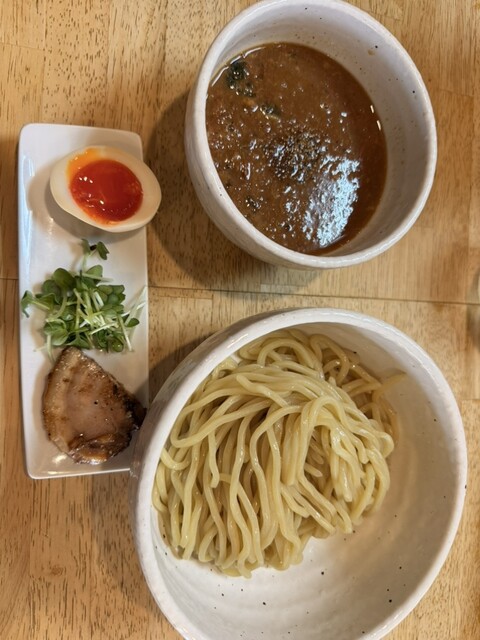
Approaching a serious ramen shop in residential Osaka is rarely theatrical. The cues are modest: a short frontage, steady diner turnover, and a counter where bowls move faster than conversation. In Higashiyodogawa Ward, KUCHE fits that practical Osaka register, where ramen and tsukemen are judged less by décor than by repeatability, queue tolerance, and whether the room holds its pace across lunch and dinner.
Osaka’s ramen scene has shifted sharply over the past decade. Once overshadowed by okonomiyaki, kushikatsu, takoyaki, and late-night drinking food, noodle specialists now occupy a more serious tier of local eating. The strongest shops do not mimic Tokyo’s reservation culture. They rely on compact rooms, quick turnover, and narrow menus. Opened in 2014, KUCHE fits that evolution: a neighborhood-scale shop with enough critical recognition to travel beyond its immediate catchment.
A compact ramen-and-tsukemen room in Osaka's newer noodle tier
The useful way to read KUCHE is through format. The shop is listed for ramen and tsukemen, a Kansai pairing that separates two appetites: the immediate comfort of soup noodles and the more deliberate rhythm of dipping noodles. Tsukemen asks different things of a kitchen, since noodle texture, dipping broth concentration, and temperature management carry more of the meal than garnish or narrative. In a small shop, that format is a strength: fewer seats mean less distance between production and service, and less slack in noodle cooking.
The room’s scale reinforces the point. Twelve seats, including counter seating and two small tables, place KUCHE at the intimate end of Osaka ramen, not in the volume-driven station-shop category. This is not fine dining translated into noodles; it is the disciplined small-shop model Japan’s ramen culture rewards when consistency holds. Tabelog Ramen OSAKA 100 selections in 2023, 2024, and 2025 give it a measurable position in that competitive field. A 3.69 Tabelog score is also meaningful in Japan’s tightly clustered restaurant-rating culture, where specialist shops can build influence without international awards.
That distinction matters for travelers. Osaka itineraries often over-index on central neighborhoods and famous street-food corridors, missing the outer-ward specialists locals fold into ordinary life. Higashiyodogawa is not the classic first-night Osaka answer. That is the editorial case: the city’s noodle culture is increasingly distributed, and leaving the obvious lanes gives a clearer view of ramen as a neighborhood meal rather than a sightseeing prop.
How recognition changed the reading of a neighborhood shop
Repeated selection on the Tabelog Ramen OSAKA 100 list changes how a small ramen shop is read. It does not make a counter a Michelin-style destination restaurant, and it should not be forced into that language. It does move KUCHE into a comparison set where consistency, category identity, and local reputation matter. The shop now sits beside Osaka noodle addresses such as Jikaseimen Tsukiyomi, Ramenya Akagi, Hakata Tonkotsu Tenjinki, and NAKAGAWA Wazu in how serious ramen followers parse the city: by price band, specialty, and willingness to travel beyond the easiest neighborhoods.
The evolution also shows across the Osaka eating map. Visitors can move from bakery culture at 52CHO-ME BAKERY to department-store snacking through 551 Horai (551蓬莱), then to international registers at 99 Pizza Napoletana Gourmet or a canto (Italian). Against that spread, ramen specialists supply the city’s lower-cost precision: craft compressed into broth, noodles, and timing rather than course structure. For a fuller local map, use Our full Osaka restaurants guide, with adjacent planning through Our full Osaka hotels guide, Our full Osaka bars guide, Our full Osaka wineries guide, and Our full Osaka experiences guide.
The shop’s practical character is part of the story. Reservations are unavailable, the room is small, and payment is cash-based. Those facts place it within Japan’s specialist ramen grammar, where planning depends on timing rather than concierge access. Solo dining is a natural fit; groups should consider the room size. The non-smoking policy also aligns with newer noodle shops that treat comfort and speed as compatible.
Where KUCHE fits in a wider Japanese casual-dining itinerary
For a Japan-focused food route, KUCHE sharpens the difference between casual cost and serious execution. The same itinerary might include regional or category-specific addresses such as -Grilled beef Sukiyaki- KAMAKURA TANUKIAN 鎌倉 たぬき庵 in Kamakura. 鮪と炭火焼き うお炭 秋葉原店 in Tokyo.know in Kumamoto, (Shoku) Vietnam in Kawasaki, [Curry Senmon Ten] Maruyama Kyoju. in Sapporo, or [ki:] in Kyoto. Add overseas Japanese-adjacent stops such as Jōdo Saké Bar in Los Angeles and Onigiri Time in Pasadena, and the pattern clarifies: casual Japanese food travels well as an idea, but its sharpest expression often depends on local routine.
That is why KUCHE should be treated as a precision stop, not a trophy booking. The award history supplies confidence; the small room sets expectations; the ramen-and-tsukemen focus tells diners what pleasure is being pursued. Osaka rewards specificity. The city’s dining culture is generous, noisy, and democratic, but its better specialist counters are exacting without announcing themselves loudly. KUCHE belongs to that lane: compact, recognized, and more useful as a lesson in contemporary Osaka ramen than as a generic restaurant recommendation.
There is also a nearby-café and casual-eating thread for repeat visitors who plan by neighborhood rather than checklist. A stop such as.cafe shows how Osaka’s everyday dining fabric extends beyond formal restaurants, while a ramen counter in Higashiyodogawa shows the opposite end of the same habit: low-friction, focused, and built around a narrow promise. Osaka dining’s current direction is not only tasting menus or hotel restaurants. It is also small specialist rooms that remain affordable, accumulate recognition, and keep their category discipline intact.
Price and Recognition
Comparable options at the same price tier.
| Venue | Cuisine | Price | Notes |
|---|---|---|---|
| KUCHEThis venue — the venue you are viewing | Not listed | $ | Not listed |
| Ramen Kasumi Nakazakichou ten | Kita, Modern Japanese Ramen & Mazesoba | $ | Not listed |
| Hana | Not listed | $ | Miyakojima, Okonomiyaki & teppan comfort food |
| Dahl | Chūō, Japanese curry house | $ | Not listed |
| Tori Soba Zagin Honten | Not listed | $ | Nishi, Chicken ramen (tori paitan soba) counter |
| Curry Senmonten Hakugintei Itwu biru ten | Chūō, Japanese Curry House | $ | Not listed |
Recognition history
Dated appearances from independent guides and award organizations, with the underlying list record or original source where available.
Tabelog 100 #88 · No. 88
Tabelog · Tabelog 100 - Ramen - OSAKA - 2025
Continue exploring
More in Osaka
Restaurants in Osaka
Browse all →




Bars in Osaka
Browse all →




Hotels in Osaka
Browse all →



Wineries in Osaka
Browse all →
At a Glance
- Lively
- Cozy
- Trendy
- Solo
- Casual Hangout
- After Work
- Late Night
- Family
- Standalone
Current opening hours
- Monday
- 11:30 AM–3 PM, 6:30–9:45 PM
- Tuesday
- 11:30 AM–3 PM, 6:30–9:45 PM
- Wednesday
- Closed
- Thursday
- 11:30 AM–3 PM, 6:30–9:45 PM
- Friday
- 11:30 AM–3 PM, 6:30–9:45 PM
- Saturday
- 11:30 AM–3 PM, 6:30–9:45 PM
- Sunday
- 11:30 AM–3 PM, 6:30–9:45 PM
Hours can change for holidays and private events. Last verified .
A compact, casual ramen shop atmosphere focused on the bowl in front of you, with an energetic feel and a sense of discovery around its experimental black KURO broth and Osaka-only limited creations.